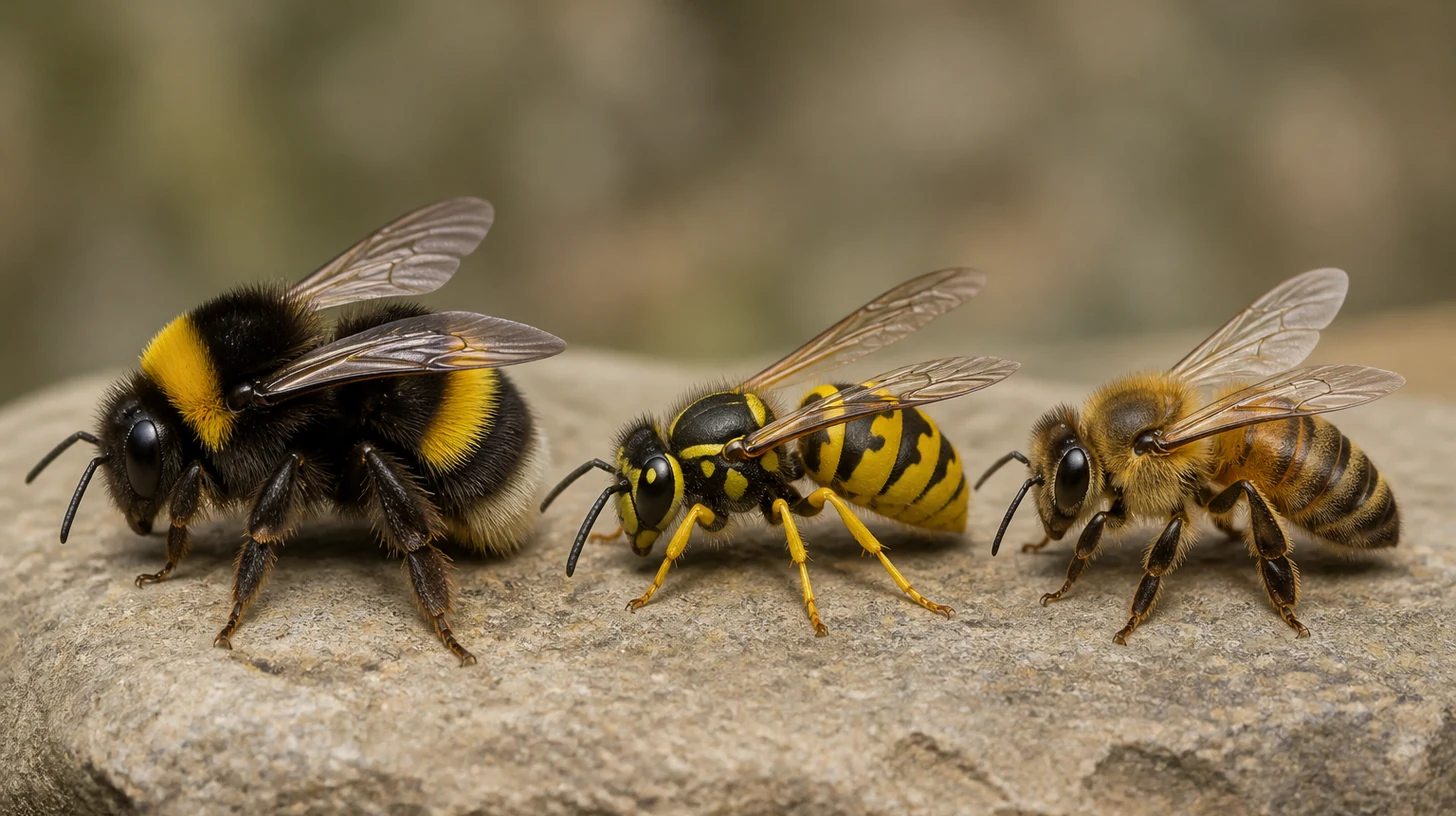
No, not every species called a wild bee is a wasp; Bombus bees are also called wild bees, and they don’t produce honey like the honey bee. The really surprising detail is that Bombus stores nectar yet doesn’t turn it into a honey store for winter, and that some tropical social wasps are an exception. To recognize the wasps commonly found in Turkey, you can look at the wasp guide.
Are wild bees and wasps the same?
No. In everyday Turkish, the name rendered here as “wild bee” does not refer to a single scientific group; it is often used broadly for bees and bee-like members of Hymenoptera living in nature. Wasps, on the other hand, are the species in the family Vespidae. The large, hairy bees called Bombus belong to the family Apidae. That’s why mistaking a Bombus for a wasp, or understanding a single species from the word “wild bee”, is misleading. You can also compare the differences between wasps and honey bees separately.
How do you recognize a Bombus bee?
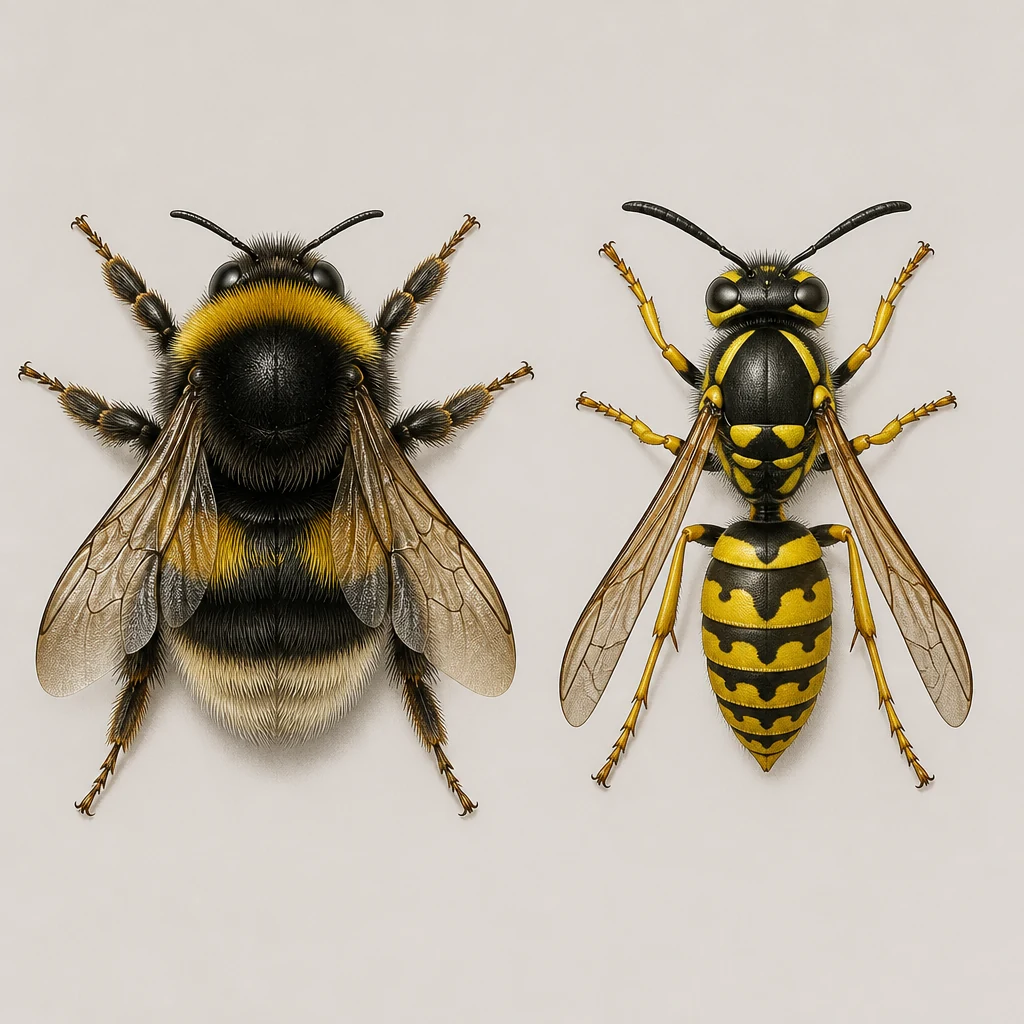
Bombus is usually a plump, densely hairy bee that works on flowers while buzzing. A wasp’s body looks shinier and smoother; there is a distinct narrow waist between the thorax and the abdomen. These signs are practical clues, they don’t identify every species on their own: color patterns can vary between species and among individuals of the same species. Both are in the order Hymenoptera; close kinship does not mean they are in the same family.
What types of wild bee are there?
More than 250 species have been described in the genus Bombus worldwide; studies on the number of species in Turkey also publish records in different periods. A 2021 faunal study reports 47 Bombus species in Turkey; this number should not be read as an unchanging, final list, because taxonomy and records can be updated. Wasps are not a single species either: in Turkey there are different members such as the European hornet (Vespa crabro), the Oriental hornet (Vespa orientalis), the German wasp (Vespula germanica) and paper wasps (Polistes species). Although the naming overlaps in everyday use, the groups are biologically separate.
Do wild bees make honey?
Bombus bees collect nectar from flowers and keep nectar and pollen in wax pots in their nests. However, they don’t ripen nectar and turn it into a long-term honey store the way the honey bee does. A Bombus colony is seasonal: in autumn, while the new queens mate and spend the winter alone in a sheltered place, the old colony comes to an end. So finding nectar in the nest does not mean there is honey in the combs.
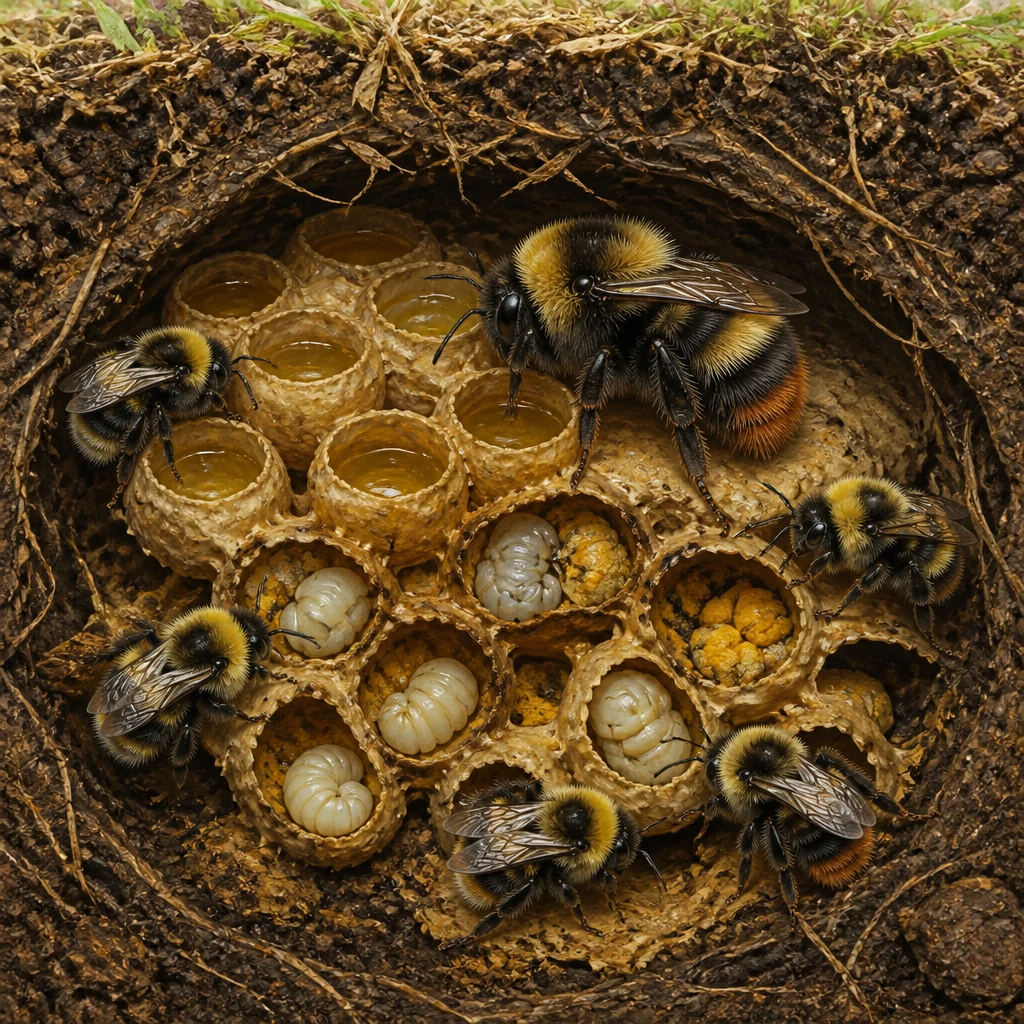
Some tropical social wasps are known to store nectar or honey-like substance; this exception does not show that ordinary wasps or Bombus nests in Turkey produce honey. You can read about the honey bee’s process of turning nectar into honey in the article on how honey bees make honey.
| Feature | Bombus bee | Wasp (Vespidae) | Honey bee |
|---|---|---|---|
| Family | Apidae | Vespidae | Apidae |
| Appearance | Large, densely hairy | Shinier, narrow-waisted | Hairy, relatively slimmer |
| Colony cycle | Usually annual | Seasonal in most temperate species | Colony continues through winter |
| Nectar/food | Collects, stores to a limited extent | Consumes depending on species; most don’t make a honey store | Ripens and stores it as honey |
| Overwintering | New queen alone | Mostly new queens | Colony lives together |
Which one stings more?
Both Bombus and wasps can sting when they perceive a threat; behavior varies with species and proximity to the nest. Bombus usually doesn’t target people while foraging on flowers, but it can defend itself if its nest is disturbed. Wasps can also be defensive, especially around the nest. If you can’t reliably identify the species, don’t approach the nest, don’t touch it and don’t try to break it up; if you have a sting allergy or severe symptoms, get medical help.
Short conclusion
Wild bee is not the name of a single species. Bombus bees are not wasps but hairy bees from the family Apidae; even though they collect nectar, they don’t produce honey like the honey bee. Wasps are in the Vespidae group, and their common species don’t make a honey store. For species in Turkey and nest behavior, you can read the main wasp guide, and to understand honey production, the honey bee guide.
Sources
- Mississippi State University Extension, “Bumble Bee Nest”: https://extension.msstate.edu/newsletters/bugs-eye-view/2023/bumble-bee-nest-vol-9-no-07
- Montana State University Extension, “Bumble Bees in Montana”: https://extension-store.montana.edu/montguides/bumble-bees-in-montana-1
- Penn State Extension, “The Bumble Bee Lifestyle”: https://extension.psu.edu/the-bumble-bee-lifestyle
- Tezcan et al. (2021), “Apidae) fauna of Turkey”, FAO AGRIS record page: https://agris.fao.org/search/en/providers/122436/records/6759a7d90ce2cede71c934b7