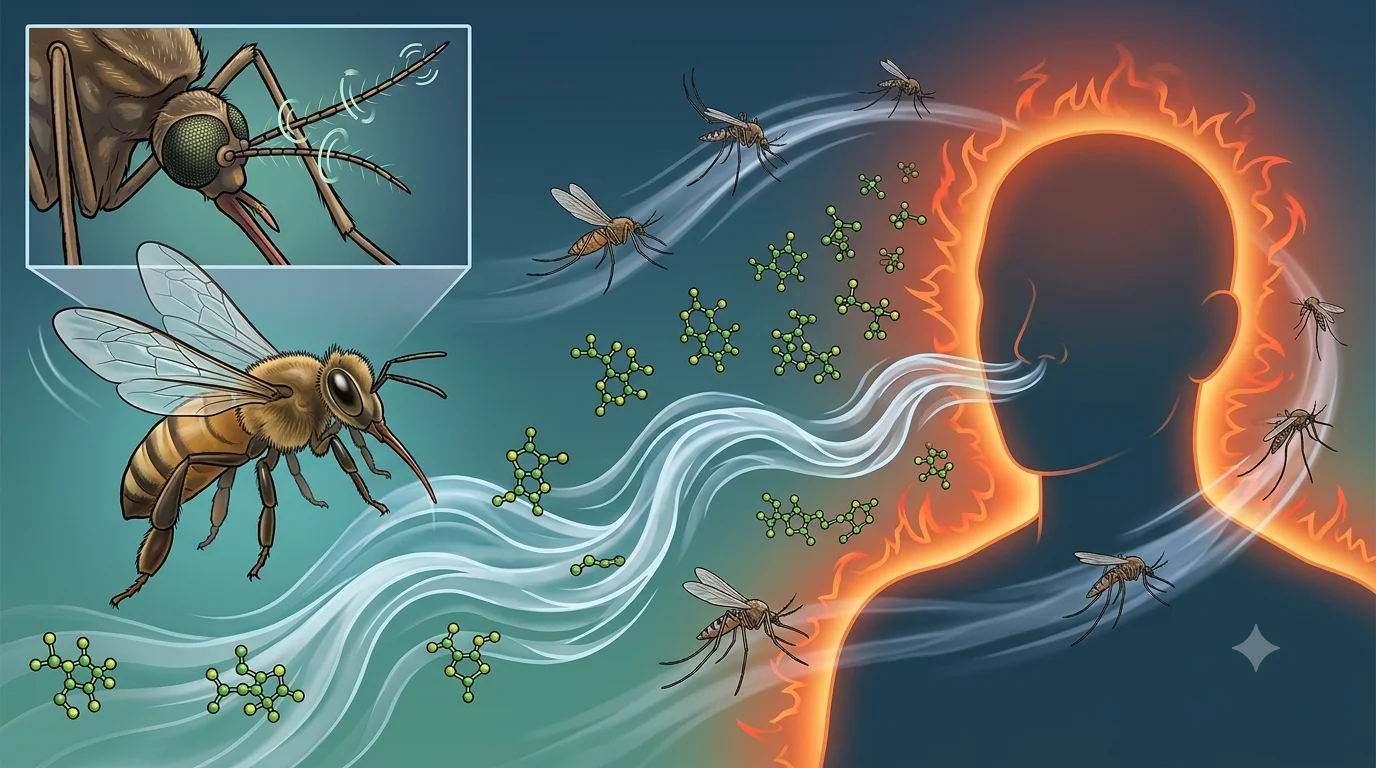
Why do mosquitoes bite some people more? The short answer is clear: female mosquitoes do not choose at random. They read CO2, body heat, sweat chemistry and micro-cues on the skin surface together. Because these cues vary from person to person, one person can appear “more attractive.” Some studies also add blood type 0 (O), pregnancy and certain microbiota patterns to this picture. In other words, the issue is not a single cause; it is the sum of more than one signal. For the general framework, you can go back to the Mosquito: Biology, Species and Health Information article.
Mosquitoes and CO2: The Breath Signal
At long range, the female mosquito tracks CO2 most of all. The carbon dioxide released with breath works like a location marker for it. That is why someone who is running, has climbed stairs or is in a hot environment is noticed more easily. The feeling of being targeted after exercise comes from here; the body gives off more CO2, and at the same time its heat rises. In babies and children the absolute amount of CO2 may not be as high as in adults; but thin skin and differences in close-range access can affect bite reports. The backbone of this mechanism is consistent with the basic biology on the CDC Mosquitoes page.
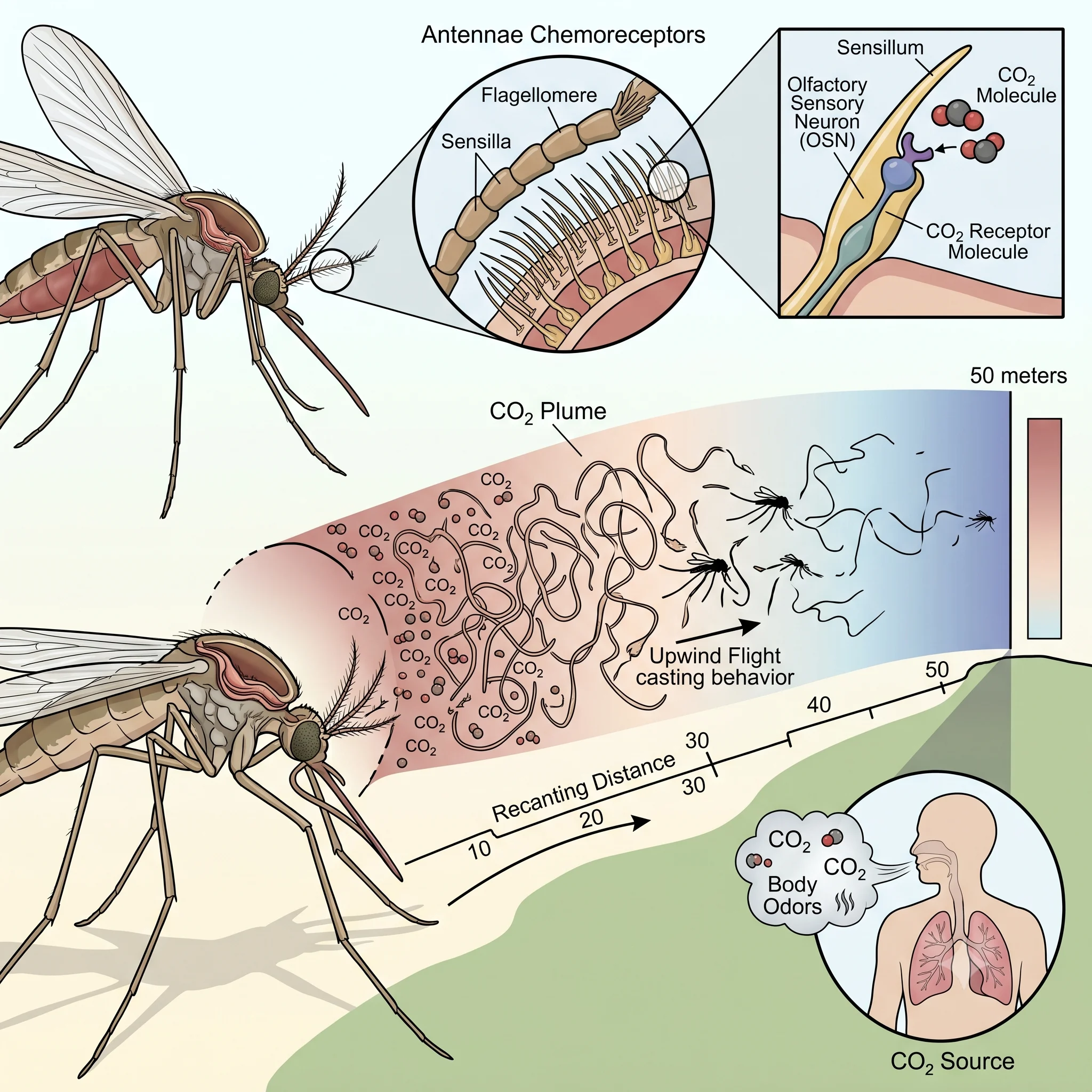
The critical point here is this: the mosquito is not looking for a single target, but for a cocktail of signals. CO2 opens a door, then sweat and skin chemistry come into play. That is why, when two people stand side by side in the same environment, one may get bitten more. Other spokes such as why mosquito bites itch complete the human side of this outcome.
Mosquitoes and Sweat Chemistry: Eccrine Traces
For the mosquito, sweat is not plain water. Eccrine sweat can mix with lactic acid, ammonia, uric acid and various organic compounds. Someone who sweats after exercise makes this chemical trace more pronounced. Some people genetically produce these compounds in different proportions; this in turn changes their odor profile. And the mosquito reads this difference. So “being sweaty” is not bad on its own, but it can make the odor profile more visible as a target.
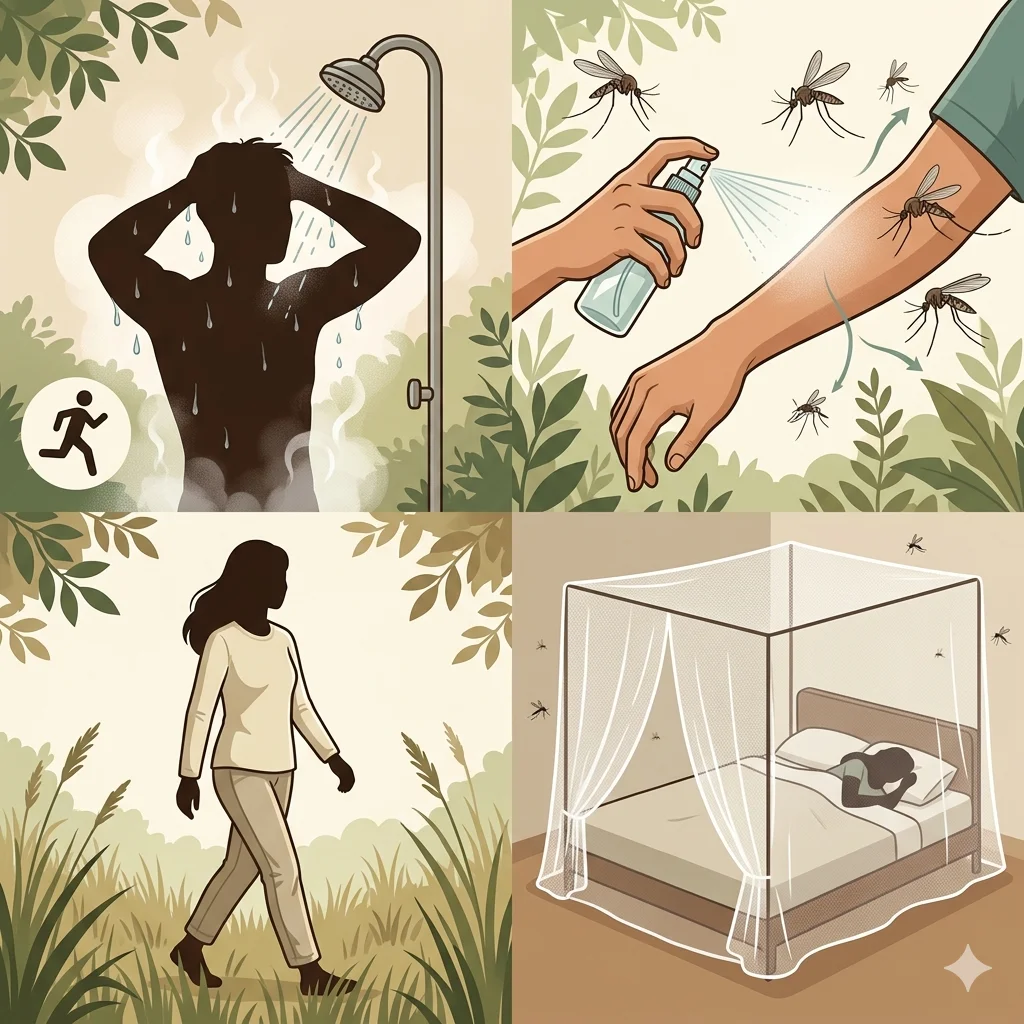
The temporary drop seen after a bath also comes from here. When the odor load on the skin surface is reduced in the short term, the target signal weakens. But this is not a permanent solution. In the field, the most solid move is not trying to change the odor profile but masking it or disrupting the environment. For details, a DEET repellent guide could be the next step.
Mosquitoes, Blood Type, Microbiota and Pregnancy
The blood type topic is talked about a lot, but it needs to be read correctly. In some studies, blood type 0 (O) is found more attractive than type A. The reason here is not the blood itself; it may be the chemical signature that appears on the skin. Shirai’s 2004 study is frequently cited in this area. But reading it as “always like this” would be wrong. There is an effect, but on its own it is not an absolute rule. Shirai 2004 ABO-mosquito is a good reference for this topic.
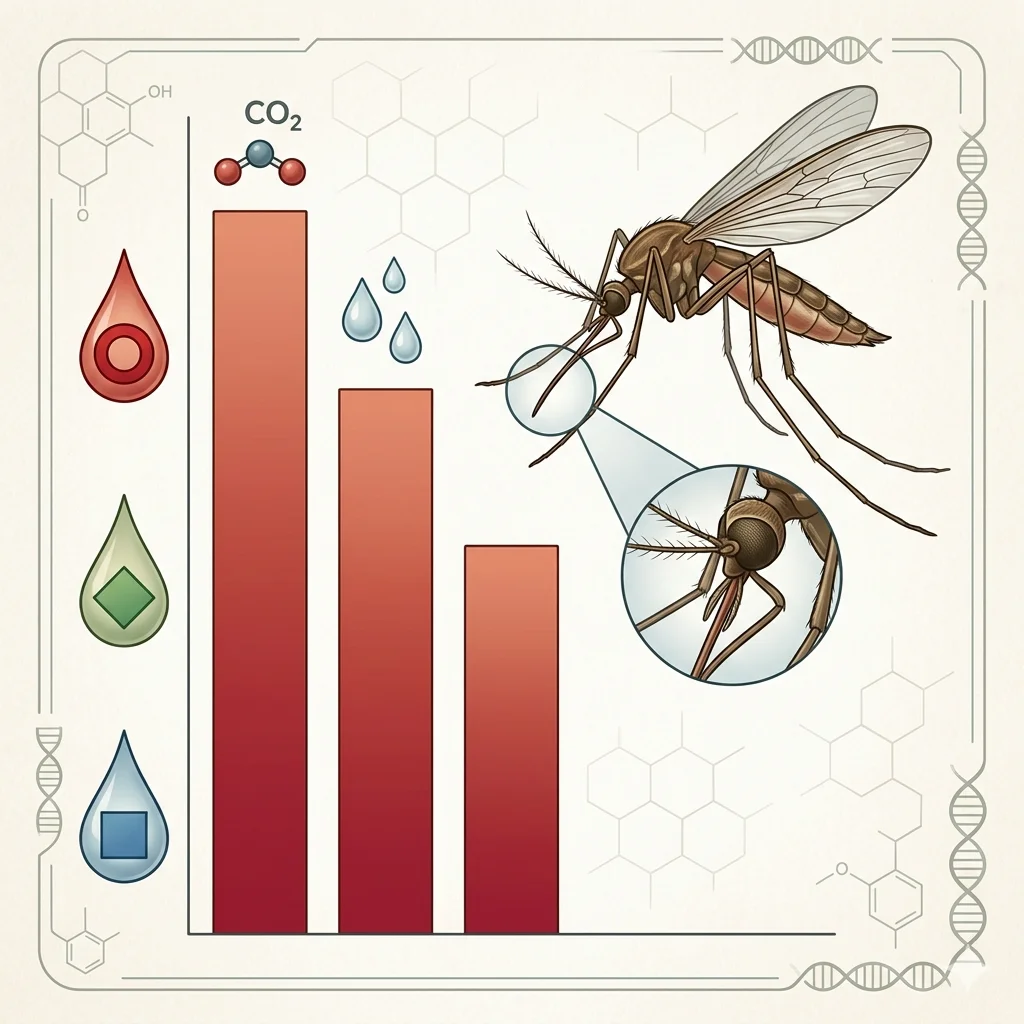
The microbiota is also in the game. The bacterial community on the skin changes the odor of the signal it gives off. The same person attracting different levels of interest on different days may partly come from this. Pregnancy adds another layer: CO2 output increases, and body temperature rises somewhat. These two changes can be perceived by the mosquito as a more distinct target. TÜBİTAK’s general science content offers a local, plain introduction to biology topics of this kind: TÜBİTAK Bilim ve Gelecek (in Turkish).
Practical Protection from Mosquitoes
You can’t change your genetics, but you can reduce the signal. The most sensible order is this: shower after exercise, wear light-colored clothing, use screens indoors, consider a bed net at night. As repellents, products containing DEET or picaridin make the job easier by masking skin chemistry. This is not a miracle on its own; but it weakens the chain. When you combine it with the general biology in the Mosquito: Biology, Species and Health Information article, the picture becomes clear.
In practice, the biggest mistake is only chasing adult mosquitoes. The real job is to reduce the attractive signal. Eliminating standing water, increasing airflow indoors and spending less time outdoors in the evening hours are more consistent. The next topic to read on this could be mosquito eggs and development; because the chain that feeds the population starts there.
Mosquito FAQ
Is mosquito biting preference entirely genetic?
No. Genetics has an effect, but CO2, sweat, body heat and microbiota work together.
Why do mosquitoes find pregnant women more?
Because CO2 output and body heat increase. These two strengthen the target signal.
Is blood type alone a sufficient explanation?
No. There are findings on type 0 (O), but what really makes the difference is the sum of skin surface chemistry.
Is eating sweets the main cause?
No. There is no strong and clean evidence on this. The real signal lies elsewhere.
In one sentence: the mosquito reads a person’s odor, breath and heat together; some people present this combination more distinctly, so they get bitten more.