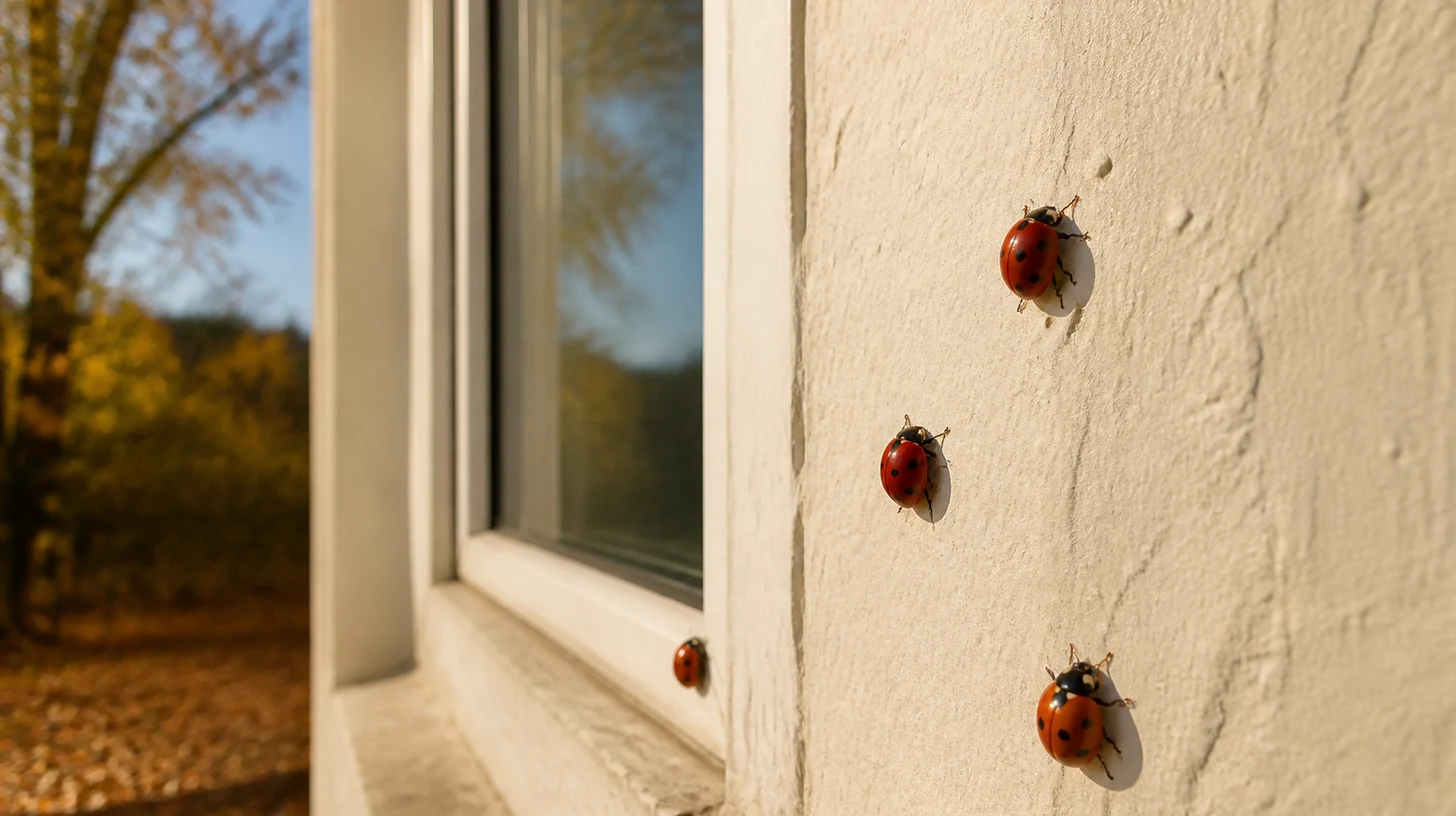
Ladybugs come indoors in autumn mostly because they are looking for a place to shelter from the cold and overwinter. What is really surprising is that the beetle does not mistake the house for food or a nest; most of the time it heads for a warm, bright wall and takes refuge in a gap in the wall. So why do dozens of them appear at once in some houses, do they breed indoors, and how do you get them out without harming them? The main guide on ladybug species and life helps you understand who the individuals you see in your home might be.
Why do they gather in autumn?
Because before overwintering they look for a suitable, sheltered place. As the days shorten and the air cools, sunlit walls and the areas around windows offer the beetles a temporarily warm surface. They can cluster on the wall for a while, then move through cracks into cavities in the building. This is less a swarm looking for food than a seasonal search for shelter.
Some ladybug species spend the winter in groups; but the behavior is not the same in all species and regions. North American sources describe heading toward buildings in autumn especially for the Asian ladybug Harmonia axyridis. It would not be right to generalize this information directly to every ladybug species in Türkiye. Seeing large numbers in the house makes this species likely, but does not identify it on its own. For the features of this variably colored species, you can check out the Harmonia axyridis guide.

How do they get into the house?
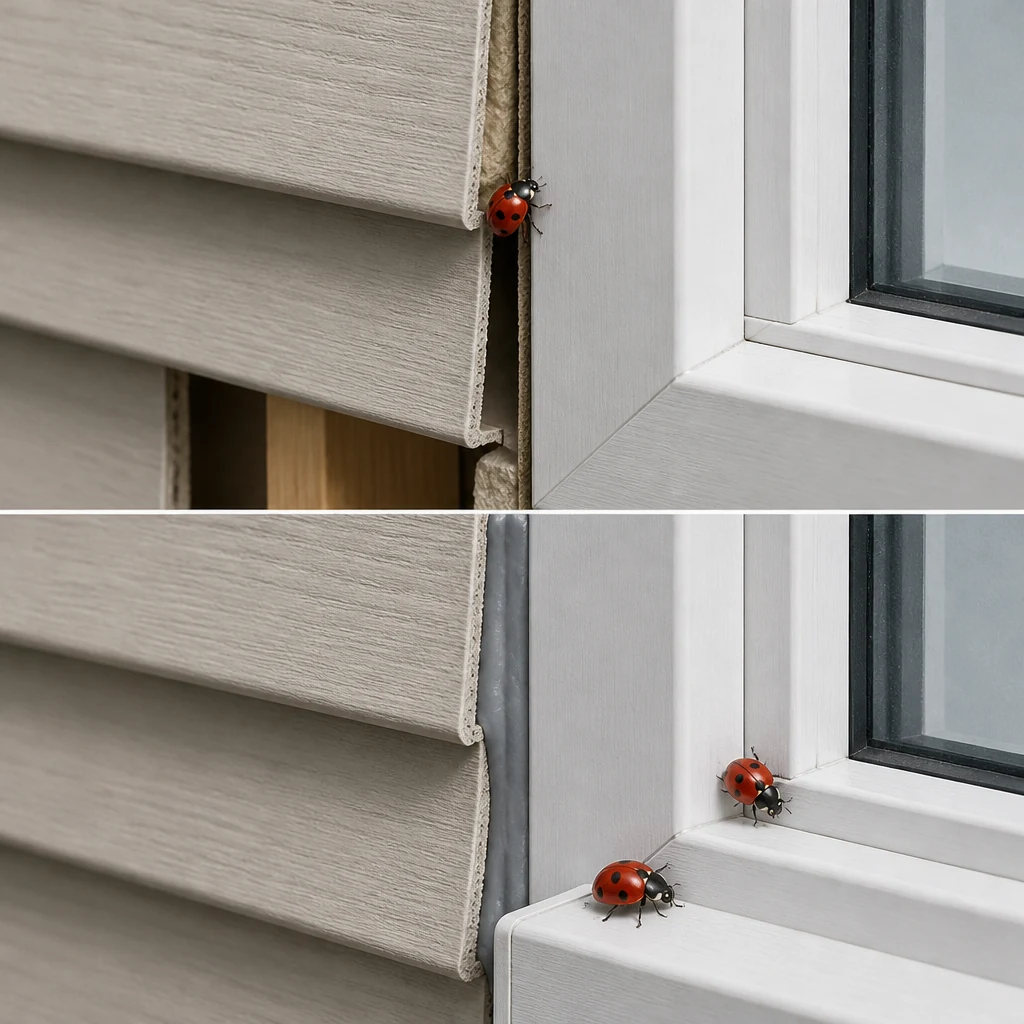
Mostly through small openings in the exterior walls. Around window and door frames, the edges of insect screens, the roof eaves, utility penetrations and siding joints are possible entry points. Rather than walking in through an open door, the beetle usually moves from a gap it finds on the outside wall into the wall cavity; after that it may appear indoors at the edge of a window.
This behavior can be more pronounced in buildings that are sunny, light-colored and surrounded by wooded areas. Mississippi State University Extension reports that the risk of Asian ladybugs entering through cracks increases especially in light-colored houses that get sun from the south or west. This is not a firm rule for every house; it is a regional observation about the effect of the wall and surrounding conditions.
Do they breed indoors, do they harm people?
Generally no; adults hiding in the house to overwinter do not come to set up a colony and breed indoors. Becoming active in rooms that warm up can lead to them being seen around windows, especially on sunny winter days. They can get out when you open the window; those that remain in the wall cavity may stay out of sight for a while.
Ladybugs are mostly not dangerous to people. Some species can release a defensive fluid when handled; Harmonia axyridis can rarely bite lightly. Crushing the beetle can leave a yellowish fluid and a stain. If there is sensitivity or a marked reaction, consult a health professional; do not squeeze the beetle with your bare hands.
How do you prevent them and remove them safely?
The best prevention is to seal the entry openings outside before autumn arrives. Repair window screens and weatherstripping; seal the gaps around door and window frames with a suitable filler material; check utility and cable penetrations. If access to the roof eaves and high areas is not safe, don’t climb up yourself; call a maintenance professional.
If you see a few individuals inside, you can gently collect them with a vacuum cleaner and release them outside. Empty the vacuum bag or canister right away; crushing them can increase the odor and staining. Using a spray or a fogger is unnecessary in most cases: it may not reach the individuals hiding in the wall cavity, and it can also expose the people and pets in the house to chemicals. With heavy entry that recurs every year, ask a professional to first identify and seal the openings on the exterior walls.
| Observation | Likely explanation | Appropriate first step |
|---|---|---|
| Clustering on the exterior wall in autumn | Search for an overwintering site | Seal the entry openings |
| A few individuals around the window in winter | Beetles hiding in the inner cavity becoming active as it warms up | Collect gently, don’t crush |
| Many entering on the same wall every year | An open joint or a cavity in the building | Have the exterior wall inspected, have the gaps repaired |
| A single ladybug on a plant in the garden | Normal feeding or passing through | Generally don’t intervene |
Conclusion: what does it mean when they come indoors?
In most cases the ladybug is not looking for food; in autumn it is heading for a sheltered gap where it can spend the winter. Get the few individuals out without crushing them, and look for the real solution in sealing the cracks. To see the species and their role as beneficial insects in a wider context, you can look at the main ladybug guide.
Frequently asked questions
Why do ladybugs come indoors in autumn?
They look for a sheltered place to overwinter. They can gather on sunny walls and exterior surfaces and get in through openings.
Are the ladybugs I see in my house harmful?
They generally do not pose a serious danger. They can leave a stain when crushed, and some species can rarely bite lightly.
How do I get rid of ladybugs without killing them?
Gently collect them with a vacuum cleaner and release them outside. Then seal the openings around windows, doors and utility lines.
Sources
- Mississippi State University Extension — Tips to Avoid an Asian Lady Beetle Invasion: https://extension.msstate.edu/blogs/extension-for-real-life/tips-avoid-asian-lady-beetle-invasion
- UC Statewide IPM Program — Convergent Lady Beetle: https://ipm.ucanr.edu/natural-enemies/convergent-lady-beetle
- Washington State University Extension — Predatory Beetles: Convergent Lady Beetles: https://hortsense.cahnrs.wsu.edu/fact-sheet/predatory-beetles-convergent-lady-beetles