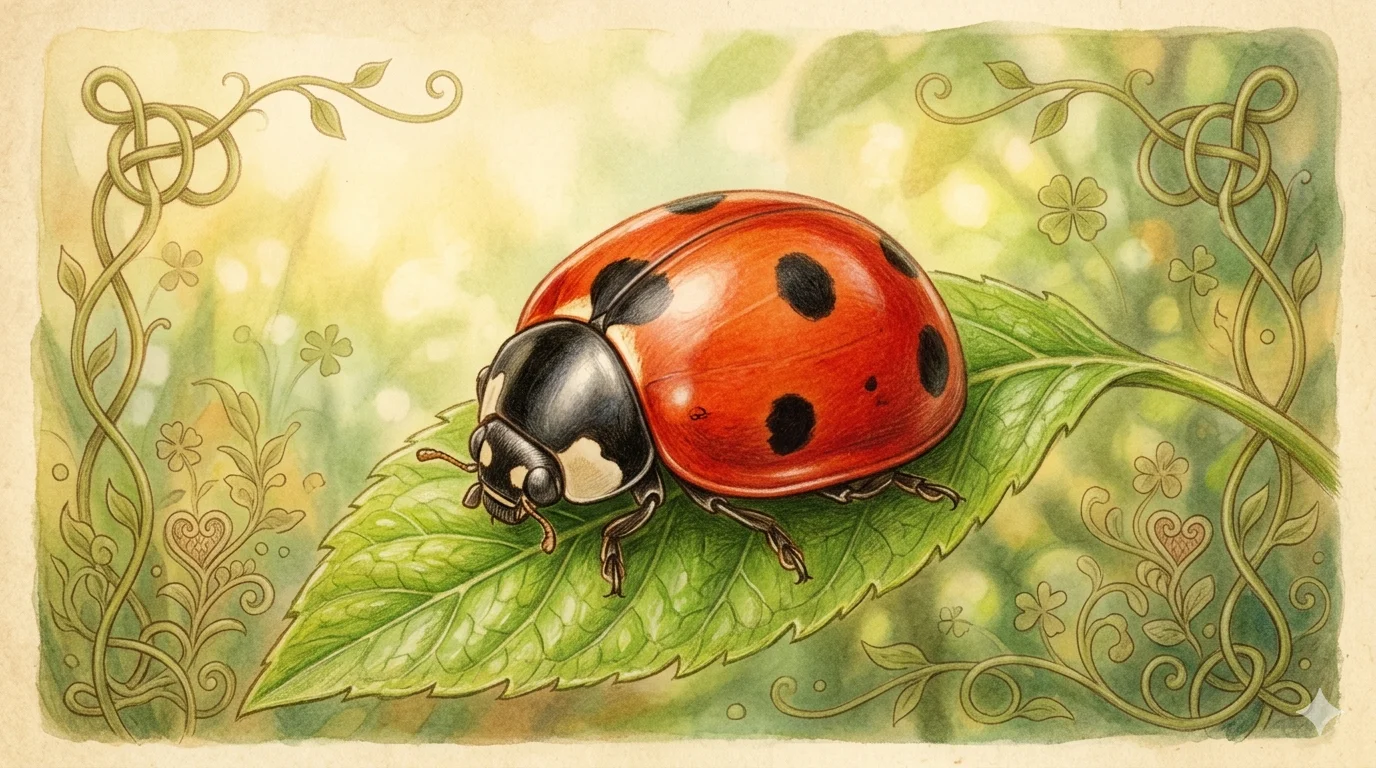
The ladybug is an insect that is underestimated because of its small body, yet it does heavy work both in the garden and in culture. People made it a symbol of “luck” because they first saw its benefit and then loaded meaning onto it. On one side there is its role as a natural predator that reduces aphid pressure; on the other there is a folkloric story of luck stretching from Europe to Anatolia. When these two lines came together, a familiar symbol emerged. The basic definition in The Ladybug: Between Science and Folklore is expanded with folklore and science in this sub-article. The short answer is this: the ladybug is considered lucky because it does work; and people love what is useful.
Why are ladybugs considered lucky?
There is no single fairy tale behind the ladybug’s association with luck. The first foundation is agricultural benefit. Villagers and gardeners saw that this beetle ate aphids. Aphids are a group of pests that suck plant sap, curl leaves and lower yields. When a ladybug arrives, the plant gets some relief. Over the centuries, this observation turned into the idea of “the insect that brings good news.” In other words, luck came first from observation and then settled into language.
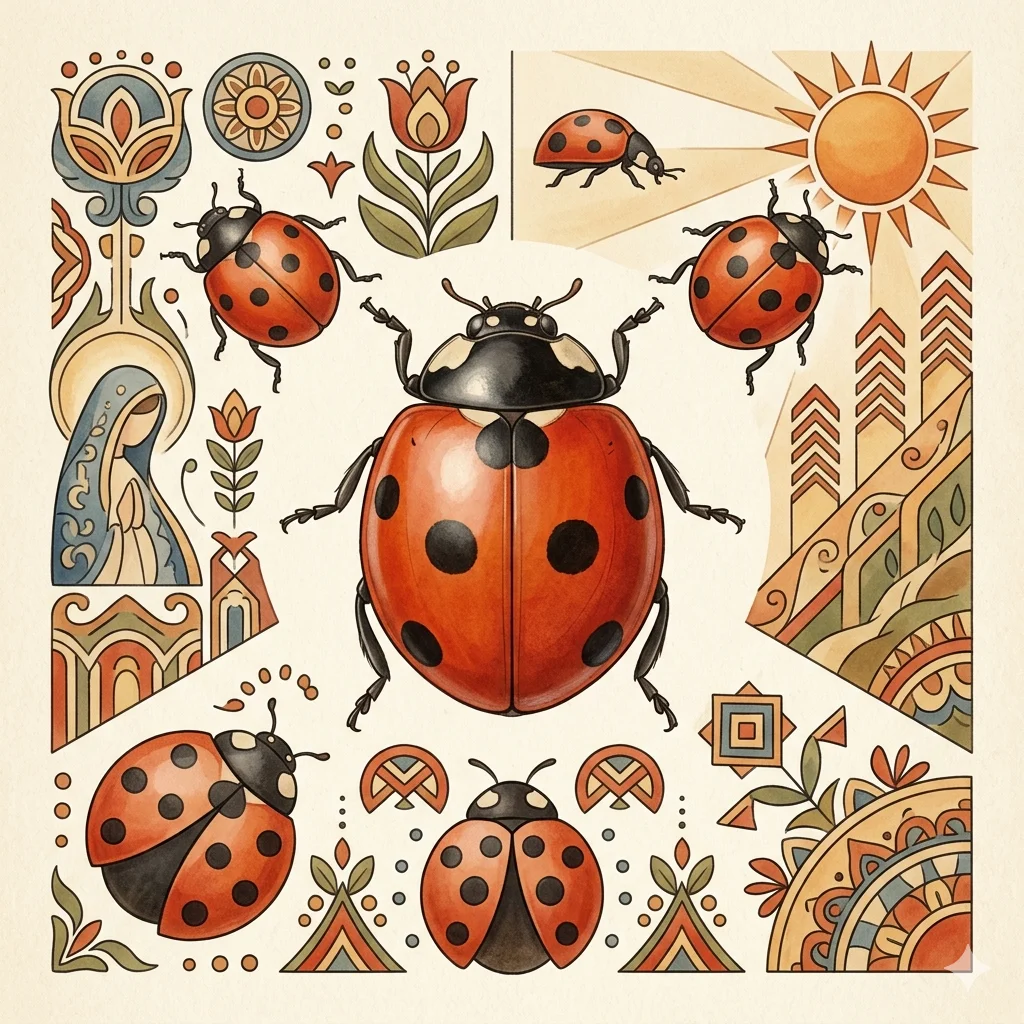
The second foundation is folklore. In Europe, the ladybug was associated with the Virgin Mary in many places; the English name “ladybug” also draws on this. In Anatolia too, it is seen as a guest believed to bring luck to the home and carry good news. In some stories it is a symbol of marriage, fertility or protection. That is why the ladybug is not only a biological creature but also carries a cultural sign. For details, also see our main ladybug article.
Why are ladybugs so valuable in agriculture?
The ladybug’s real strength is that it is quiet biocontrol. That is, it exerts natural pressure instead of chemical pesticides. A single adult ladybug can consume thousands of aphids over its lifetime; the larval stage also builds serious predation pressure in a short time. This number varies with species, temperature and prey density, but the main idea does not change: the ladybug is a predator that works for free in the garden. That is why it holds an important place in organic farming and integrated pest management.
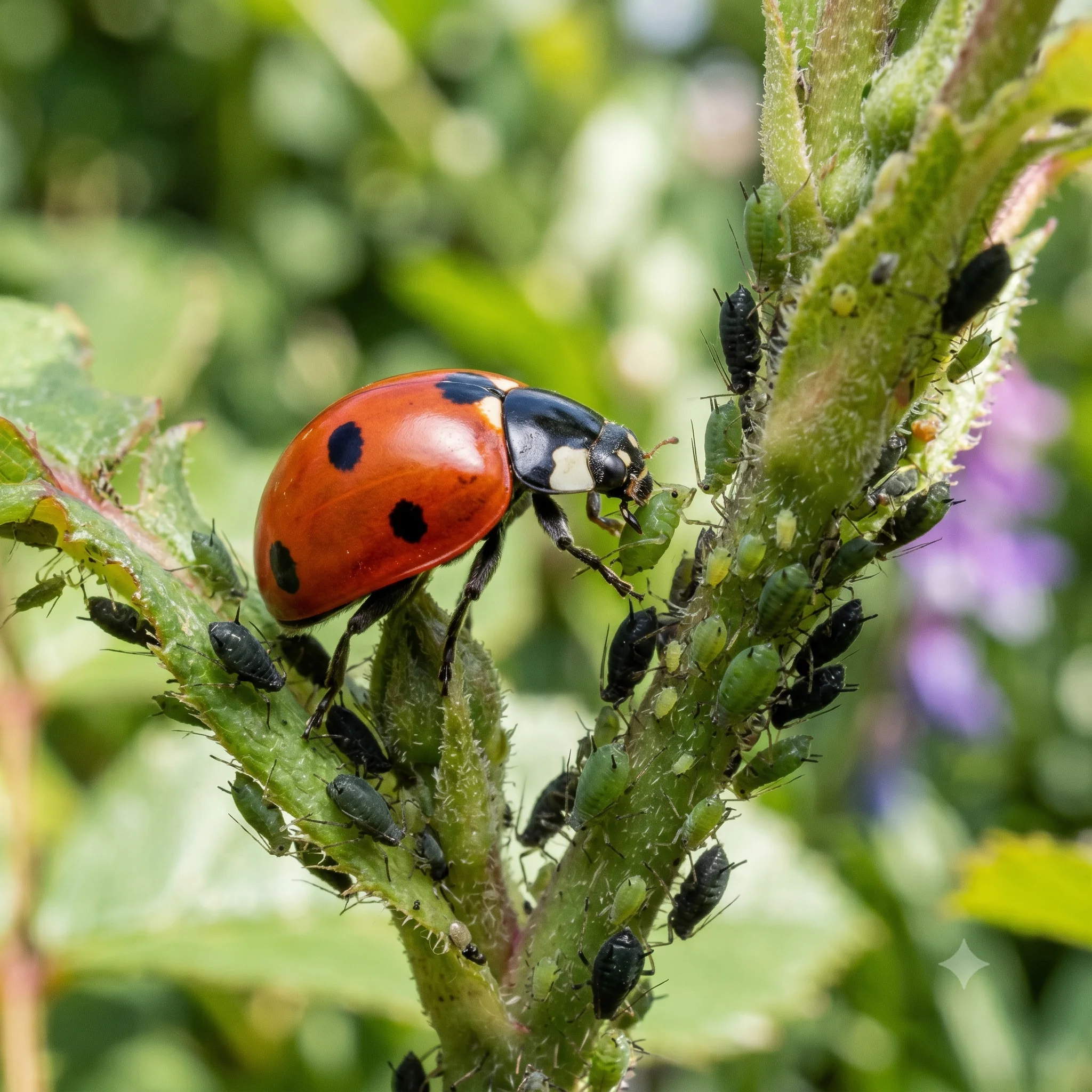
The critical point here is this: the ladybug alone is not a miracle. What keeps it there is habitat. Flowering strips, low pesticide pressure, diversity and the presence of prey are needed. If the garden is “sterile,” the ladybug won’t stay either. The story that works in agriculture is not just releasing the beetle; it is leaving it a place to live. This approach is the practical side of the ecological role described in the ecological role of the ladybug. For a wider framework, a link to the garden biocontrol guide also fits at this point.
Where do the ladybug’s folklore and cultural meaning come from?
Folklore draws directly on nature. The ladybug represents this well. It looks harmless, it provides a benefit and its colors catch the eye. The human mind quickly attaches meaning to such creatures. In Europe there is a religious association, in Anatolia luck and wishes, in Japan a sense of closeness to the sky and the sun, and in Russia an association with holiness. The name changes across cultures, but the shared feeling is the same: this insect is taken as a good sign.
This cultural layer is not a fairy-tale ornament but a product of human observation. You code a creature whose benefit you constantly see in nature as a “good sign.” Then it filters down into children’s stories, folk language and even souvenirs. That is also where the ladybug’s great popularity comes from. Small, colorful, harmless and useful. For people, it is a package like a rare quadrilateral: looks, benefit, symbol and memorability.
What do the ladybug’s colors, spots and defense tell us?
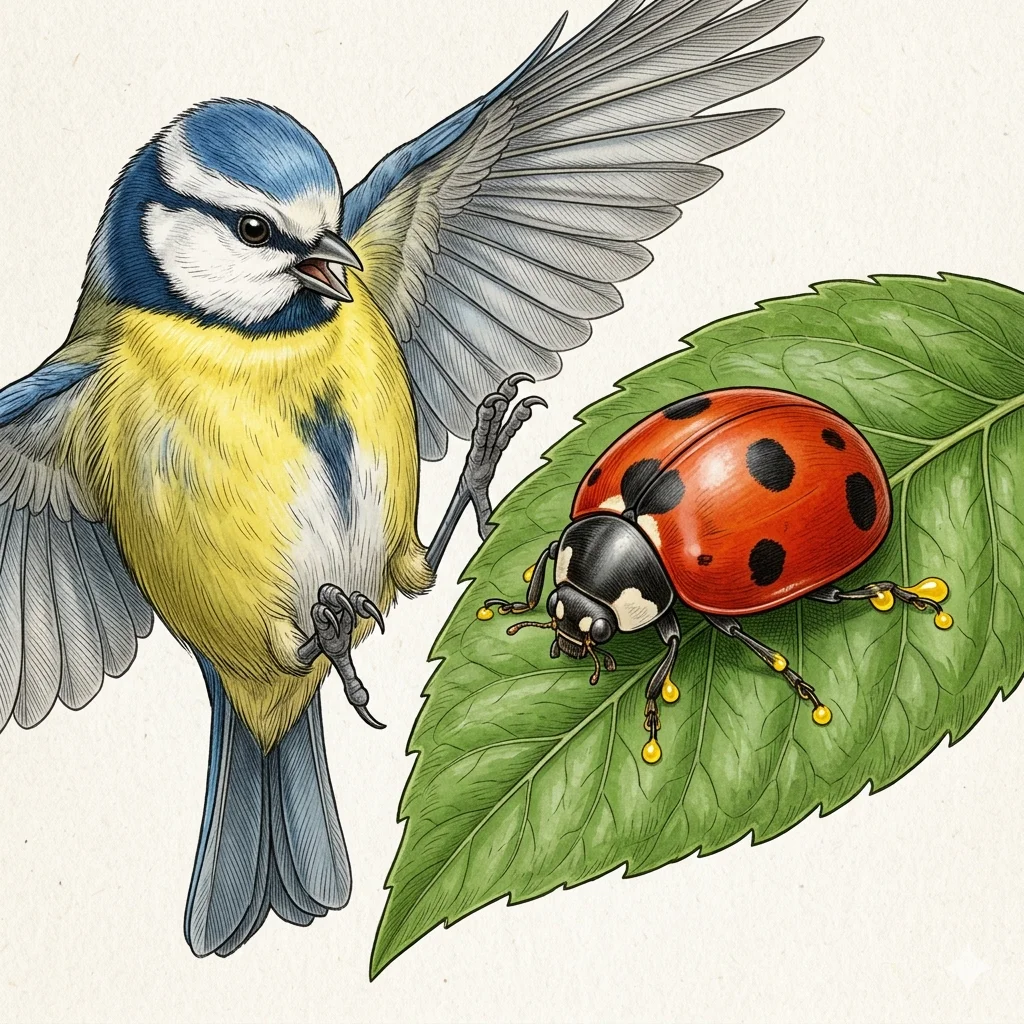
The red-and-black pattern is no coincidence. This is the warning signal called aposematism: “Don’t eat me, I don’t taste good.” When threatened, the ladybug can perform reflex bleeding; that is, it can release a yellowish defensive fluid from its leg joints. This fluid leaves a bad taste for the predator and sometimes causes mild irritation. The essence of it is defense, not attack.
A lot of misinformation circulates among people about the number of spots. Spots are not an indicator of age. They are a species marker. A species having 7 spots does not mean it is old. Another species may have 2 spots, and in yet another species the pattern may be very variable. That is why “reading age from the spots” is empty talk. The anatomy section in the main ladybug article explains this difference more technically. The message here is clear: color and spots are not nature’s decoration; they are tools of defense and identification. The Harmonia axyridis invasion link is also important on this point, because not every shiny ladybug is native and innocent.
What do ladybugs mean in terms of modern science, conservation and FAQ?
Modern science follows the ladybug from two angles: biological control and conservation. On one side there are beneficial species that reduce pest pressure in agriculture. On the other there are invasive species that suppress native species. Species such as Harmonia axyridis in particular can upset the balance in some regions. That is why careful monitoring is needed, not enthusiastic romanticism. Citizen science efforts such as BugGuide — Coccinellidae are valuable for this reason. Seeing population change with data is better than talking about it.
On the conservation side, the simple rule is: reduce pesticides, diversify habitat, get to know local species. The IUCN’s records on ladybird groups also show that risk at the species level varies from region to region. The strong idea is this: the ladybug is not just a cute icon, but a working part of the ecosystem. Britannica’s Coccinellidae page also confirms this within a general framework. The lesson to draw from this is not to reject folklore, but to ground folklore in biology.
Do ladybugs bite people?
Most of the time, no. Light biting can occur in some species, but this is not the general rule.
What should you do if a ladybug is found indoors?
Taking it outside without crushing it is the best way. You protect the beetle and reduce unnecessary contact.
Why is a ladybug considered good news in the garden?
Because it reduces aphid pressure. This is a real benefit for plant health.
Why is the ladybug so well known?
Because it is small, shiny, harmless and beneficial. Human memory holds on to such creatures easily.
The reading order after this article is clear: first the basic ladybug guide, then the Harmonia axyridis invasion, then the garden biocontrol guide. That way the topic does not stay on a single page; nature, agriculture and culture are read together.