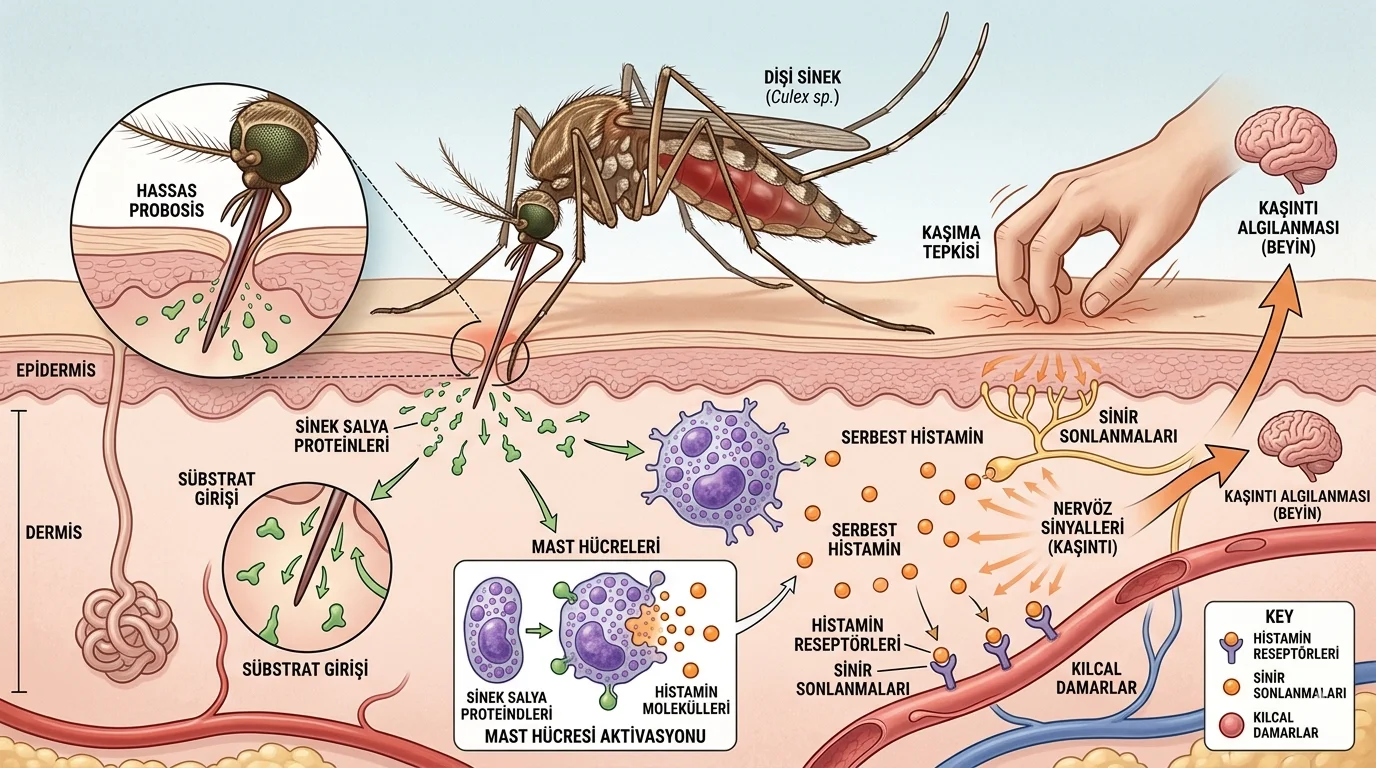
Why do mosquito bites itch? The short answer is clear: proteins in the female mosquito’s saliva enter the skin, mast cells treat this as a foreign signal, release histamine, and the itching starts. For the general framework, see the Mosquito: Biology, Species and Health Information article, and for the broader question of target selection, see the Why Do Mosquitoes Bite Some People More? The ETM Complex page. This text is general information; if there is shortness of breath, swelling of the lips or tongue, rapidly spreading redness or fainting, emergency help is needed.
Note: This article does not make a diagnosis and does not replace treatment. If there is fever, pus, redness spreading in a streak or suspected cellulitis, a health assessment is needed.
Where does the itch come from?
When the female mosquito feeds on blood, it doesn’t just insert a needle. First it secretes saliva from its mouthparts. That saliva contains proteins that slow clotting and make blood flow easier. Human skin doesn’t recognize these proteins. The defence system wakes up to what is happening. One of the cells that gives the first response is the mast cell. And the mast cell releases histamine.
Histamine widens small blood vessels, makes nerve endings more sensitive and produces that familiar itching sensation. In other words, what bothers you is your body’s defence response to the mosquito’s bite as much as, or even more than, the bite itself. Redness, mild swelling and increased warmth are also part of the same chain. That’s why it is normal for it to become noticeable within an hour or two.
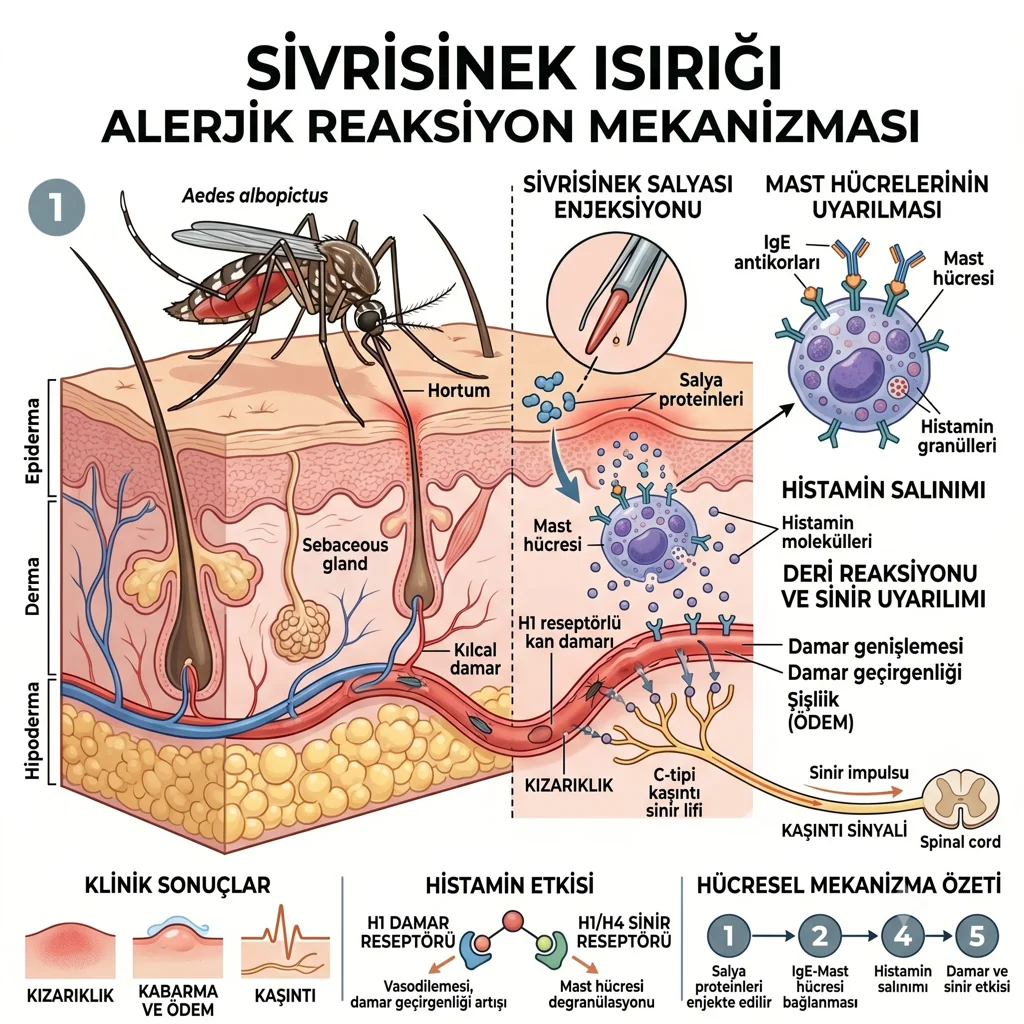
The critical distinction here is this: itching is the expected local reaction in most people. But the same bite may stay very mild in one person while feeling harsher in another. The reason for this is not just “sensitivity”; the immune threshold, the skin barrier and genetic predisposition work together. Some people’s mast cells respond faster. In some, the histamine effect lasts longer. And in some, the skin surface reddens more easily.
Why is it harsher in some people?
There is no single reason behind this difference. Genetic tendency, allergic predisposition and the state of the skin barrier play a role. Someone prone to atopy may feel the same mosquito bite more strongly. Sweat, a hot environment and friction also increase the itching. Heat widens blood vessels; widened vessels in turn make the redness more noticeable.
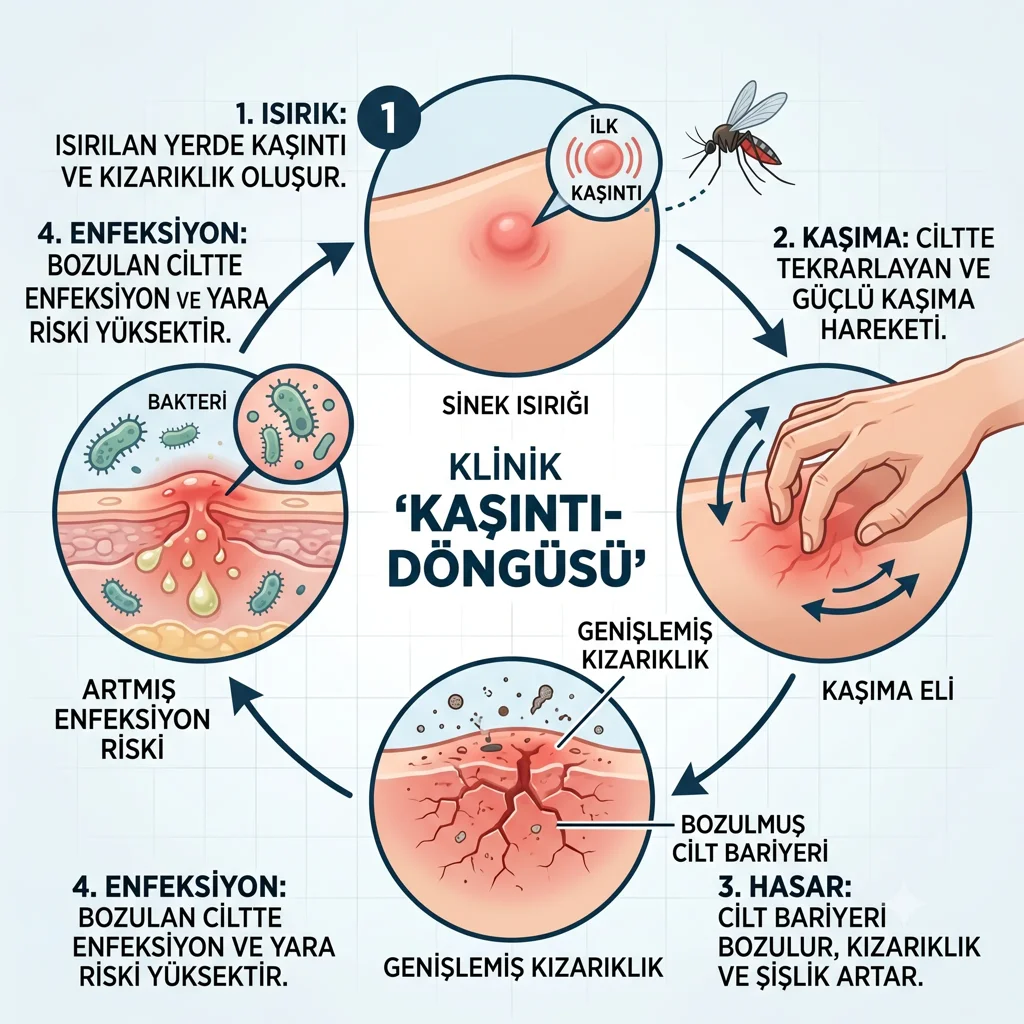
Another factor has to do with how soon you start scratching the reaction. If your first reflex is to scratch, the mechanical stimulation produces more nerve activity. Then the itch enters a “the more you scratch, the more it itches” cycle. This is exactly where the scratch cycle kicks in. It gives short-term relief but a little later leaves a bigger problem.
That’s why in some people the mark stays small while in others the bump is bigger. In short, the same bite makes a different sound in different bodies. Most likely the difference lies in the intensity of the histamine response and the level of local inflammation in the skin.
What should you do at home?
The first move is cold. A cold compress reduces the widening of the blood vessels and calms the nerve endings. Don’t press ice directly onto the skin; put it inside a thin cloth. Apply it for 10 minutes, then take a break. If the itching is mild, this alone will often bring relief.
Then keep the skin clean. Lukewarm water and a gentle soap are enough. Perfumed products, a harsh exfoliating mitt or a hot shower can make things worse. Pressing lightly on the area instead of scratching is safer. Keeping nails short helps, especially for those who tend to scratch at night.
If the itching drags on, topical products such as crotamiton or calamine can be used with guidance from a pharmacist or physician. These are options often used in practice to soothe the itching sensation. In some cases the AAD also recommends topical anti-itch products and oral antihistamines after a bug bite; however, the choice of product varies according to age, skin condition and accompanying findings. For a detailed dermatology approach, the AAD’s guide to preventing and treating bug bites is a good in-depth source.
Why is the scratching cycle risky?
When the itching starts, your hand goes there automatically. But although scratching gives brief comfort, it damages the upper layer of the skin. When the barrier breaks down, a new door for irritation opens. More irritation, more inflammation; more inflammation, more itching. That’s how the cycle closes. For this reason the “let me scratch a little and it’ll pass” approach often backfires.
When the skin is broken, the risk of secondary infection also increases. This risk is higher especially in children, in sweaty areas or in those who scratch a lot at night without noticing. If yellowing, discharge, increasing pain, increased warmth and redness spreading to the surroundings develop, we may no longer be talking about just a mosquito bite. At that point, a local infection is considered.
The simple rule in practice here is this: put out the itch, don’t let the skin break open. Cold compresses, topical products and scratching control are the backbone of the job. The best result is achieved in the first hours. A cold compress applied before going to bed at night and a clean bed environment can reduce the complaint that carries on into the morning.
When do you need your country’s emergency number or emergency care?
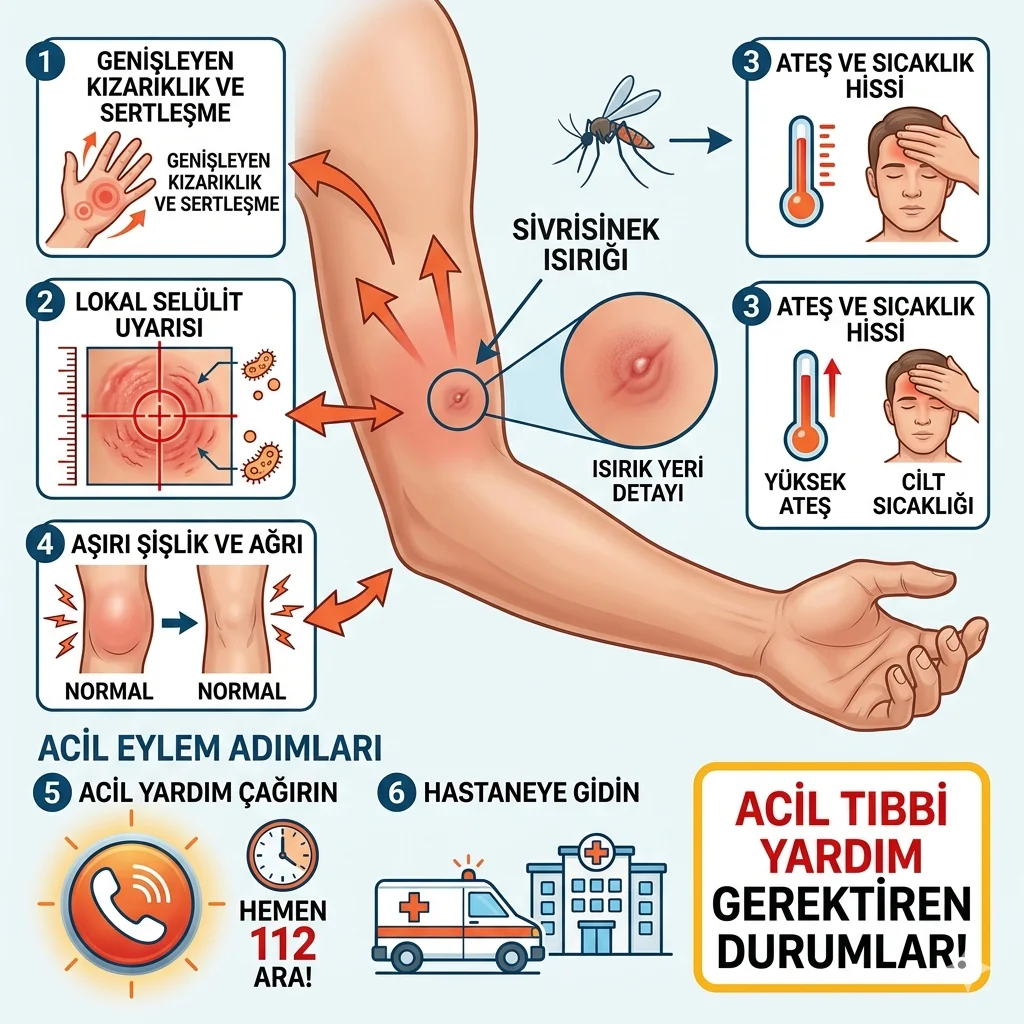
A mosquito bite is usually managed at home. But some signs change the line. If the redness is growing within hours, the area has become warm and painful, fever is added or a cellulitis appearance develops, don’t wait. If there is weakness, chills, a fast pulse or a general deterioration in condition together with spreading redness, an emergency assessment is needed.
An allergic picture is serious too. If there is shortness of breath, swelling of the lips or tongue, widespread hives, dizziness and fainting, call your country’s emergency number. This is not simple itching. Especially in a child or in someone with a suppressed immune system, the condition can become severe more quickly. If fever accompanies it, a distinction must be made between infection and a systemic reaction.
The decision sentence in practice should be short: small, limited, itchy lesion = home care; spreading redness, fever, suspected cellulitis or a breathing symptom = emergency. You must not miss this line. WHO’s West Nile virus fact sheet also explains mosquito-borne risks and breeding site control within an official framework.
Short Q&A
When does a mosquito bite start to itch?
In most people it starts within minutes. The itching may not come immediately; the redness and bump become noticeable a little later.
For how many minutes is a cold compress applied?
Generally 10 minutes is enough. Then a break is taken. The aim is not to freeze the skin but to calm the inflammation.
Is crotamiton or calamine better?
Both are used to relieve itching. Which one is suitable depends on skin type, age and the severity of the complaint.
When should I not pick at the bite site?
If a scab has formed, discharge has started or the redness is growing, don’t pick at it. At this point the barrier has been damaged.
In which situation should you see a physician?
If there is fever, rapidly growing redness, pus, increasing pain, local cellulitis or signs of allergy, a physician is needed.
Sources
- AAD — How to prevent and treat bug bites
- AAD — Bug bites: when to see a dermatologist
- WHO — West Nile virus fact sheet
- Mosquito: Biology, Species and Health Information
- Why Do Mosquitoes Bite Some People More? The ETM Complex
Mosquito bite itching looks like a simple discomfort; but underneath it are the saliva protein, the mast cell, histamine and the scratching cycle. Most of the time a cold compress and topical anti-itch products are enough. A lesion that spreads and becomes feverish, warm and painful, however, should not be treated as a home matter; it is a matter for emergency care.