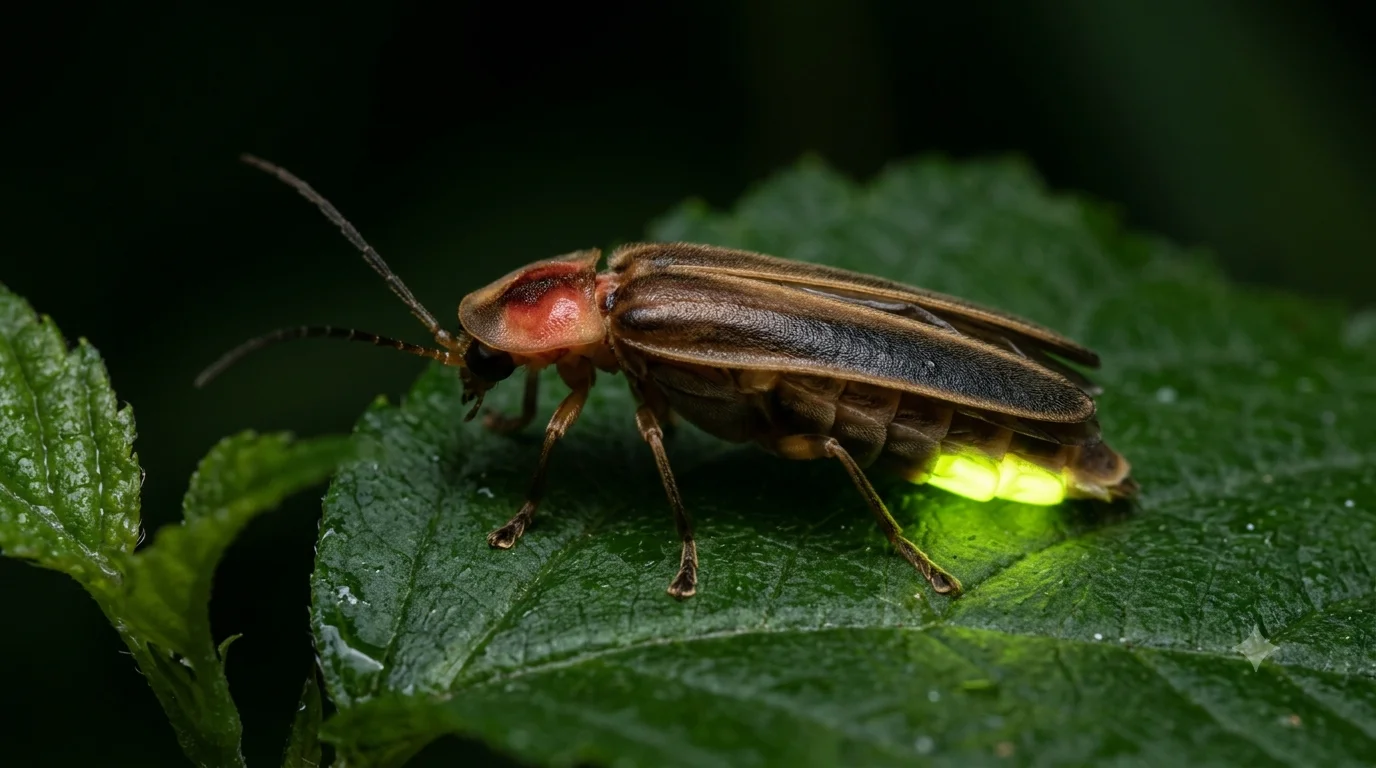
Why do fireflies glow? The short answer is this: the photophore organ in the abdomen controls the reaction between luciferin and luciferase; when ATP and oxygen come into play, cold light is produced. This light is not a random flash but a signal used for communication within the species. In other words, the light is lit not to attract the attention of some other creature but directly to find the right mate. If you want detail, the main framework is in the main article: Firefly: Bioluminescence and Ecology.
Look at the same topic from the field as well. Where there are fireflies, the night is generally close to dark, the environment is humid and the plant texture is rich. This creature talks by glowing. Its silence matters as much as its message. As artificial light increases, this message gets lost. That’s why the topic is not only science but a matter of habitat. We keep the details in the main article again: Our main firefly article.
How does the firefly’s photophore organ work?
The photophore, located in the last segments of the firefly’s abdomen, is a specialized organ that produces light. Inside the structure there are light cells called photocytes. Behind them is a reflector layer; it reduces light escaping backward and directs it outward. The tracheal system, meanwhile, carries oxygen to this area. Nerve control is also involved; in other words, the organ works on an on-off logic. While human muscle sends ATP more toward heat, the firefly turns the same energy into light.
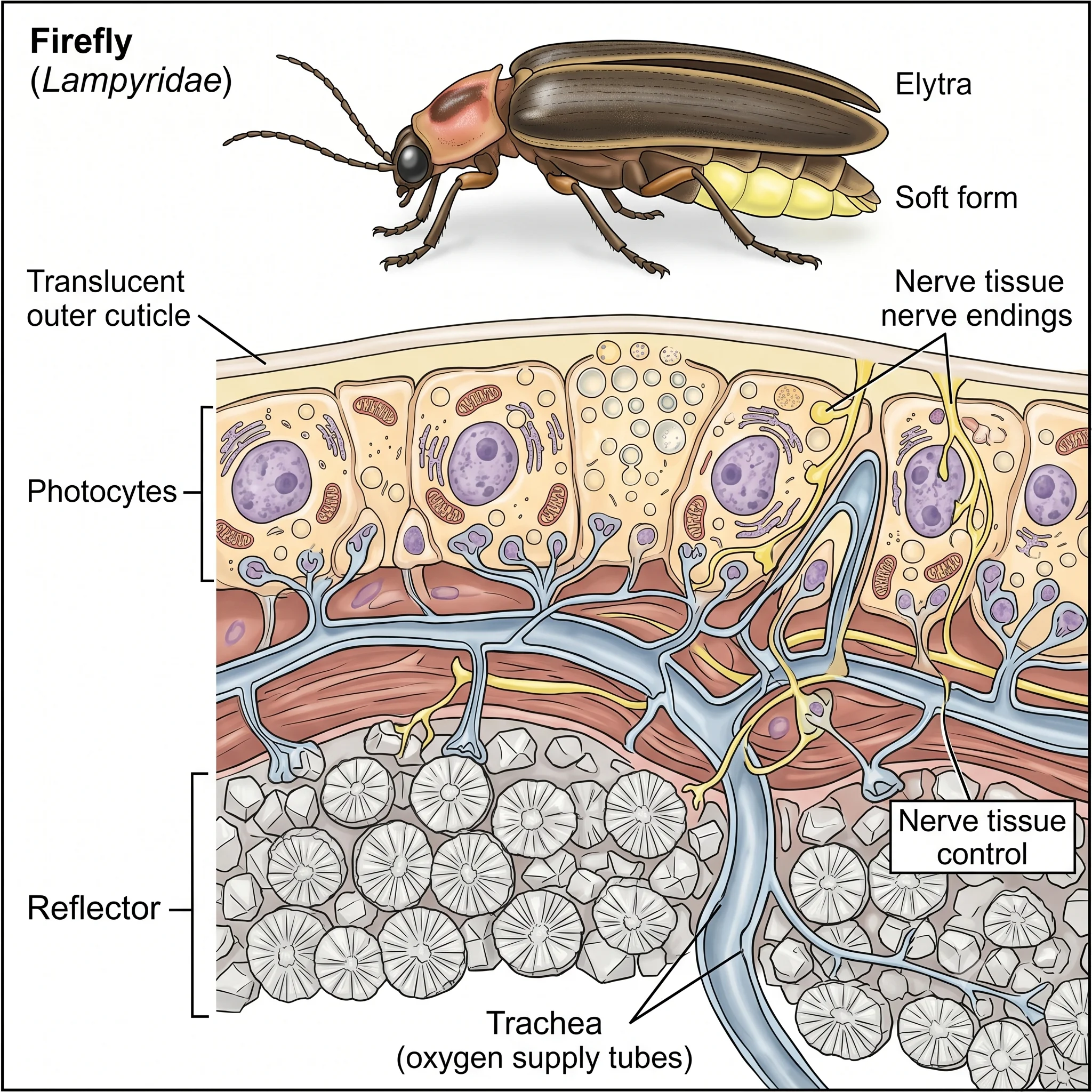
The critical difference here is this: a firefly does not stay lit continuously like a lamp. It glows in a variable, controlled and purpose-bound way. This shows how economical biological systems can be. If the structure of the organ is damaged, the signal is damaged too; that’s why the photophore means not just brightness but communication quality. The main article has the general biology; here we lay out the inner architecture of the organ: Firefly bioluminescence section.
Why does the firefly’s chemical reaction give cold light?
The chemical side works very cleanly. Luciferin, luciferase, ATP and oxygen come together; as a result, oxyluciferin, carbon dioxide and light are produced. Heat loss in this process is low, which is why it is called cold light. In practice this means the following: the energy comes out directly as photons without first dissipating as heat. A comparison with LEDs is made, but the firefly works even more delicately.
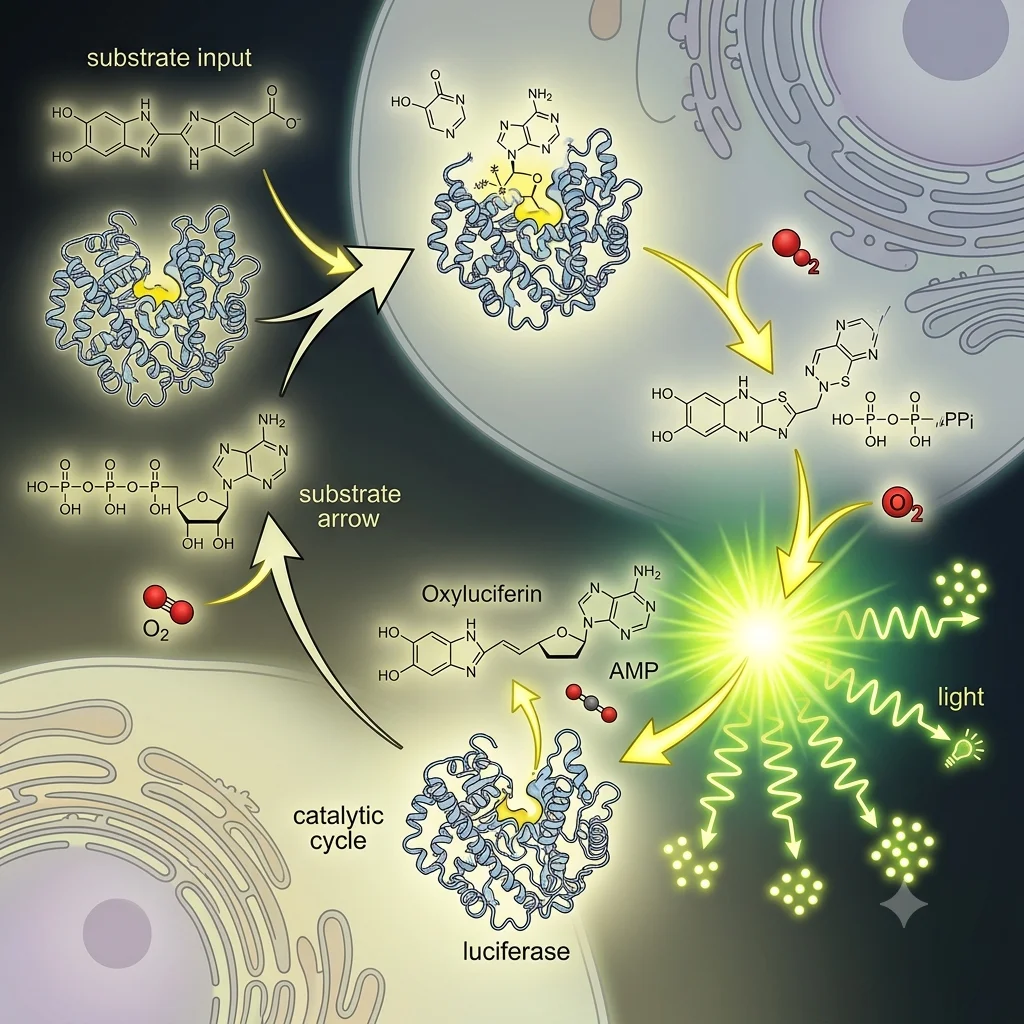
The color varies by species. Green, yellow-green or turquoise tones can be seen. This difference has to do with enzyme variants and the optical structure of the tissue. In other words, one leg of the question “why does it glow” stands in chemistry and the other legs in species differences. That’s also why this mechanism is so useful in the laboratory. It does the job in viability testing for human cells, in tracking biomarkers and in monitoring gene expression. On a detailed biology basis, the main source is again here: Main firefly article.
What does the firefly’s flash language say in mating?
The firefly uses its light mostly for mating. The male sends a species-specific flash pattern while flying in the air. The female, close to the ground or on top of a plant, gives the answer that fits her own species. This is not a game of imitation; it is a recognition protocol. The wrong rhythm means the wrong species. That’s why the flash language is also a serious selection filter on the evolutionary side.
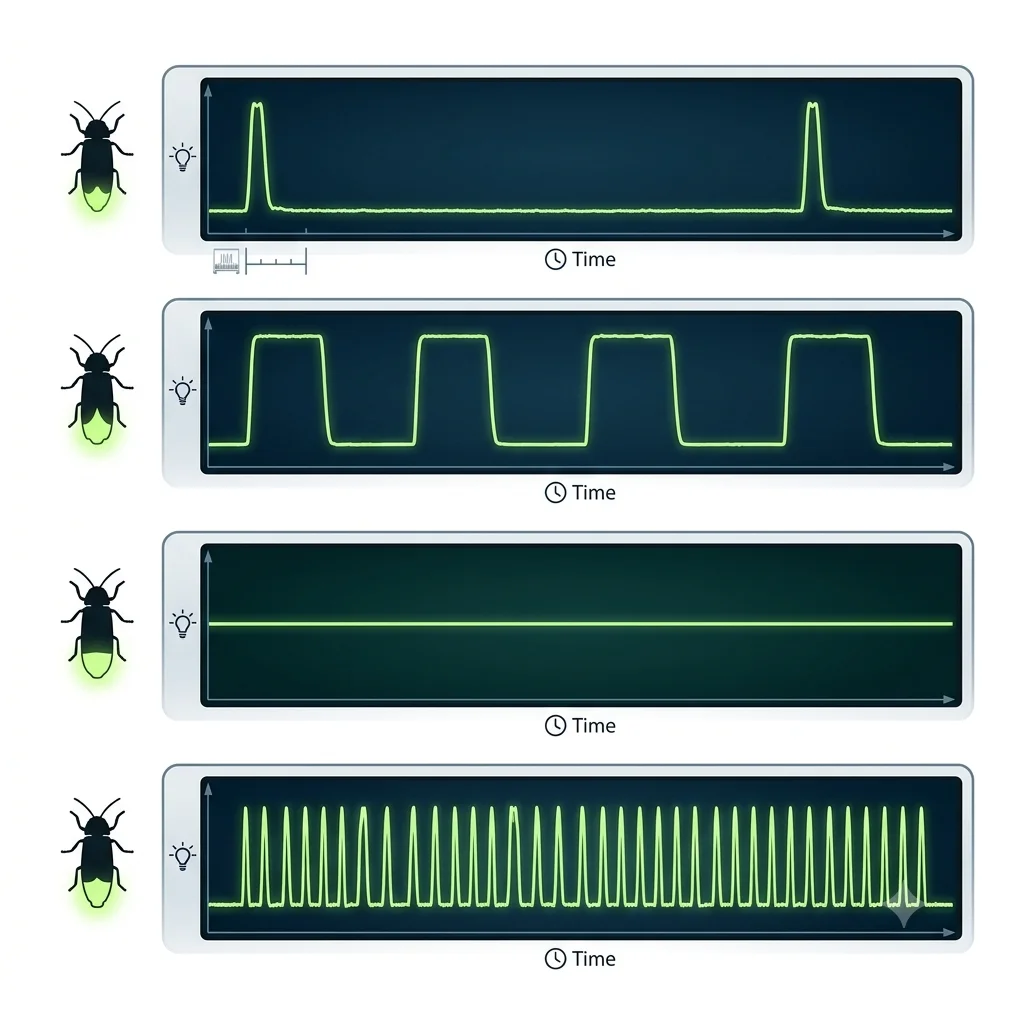
In some species the pattern is simpler, in others long and intermittent. In some groups, females can even use the males of other species as prey. This is a harsh but real behavior. The lesson that comes out of this is clear: the firefly keeps its light on not for aesthetics but for the right mating. That’s why excess light at night spoils not just the romance but also reproductive success. The main page that guides this topic is here: Firefly basic guide.
Why are fireflies important in science and conservation?
The firefly is valuable both in the laboratory and in the field. The luciferase system is used for measuring cell viability. It serves as a marker in tracking gene expression. In biotechnology it is considered a very powerful tool for making signals visible. The Nobel connection also comes from here: GFP work is related to a natural bioluminescence ecosystem that emerged from among fireflies. At this point the firefly is more than an insect; it is a scientific toolbox.
The conservation side is just as important. Artificial lights disrupt the flash message. Habitat loss hits the egg and larval stages. Pesticides also do harm, especially in sensitive periods. That’s why simple measures help: reducing outdoor lights at night, leaving dark pockets in the garden, limiting chemical use. It looks like a short list, but it has an effect. This topic has two closely related subjects: the effect of light pollution on firefly conservation, and GFP (green fluorescent protein).
FAQ short wrap-up:
- Do all firefly species glow? The great majority do, but there are exceptions that are day-active and use pheromones.
- How does it switch its light on and off? The flow of oxygen is controlled by the nervous system.
- Are they edible for humans? There is historical use, but in modern times it is unnecessary; observing is more appropriate than collecting.
- What is the best protection? Giving back the darkness.
External sources keep this topic solid: the Britannica firefly entry, the IUCN Red List and TUBITAK science articles (in Turkish). But the main message does not change: the firefly is an insect that reads the night with chemistry. It lights a light; and we should read the reason for that light correctly.