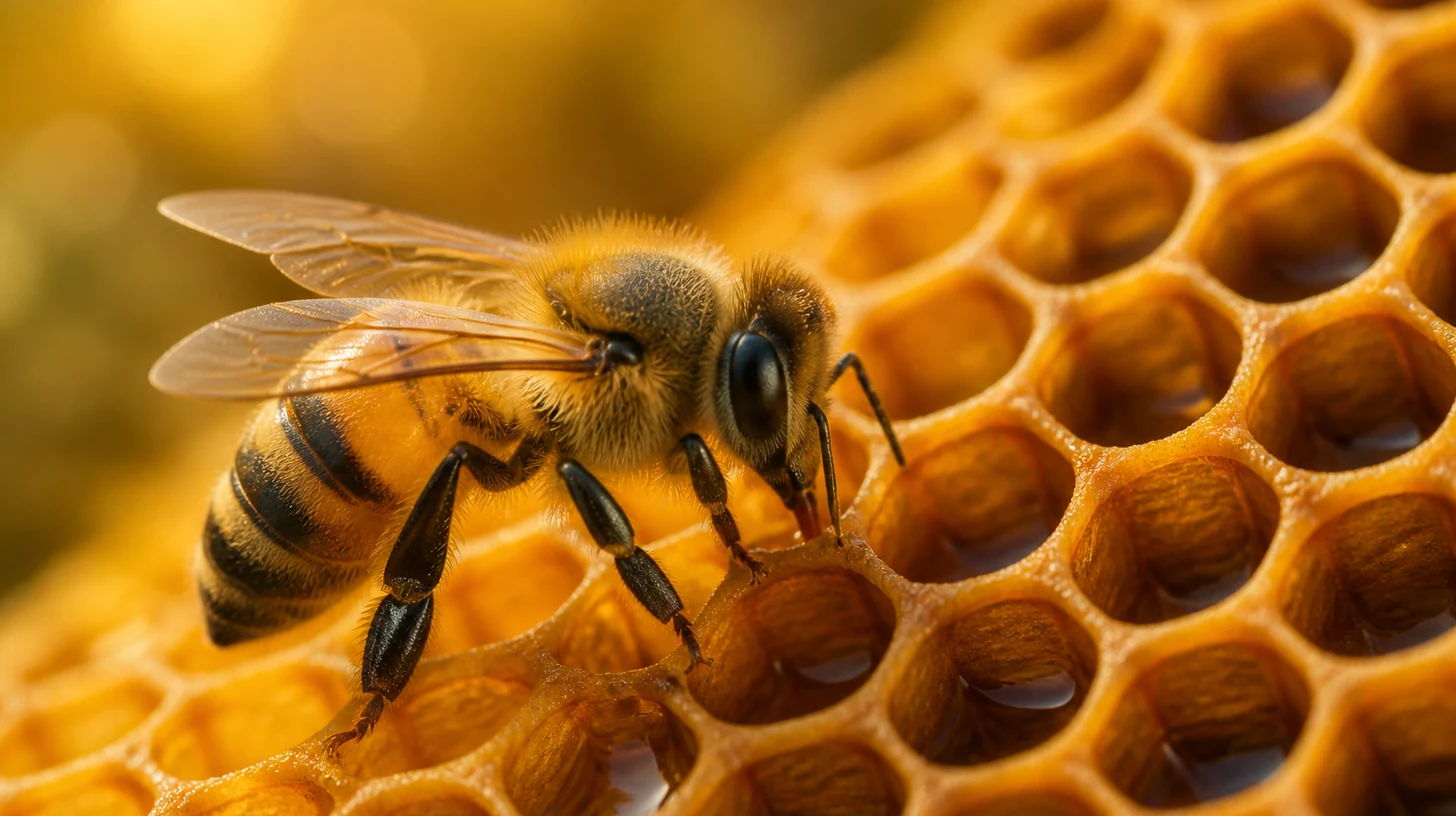
A honey bee swarms when the colony is going to reproduce and found a new nest: the old queen leaves the hive with part of the workers, while the remaining colony raises a new queen. The surprising part is that the cluster of bees hanging in a tree is usually a temporary stop; while scout workers look for a new nest, the colony waits, holding on to one another. For the colony’s general organization, you can take a look at the honey bee guide.
Why does a bee choose to swarm?
Swarming is the honey bee’s reproduction at the colony level, not the individual level. A strong colony grows in spring and early summer; the amount of adult bees and brood in the hive increases. Factors such as crowding of the nest space, the brood-rearing pattern and an abundance of resources can support swarm preparation. However, there is no single cause, nor a simple “crowding button” that works the same way in every colony at once. The University of Florida IFAS explains swarming as the splitting of the colony into two colonies and the exchange of genes through the new queen mating with drones from other colonies in the area.
Swarming is different from new bees being raised in the hive. Worker bees and drones are produced within every colony; in a swarm, however, part of the worker group and the queen leave the old nest and found a new colony. That’s why the individual life cycle covered in the honey bee’s lifespan and the worker-queen differences should not be confused with reproduction at the colony level.
What happens in the hive before the swarm leaves?
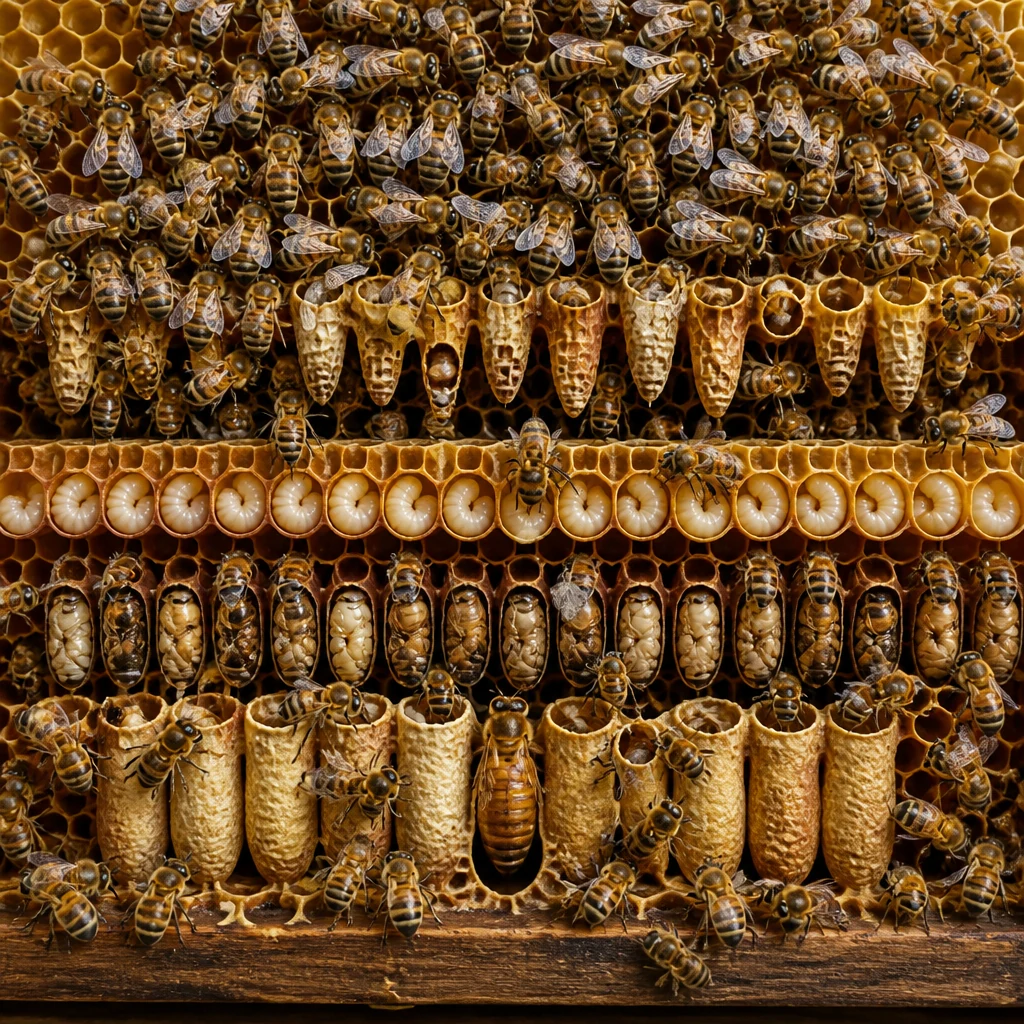
The workers prepare special queen cells in which the new queens will develop and raise larvae as queens. As the swarm approaches, the current queen’s egg laying can decrease; her body weight drops so that she becomes fit for flight. While part of the colony prepares to leave, the workers that stay in the parent hive and the developing queens take over the new arrangement. This preparation can take days; a queen cell seen in a hive does not necessarily mean a swarm will leave. For the queen’s role in beekeeping and how to recognize her, you can look at the queen bee guide.
Where do the queen and the workers go when the swarm leaves?
In a primary swarm, the old, mated queen mostly leaves the hive with a substantial part of the workers. The cluster may settle on a nearby branch, a fence or another surface. This stopover is usually temporary: scout workers search the surroundings for a hollow tree or another suitable cavity, then the colony moves to the new place. Exactly how long the swarm stays depends on the weather and on how quickly a new nest is found; it would not be right to give a single duration.
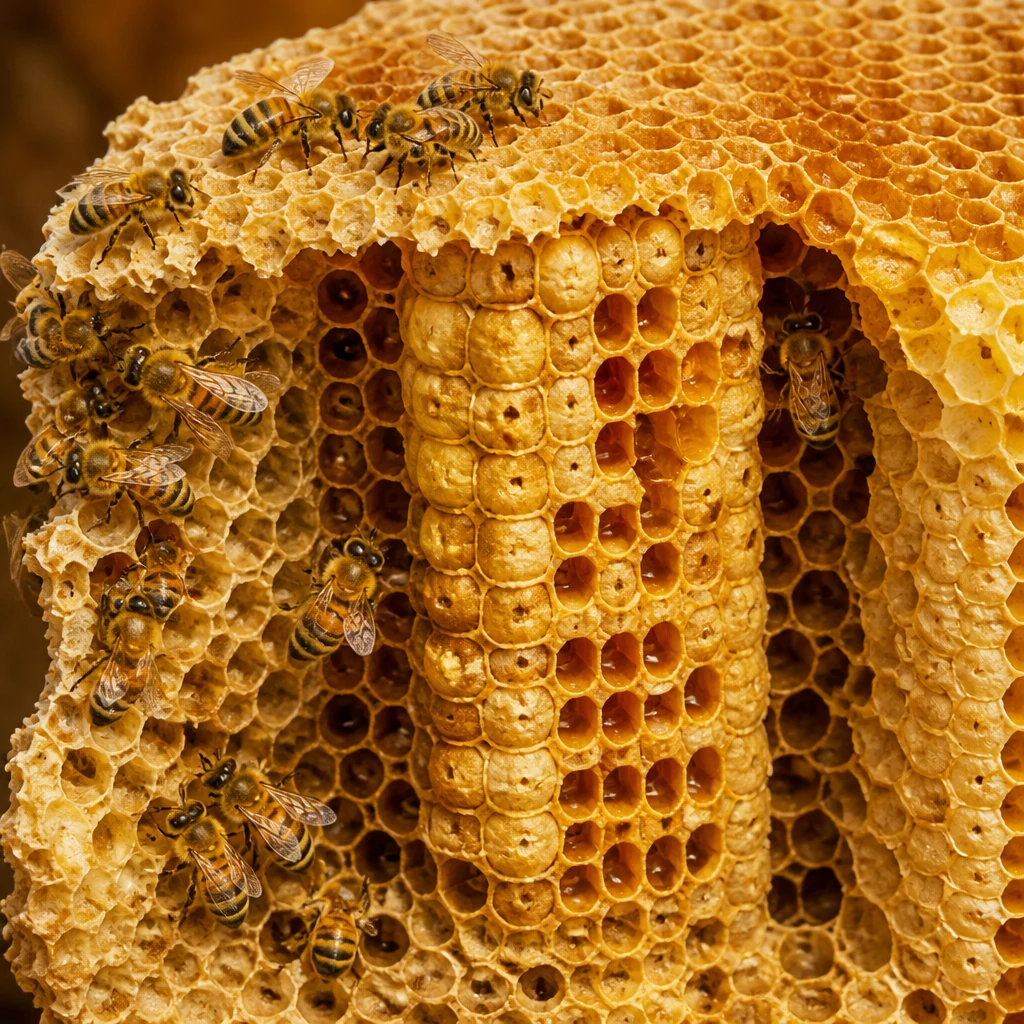
The workers that stay in the old hive raise the new queen. Clemson Cooperative Extension reports that queens develop in queen cells, that the first queen to emerge can kill the other queen candidates and that she then goes out on mating flights. In this way, while the departing group tries to found a new nest, the parent colony carries on with the new queen. You can see what the comb cells and the brood area look like in the image below.
In which season are bee swarms seen most?
Swarms are mostly seen in spring, when colonies grow quickly and nectar sources are available. Clemson’s regional guide gives the March-May range for South Carolina; this calendar cannot be carried over to Türkiye as it is. In Türkiye, the local climate, altitude, vegetation and the beekeeping calendar change the timing. The main sign is not a specific month but the colony’s conditions for growth and reproduction becoming suitable.
| Situation | Swarming | Queen replacement |
|---|---|---|
| Outcome for the colony | A group leaves and founds a new colony | The colony stays in the same nest |
| Old queen | Usually leaves together with the workers | Mostly stays in the hive or gives way to the new queen |
| Those who stay in the parent hive | Raise a new queen | The new queen takes over the colony |
| Basic function | Reproduction at the colony level | Replacing the queen in the existing colony |
This comparison describes the general pattern; behavior is not exactly the same in every colony in nature. Penn State Extension notes that after a swarm, brood production can be temporarily disrupted while a new queen is raised in the parent hive. So although swarming is a natural process through which a beekeeper can increase the number of colonies, it is an event that needs to be managed in terms of honey production and the strength of the hive.
Should you approach a cluster of bees in a tree?
No. Honey bees in a swarm can be calmer because they are usually not defending a hive; this does not mean they won’t sting. Don’t poke the cluster, throw stones at it, or spray water or insecticide on it. Keep your distance; in particular, keep children and pets from approaching. If it poses a risk in a residential area, notify a local beekeeper or beekeepers’ association. Clemson Extension also recommends contacting a beekeeper instead of spraying when a swarm is seen. Bees that enter a wall or chimney cavity, on the other hand, may not be a temporary swarm but a colony that has started to settle; don’t close off its entrance, because comb and bees may remain inside.
In short, a bee swarms by sending part of its strong colony to found a new nest. The old queen mostly goes with the departing group; those who stay in the hive raise the new queen. The cluster in the tree may be temporary, but keep a safe distance and leave the intervention to a beekeeper.