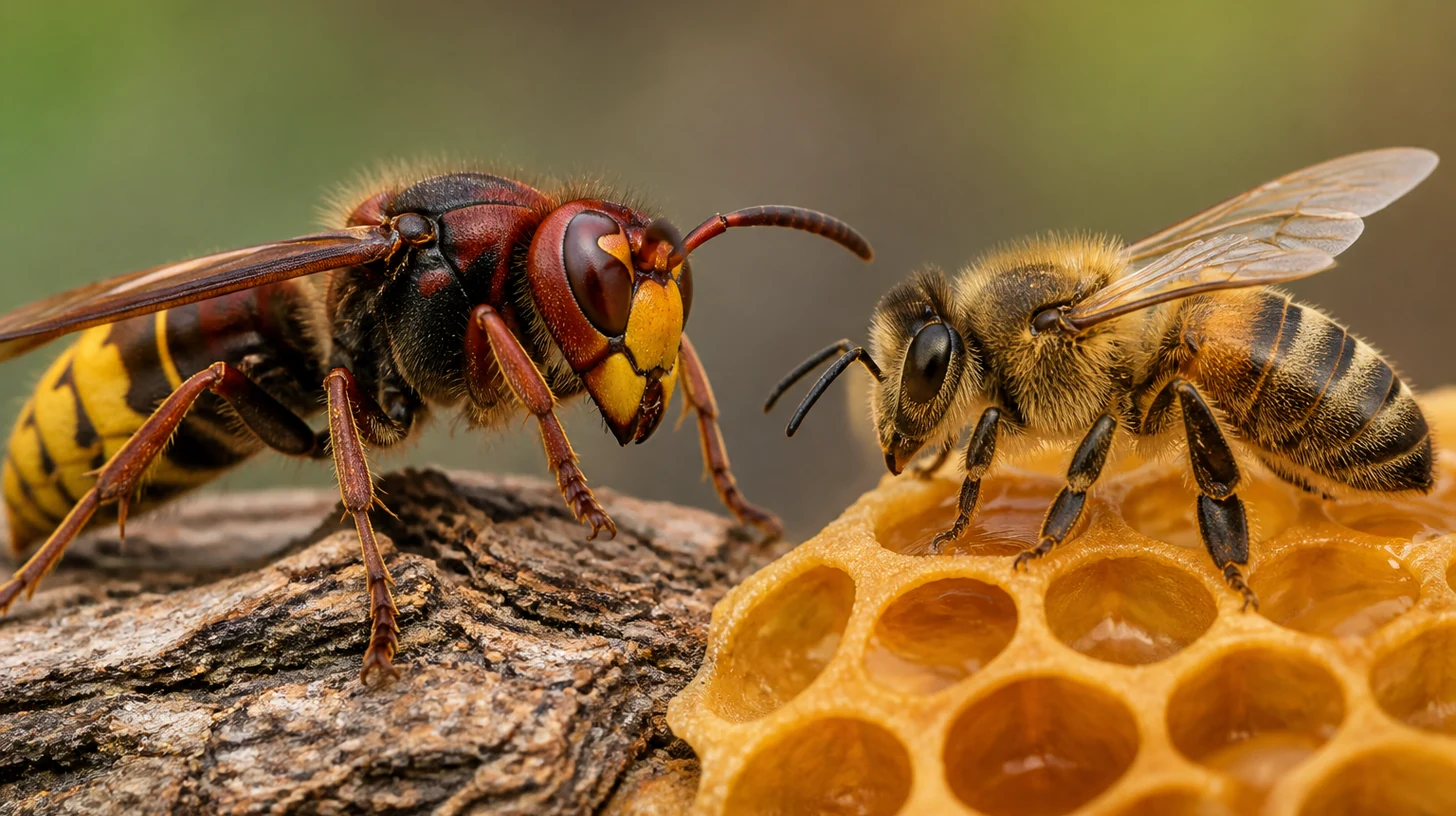
The basic reason for a bee sting is defense; the wasp and the honey bee do it with different stinger structures. A wasp can usually pull out its stinger and use it again, while the honey bee’s barbed stinger can get stuck in human skin. The details of the behavior vary by species; the life and behavior of wasps and the colony organization of the honey bee help in understanding this difference.
Why do bees sting?
Bees mostly sting while protecting themselves, their nest or their colony. Being stepped on, being squeezed, being chased suddenly or someone getting too close to the nest can be perceived as a threat. In social species, worker bees take part in nest defense; some wasps also come into contact with people more often while searching for food in late summer. That’s why a sting does not always mean “the bee attacked”: in most incidents, the distance between the person and the insect has closed unintentionally.
When a honey bee stings, it can leave an alarm scent; this signal can direct the nearby colony toward defense. Seeing bees one after another in the area near the nest may result not from a single bee coming back again and again but from more than one bee joining the defense. You can also find the risks around the nest in the guide that describes the wasp’s nest and its defensive behavior.
How many times does a wasp sting?
A wasp can sting more than once during the same attack. The stinger of female wasps is a modified form of the egg-laying organ; because the stinger is straight or not as hooked as the honey bee’s, it can mostly be pulled back out of the skin. This does not mean that every wasp will definitely sting again. There is no fixed number for how many times it will sting; the species of the insect, the way it is disturbed and its chance to escape all play a role.
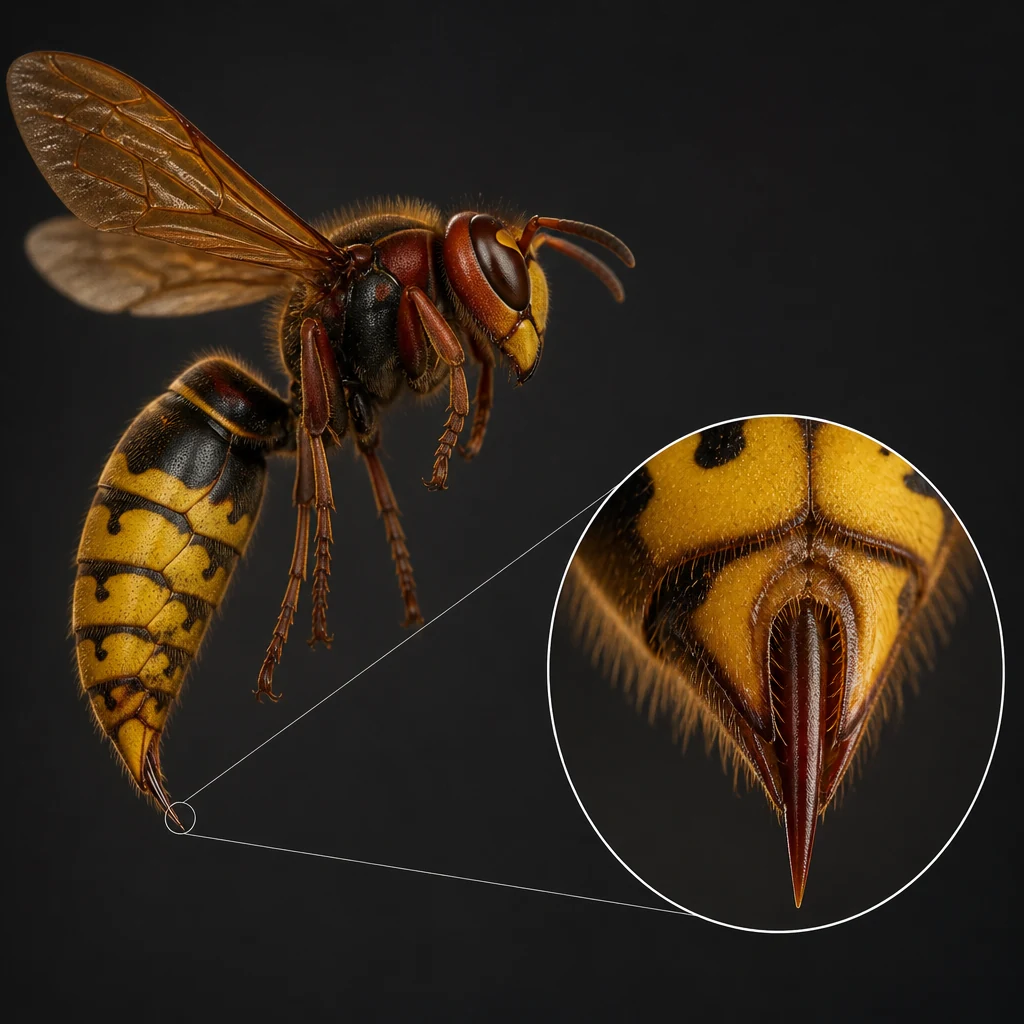
In everyday Turkish, the name rendered here as “wasp” can be used for more than one species of wild wasp. That’s why it is not right to make an absolute judgment about stinging behavior without seeing the species. Penn State Extension notes that social wasps can sting repeatedly while defending their nests; you can also look into the basic differences between the wasp and the honey bee in the comparison article.
How many times does a honey bee sting?
The honey bee also stings for defense; but in elastic skin such as human skin, its barbed stinger can get stuck. When the bee tries to fly away, the stinger, the venom sac and some tissues attached to it are separated from its body. This injury mostly leads to the death of the honey bee. So the same honey bee is not expected to sting a person again and again; however, more than one honey bee can sting separately.
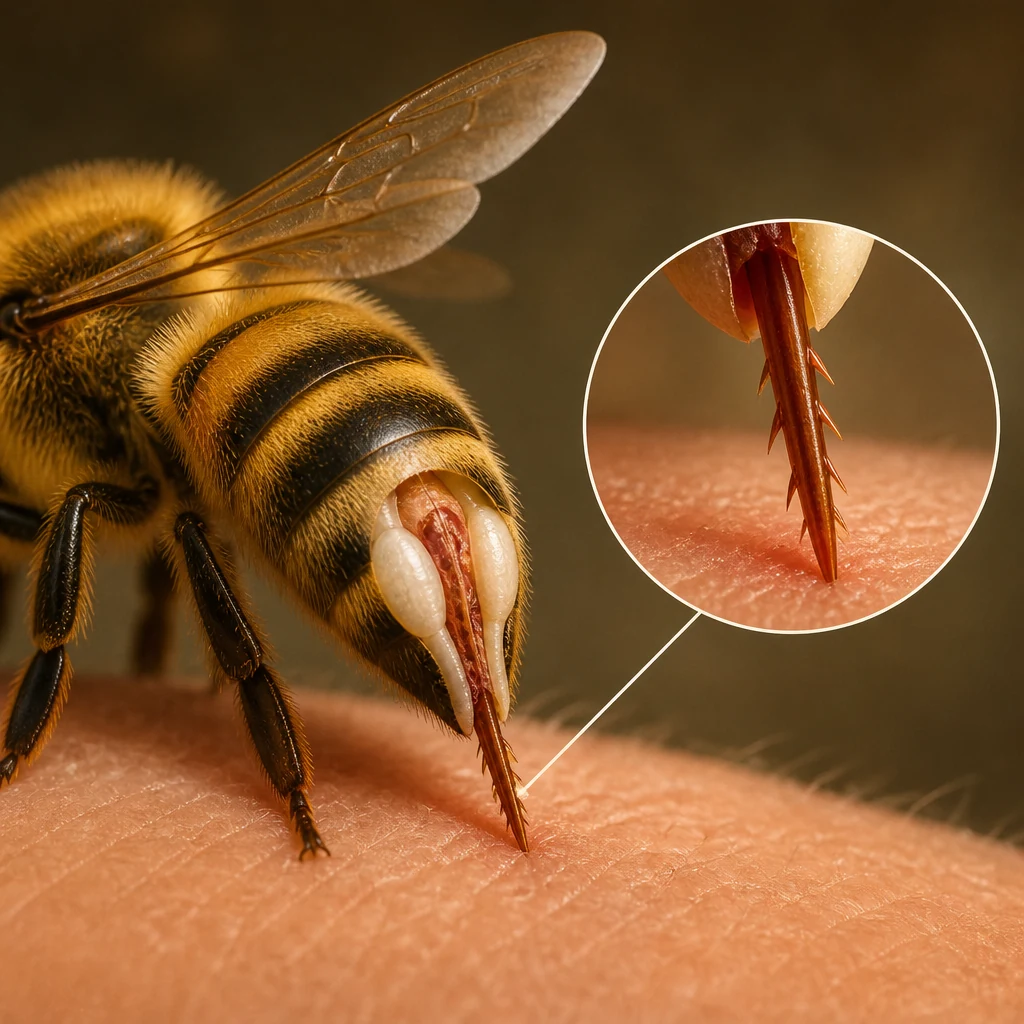
This rule should not be extended to all bees: bumblebees are not honey bees either, and they can sting again. The University of Illinois BeeSpotter explains that the honey bee’s barbed stinger can stay in the skin and keep delivering venom. If the stinger has stayed in the skin, it is important to remove it without delay; if there is severe shortness of breath, swelling in the throat, fainting or a rapidly spreading allergic symptom, emergency medical help should be sought. This article is not a diagnosis or a treatment recommendation.
What is the difference between a wasp and a honey bee?
| Feature | Wasp | Honey bee |
|---|---|---|
| Reason for stinging | Usually defense; close contact while searching for food is also possible | Usually defending itself or the colony |
| Structure of the stinger | Mostly retractable, can be used again | Barbed; can get stuck in human skin |
| Stinging by the same individual | Possible more than once | Usually once in human skin |
| State of the insect after stinging | Can get away without losing its stinger | The stinger and attached tissues separate; the bee mostly dies |
| Important distinction | “Wasp” is a general name used for several species | Honey bees are the bees in the genus Apis |
The table shows the general tendency, not a guaranteed outcome of every encounter. University of Minnesota Extension reports that social wasps and honey bees can defend their colonies, and that wasp species can reuse their stingers. For broader information on the honey bee, you can move on to the honey bee guide.
What should you watch out for to prevent stings?
Don’t linger around the nest, swat at the insect with your hand or try to block the nest entrance; these movements can increase the defensive response. Not leaving food and drinks out in the open helps reduce wasp encounters, especially in late summer. If a nest is at a door, on a balcony or on a frequently used walkway, take the area out of use and get expert help instead of removing it yourself. To tell apart the species of bees and the risk of stings, read the bee sting and first aid guide.
Short answer
A bee mostly stings for defense. A wasp can usually pull back its stinger and use it more than once; when the honey bee’s barbed stinger gets stuck in human skin, the bee mostly dies. There is no fixed figure for the number of stings in the wasp; in case of danger signs, medical help is needed without delay.