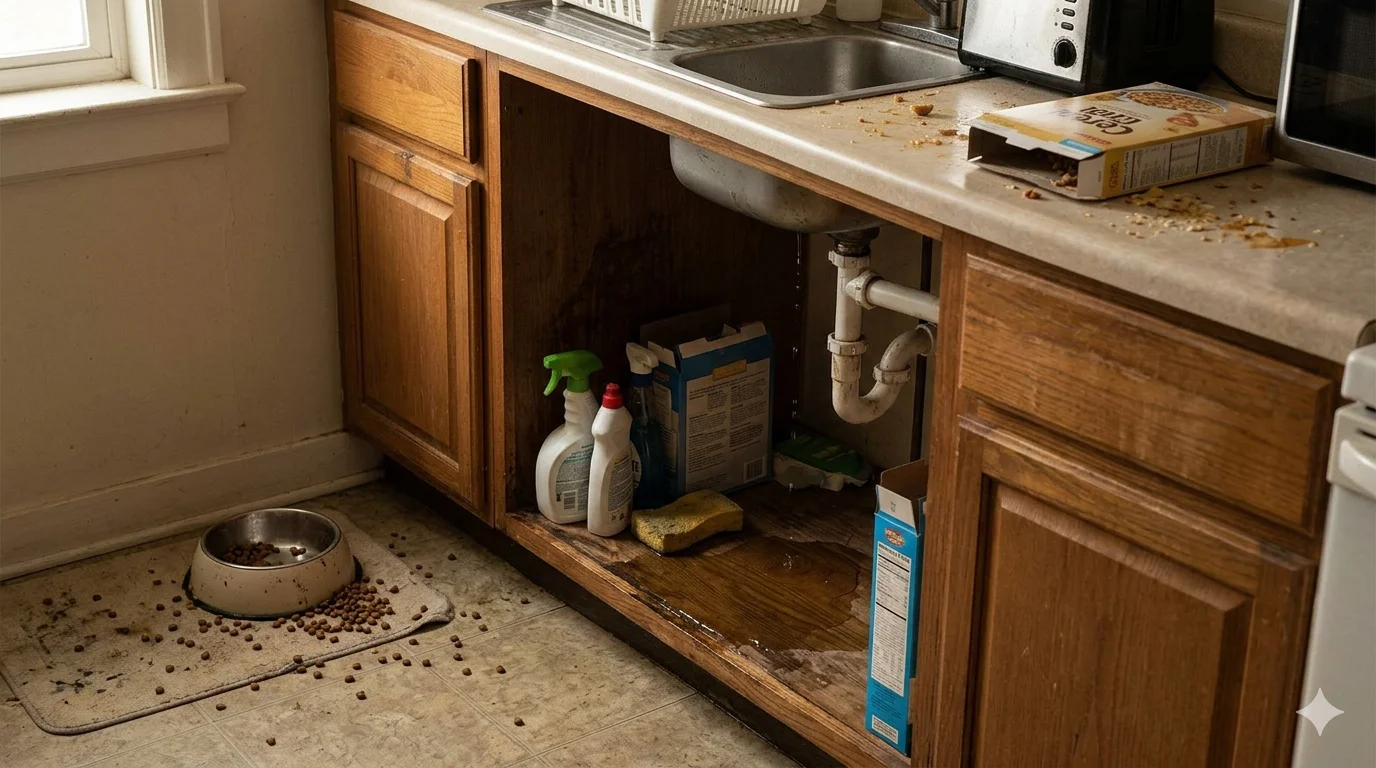
A cockroach generally enters a home for three things: food, water and warmth. But it doesn’t end there. If the home has a hidden entry point, a damp corner and easily reached crumbs, the setting is ready for it. That is why the kitchen and bathroom are the areas where it is seen most often. For broader biology and species differences, also see the Cockroach: Species, Biology and Relationship with Humans page. The issue here is not a single cause; it is the attraction factors gathering at the same point. When [food], [moisture] and [temperature] come together, the home becomes an easy stop for the cockroach.
Direct Answer
A cockroach comes into the home because it finds the basic things it needs to live there. In the kitchen in particular, crumbs left out in the open, pet food, the smell of trash and dirty surfaces attract it. Moisture around the bathroom and plumbing is just as important; dripping water, condensation and areas close to drains give it an advantage. Add warmth on top of that, and the home becomes an ideal hiding and breeding spot for it. In short: food + moisture + temperature are the three main keys that explain its entry behavior. If you cut off all three together, the attraction can drop sharply.
The food attraction factor
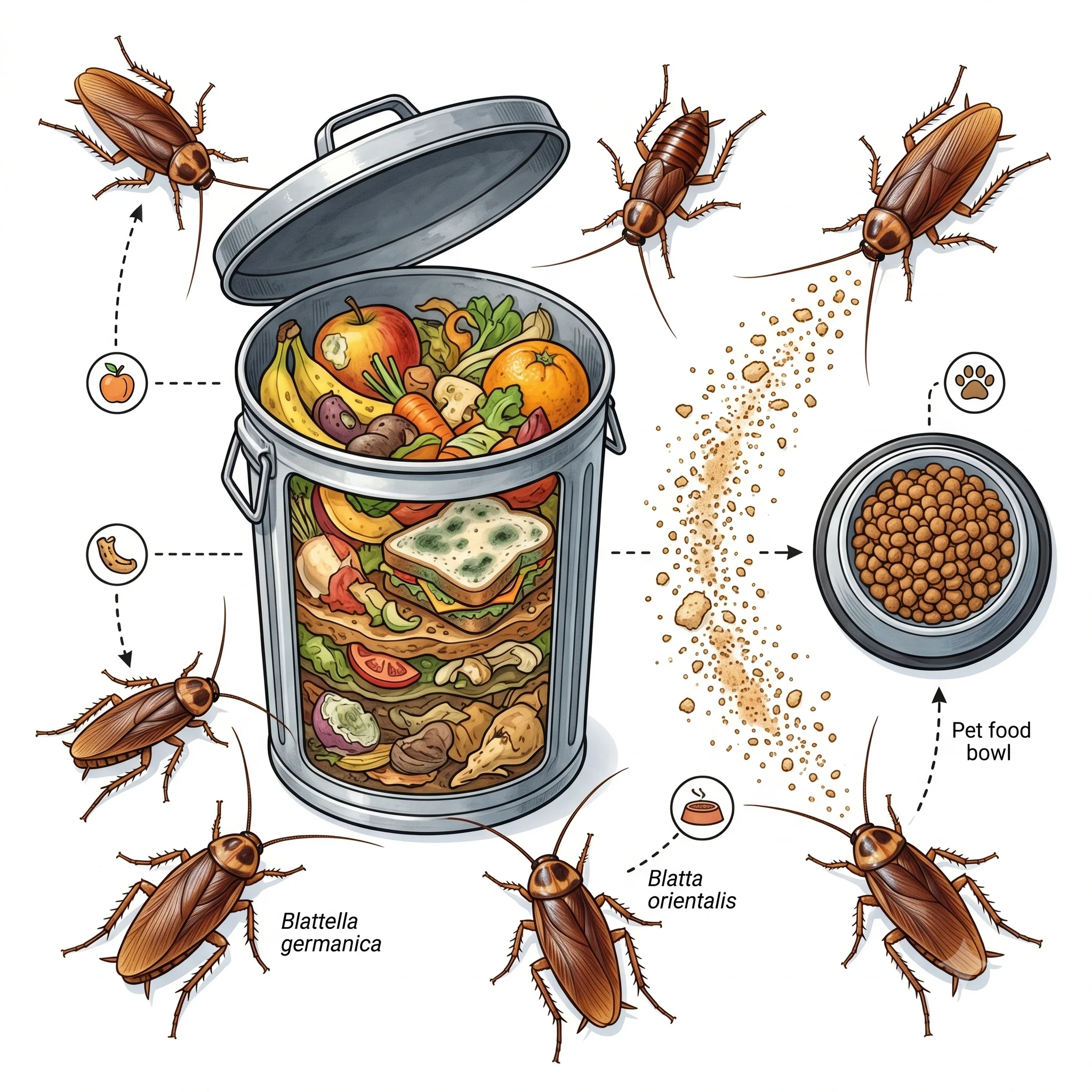
The cockroach is an omnivore; in other words, it is not selective. Human food, pet food, fallen crumbs, soap residue, paper, and even skin and organic debris can fall within its interest. This explains why the kitchen is the center. If the trash can is left open, if the back of the stove is not cleaned, if the bread bag waits on the counter or if leftovers remain in the pet food bowl, the scent signal attracts the insect. As explained in our main cockroach article, Blattella germanica in particular is the dominant species in kitchen infestations. This species can quickly pass through narrow gaps and reach a hidden food source. For this reason it is not only a “dirty house” but also “improperly stored food” that creates risk. Food storage, closed containers and regular crumb cleaning are the main defense here.
Moisture and access to water
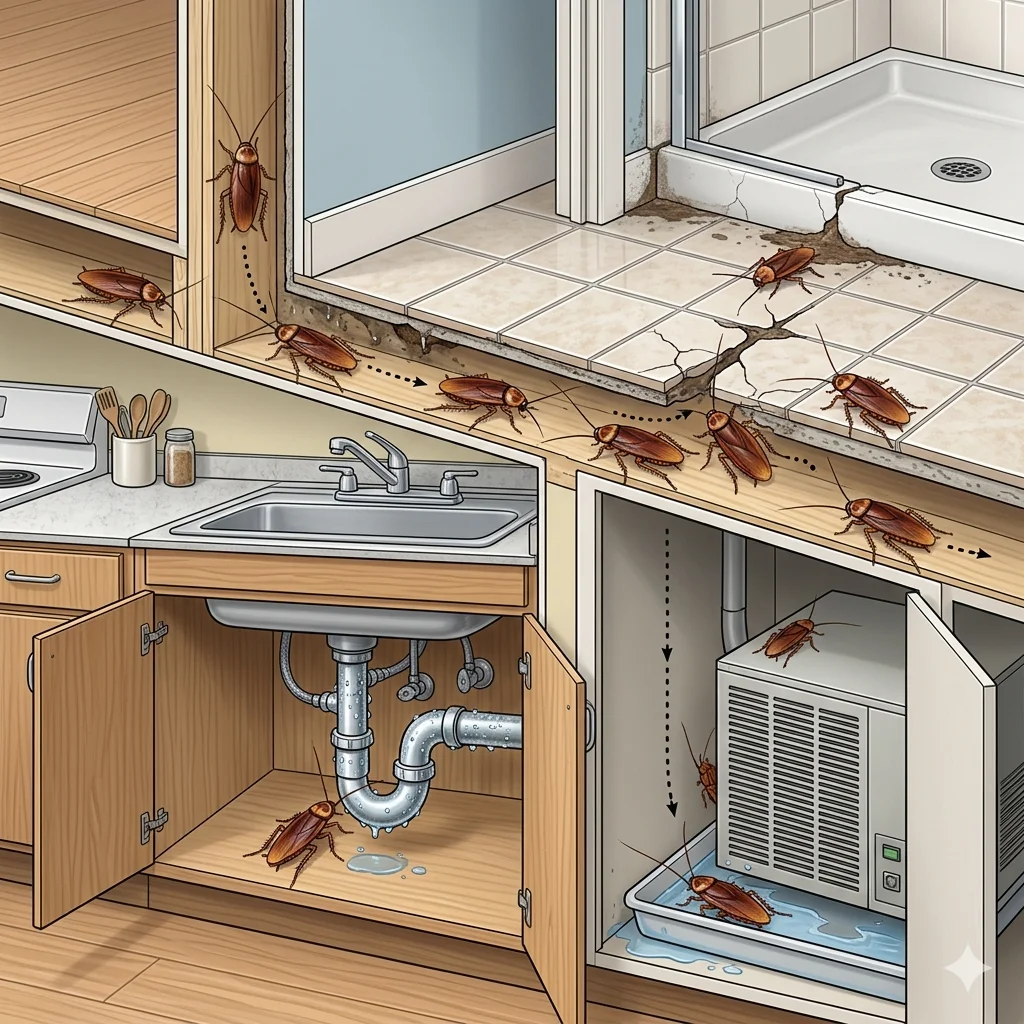
The cockroach loves moisture, because without water it cannot stay active for long. The ideal range can vary by species and environment, but high humidity works in its favor. Places such as the bathroom, under the sink, around the drain trap, the air conditioner condensate pan, water pipe joints and the corner of the boiler room are risky areas for this reason. Even a small leak under the sink can be enough. Dry homes are less attractive, even when other conditions are similar. The love of damp, dark areas emphasized for Blatta orientalis in Cockroach biology and species builds the logic here too. Water is needed not only for drinking but also for sustaining the life cycle. That’s why an insect seen in the bathroom is as serious a signal as one in the kitchen. For moisture control, repairing leaks, ventilation and keeping the area under the sink dry are the first three steps.
Temperature and shelter
The cockroach loves warm environments. Mild and sheltered spaces, especially the 20-30°C band, are comfortable for it. When winter comes, the cold outdoors pushes it into indoor spaces. In apartment buildings, plumbing voids, the boiler room, the elevator shaft, the garage and shared duct passages collectively create a bigger risk than a single home on its own. Because the cockroach uses not just one apartment but also the connections within the building. Not only the downstairs neighbor but also the upstairs neighbor and shared lines matter. Detailed defense steps will come in the article on how to get rid of cockroaches; the main idea here is this: if there is warmth, comfort and a hiding place, entry behavior becomes easier. Warm corridors inside the building are like a shortcut for it.
Structural entry points
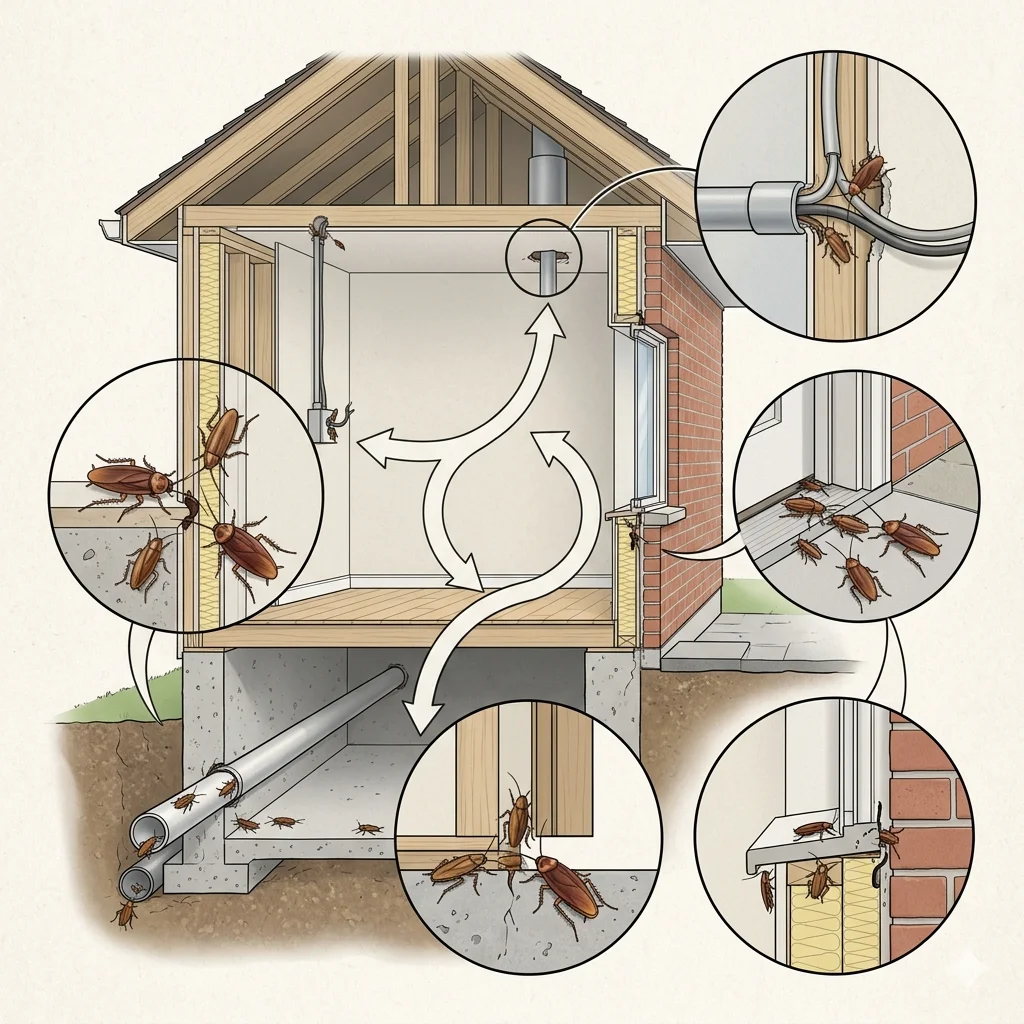
A cockroach does not always come in through the door. Most of the time it seeps in through gaps around the door, window corners, cable passages, pipe holes and the door threshold. Packages, cardboard boxes and second-hand items can also be hidden means of transport. Kitchen items, storage boxes and parcels that have been sitting for a long time in particular carry risk. That is why it is not just surface cleaning but structural sealing that becomes more critical. Sealing gaps with silicone, cutting off water and food sources, taking out the trash regularly and checking newly arriving packages work together. CDC’s guidance on controlling pests at home considers cutting off attraction and exposure at the source a sensible basis: https://www.cdc.gov/asthma/control/index.html. In addition, TUBITAK’s search pages (in Turkish) also help for general background.
FAQ
- “Can a clean home have cockroaches?” Yes. Cleanliness is important but not enough on its own; there is also spread from neighbors, plumbing voids and being carried in with packages.
- “What does it mean to see a cockroach during the day?” It generally means an increase in density. When the hiding places fill up, it comes out during the day.
- “Can I bring cockroaches into a new home?” Yes. Cardboard boxes, second-hand furniture and packages are risky; check newly arriving items out in the open.
- “Which season is riskier?” Winter increases the indoor pull, while summer can raise the rate of reproduction. Both bring risk from different directions.
Related Topics
In upcoming articles this topic will connect to two places: the difference between German and American cockroaches, and how to get rid of cockroaches. The first clarifies the species distinction, the second gathers the practical prevention steps. The aim of this subtopic is to keep the question “why do they come indoors” open; for detailed defense, it is better to move on to those articles.
Sources
- CDC — Controlling Asthma (pest control at home): https://www.cdc.gov/asthma/control/index.html
- CDC/ATSDR — Environmental Triggers of Asthma (archived page; cockroach allergens): https://archive.cdc.gov/www_atsdr_cdc_gov/csem/asthma/environmental_triggers_of_asthma.html
- TUBITAK (in Turkish): https://bilimvegelecek.tubitak.gov.tr/