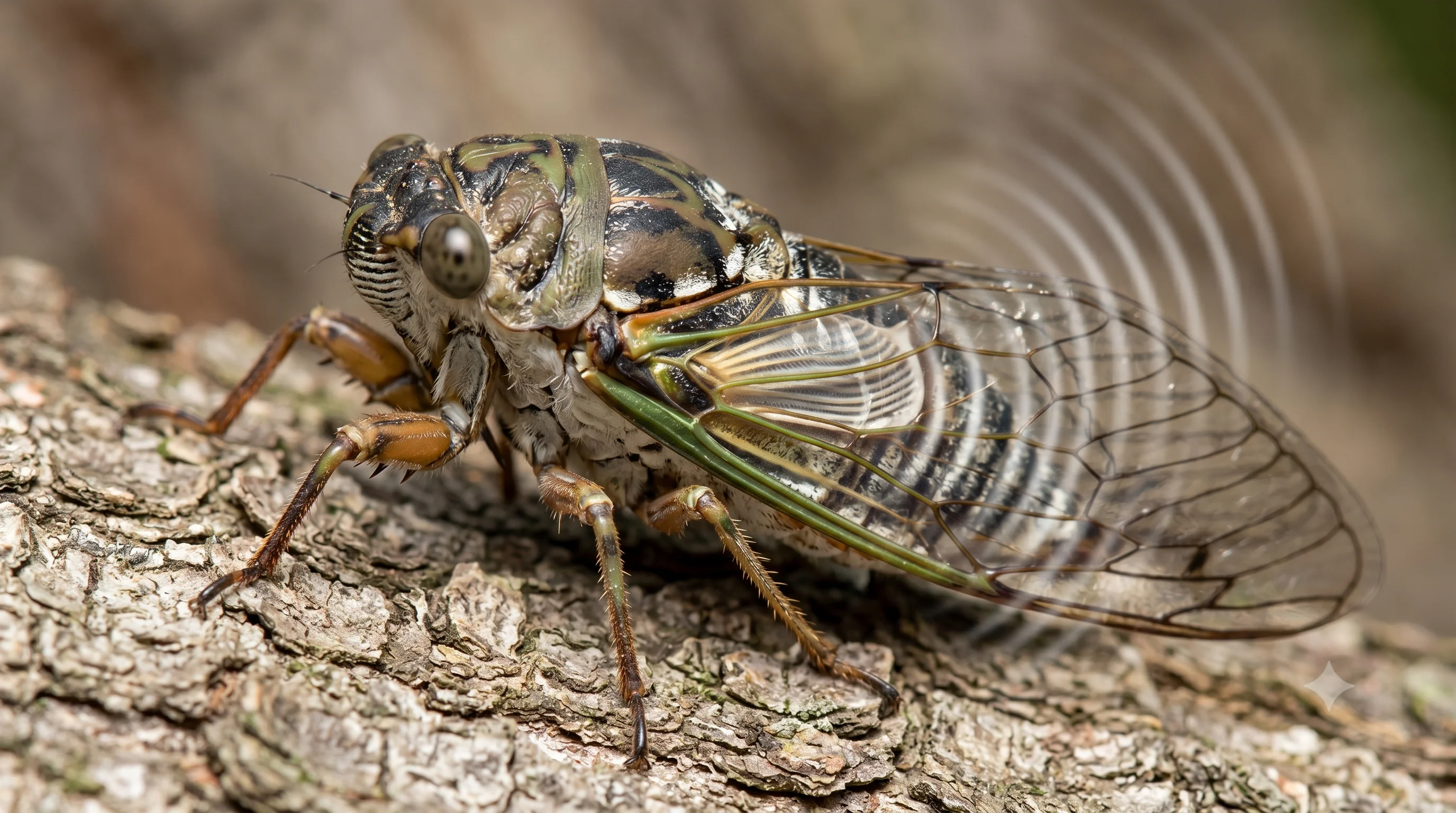
Why does the cicada sing constantly? The short answer is this: the male individual produces a click-click sound by rapidly contracting and relaxing the tymbal organ on the sides of its abdomen; the abdominal cavity then amplifies this sound. What sounds to the ear like a continuous buzz is actually the sum of mechanical pulses repeated hundreds of times per second. The main purpose of this sound is the mating call. So it is not random noise but a biological message. For the wider framework, see the main article: Cicada: Sound, Nature and Life Cycle.
The first step in understanding cicada sound is to read it not as “singing a song” but as “sending a mechanical signal”. The rhythm of the sound gives clues about the species and even the strength of the individual. In this article we focus on the mechanism; for the life cycle, habitat and general information, we keep the main article alongside: our main Cicada article.
Why does cicada sound come across like click-click?
What you hear is not a single long note. Tiny pulses produced by the rapid contraction and relaxation of the tymbal pile up. The ear is not slow enough to separate these pulses; that is why the sound is heard as a single-piece buzz. The cicada uses exactly this algorithm: rapid mechanical repetition, then resonance, then a call carried far away. For this reason people say “it sings constantly”, but technically there is no single uninterrupted sound. The more accurate expression is that it is a rhythmic, rapidly repeating signal.
What is the cicada tymbal organ?
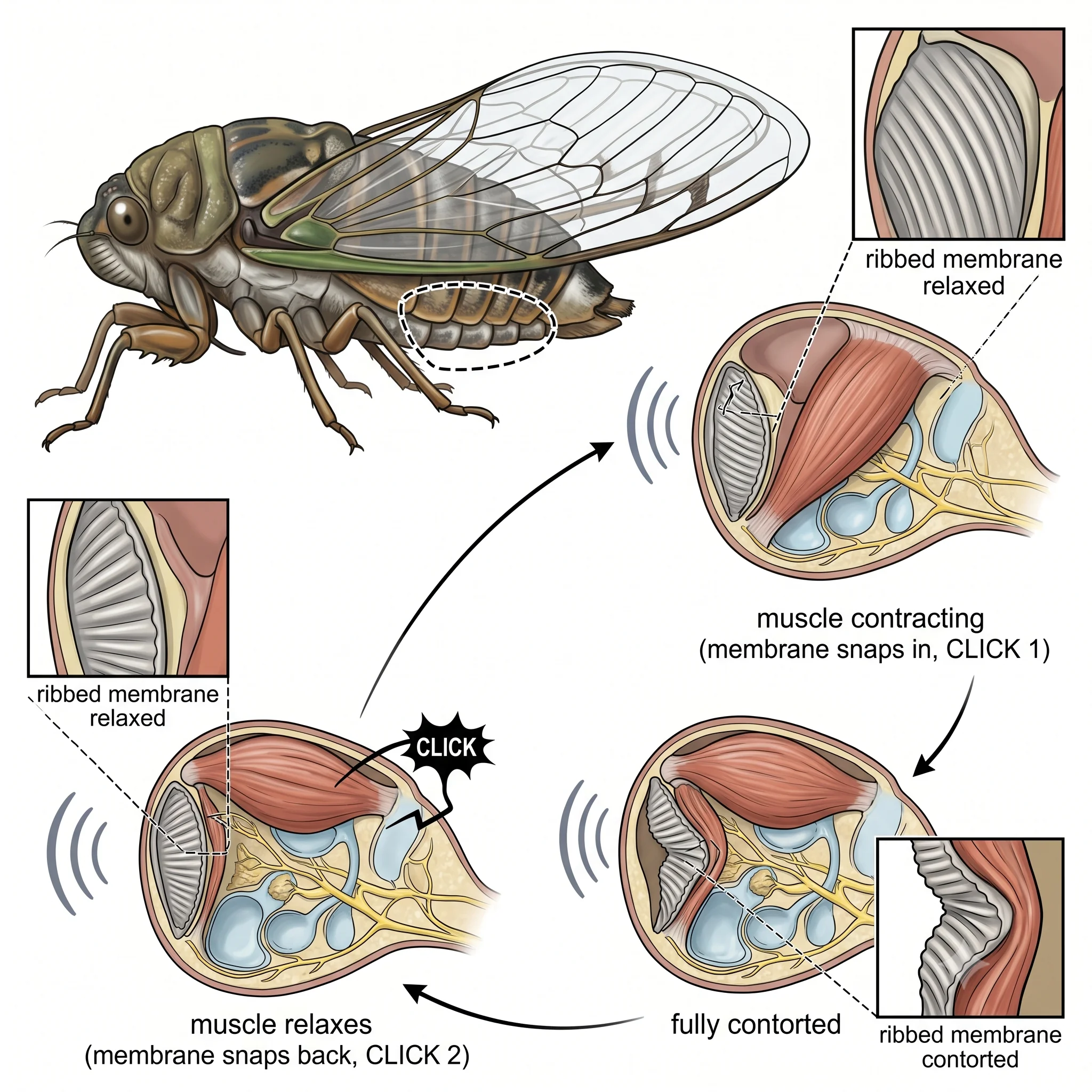
The tymbal is a thin but durable membrane structure found in the cicada’s abdomen. On the membrane there are ribbed, hardened parts. When the muscle contracts, this membrane buckles inward; when the muscle relaxes, it returns to its former shape. One “click” comes, then another. This movement is so fast that instead of separating the individual pulses, the human ear hears them as a single sound.
The critical point here is this: the tymbal doesn’t work like a string, that is, a guitar string. It works like a springy, cymbal-like, mechanical system. Sound production starts with muscle power, gains its character from the shape of the membrane and finds its direction through the structure of the body. For this reason the tone of cicada sound can change from species to species. In the article Cicada biology section, the general structure of this family is explained more broadly.
The fact that the tymbal seems never to fall silent is also a bit of a trick of perception. In reality the insect is not producing a continuous “sticky” sound; it is sending calls repeated at short intervals. When you stand far away, these merge and are heard as a single piece. That is why in the field people say “it sings constantly”, but technically this is a rhythmic pulse series.
Why is the cicada so loud?

In making the sound louder, the abdominal cavity works like a second engine. The tymbal produces sound on its own, but the cavity inside the abdomen amplifies the vibration and carries it outward. It is not for nothing that this structure is called a resonance chamber. Just as the human mouth cavity shapes sound, the cicada’s abdominal structure also strengthens the sound it makes.
That is why even a single insect can be heard from meters away. Values above 100 dB are mentioned in the literature; this shows that the sound is not at a level to be taken lightly. But let’s not get this wrong: as a goal, the cicada doesn’t produce “noise”. It uses sound to find a mate. So loud sound is an efficient communication tool more than a show.
Temperature also comes into play. When body heat is suitable, the muscle system works more efficiently. That is why cicadas are heard more distinctly not in the cool of the morning but in the afternoon and in the hot summer hours. Rain, wind and low temperature, on the other hand, suppress the sound. If you want the general background of this behavior, you can also see it in the main article: Main Cicada article.
Why is cicada sound heard only from males?
The real owner of cicada sound is the male. In the female individual the tymbal is either absent or very poorly developed. This means the following: the sound is the male-side interface of the within-species mating call. The male calls, the female recognizes it and gives her answer in the appropriate rhythm.
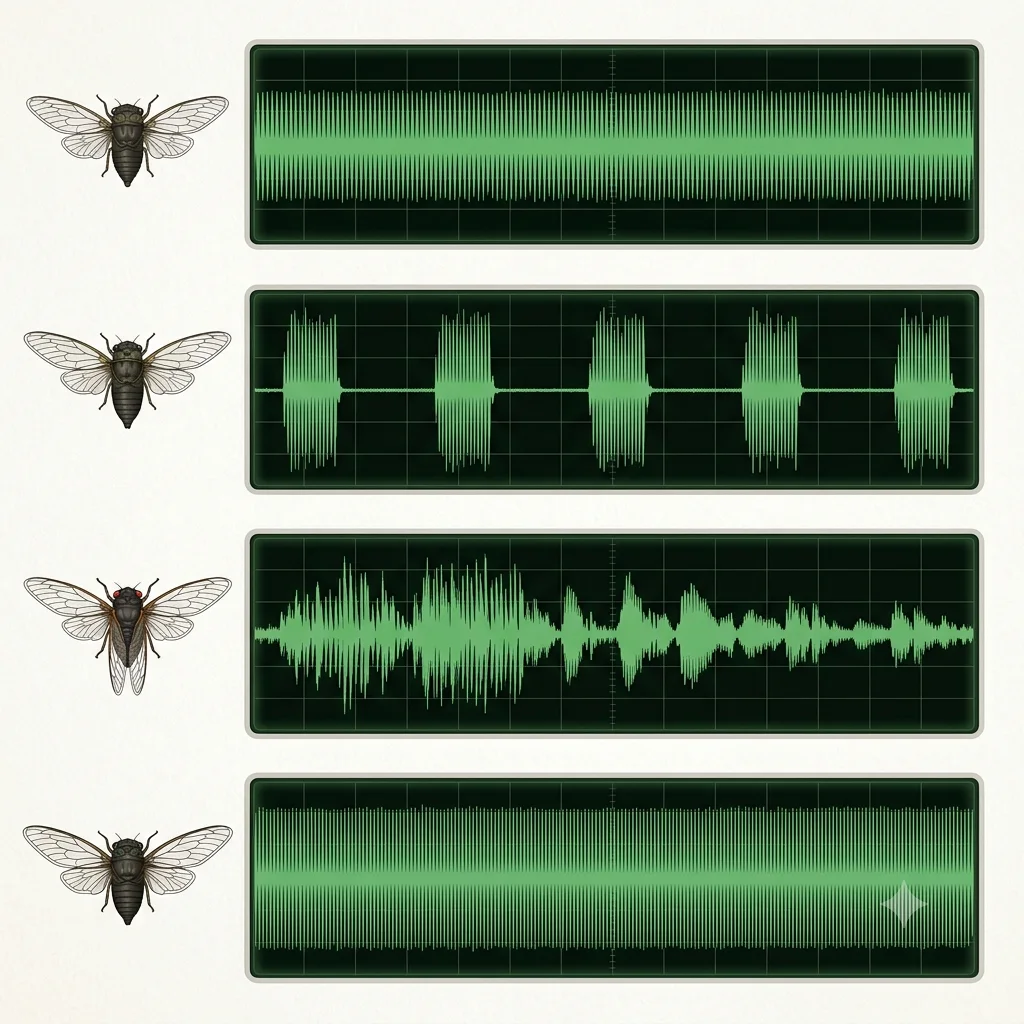
This system is not random. The wrong rhythm means the wrong species. That is why not every cicada makes the same sound. On a species basis, different frequencies, different pulse sequences and different lengths are seen. In Cicada orni, Tibicen plebejus and other species this difference can be felt even in the field. So cicada sound is not “a single sound”; it is a species signature.
At this point another distinction matters too: the male insect’s sound is not shouting but a call. What you hear is a communication package. Because energy is expensive in nature, the insect doesn’t waste sound for nothing. The sound comes if there is the right time, the right temperature, the right setting and the right chance of a mate.
Cicada FAQ and species differences
Why does the cicada seem to sing constantly?
Because what is heard is not a single long sound but the sum of very fast clicks coming one after another. The ear merges this into an uninterrupted buzz.
Does the cicada sing only in summer?
In most species, yes, because it is temperature-dependent. In cool weather activity drops, while in summer the calls increase.
In which species is cicada sound different?
Each species’ rhythm is different. In some species the sound is flatter and continuous, in others more pulsed, that is, broken up. This in turn helps with mate recognition.
Which sources should you look at about the cicada?
The Britannica Cicadidae entry, Cicada Mania compilations and TÜBİTAK (in Turkish) content serve for a basic overview. For deeper reading, academic species records also help.
If you want to read further on this, let the next two topics stand here: Periodical cicada 17 years and Summer insect concert recording.
The last word is clear: the cicada is not a silent insect, it is a mechanical signal generator. The tymbal contracts, the abdomen resonates, the male calls, the species answers. That’s it. This is the core of the subject. For more, go back to the main article: Cicada basic guide.
External sources: Britannica - Cicada, Cicada Mania, TÜBİTAK Science and Technology (in Turkish).