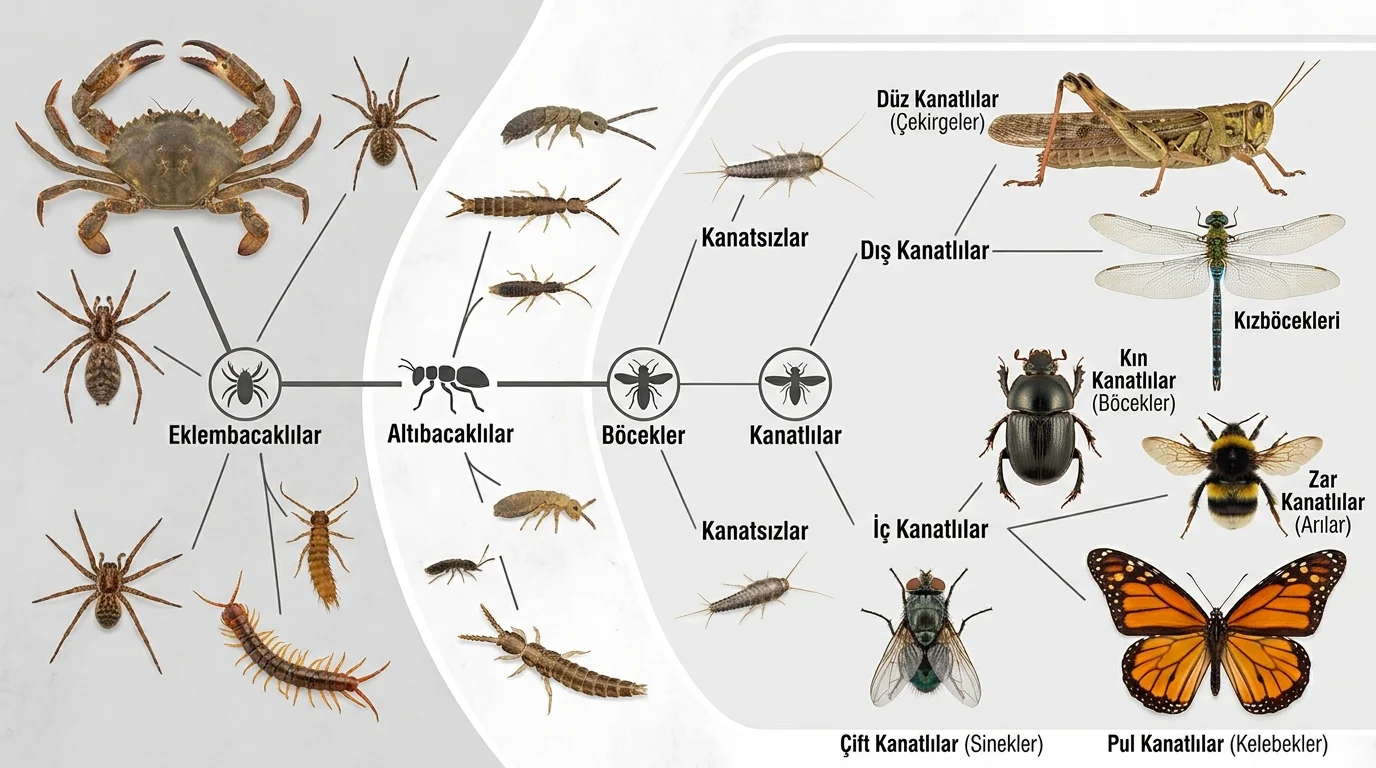
The short answer to the question of what an insect is: an insect is an animal belonging to the class Insecta within the arthropods, which in the adult stage has six legs, one pair of antennae and a body plan arranged as head, thorax and abdomen. This answer is narrower than the everyday meaning of “a small thing walking around the house”. In daily life it is correct to call the cockroach, the ant, the house fly and the mosquito insects; for spiders, ticks, millipedes, centipedes, woodlice, slugs and worms, the same word is not biologically correct.
This article is the heart of Bocek.net. Here we will take the word “insect” from everyday speech and place it in scientific classification. First we will set up the framework of Arthropoda, that is, the arthropods. Then we will go down to the distinction between Hexapoda and Insecta. After that we will clearly tie together the five criteria required for an animal to count as an insect, the major insect orders, the most common misconceptions, the 400-million-year evolutionary line and today’s biodiversity crisis.
1. Introduction: The Everyday Word “Insect” and the Scientific Term “Insecta” Are Not the Same Thing
In everyday speech, “insect” usually means a small, fast animal with legs, sometimes with wings and sometimes annoying. The word “insect” can be applied to a spider walking on the wall at home, a woodlouse seen in the bathroom, a millipede curling up in the soil, and even a worm that comes out after the rain. This usage is culturally understandable. The human eye looks first at size, movement and the feeling of unease. But biology does not work this way.
In scientific language, an insect is the class Insecta. Insecta sits within the Hexapoda branch of the phylum Arthropoda. Classification here does not ask “is it small, is it in the house, did it scare me?”. It looks at the body plan, the number of legs, the structure of the antennae, the mouthparts, the respiratory system, the developmental cycle and evolutionary kinship. That is why the scientific answer is sharper: every insect is an arthropod; but not every arthropod is an insect.
This distinction is useful in practice. Because a wrong identification leads to wrong behavior. When you see a spider, instead of reaching for insecticide you need to know that it is an arachnid. When you see a tick, you should not dismiss it as “a little bug”; the tick has a different biology, a different health risk and a different removal method. The woodlouse, despite its Turkish name, is a crustacean; seeing it at home is usually an indicator of moisture, not a classic insect infestation.
In this article we will use the word “insect” on two levels. When we say everyday language, we will mean the broad and loose usage. When we say scientific language, we will mean the class Insecta. The soundest method for the reader is this: first look at the number of legs. If there are six legs, the chances of it being an insect are high. If there are eight legs, go to the arachnids. If there are many legs, go to the centipede-millipede line. If there are no legs or the body is soft, think of another phylum altogether.
2. Arthropoda: Why Are Arthropods So Successful?
Arthropoda is known in Turkish by a name meaning “jointed-legged animals”, that is, the arthropods. Insects are only one branch of this giant phylum. Arthropods are animals with jointed legs, a segmented body and a chitinous exoskeleton. This structure is the basic engineering solution that has carried them to land, fresh water, the sea, soil, leaves, under bark, caves and even human-made spaces.
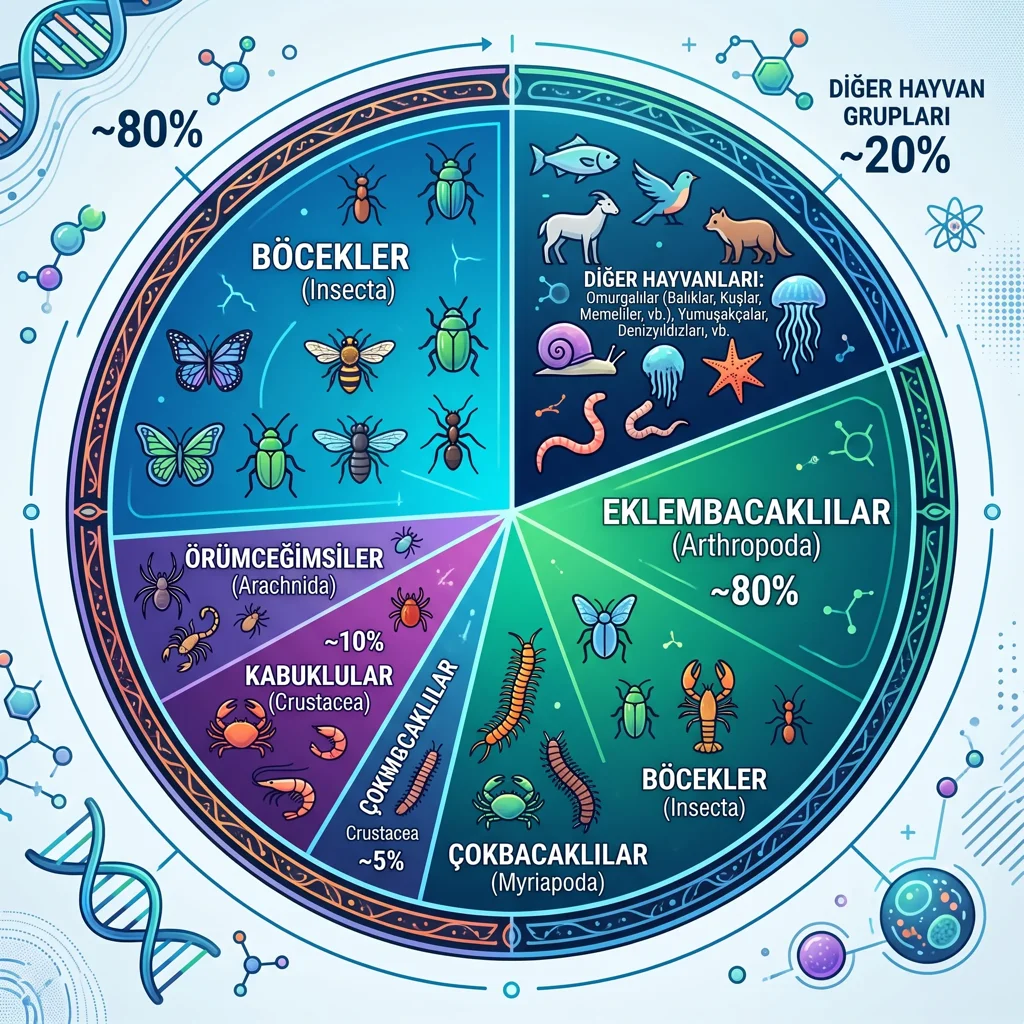
A very large proportion of described animal species are arthropods. Sources give the proportion differently depending on the method, but a range of about 80 percent is a common framework. A major part of this is made up of insects. This picture is not a coincidence. The arthropod body plan provides strong armor at a small size, precise movement, diverse mouthparts and the possibility of rapid reproduction.
The exoskeleton protects the soft tissue. Jointed legs provide precise movement in a small body. The segmented structure allows different regions of the body to be divided among different tasks. One part can specialize in sensing, another in walking, another in digestion and reproduction. In insects this plan becomes clearly defined as the head, thorax and abdomen.
What we call evolutionary success is not a single “superiority”. It is the right combination for the environment. A small body needs little food. A short generation time allows fast selection. A hard exoskeleton protects against drying out and impact. Wings lift insects to a separate level among land animals. Metamorphosis allows the larva and the adult to live without loading the same resource. In other words, insect success is one of the sharpest examples of arthropod engineering.
Arthropods are not made up of insects alone. Spiders, scorpions, ticks, mites, centipedes, millipedes, shrimps, lobsters, crabs and the extinct trilobites are also parts of this broad framework. That is why the first step in learning the definition of an insect is to put the insect on the right shelf within the arthropods.
This shelving reduces the confusion in everyday language. When you see a fast-running animal at home, it is sounder to look first not at “is it a pest?” but at “which body plan?”. Because two small animals seen in the same room can have completely different biology. The cockroach is a six-legged insect; the spider is an eight-legged arachnid; the woodlouse is a crustacean that has come onto land. Lumping all of them together under the same pesticide, the same fear and the same cleaning interpretation gives wrong results in the field.
Another reason for arthropod success is modularity. The arrangement of a segmented body and jointed limbs has been adapted again and again to different tasks over the course of evolution. A leg can turn into a tool for walking, swimming, digging, jumping, catching prey or carrying pollen. A mouthpart can remain a chewing type, extend into a proboscis or turn into a piercing-sucking needle system. This flexibility allows arthropods to solve thousands of different tasks with the same basic plan.
3. Arthropoda Subphyla: Correctly Distinguishing the Insect’s Relatives
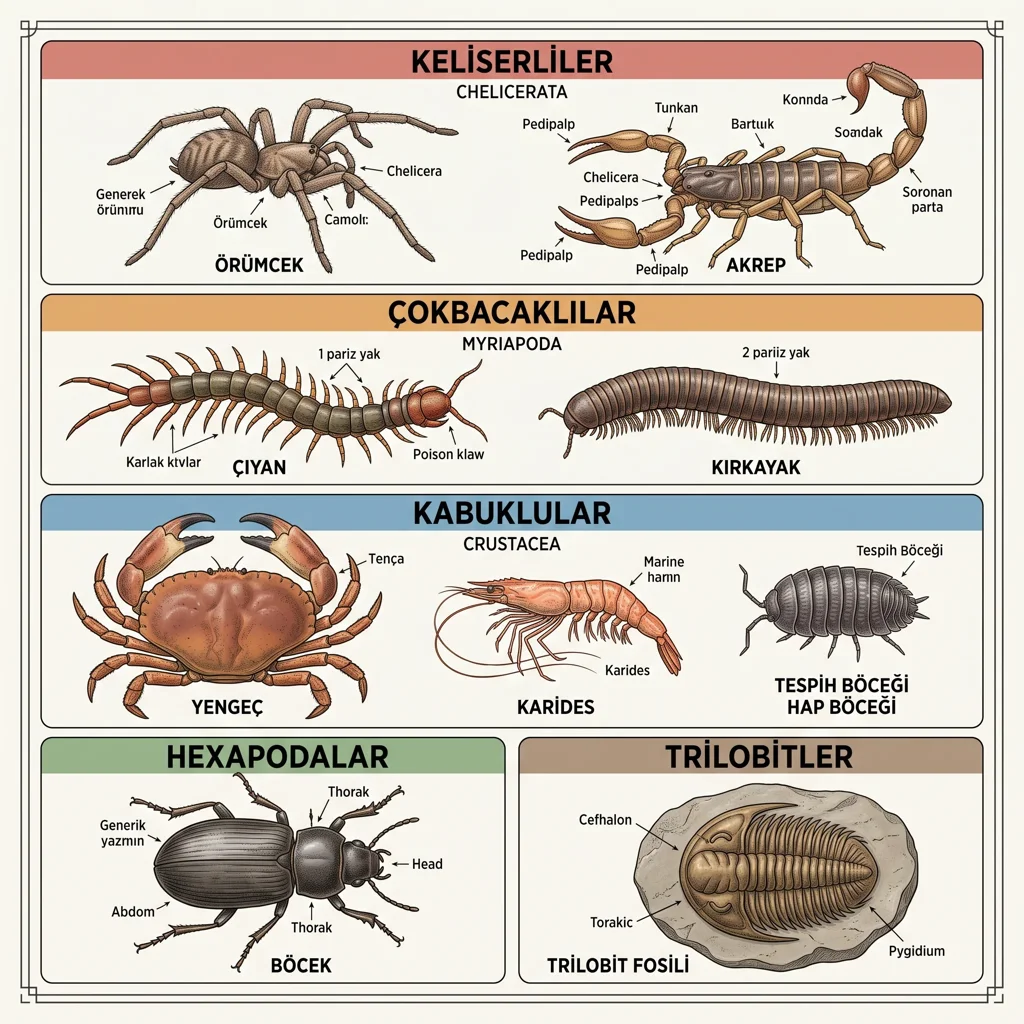
Within Arthropoda, five main lines provide enough of a backbone for understanding insect misconceptions: Chelicerata, Myriapoda, Crustacea, Hexapoda and Trilobita. These are parts of the same large phylum, but their body plans differ. In field identification, the questions “how many legs, are there antennae, how many body parts, what are the mouthparts like?” come from here.
3.1. Chelicerata: The Spider, Scorpion, Mite and Tick Line
Chelicerata means the chelicerates. This group includes spiders, scorpions, mites and ticks. Typical arachnids have four pairs, that is, eight legs. There are no antennae. Around the mouth there are special structures called chelicerae, which serve to grip, pierce or tear. This alone is a strong clue for distinguishing them from insects.
Spiders and scorpions are not insects. Ticks are not insects either. This is the point people confuse most. A tick can be small, can be seen on a pet or on a person, and can even look like a “tiny bug” from the outside. But the adult tick has eight legs and is biologically an arachnid. That is why ticks are dealt with not with the insecticide reflex but with correct removal and health monitoring.
3.2. Myriapoda: The Centipede and Millipede Line
Myriapoda is thought of as the many-legged animals. Centipedes and millipedes are in this line. Centipedes are generally predators; their bodies are flat, their movements fast, and their first pair of legs has turned into a venomous grasping organ. Millipedes, on the other hand, are slower animals that mostly feed on decaying plant matter. Their body segments are numerous and they carry many legs.
Centipedes and millipedes are not insects. Because insects have six legs, and the legs are attached to the thorax. In the many-legged animals, on the other hand, a leg arrangement repeated along the body is seen. That is why the “small and leggy” measure collapses here. The correct measure is the body plan.
3.3. Crustacea: Shrimps, Lobsters, Crabs and Woodlice
Crustacea is the crustacean line. Shrimps, lobsters, crabs and similar sea creatures are the well-known members of this group. But this group also has representatives living on land. The woodlouse, although its Turkish name contains the word for insect, is biologically a crustacean. In a sense, it is a crustacean relative that has adapted to land.
This information is useful when interpreting what you find at home. When you see a woodlouse, instead of diagnosing an insect, you need to look at moisture, decaying organic matter and basement-ventilation conditions. Nobody calls a shrimp or a crab an “insect”; but because the woodlouse walks around small on land, it is wrongly put in the same group. Yet classification is stronger than the common name.
3.4. Hexapoda: The Six-Legged Line Leading to Insects
Hexapoda means the six-legged animals. This is the real gateway to understanding insects. The class Insecta is found within Hexapoda; but not all of Hexapoda is Insecta. Small soil animals such as Entognatha, whose mouthparts are sunk inside the head capsule, are also in this broad line.
At first glance the name Hexapoda can be read as “if it has six legs, it’s an insect”. In practice this often works, but the scientific distinction is a little finer. In Insecta the mouthparts are external, the body plan is more distinct, and the winged lineages developed within this class. That is why Hexapoda is the big box and Insecta the narrower box.
3.5. Trilobita: The Extinct Marine Arthropods
Trilobita is the extinct arthropod line that includes the trilobites. They were very common in Paleozoic seas. Their bodies are recognized by their three-lobed appearance. They disappeared completely in the end-Permian mass extinction, about 252 million years ago. They are not insects; but they show the ancient power of arthropod diversity.
The reason we include trilobites in this article is to break the “arthropod = insect” misconception. The arthropod framework is broad enough to include both today’s ant and the ancient trilobite of the sea. The insect is one of the most successful living branches of this phylum, not the whole phylum.
4. Hexapoda: The Distinction Between Entognatha and Insecta
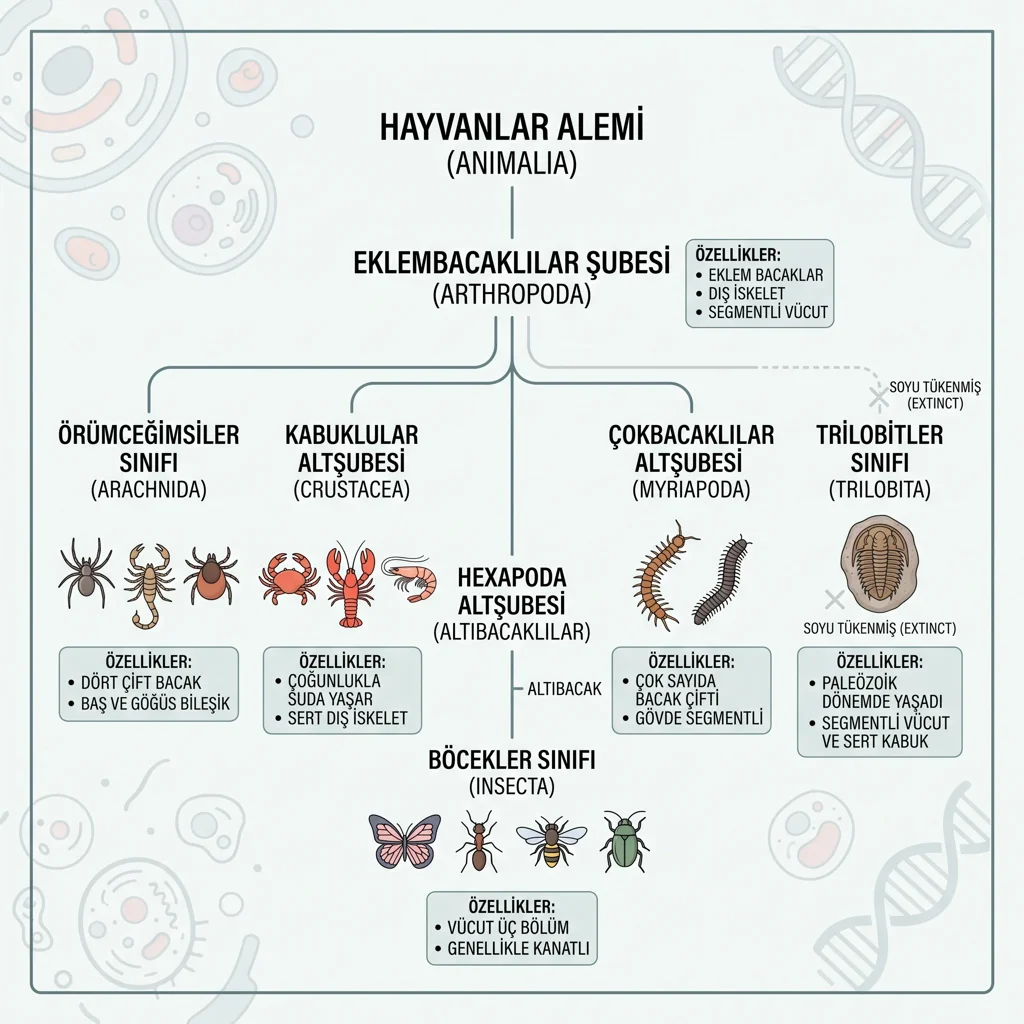
Hexapoda can be described in two main lines: Entognatha and Insecta. Both are six-legged. But they differ in terms of the position of the mouthparts, body plan and ecological role. This distinction preserves scientific precision before saying “I saw six legs, so it’s an insect”.
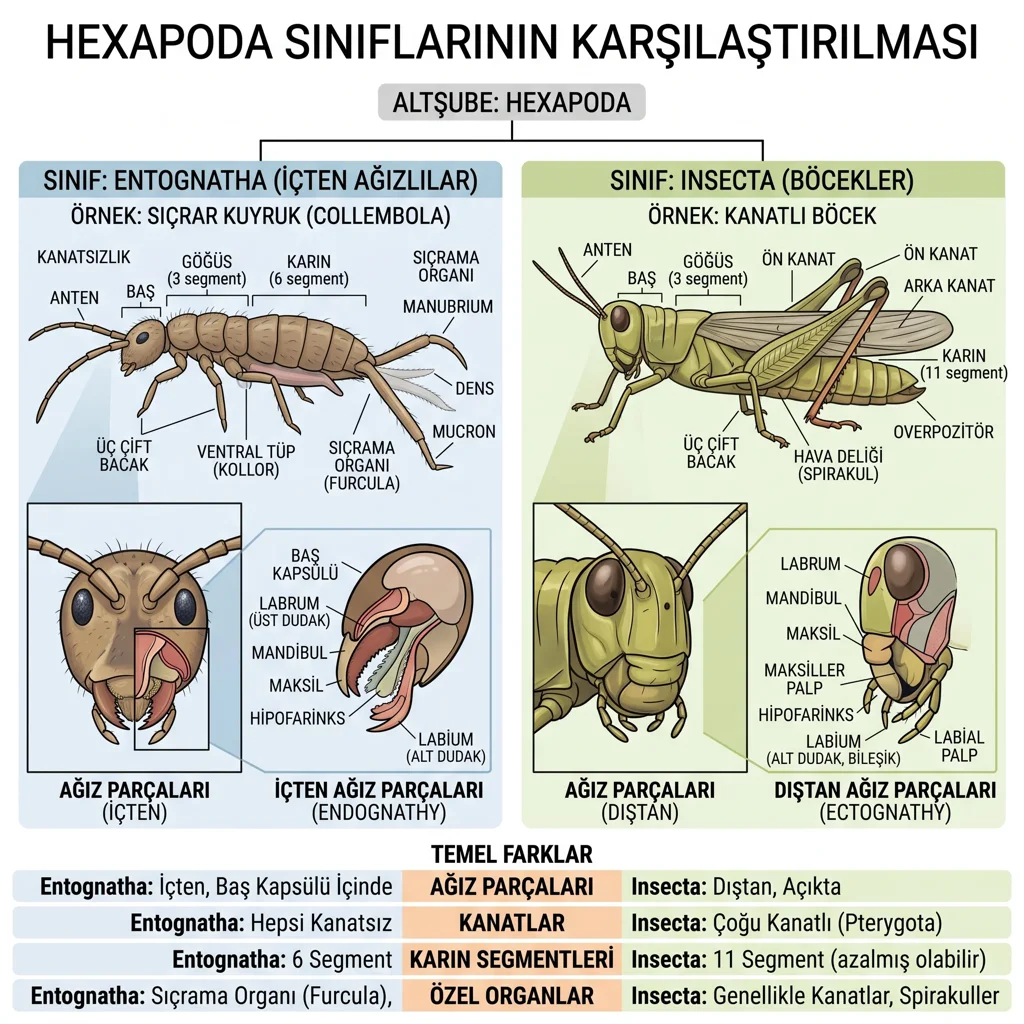
Common examples within Entognatha are members of Collembola, known as springtails. These animals live in soil, in leaf litter and in damp microhabitats. Their mouthparts are sunk inward into the head capsule. Because they are small, they usually go unnoticed in daily life. They are important for soil ecology, but they are not at the center of the classic insect story.
The Entognatha distinction is especially important in scientific language. Because although these animals are six-legged, they are not counted within Insecta. They are hard to see with the everyday eye anyway; but in soil biology they have roles in the breakdown of organic matter, in relationships with microorganisms and in the ecology of damp surfaces. That is why the conclusion “if it’s not an insect, it’s unimportant” is not drawn. Only the correct classification is made.
Insecta, on the other hand, is the true insect class. The mouthparts are external. The division into head, thorax and abdomen is distinct. The legs emerge as three pairs attached to the thorax. One pair of antennae and compound eyes are typical features. Wings are present in many groups; in some groups the wings have been lost or reduced later on. The enormous diversity that interacts with plants, fungi, carrion, blood, nectar, wood, soil, other insects and human settlements is gathered here.
At this point the cleanest sentence is this: Hexapoda is the broad umbrella for the six-legged animals; Insecta is the main class we call “insects” in both the everyday and the scientific sense. In the rest of this article, when we say insect, we mean Insecta.
5. Five Mandatory Criteria for Insecta
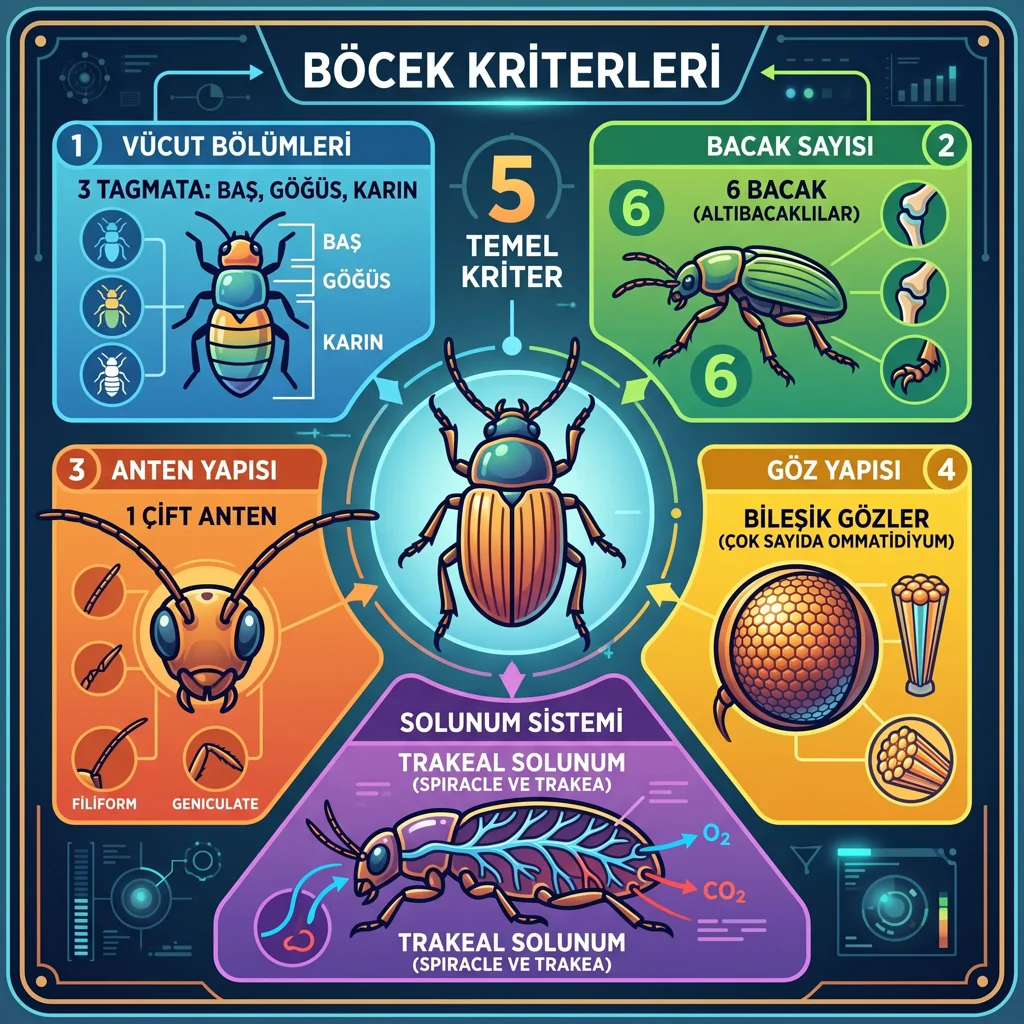
For an animal to count as an insect, it is not a single sign but the whole body plan that is looked at. Still, there are five basic criteria that work in the field: three tagmata, six legs, one pair of antennae, compound eyes and tracheal respiration. When these criteria are read together, wrong identification decreases to a large extent.
5.1. Three Tagmata: Head, Thorax, Abdomen
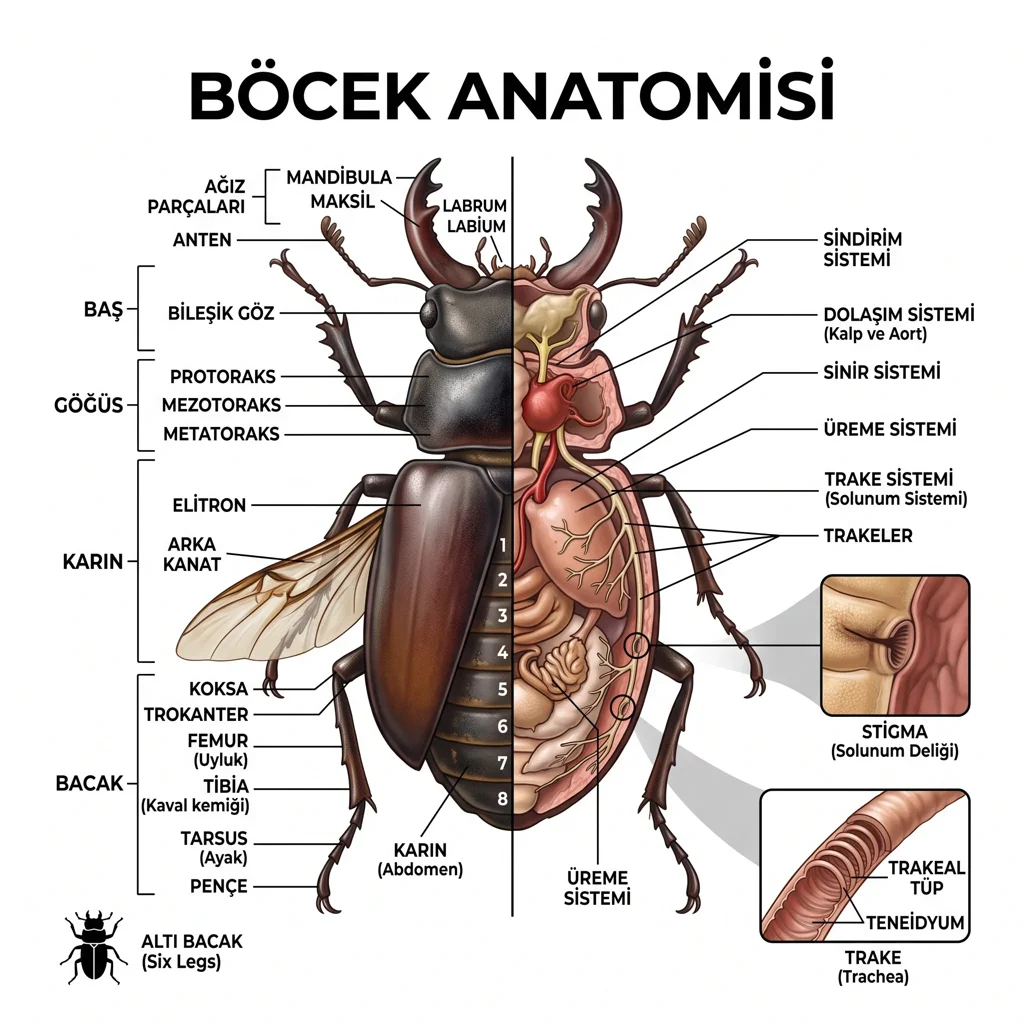
The insect body is divided into three main sections. The head is the center of sensing and feeding. The antennae, eyes and mouthparts are located here. The thorax is the center of movement; the three pairs of legs and, if present, the wings are attached to the thorax. The abdomen, on the other hand, is associated with the digestive system, the respiratory openings, excretion and the reproductive system.
This three-part plan is very valuable for distinguishing insects from spiders. In spiders the body looks like two main sections: the cephalothorax and the abdomen. In insects the head reads as more separate. The narrow waist of ants or the body shape of bees can hide this plan, but the anatomical basis does not change.
5.2. Six Legs
Adult insects have three pairs of legs. All the legs come out of the thorax. A grasshopper may have legs adapted for jumping, a praying mantis for catching, a honey bee for collecting pollen, water bugs for swimming and a flea for leaping. The function changes; the number does not.
The six-leg criterion is the measure that breaks the popular misconception fastest. An eight-legged animal is not an insect. A many-legged animal is not an insect. A worm, which has no legs, is not an insect. Of course, appearance can differ in larval stages; a caterpillar has leg-like appendages. But classification is read not from a single image of the larva but from the development and the adult body plan.
5.3. One Pair of Antennae
Insects have one pair of antennae. Antennae are used for touch, smell, sensing air currents, finding mates and scanning the environment. The ant’s antenna system is very prominent in social communication. The cockroach’s long antennae scan the surroundings in dark, narrow spaces. In butterflies and moths, the shape of the antennae helps to distinguish species and sex.
Spiders have no antennae. Even this simple difference is sharp in distinguishing spiders from insects. In crustaceans such as shrimps and crabs, the arrangement of the antennae is different. That is why the presence of antennae alone is not enough, but it is one of the main pieces in identifying Insecta.
The shape of the antennae also gives clues about an insect’s way of life. Long, sensitive antennae are often seen in nocturnal species. In social insects, antennal contact is one of the main channels of information transfer within the colony. In male moths, comb-shaped antennae help detect the female’s pheromone from a distance. In other words, antennae are not just “two protrusions”; they are the insect’s line of chemical and tactile contact with its environment.
5.4. Compound Eyes
Most insects have compound eyes. A compound eye is a mosaic perception system made up of many small visual units. It is powerful for detecting fast movement, giving a wide field of view and controlling flight. In fast-escaping species such as the house fly, the effect of this system is noticeable even in daily life.
The eyes are not equally developed in every insect. In soil, in caves or in a parasitic life, the eyes can become reduced. In some species, simple eyes, that is, ocelli, are present together with compound eyes. That is why eye structure is also interpreted within the whole plan.
5.5. Tracheal Respiration
Insects do not breathe with lungs. On the sides of the body there are openings called spiracles, and inside there is a network of tracheae. Oxygen is carried to the tissues by this tube system. The advantage of small size comes into play here too. When the body is small, diffusion and tracheal distribution work more effectively.
The tracheal system is also discussed as one of the factors limiting insect size. That is why the link between the high-oxygen conditions of the Carboniferous period and large insect-like forms attracts interest. Today’s insects generally stay small; but staying small is not a weakness for them, it is an ecological advantage.
6. 10 Major Orders Within Insecta
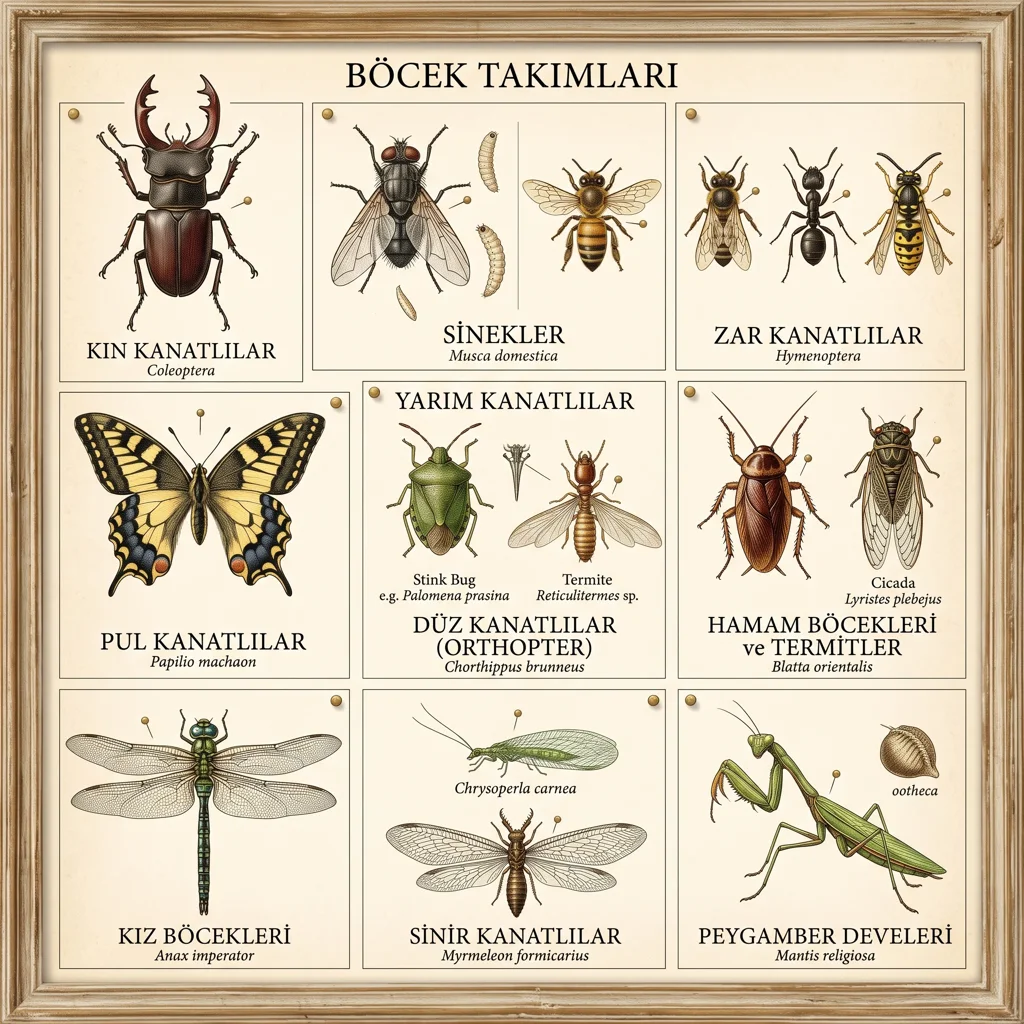
Insect diversity becomes easier to understand through orders. The ten orders below form the main backbone in terms of number of species, contact with humans and the Bocek.net content network. Each order has its own mouth structure, wing arrangement, type of development and ecological role.
6.1. Coleoptera: Beetles
Coleoptera is the order of beetles. It holds the largest share of described insect species; the frequently given proportion is about 40 percent. The forewings turn into hard elytra and protect the hind wings. Ladybugs, stag beetles, leaf beetles, weevils and many wood or seed pests belong to this order.
To read this line through its most familiar example within Bocek.net, you can look at the ladybug article. Ladybugs look small and cute; but biologically, with their predatory species, they are among the important players of biological control in the garden.
6.2. Diptera: Flies and Mosquitoes
Diptera means the two-winged insects. There is only one true pair of wings; the second pair of wings has turned into balance organs called halteres. House flies, mosquitoes, sand flies, fruit flies and many small flying groups are here. Diptera is one of the most important insect orders in contact with humans.
In this group, blood-feeding mosquitoes and the house fly line are the examples seen most often in daily life. In mosquitoes, the female’s blood-feeding is related to reproductive biology. In house flies, fast flight, compound eyes and surface contact stand out.
6.3. Hymenoptera: Bees, Ants and Wasps
Hymenoptera covers bees, ants and wasps. Social life, colony organization, division of labor, pollination and stinging behavior are the best-known aspects of this order among the public. In winged forms, membranous wings and characteristic connections are seen. Most ants are wingless in the worker form, but at the order level they are within Hymenoptera.
There are three strong internal links for this line: honey bee, ant colonies and wasp. The honey bee stands out with pollination and colony organization; the ant with social architecture; and the wasp with hunting, defense and contact with humans.
6.4. Lepidoptera: Butterflies and Moths
Lepidoptera is the order of scale-winged insects. Butterflies and moths are in this group. Microscopic scales on the wing surface produce color, pattern and camouflage. The larval stage is the caterpillar; in the adult stage, nectar feeding and reproductive behavior stand out. Complete metamorphosis is very pronounced in this order.
People sometimes mistake some large, fast-flying moths for birds. Hawk moths can feed from flowers while hovering in the air like a hummingbird. This is a good example of the “true insect mistaken for another animal” misconception that we will describe in Section 7.
6.5. Hemiptera: True Bugs
Hemiptera includes bed bugs, aphids, cicadas and many plant sap-sucking species. The mouthparts are of the piercing-sucking type. Plant pests, vector species and sound-producing cicada groups are the visible parts of this order.
On the Bocek.net side, you can read about this group in the cicada article. The cicada’s song is like the ecological signature of summer. This sound is not a romantic background; it is a mechanism of mating and intraspecific communication.
6.6. Orthoptera: Grasshoppers and Crickets
Orthoptera covers groups such as grasshoppers, crickets and katydids. Strong hind legs, jumping, sound production and plant feeding are common in this order. Some grasshopper species can show swarming behavior under suitable climate and population conditions.
Orthoptera has been known throughout human history for its impact on agriculture. But labeling all grasshoppers as “pests” is a mistake. In the ecosystem they have roles such as herbivore pressure, food for birds and reptiles, and transfer within the food web.
6.7. Blattodea: Cockroaches and Termites
Blattodea covers cockroaches and, in current classification, termites. Cockroaches are known for their flat bodies, long antennae, nocturnal activity and resilience. Termites, on the other hand, stand out with cellulose digestion, colony life and soil/wood ecology.
In terms of contact indoors, the most familiar page is the Blattodea home guide. The important point here is not to read the cockroach only as a “sign of a dirty home”. If there is moisture, warmth, food and a hiding gap, it can also be seen in a clean place.
6.8. Odonata: Dragonflies and Damselflies
Odonata covers dragonflies and damselflies. Powerful flight, large compound eyes, an aquatic nymph stage and a predatory life are the basic features of this order. The larvae are predators in water; the adults catch prey in the air. For this reason they are closely linked to the health of wetlands.
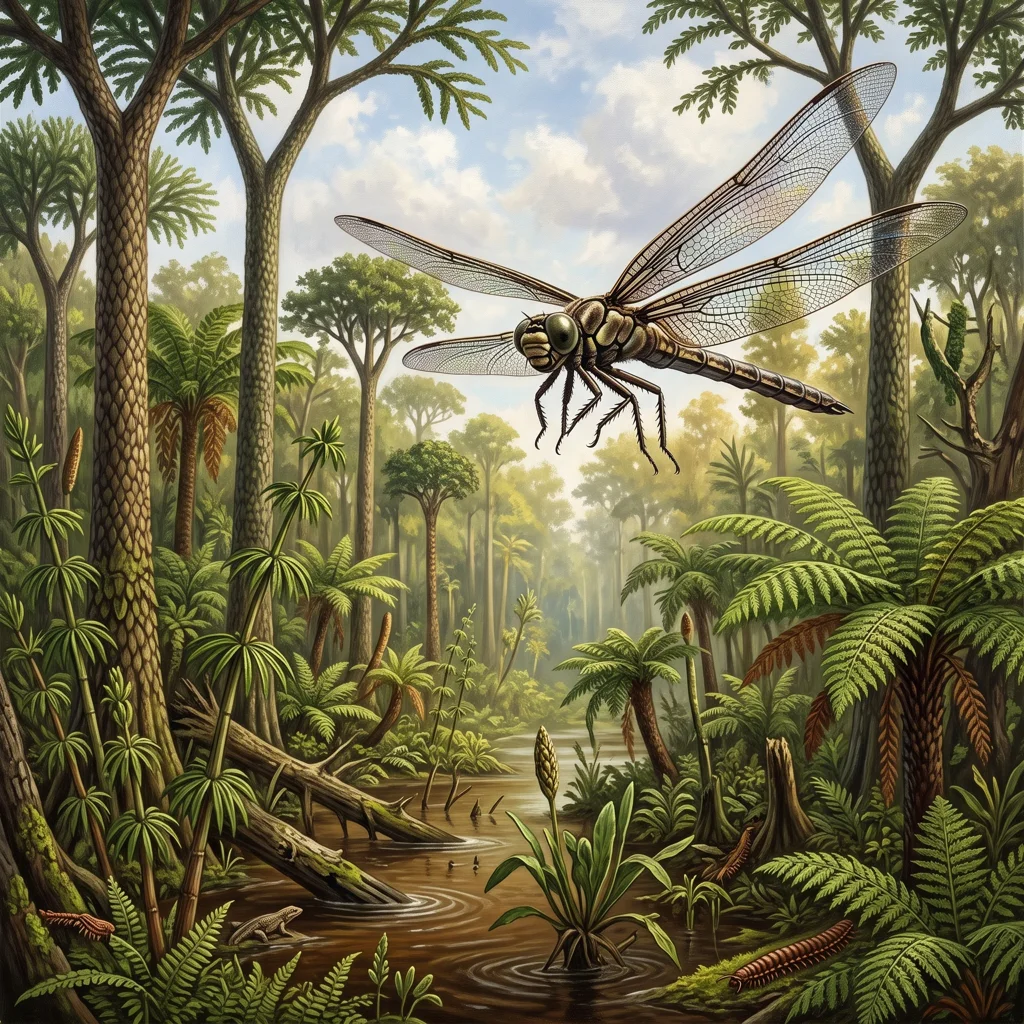
Odonata is also important in the story of insect evolution. The giant dragonfly-like forms of the Carboniferous period are often mentioned in discussions of insect size and atmospheric conditions. Modern dragonflies do not reach the same giant size; but their mastery of flight is still impressive.
6.9. Neuroptera: Lacewings and Antlions
Neuroptera includes groups such as lacewings and antlions. Finely veined wings and predatory larvae are striking in this order. Antlion larvae can catch ants and small insects by building funnel traps in sand.
This order shows how diverse predatory strategies are in the insect world. Not every insect eats plants, not every insect bothers people. Many insects are natural enemies that control other insects.
6.10. Mantodea: Praying Mantises
Mantodea covers the praying mantises. The front legs have turned into grasping organs. Head mobility, a triangular appearance, ambush hunting and camouflage are the best-known sides of this order. A praying mantis seen in the garden is generally a predatory insect.
The praying mantis looks like a “strange bug”, but it meets the Insecta criteria. It is six-legged, has antennae, and its body plan follows the insect layout. In other words, even if its appearance is unusual, its biological shelf is clear.
7. Animals Mistaken for Insects That Are Not Insects
This section shows the sharpest break between everyday language and scientific language. An animal is not an insect just because it is small. It is not an insect because it walks on land. It is not an insect because it frightens people. Biology looks at the number of legs, the antennae, the body plan and kinship.
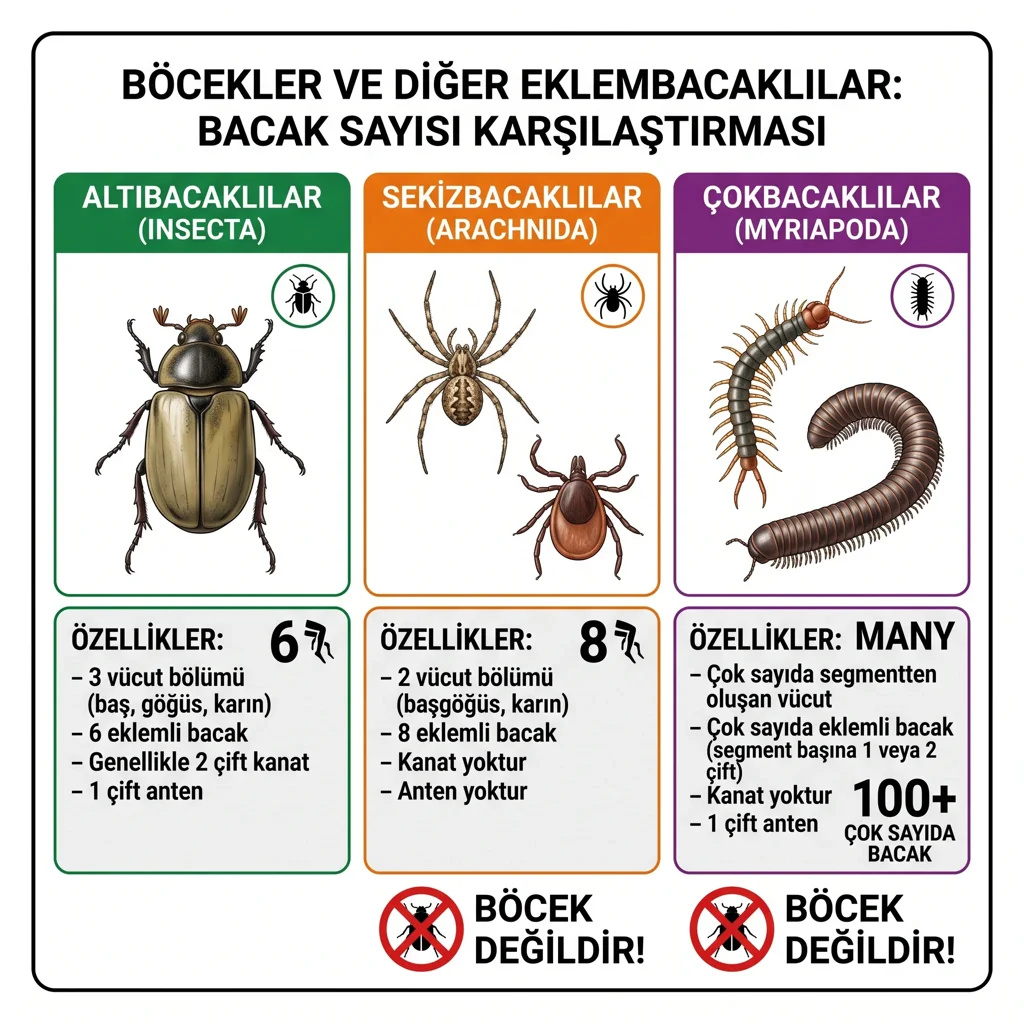
7.1. Spiders: The Most Famous Misidentification
The unshakable number 1 on the list of animals that people think of as ‘insects’ but that are biologically definitely not insects is, proudly, the spider.
People usually reflexively call every small terrestrial arthropod with legs an ‘insect’, but spiders belong to the subphylum Chelicerata (chelicerates) and the class Arachnida (arachnids) of the arthropods. In fact, if you pay attention, the basic differences give it away instantly:
- Insects have 6 legs, 2 antennae and usually 3 body sections (head, thorax, abdomen), and most can fly.
- Spiders, on the other hand, have 8 legs, no antennae and no wings, their bodies are divided into 2 main sections, and in their mouths they have those famous chelicerae (pincer/fang) structures that insects do not have.
The top three of this common ‘insect’ misconception are as follows:
- Spiders and Scorpions: They are definitely arachnids, not insects.
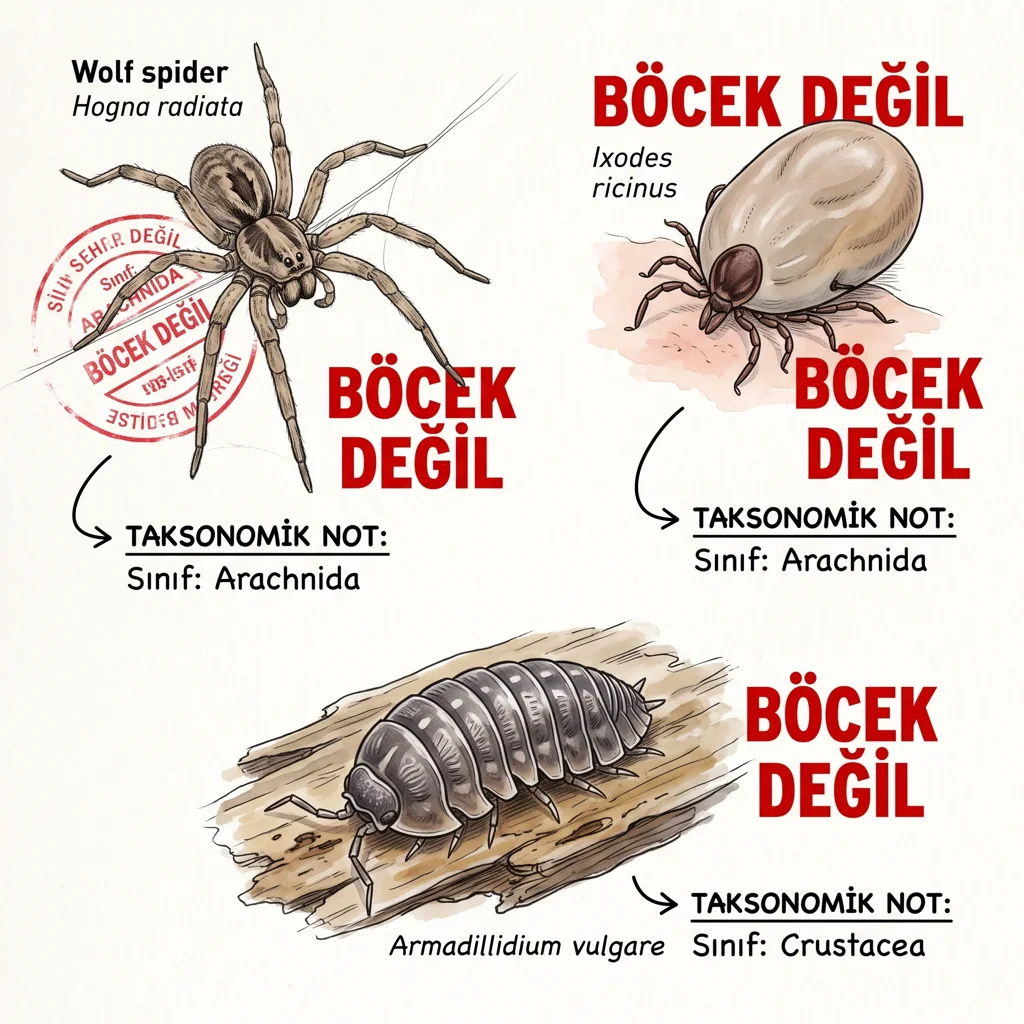
- Ticks and mite species: Even if they are microscopic, because they have 8 legs they are arachnids, not insects.
- Woodlice: Despite having the word for ‘insect’ in their Turkish name and living on land, they are actually crustaceans adapted to land (they are the terrestrial relatives of crabs and lobsters, that is, a small version of a shrimp that walks on land).
So that eight-legged friend we come across in the street or at home never gives up its title of ’the non-insect most often mistaken for an insect’ to anyone.
7.4. Centipedes and Millipedes: Many-Legged, Not Insects
Centipedes and millipedes are in the Myriapoda line. Both have many body segments and many legs. The centipede is faster, flatter and a hunter. Its first pair of legs works like a venomous grasping organ. The millipede, on the other hand, is an animal with a more cylindrical body, slower and mostly feeding on decaying plant matter.
Calling these two “insects” is common in everyday speech but scientifically wrong. In insects the number of legs is six, and the legs are found not along the body but as three pairs on the thorax. In the centipede-millipede line, on the other hand, there are repeating body segments and an arrangement of many legs attached to the segments.
The field interpretation is also different. Seeing a centipede may not mean the house has an insect infestation; it may indicate that there is a damp, hidden microhabitat where it can find prey. Seeing a millipede is usually due to the outdoors, moisture and organic matter. In other words, correct classification opens the door to the correct intervention.
7.5. Slugs: The Mollusca Line
The slug’s Turkish name contains the word for “insect”, but it is not an insect. In fact, it is not even an arthropod. It belongs to the phylum Mollusca, that is, the molluscs. It is related to snails. Its body is soft, it has no jointed legs, it does not carry a chitinous exoskeleton, and it does not meet any of the main criteria of the Insecta body plan.
In the garden it can eat leaves, damage vegetable seedlings and come out at night in damp weather. That is why people throw it into the same “garden pest” bag as insects. But the biological analysis is different. For the slug, you need to think in terms of moisture, shelter, nocturnal activity and the feeding traces of molluscs.
7.6. Worms: The Annelida Line
The worm is not an insect either. It belongs to the phylum Annelida, that is, the segmented worms. It has no legs, antennae, compound eyes or exoskeleton. Its body is ringed, and it plays an important role in the cycling of organic matter in the soil. Seeing worms in the garden is usually a sign of good soil.
People calling a worm an insect mostly comes from the perception of “a small animal that comes out of the soil”. Yet the worm is an animal group very far from insects. The insecticide reflex here is both wrong and unnecessary. From the point of view of soil health, the worm is usually a friend.
7.7. Three Types of Misconception
The first type of misconception is animals that people think are insects but that are biologically not insects. Spiders, scorpions, ticks, mites, centipedes, millipedes, woodlice, slugs and worms fall into this group. This misconception arises most often in observations at home and in the garden.
The second type of misconception is animals that people do not call insects but that have arthropod kinship. Shrimps, lobsters, crabs and the horseshoe crab are instructive in this respect. A shrimp is not an insect; but it sits within the arthropod framework. Although the horseshoe crab’s name sounds like a crab, it is in the chelicerate line. The water bear, on the other hand, is not an arthropod; it is a separate microscopic animal group within Tardigrada. This example shows that common names are not reliable for classification.
The third type of misconception is true insects mistaken for other animals. A hawk moth can be mistaken for a hummingbird when it feeds while hovering. Some long-bodied insects known in Turkish as the “snake bug” can be perceived as small reptiles. Leaf insects and the dead-leaf butterfly, because of their camouflage, are mistaken for pieces of plants. Here the animal is an insect; this time the mistake goes in the opposite direction. The human eye is deceived by shape; classification looks at the body plan.
8. Evolutionary Advantages: The System That Makes Insects Successful
It is not possible to explain insect success in a single word. Flight, small size, a short life cycle, metamorphosis, the diversification of mouthparts, the exoskeleton and a high reproductive capacity work together. This combination has made insects one of the most widespread and diverse animal groups in land ecosystems.
Flight is a great leap in insect evolution. Winged insects can escape predators, reach new food sources, find mates and spread between habitats. While vertebrates developed flight on land later, insects used this space very early. Even a short-distance move by an insect with small wings expands its ecological opportunities.
Small size is the second big advantage. A small animal needs little food, gets into a narrow crack, uses the underside of a leaf, lives in a soil cavity and makes a small pool of water its habitat. For the mosquito’s water-dependent cycle, the standing water under a flowerpot can be enough. For the layout of an ant nest, a crack in a wall can become a colony passage. Being small is not a weakness but a permit of access to microhabitats.
A short life cycle means fast adaptation. When generations are short, selection leaves its mark faster. That is why pesticide resistance, climate adaptation, food preference and behavioral change can emerge rapidly in some insects. This sometimes creates problems for people; but from an evolutionary point of view it is a powerful mechanism.
This speed also makes insects special in the face of human pressure. Agricultural pesticides, urban heat, new plant species, storage areas and global transport form a harsh filter for some species. Those that cannot pass the filter decline; those that can pass it multiply. That is why resistance and behavioral change can be seen in household pests. The same logic applies to beneficial species too: if habitat is fragmented, a short generation time alone is not a savior; because the places to lay eggs, the food and the corridors for finding mates disappear.
Metamorphosis divides insects’ resource-sharing cleverly. In species that undergo complete metamorphosis, the larva and the adult usually live differently, feed differently and use different habitats. The caterpillar eats leaves, the butterfly takes nectar. The mosquito larva lives in water, the adult flies in the air. This separation reduces competition between the life stages of the same species.
In insects that undergo incomplete metamorphosis, on the other hand, the nymph resembles the adult more. This pattern is seen in the grasshopper, cockroach and cicada line. The nymph grows, molts and comes closer to the adult form. In complete metamorphosis there is a sharp transformation such as the pupa; in incomplete metamorphosis the transition is more gradual. This difference is also important for control and observation. The larva, the nymph and the adult may not be found in the same place; that is why it is hard to understand the whole population by looking at a single stage.
The diversification of mouthparts also magnifies success. Chewing, sucking, piercing-sucking, lapping, cutting or proboscis-like structures open the door to different food sources. The cicada sucks plant sap; the honey bee’s nectar line combines with carrying pollen; the praying mantis catches prey; the cockroach uses a wide range of food.
Because of this combination, it is difficult to give a single figure for the number of insect species. The number of described insect species is around 1 million. There are estimates for the true total ranging between 1.5 million and 30 million. Assessments such as Stork 2018 clearly show that estimates of the global number of species change from method to method. The safe statement is this: insects are a giant group that makes up the largest part of described animal diversity; the total diversity is still not fully known.
9. Four Hundred Million Years of History
The history of insects goes back about 400 million years. Rhyniognatha hirsti is often cited as an early insect or a hexapod fossil very close to insects, dated to about 407 million years ago. This record shows that the insect line was present even when land ecosystems were younger. The details of fossil interpretation and classification are debated; but the time scale is clear: the insect story is very old.
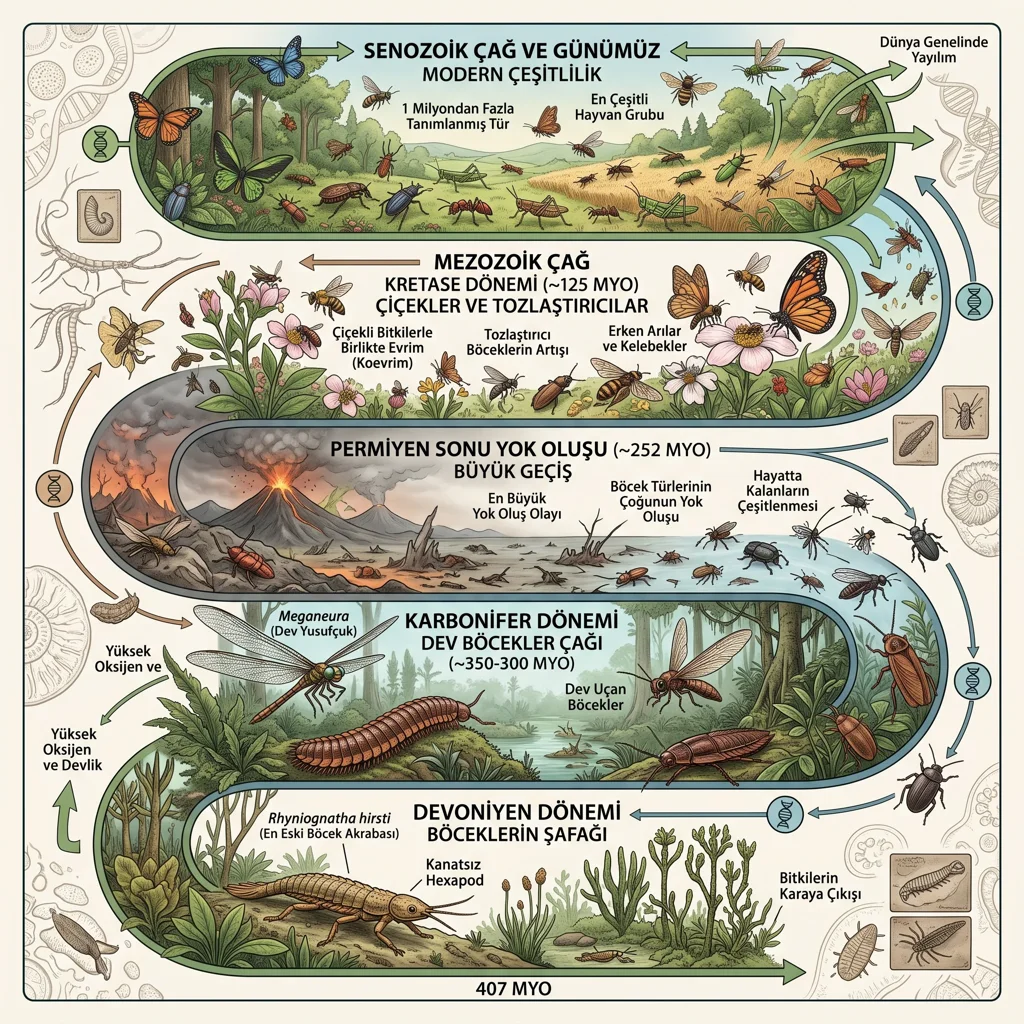
In the Carboniferous period, swamp forests, high oxygen levels and rich vegetation set a special stage for insect evolution. Meganeura and similar giant dragonfly relatives are known for a wingspan of about 70 cm. These are not modern dragonflies; but they are a strong example of the size that giant Odonata-like predatory insects reached in the past.
The end-Permian extinction is one of the greatest mass breaks in the history of life. Marine life, land vertebrates, plants and arthropods were heavily affected. The trilobites disappeared completely in this extinction. Insects, on the other hand, continued their line despite suffering serious losses. Afterwards, different groups diversified again throughout the Mesozoic and Cenozoic.
The rise of flowering plants is another turning point in insect history. Coevolution between plants and insects, that is, evolving together, proceeded through pollination, defensive chemicals, mouthparts, flower shape, scent and color. Butterflies, bees, some flies and beetles formed strong relationships with flowering plants. The plant shaped the insect; and the insect influenced the plant’s reproductive success.
This mutual influence is not only the relationship between flowers and pollinators. A plant produces defensive chemicals in its leaves; the insect develops tolerance to them. An insect lays its eggs in a particular tissue; the plant thickens its tissue or changes its phenology. Some insects are tied to a single group of plants, others feed broadly. This fine web of relationships explains why insect diversity rose together with plant diversity.
Grimaldi and Engel’s synthesis of insect evolution builds this long story within a framework of fossils, morphology and systematics. Chapman, in turn, provides the basic anatomy-physiology foundation for understanding insect structure and function. When these two sources are read together, it becomes clear that insects are not just a matter of the sentence “there are many species”. The real point is that the body plan has been able to adapt to new tasks again and again over long geological time.
10. Today: Biodiversity, Threats and Conservation
Today insects are still one of the main pillars of the world’s ecosystems. They pollinate, break down dead organic matter, affect the soil, and become food for fish, birds, bats, reptiles and amphibians. At the same time, some species can be agricultural pests, disease vectors or a source of problems indoors. That is why dividing insects into “beneficial” or “harmful” in a single sentence is wrong.
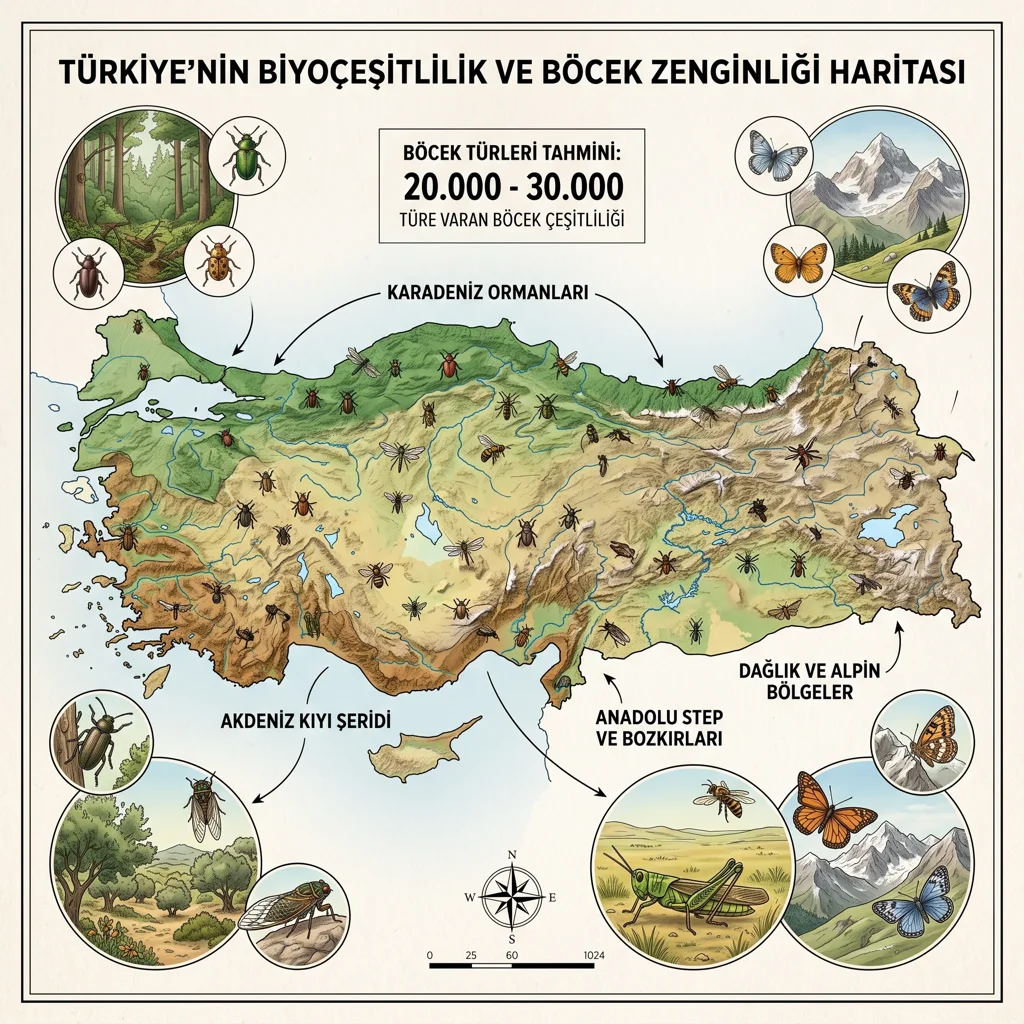
Insect diversity is considered high for Türkiye. The country holds very different habitats with the Mediterranean, the Black Sea, the Central Anatolian steppe, mountain belts, wetlands and transitional climates. The range frequently used for the number of insect species in Türkiye is around 20-30 thousand. This figure is not a definitive final count; it changes with new records, revisions and local studies. The more honest sentence is this: because of its location and habitat diversity, Türkiye has a high insect diversity; the total inventory is still a developing field.
On a global scale, however, the picture is not only a success story. The Krefeld study published by Hallmann and colleagues in PLOS ONE in 2017 reported a decline of more than 75 percent in flying insect biomass over about 27 years in protected areas in Germany. This study alone is not a definitive verdict for the whole world; but because of the strength of its long-term measurements, it is a serious warning sign.
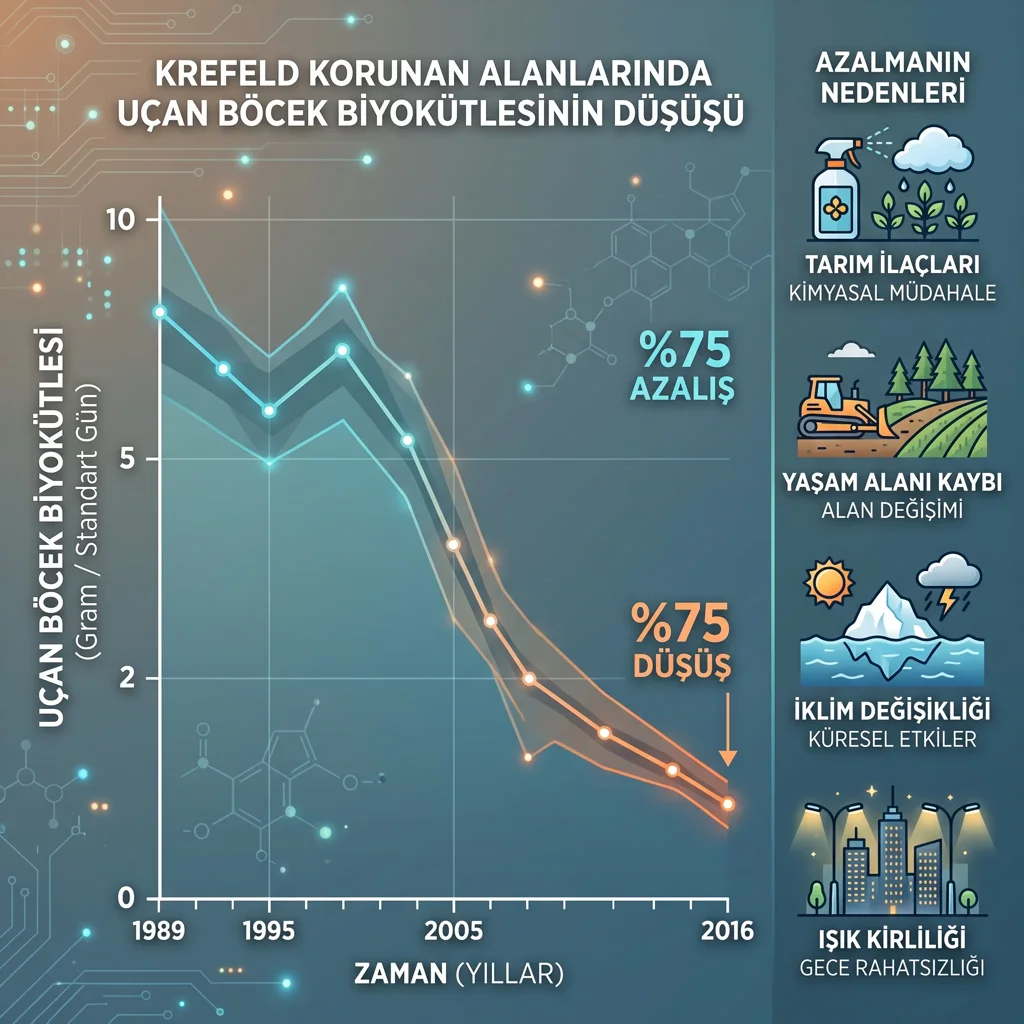
The main suspects in insect declines are habitat loss, agricultural intensification, pesticide use, climate change, light pollution and invasive species. The impact varies by region. In one place the main pressure may be agricultural pesticides; elsewhere, wetland loss, night lighting or drought may come to the fore. That is why the right approach is not single-cause panic but regional monitoring and habitat management.
Habitat loss is often the quietest pressure. When a flowering strip at the edge of a field is removed, a stream bed is concreted, old trees are cut down or a vacant lot is mowed constantly, the insect’s breeding and feeding area shrinks. This loss is not always noticed in a single day. But over the years populations are squeezed into islands, gene flow falls and the risk of local extinction rises. That is why a conservation plan is not just declaring protected areas but also maintaining habitat connectivity.
Climate change does not work in one direction either. Some species may spread northward or to higher altitudes; others retreat under the pressure of heat and drought. An early spring can disrupt the timing between plant flowering and insect emergence. This timing shift creates chain effects for pollinators, herbivorous insects and the birds that eat them. In other words, the issue is not just “the weather got warmer”; the ecological calendar shifts.
Light pollution can have strong effects, especially on nocturnal insects. For fireflies, the light signal is directly the mechanism for finding a mate; artificial light can disrupt this communication. The firefly article is a good starting point for this topic. Night-flying moths and other insects can also lose energy by being drawn to artificial light sources, become exposed to predators or have their reproductive behavior disrupted.
The pesticide issue is more sensitive. Pest management is necessary in agriculture, but broad-spectrum and badly timed applications can also affect non-target insects. Pollinators, natural enemies and soil fauna can be harmed in this chain. That is why integrated pest management (IPM), monitoring, threshold values, selective application and habitat support are important. The biodiversity and conservation topics of the Ministry of Agriculture and Forestry of Türkiye link this issue to the framework of national nature management.
On the lighting side, too, the solution is not a completely dark city. The right solution is turning off unnecessary lights, using downward-facing fixtures, reducing harsh blue-white light, using timers and motion sensors, and limiting night lighting at the edges of wetlands and gardens. This way human safety is protected, and the orientation and mate-finding behavior of nocturnal insects is disrupted less.
Individual garden management looks small, but added together it forms corridors. Native flowering plants, nectar sources spread across the seasons, small pesticide-free areas, leaving part of the leaf litter and not completely eliminating bare soil provide micro-shelters for different insect groups. Not every garden becomes a national park; but every garden can be a small transit station. Even a balcony flowerpot can become a short-term feeding stop with the right plant.
There are things everyone can do to protect insects. Using native plants in the garden, reducing unnecessary light at night, making pesticides the last resort, leaving part of the leaf litter to the ecosystem, managing small water and flower sources in a balanced way, teaching children to identify insects and reducing the reflex to kill unnecessarily are concrete steps. A small decision, in the right place, really makes a big difference.
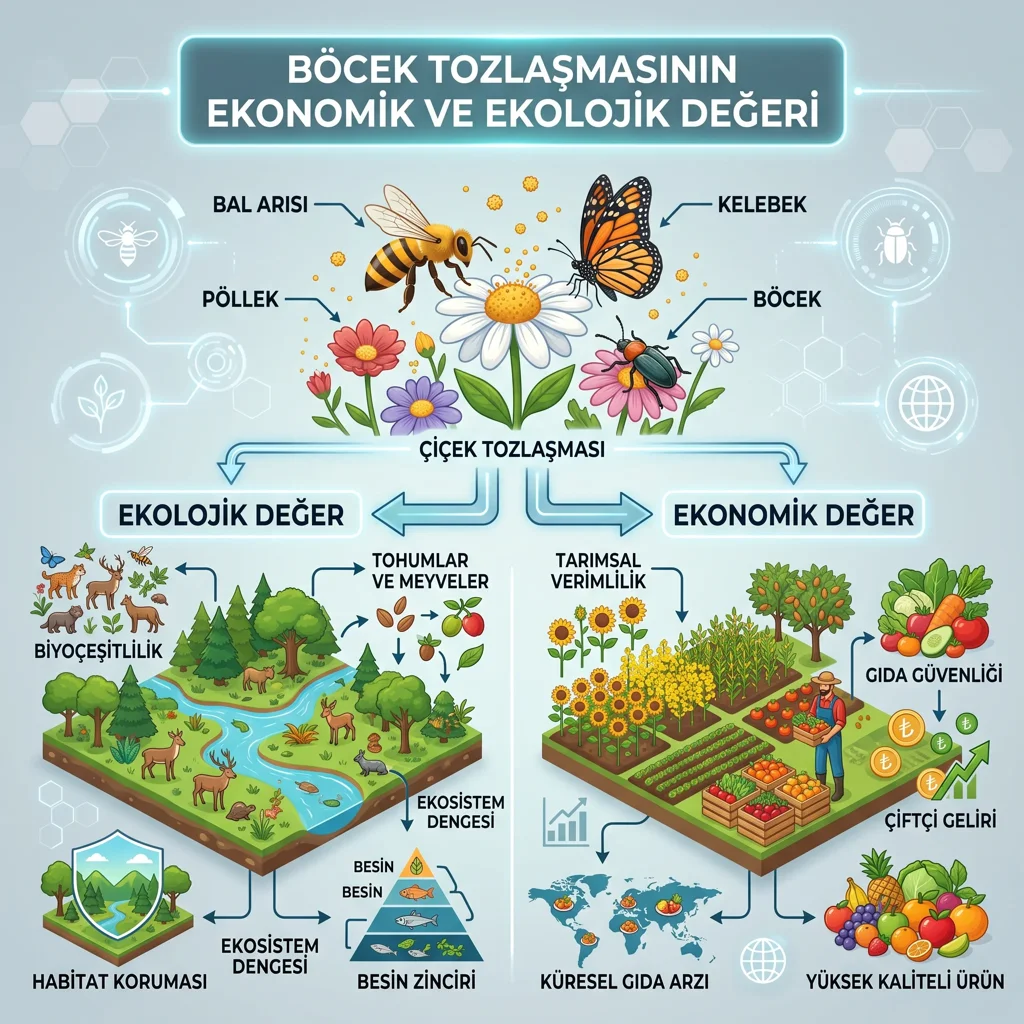
The value of pollination is especially important. FAO emphasizes the critical role of pollinators for food production and agricultural diversity. Honey bees are the most visible player in this story, but not the only one. Wild bees, flies, butterflies, moths and some beetles can also contribute to pollination. In other words, simplistic logic like “if insects decline, mosquitoes will decline, which is good” is wrong. An ecosystem does not consist of a single item.
11. FAQ: Clear Answers to Questions About What an Insect Is
What is an insect?
An insect is an animal belonging to the Hexapoda line within the phylum Arthropoda and to the class Insecta. In the adult stage it generally has three body sections — the head, thorax and abdomen; three pairs of legs; one pair of antennae; compound eyes and tracheal respiration.
Is every small animal with legs an insect?
No. Being small is not enough to be an insect. Spiders, ticks, scorpions, centipedes, millipedes, woodlice, slugs and worms are not insects. These animals belong to different classes or phyla.
Is a spider an insect?
No. Spiders are in the class Arachnida. They have eight legs, carry no antennae, have no wings, and their body plan is different from that of insects.
Is a tick an insect?
No. The tick is an animal belonging to the arachnids. Adult ticks have eight legs. For this reason it is not an insect but a member of the Chelicerata line. For practical health information about ticks, the tick prevention and identification guide is a better starting point.
How many legs do insects have?
Adult insects have six legs. These legs are arranged as three pairs attached to the thorax. Appearance can change in larval stages, but classification is read together with the whole developmental cycle.
Are Insecta and Hexapoda the same thing?
No. Hexapoda is a broader group and covers the six-legged animals. Insecta is the true insect class within Hexapoda. Some six-legged animals, such as Entognatha, remain outside Insecta.
How many insect species are there in the world?
The number of described insect species is around 1 million. For the true total, different methods give different results; estimates can range from a few million to 30 million. That is why it is more accurate to give an estimated range instead of a single definitive figure.
How many insect species are there in Türkiye?
The range frequently given for Türkiye is around 20-30 thousand insect species. But this number is not fixed. It is updated with new records, species revisions and local studies. Türkiye’s climate and habitat diversity support a high insect diversity.
Why are insects so successful?
Because small size, flight, a hard exoskeleton, fast reproduction, a short generation time, metamorphosis and different ways of feeding have come together in the same animal group. This combination has carried insects into very different habitats.
What would happen if insects disappeared?
Pollination, soil cycling, the decomposition of organic matter, the food web and biological control would be harmed. Although the decline of some pest species may seem good in the short term, an overall insect decline is a serious risk for the ecosystem.
12. Bocek.net Internal Link Map
This article is the main gateway to the definition of an insect. For narrower species and behavior topics, you can continue with the articles below:
- Cockroach: species, biology and relationship with humans
- Mosquito: biology, species and health information
- Ant: the master of social structures in the insect world
- House fly: a guide to the flying insect indoors
- Wasp: identification, behavior and safe distance
- Tick: the arachnid mistaken for an insect
- Firefly: bioluminescence and nighttime communication
- Cicada: the sound of summer and the Hemiptera line
- Honey bee: society, communication and pollination
- Ladybug: the beetle predator and garden friend
Sources
- Grimaldi, D. & Engel, M. S. 2005. Evolution of the Insects. Cambridge University Press: https://www.cambridge.org/core/books/evolution-of-the-insects/4BB6A6A0E6F4DB9D0F6C834F5D6BA2A2
- Chapman, R. F. 2013. The Insects: Structure and Function, 5th edition. Cambridge University Press: https://www.cambridge.org/core/books/insects/8F1F8632F3D8F0632D0E18F3E8B48B2D
- Hallmann, C. A. et al. 2017. More than 75 percent decline over 27 years in total flying insect biomass in protected areas. PLOS ONE: https://journals.plos.org/plosone/article?id=10.1371/journal.pone.0185809
- Stork, N. E. 2018. How Many Species of Insects and Other Terrestrial Arthropods Are There on Earth? Annual Review of Entomology: https://www.annualreviews.org/content/journals/10.1146/annurev-ento-020117-043348
- IUCN Red List summary statistics: https://www.iucnredlist.org/resources/summary-statistics
- FAO Pollination services for sustainable agriculture: https://www.fao.org/pollination/en/
- WWF UK climate change effects on nature: https://www.wwf.org.uk/learn/climate-change/effects
- Ministry of Agriculture and Forestry of Türkiye, General Directorate of Nature Conservation and National Parks (in Turkish): https://www.tarimorman.gov.tr/DKMP/Menu/18/Biyolojik-Cesitlilik
- Smithsonian Ocean, Trilobites: https://ocean.si.edu/ocean-life/invertebrates/trilobites
- University of California Museum of Paleontology, Arthropoda: https://ucmp.berkeley.edu/arthropoda/arthropoda.html
- University of California Museum of Paleontology, Insecta: https://ucmp.berkeley.edu/arthropoda/uniramia/insecta.html
- GBIF Backbone Taxonomy, Insecta: https://www.gbif.org/species/216
- Wikipedia backup reading, Insect: https://en.wikipedia.org/wiki/Insect