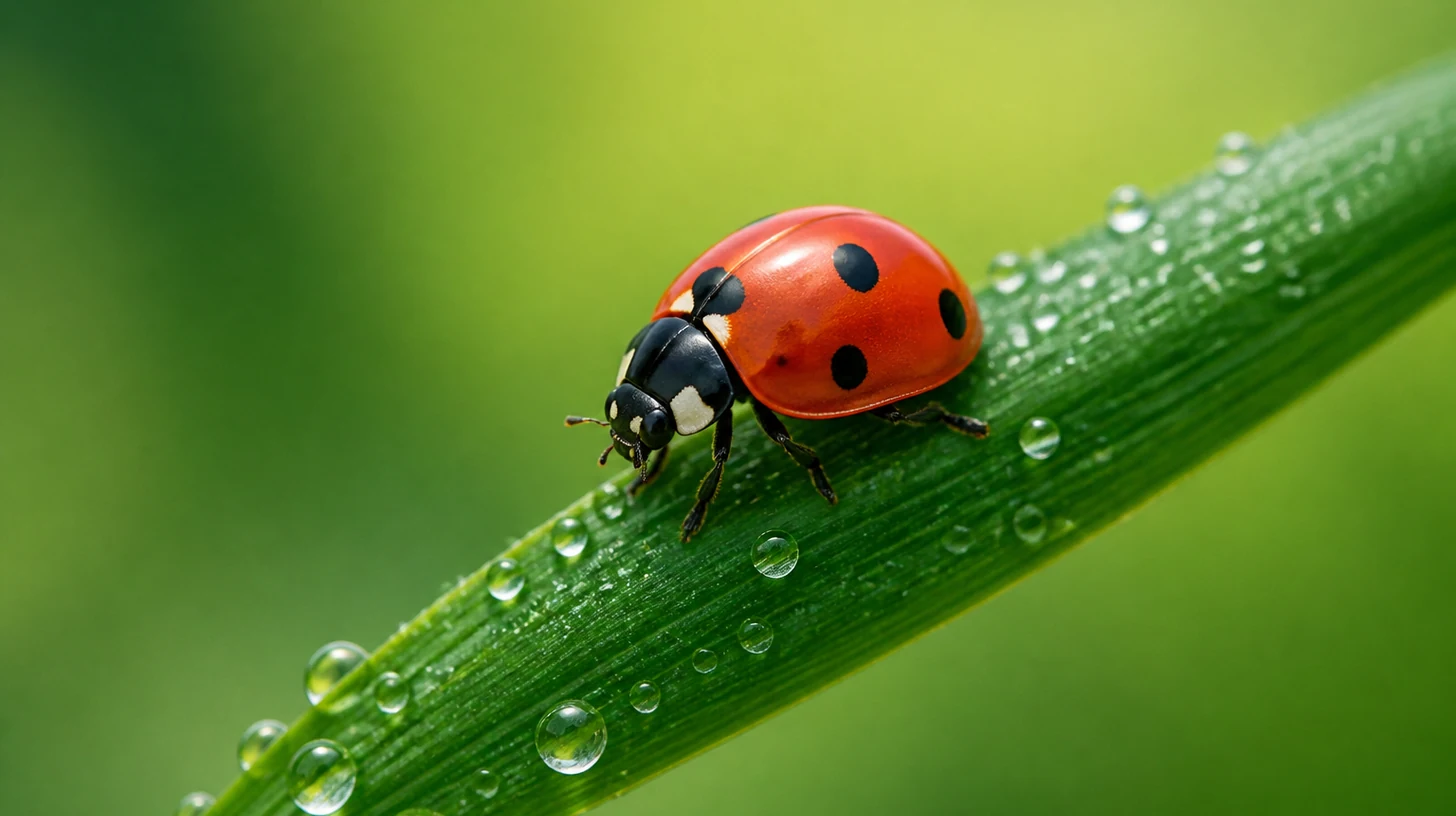
Most ladybugs eat aphids and other small creatures; depending on the species and conditions, the adults can live anywhere from a few months to more than a year. But not all of them are aphid hunters: some species feed on plants, others on fungi. Reducing their lifespan to a single number isn’t right either. Let’s look first at what they eat, then at how long they live. For the species and color diversity of the family, you can check out the main ladybug guide.
What do ladybugs eat most?
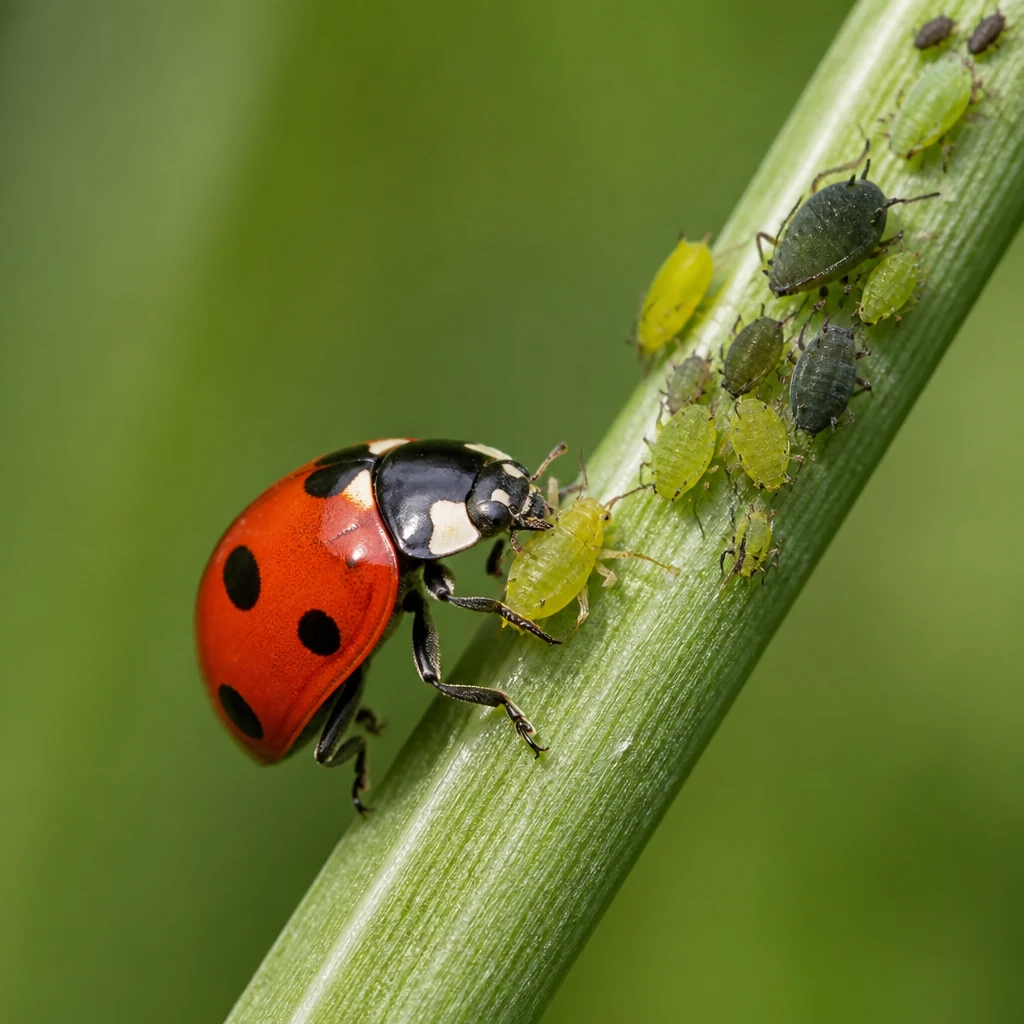
The main prey of many species is the aphid. Besides these small, soft-bodied insects, some ladybugs also hunt scale insects, mites, whiteflies and other small arthropods. The range of prey varies from species to species; making a firm judgment like “I saw a ladybug, so it must be eating aphids” is not right.
When they can’t find aphids, some species turn to other small prey; some can also consume pollen and nectar. The behavior of eating eggs or other ladybugs when food is scarce has also been recorded. In other words, the diet of the adult ladybug is not limited to a single type of prey. If you want to support these insects in the garden, you can read about ways to attract ladybugs to the garden.
Do ladybug larvae eat aphids too?
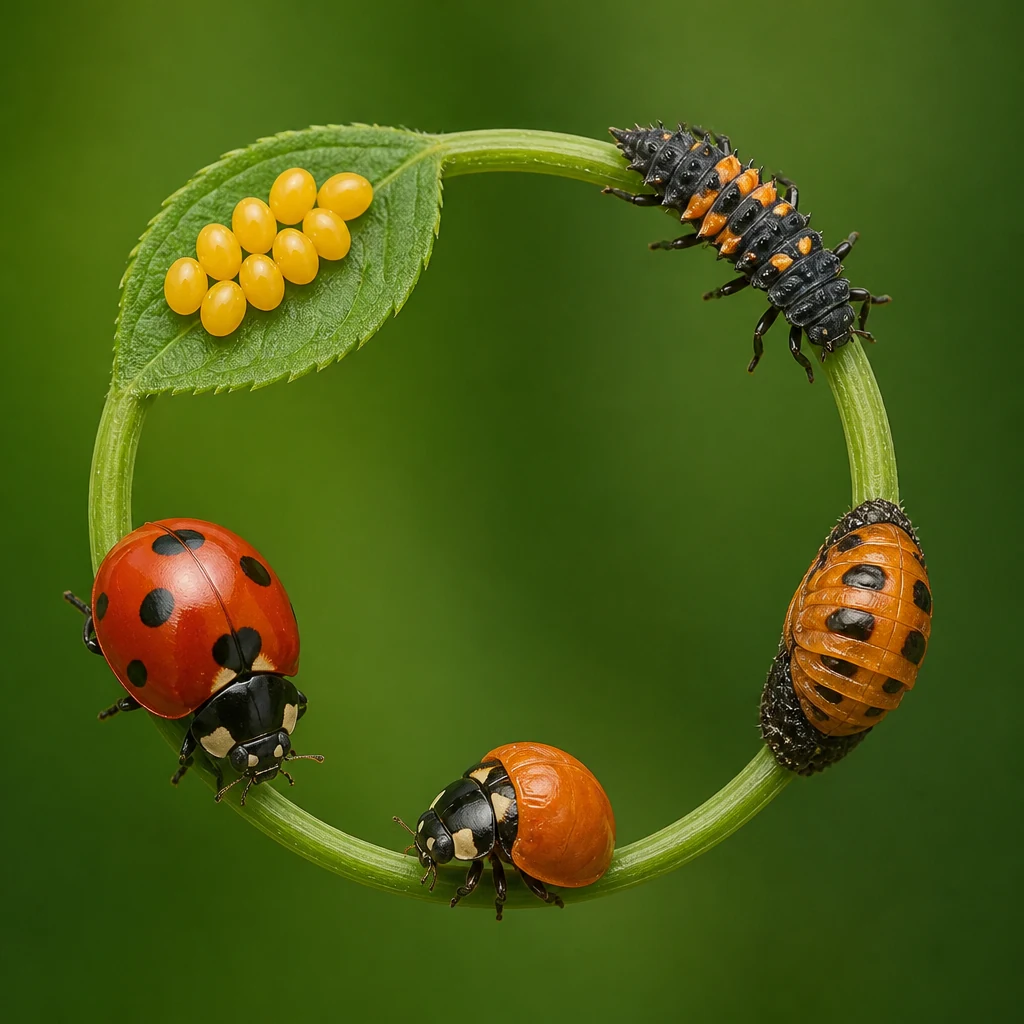
Yes, in many predatory species the larva also eats insects; in fact, this stage can feed more intensively than the adult. The larva does not look like the adult ladybug: it has an elongated, dark-colored body with spiny projections. It matters that prey is nearby when it hatches from the egg; this is related to the female ladybug often laying her eggs on plants where prey is present.
As the larvae grow they molt several times, then move into the immobile pupal stage. After that, the adult emerges and its wing covers harden. The egg-larva-pupa-adult sequence shows that ladybugs undergo complete metamorphosis. The details of this cycle are in the life cycle section of the main guide.
Are all ladybugs carnivorous?
No. Feeding habits differ within the family Coccinellidae. Although most well-known species are predators, some species feed on plant tissue; others consume fungi instead of insects. For example, ladybugs in the genus Psyllobora feed on the structures of powdery mildew fungi. This exception breaks the assumption that every small insect with red spots or a yellow color does the same job.
The existence of plant-feeding species also prevents classifying the whole family as either “garden-friendly” or “plant pests.” The identity of the species you see and the feeding traces on the plant it is on are what matter. Color and spots alone do not provide an identification; in the article on ladybug species and colors you can see why this distinction is difficult.
How long do ladybugs live?
There is no single lifespan that applies to all species. Cornell University’s biological control resource gives a range for adult ladybugs that extends from a few months to more than a year. For the seven-spotted ladybug (Coccinella septempunctata), UC IPM reports the lifespan of the egg-laying adult female during the growing season as about two months. This figure is not a fixed timetable for the whole lifespan or for all species.
Lifespan is affected by species, temperature, food, reproduction and overwintering conditions. Some adults spend the winter in sheltered places; for this reason, an individual that hides in autumn may not disappear within a few weeks. Applying the figure for a single North American species to every ladybug you see in Türkiye would also be misleading. You can find more on overwintering behavior in the article explaining why ladybugs come indoors in autumn.
| Comparison | Diet or duration | What does it mean? |
|---|---|---|
| Most predatory species | Aphids and other small creatures | Larva and adult can be predators |
| Psyllobora species | Powdery mildew fungi | An exception group that does not hunt insects |
| Some other species | Plant tissue | Not all species in the family are beneficial predators |
| Adult lifespan | From a few months to more than a year | Species and environmental conditions change the range |
| Egg-laying adult female of the seven-spotted species | About two months during the growing season | An approximate value given for the species and period; not a universal lifespan |
Short answer: what do they eat, how many days do they live?
Most ladybugs eat aphids and similar small prey; the larvae are usually predators too. But since there are species that feed on plants or fungi, don’t assign a single feeding habit to the whole family. Lifespan also varies with the species and conditions: adults can live a few months, and in some species the duration can exceed a year. To learn about the species, their habitat and their relationship with people together, you can go back to the basic ladybug guide.
Frequently asked questions
What do ladybugs eat most?
Many species hunt aphids and other small insects. Some species turn to prey such as mites or scale insects.
How many days do ladybugs live?
There is no single number in days that fits all. Depending on the species, an adult can live a few months; in some species the lifespan exceeds a year.
Are ladybug larvae harmful?
In many species, the larva hunts small creatures such as aphids. It looks different from the adult, but that alone does not mean it is harmful.
Do ladybugs feed on plants?
Some species eat plant tissue; most well-known species, however, are predators. There are also species that feed on fungi.
Sources
- Cornell University — Lady Beetles — prey, alternative foods and adult lifespan.
- University of Florida IFAS — Ladybirds of Florida — different feeding groups within the family.
- UC Statewide IPM Program — Sevenspotted Lady Beetle — the diet of the seven-spotted species and its approximately two-month egg-laying period.
- U.S. National Park Service — Ladybug — dietary diversity and life cycle.
- UC Statewide IPM Program — Fungus-Feeding Psyllobora Lady Beetles — the fungus-feeding exception.