The wasp is a member of the Vespidae family within the order Hymenoptera. This group, which people know as the “big bee,” actually stands on a separate line from the honey bee. There are over 5,000 species worldwide, and their distribution extends across Europe, Asia and North America. Their evolutionary line goes back about 150 million years. In other words, the creature in front of you is not a short-term summer guest, but a social insect group with a long evolutionary history. That’s why seeing the wasp as just a “stinging insect” falls short; the right view is to read it as a community of species in which biology, behavior and the relationship with humans come together. This article is a general guide; for the detail asked about most often in daily life, see our Wasp vs Honey Bee: How to Tell Them Apart? article.
Wasp Species: The Main Types Found in Türkiye
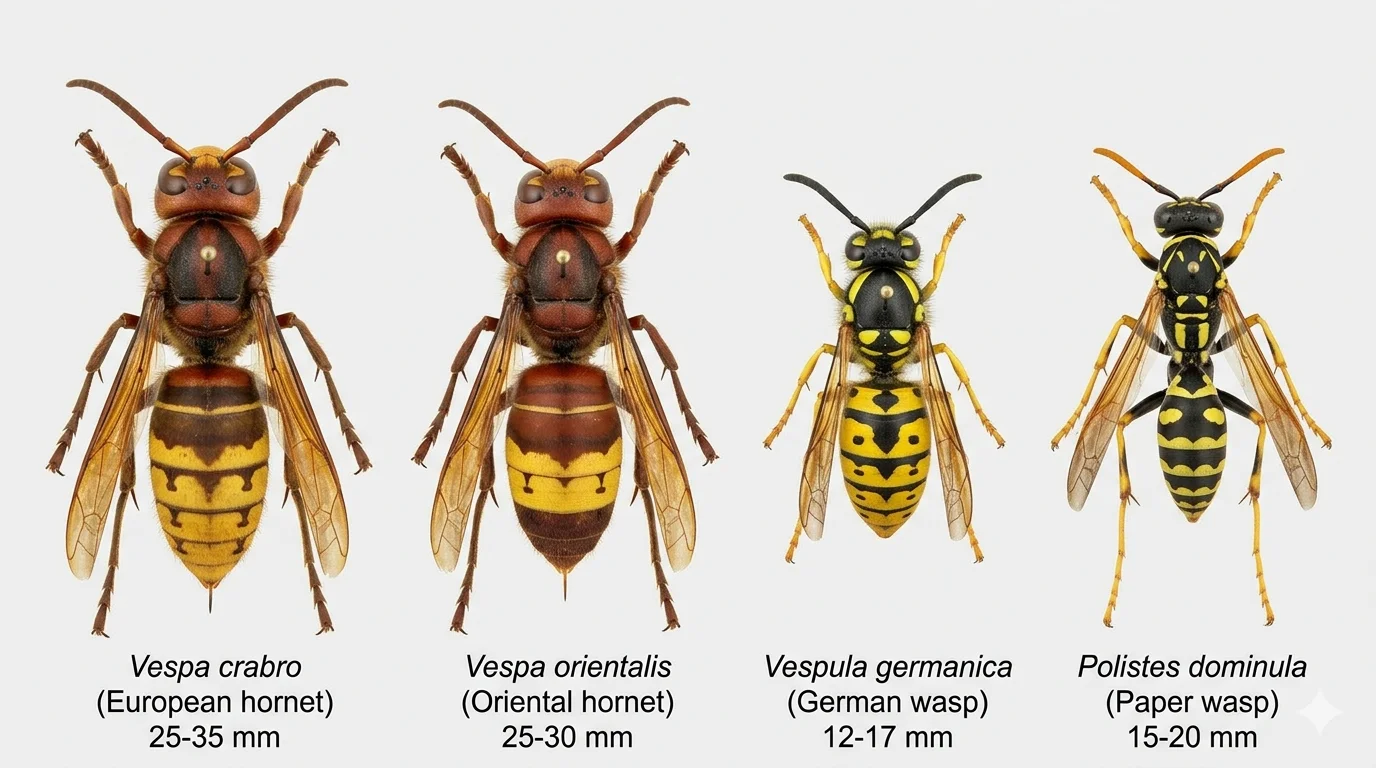
When it comes to wasps in Türkiye, four groups stand out most in the field: Vespa crabro, Vespa orientalis, Vespula germanica and Polistes species. Not all of them behave the same way. Size, color, nest location and attack threshold differ. Knowing this difference is important, because both risk perception and the way of intervening change accordingly. When talking about wasps, knowing the species name is not just an academic detail, but a practical safety tool.
Vespa crabro
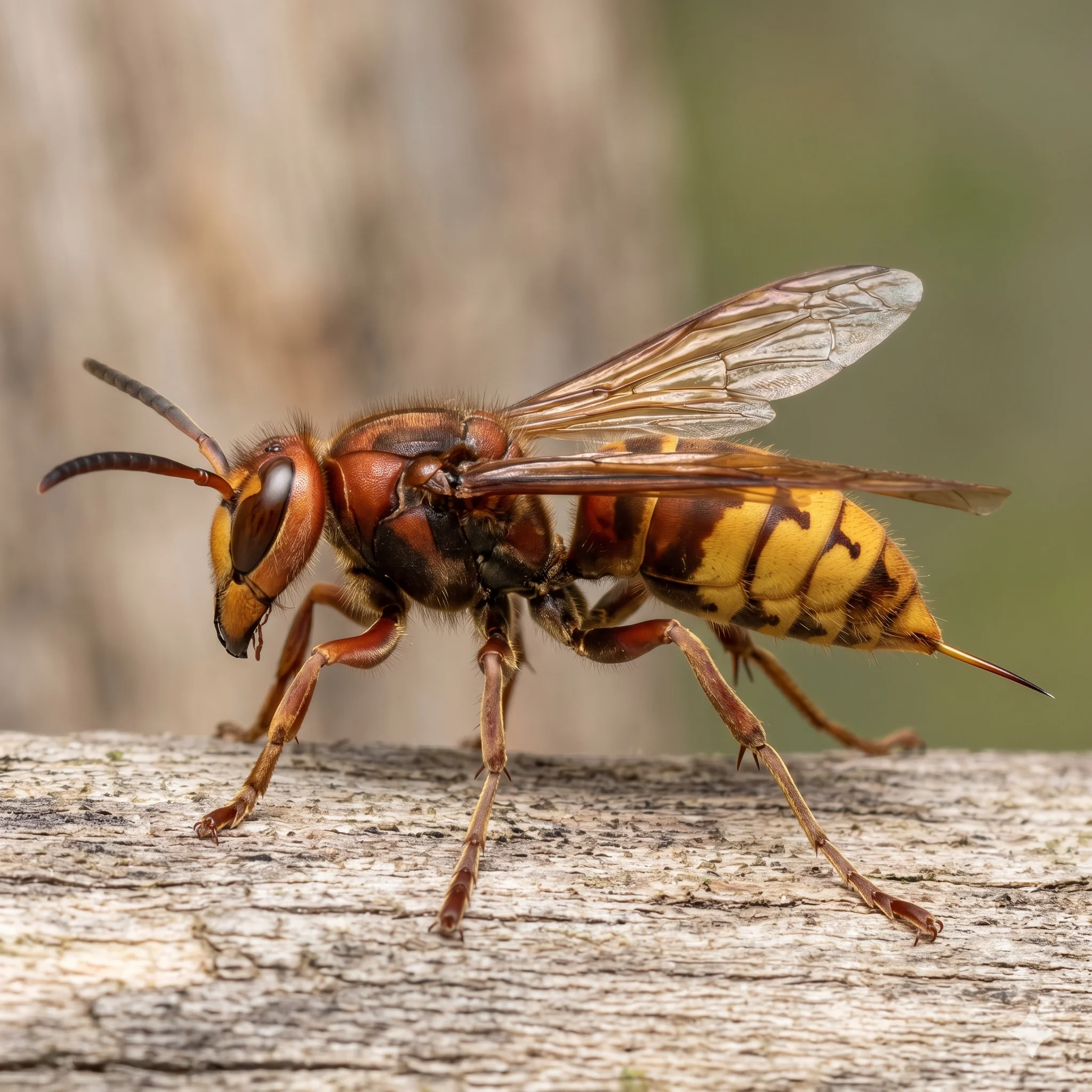
Vespa crabro is known as the European hornet and is one of the largest members of the group. It generally reaches a length of 25-35 mm. Brown-yellow tones dominate. Colony size is given in most sources in the range of 200-400 individuals. It often builds its nest in tree hollows, among branches or in sheltered high places. Its behavior matters as much as its appearance; normally it is not a species that attacks without reason, but it is serious about nest defense.
Vespa orientalis
Vespa orientalis, that is, the Oriental hornet, is the species heard of more often along the Mediterranean and Marmara regions. It can be around 25-30 mm and likes warm climates. It stands out with its brown-yellow body. It isn’t for nothing that it is called “aggressive” in the field; especially if someone approaches the nest, its defensive response rises. That’s why the most correct reflex regarding it is to keep your distance. This species is often the main reason why the word wasp frightens people.
Vespula germanica
Vespula germanica is known as the German yellowjacket or German wasp. At 12-17 mm it is smaller, but it is not a species to be underestimated. Its bright yellow-black patterns are distinctive. It is famous for its underground nests. It can be more visible in picnic areas, around garbage and in places where sweet smells rise. Because adults go for sugary sources for energy. That’s why its contact with humans is more frequent.
Polistes species
The Polistes group is known as paper wasps. Its body structure is more slender, it looks long-legged, and it builds its nest with paper-like material. This group is often not as aggressive as the other two large species. Still, “calm” doesn’t mean safe. If the nest is touched, defense begins. Skipping Polistes under the wasp heading would be a big omission, because it is also one of the forms encountered in Türkiye.
Wasp Biology and Social Structure
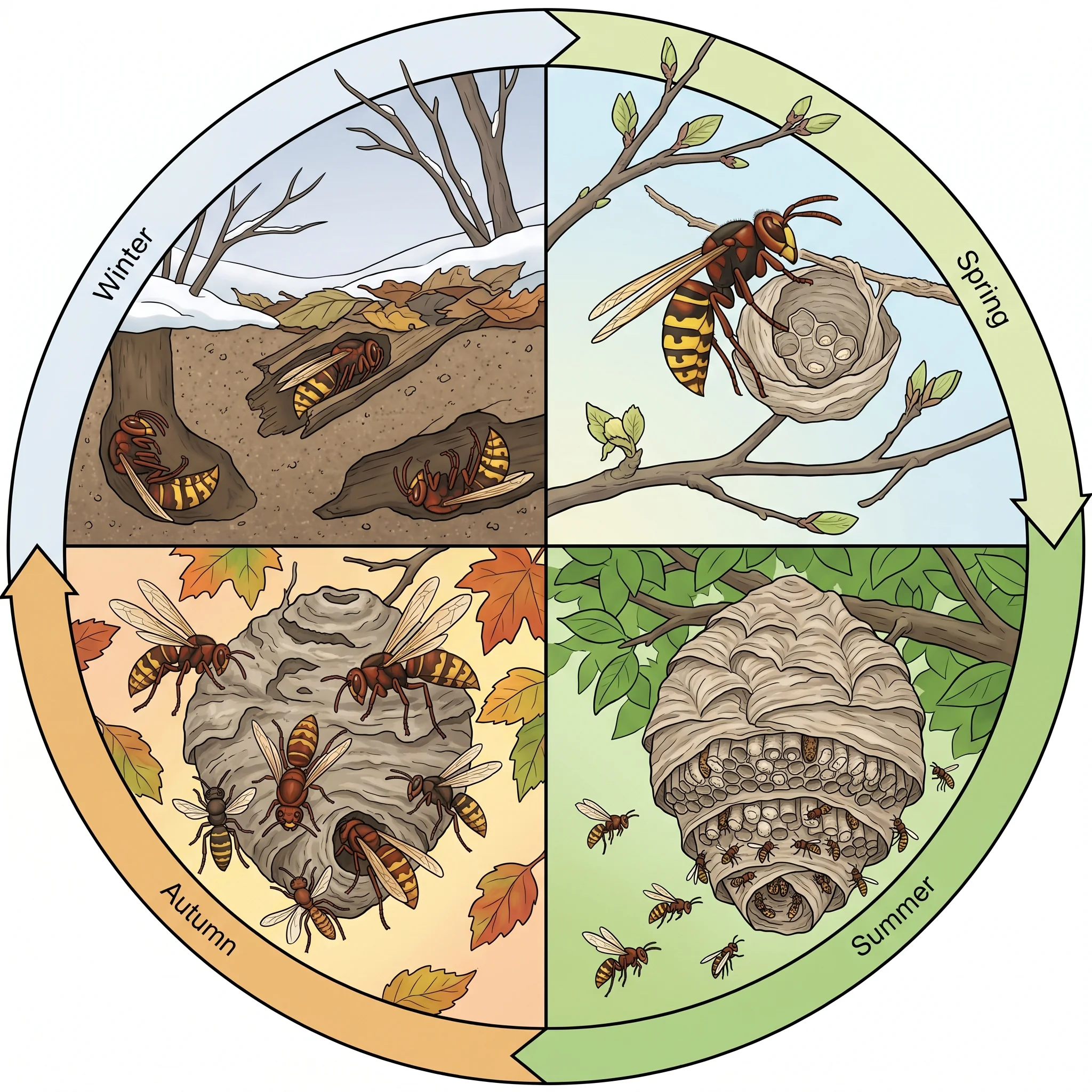
The wasp undergoes complete metamorphosis. That is, it has egg, larva, pupa and adult stages. The colony structure is also clear: a queen lays eggs, workers collect food, build the nest and care for the larvae, and males appear in the breeding period. In most species the colony’s lifespan is one season. In spring the queen starts alone, in summer the colony grows, in autumn new queens and males emerge, and in winter only the queens survive. This cycle explains why the wasp seems like a late-summer creature.
Larvae need protein. That’s why workers hunt insects, cut them up and carry them to the nest. Adults, on the other hand, go more for sweet sources for energy. In other words, the feeding role changes within the same colony. This distinction is important. The “they’re stealing honey” sight you see in the field and larval feeding behavior are not the same thing. Because the wasp also keeps other insects in check in nature, it is part of the ecological chain. If you read it only through human annoyance, you see half the picture.
Wasp Nest and Behavior
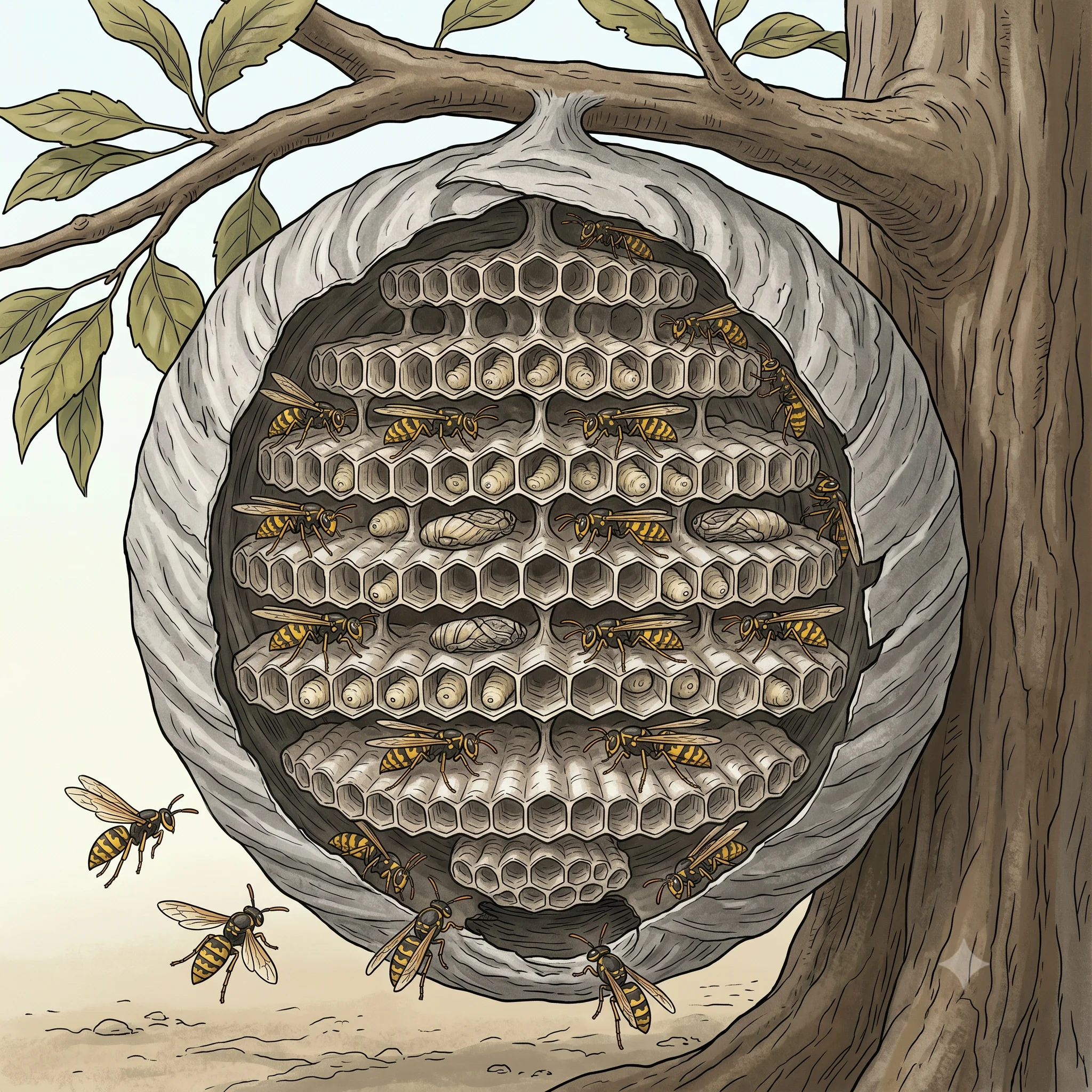
The most critical element in behavior is threat perception. Wasps communicate with pheromones. If the nest is shaken, vibration increases, or there is loud noise and fast movement, the alarm rises. That’s why throwing stones at the nest, turning a hose on it, smoking it or trying homemade chemicals is not wise. The colony reads this as an attack. A good rule in the field is: find the nest, stay away, call a professional. In dealing with wasps, it is distance, not courage, that pays off.
The Wasp’s Relationship with Humans
The wasp has shared the same environment with humans for a long time. In historical sources its aggressive image has existed since early times. One reason for this is that it is visible and large; people notice it easily, but noticing it and identifying it correctly are not the same thing. The wasp’s Turkish name is also meaningful here: its first part means donkey, that is, big; its second part means bee, that is, bee-like. Folk language was born precisely from physical perception.
In the modern era another species has come to the fore: Vespa velutina. Because this species harms honey bee colonies in Europe, it is monitored as a biological threat. In Türkiye, however, it would not be right to act as if it were currently a widespread and established record; it is more of a species being monitored. What is needed here is not panic, but surveillance. It is not right to always think of the same species when wasps are mentioned; the tone of the relationship with humans varies from species to species.
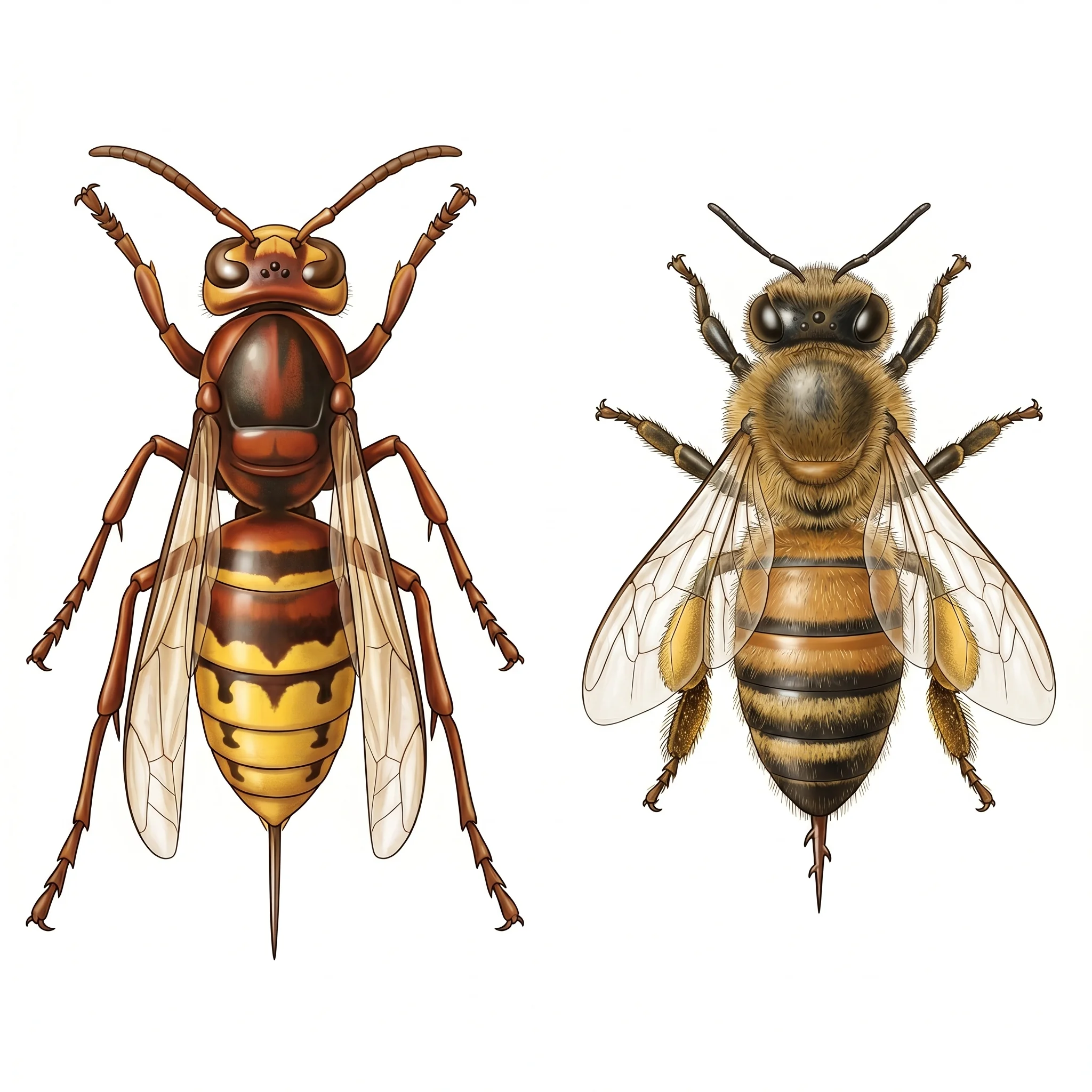
Wasp Sting and Its Mechanism
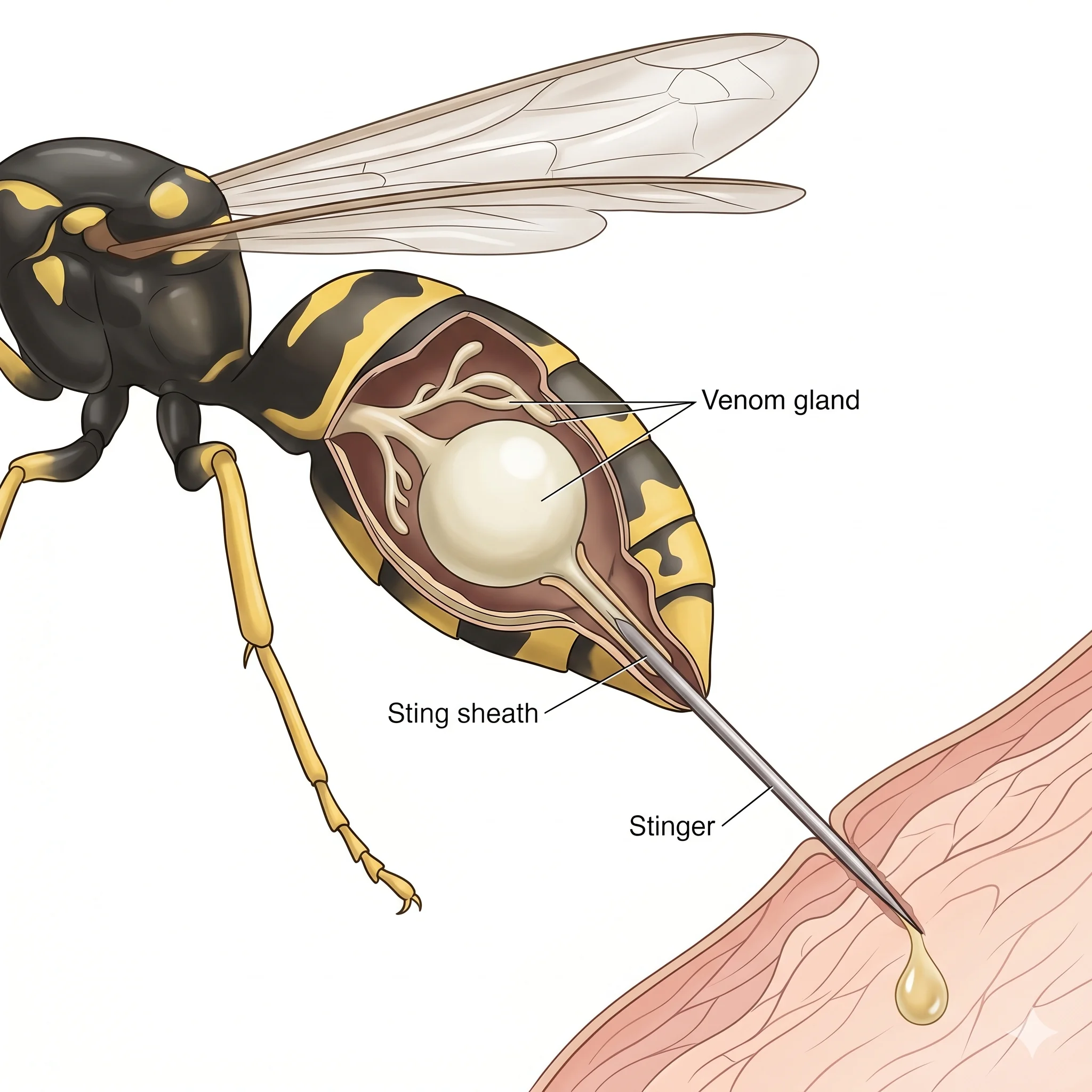
A wasp can sting more than once. Because its stinger doesn’t easily break off and stay behind the way a honey bee’s does. This makes a serious difference in defensive behavior. The venom contains histamine, serotonin, acetylcholine and various protein toxins. The pain at the moment of the sting generally starts quickly. Local redness, warmth and swelling may be seen. In most people this picture is short-lived, but not every body gives the same reaction.
Pain and swelling are usually pronounced in the first hours, then ease. Itching and tenderness, however, can last longer. But rapid swelling in the face, lips and tongue, shortness of breath, widespread hives, dizziness or a feeling of fainting are a different picture. These symptoms are taken seriously in terms of an allergic reaction. Although a wasp sting may look like a minor event, in some people it can escalate quickly. That’s why monitoring the symptoms is an important practice.
Wasp Health Perspective
A wasp sting is painful for most people but stays limited within a short time. Risk groups should be discussed more clearly. Multiple stings, children, the elderly and people with a Hymenoptera venom allergy are assessed more carefully. Sensitivity to bee and wasp venom can be seen in about 3 percent of the world’s population; this rate is not a large mass, but it is not small enough to ignore either. Then there are multiple stings. Ten or more stings, especially in small bodies, can create a systemic load.
I’m not giving medical advice here; but the direction is clear. After a sting, clean the area, cool it and keep track of the complaints. If there is widespread itching, facial swelling, inability to breathe, hoarseness or a change in consciousness, call for emergency help. In Türkiye, severe reactions to stings from wasps and similar Hymenoptera are rare but serious. This is also the emphasis of Türkiye’s Ministry of Health and surveillance sources: focus not on panic, but on noticing early.
Another point is that the risk varies from person to person. Someone who has had a severe reaction before and someone stung for the first time are not assessed the same way. Children, the elderly and people with a history of allergy are monitored more carefully. For people who work outdoors in summer, sit in the garden or have picnics, checking the surroundings is also a simple but powerful habit. The real task under the wasp heading is neither to downplay the event nor to exaggerate it.
Wasp FAQ
How do you tell a wasp from a honey bee?
A wasp is larger, shinier and less hairy. The honey bee, on the other hand, is smaller and hairy. A wasp can sting more than once in defense; a honey bee may leave its stinger behind after stinging. Their nests are also different.
How many times does a wasp sting?
An individual can sting more than once if conditions allow. It is not limited to a single sting. In nest defense the number of attacks can increase. That’s why care is needed around the nest.
How do I find a wasp nest?
You can watch the entry-exit line from a distance. You’ll see the wasps going back and forth to the same point. But approaching, throwing stones or interfering with the hole is not right. The nest may also be in a hidden corner of the house.
Is removing a nest dangerous?
Yes, it is dangerous. The colony mounts a collective defense. Attempts with homemade pesticides, fire, water or smoke often increase the risk. A licensed pest control professional is needed.
What should you do after a wasp sting?
Clean the area with soapy water, apply cold and watch the symptoms. If there is widespread itching, shortness of breath, facial swelling or dizziness, call for emergency help. A sting that looks simple can have a different outcome for someone with an allergy.
Wasp-Related Topics and Sources
The main wasp page opens the door to narrower topics. The goal here is not to leave the reader stuck on a single question. Species differences, nest removal and the distinction from the honey bee are explored in depth on separate pages. This way the page structure works; the main article gives the basic picture, and the subtopic pages go deeper into a single topic.
Internal links:
- Wasp vs Honey Bee: How to Tell Them Apart? — the closest subtopic for telling species apart.
External sources:
This framework describes the wasp not in the language of fear, but in measured and evidence-based language. The most solid conclusion is not approaching the nest, reading the species correctly and not being late when there is a health symptom.
Related Topics
If you want to read this topic in a wider context, see the cluster articles: Honey Bee: Society, Communication and Ecological Importance.