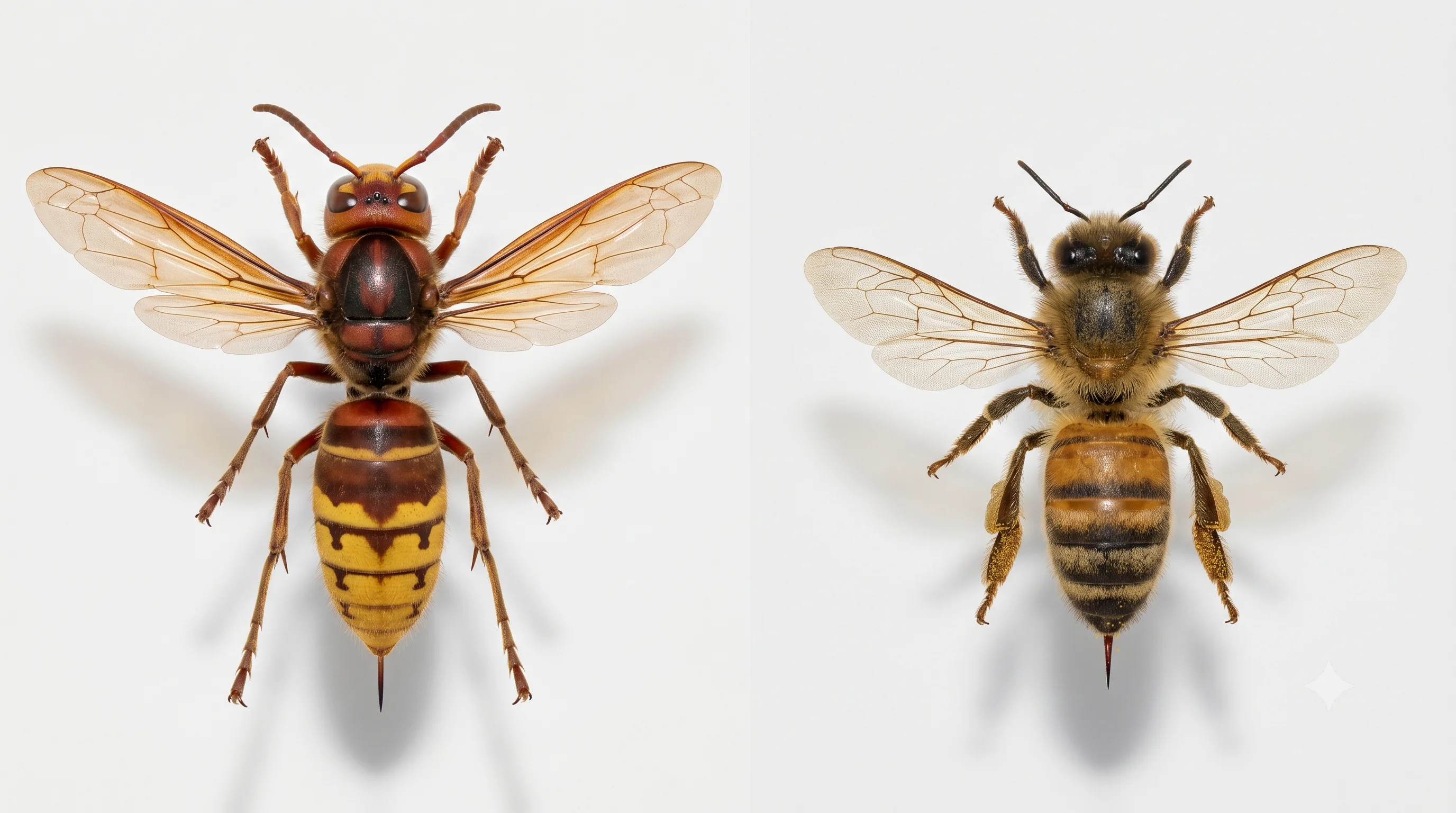
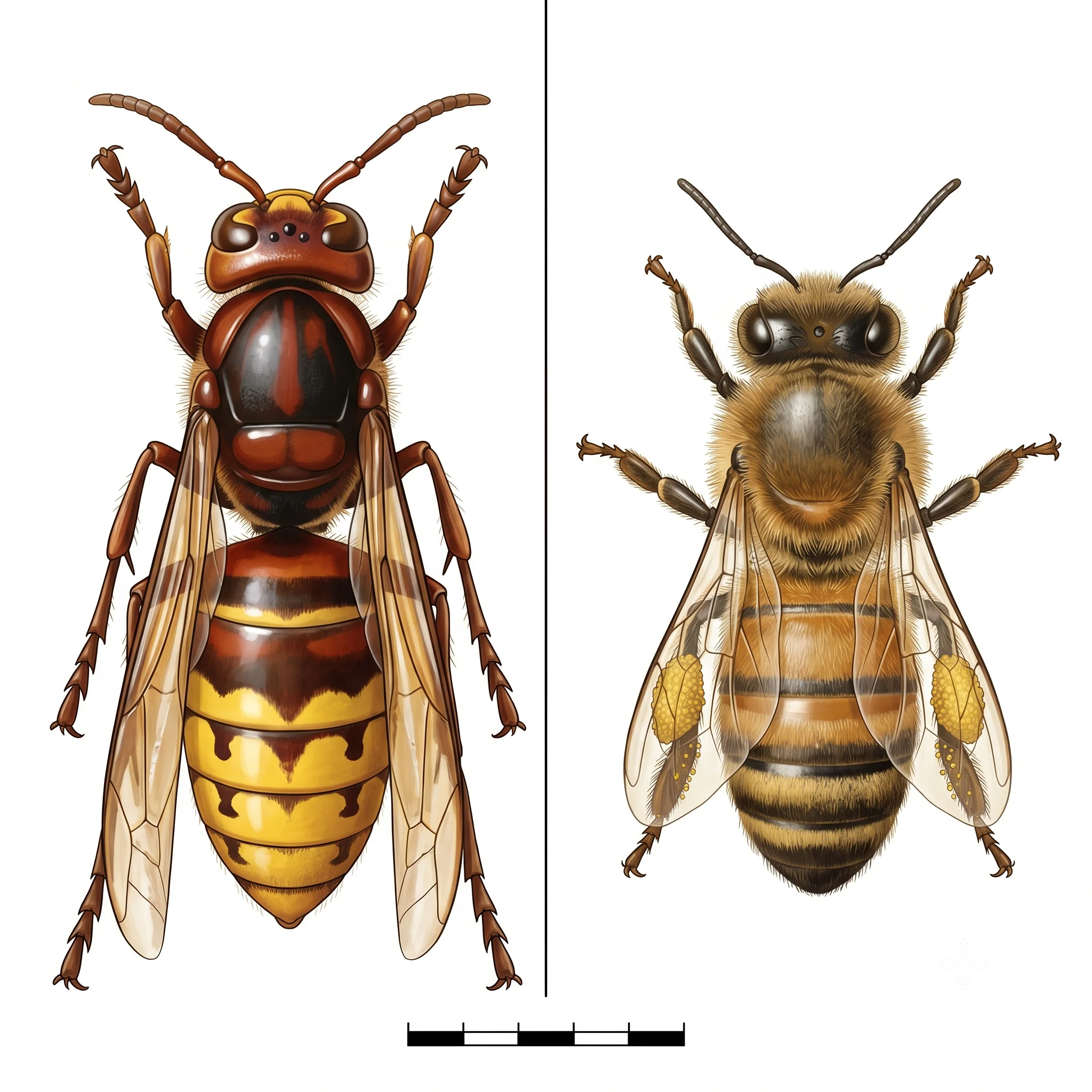
The wasp is large, shiny and almost hairless; the honey bee is small, round and hairy. The way to tell them apart at a single glance from a distance is to look at the hair: the honey bee looks velvety, the wasp looks polished.
The real difference, though, is not in appearance. A honey bee can sting you once and usually pays for it with its life; a wasp pulls its stinger back and stings again and again. That is why confusing the two also means making the wrong decision about approaching. In other words, in the field the first difference is visible to the eye, while the second becomes clear when you make the mistake of getting too close. The right attitude is not curiosity but keeping your distance. In this article we separate the differences between the wasp and the honey bee in a practical, clear way, without creating panic.
Wasp and honey bee: size and color difference
The first difference between a wasp and a honey bee is size. A wasp generally appears in the 25-35 mm range; a honey bee is usually around 12-15 mm. This measurement alone does not settle everything, but it gives a big clue in the field. The wasp looks longer, with a narrower waist, and more “hard-edged”. The honey bee, on the other hand, looks stockier, rounder and, because its body is hairy, softer. Color does not deceive either: the honey bee is close to brown-gold tones and hairy; the wasp is usually shiny with yellow-black stripes or in brown tones. To the naked eye, a shiny surface is a sign in favor of a wasp. This difference is useful especially when you see one in the garden, around garbage or on a flower.
Wasp and honey bee: sting mechanism difference
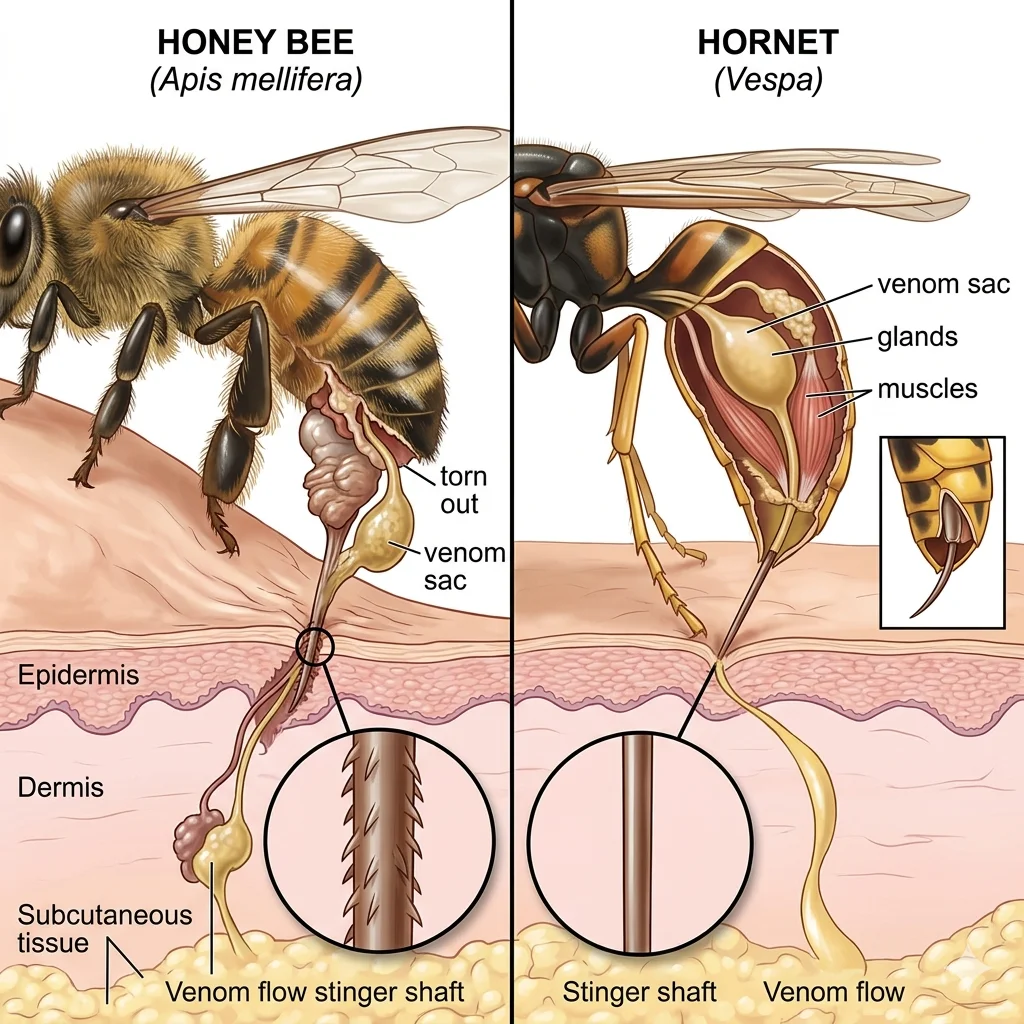
The critical difference between a wasp and a honey bee is the way they sting. The honey bee’s stinger is barbed; it can get stuck in the skin, and in most cases this is why the bee is harmed. For this reason the honey bee stings once and then cannot get away. In the wasp, the stinger has a straighter structure; it can be pulled back and used again. This changes defensive behavior. That is why a wasp does not leave a threat after a single strike. However, a misconception needs to be corrected here: not every sting is equally severe. The person’s allergy, the place stung, the number of stings and the body’s reaction change the outcome. In other words, saying “the honey bee is harmless” is as wrong as saying “the wasp is always deadly”. Both are taken seriously, but the wasp’s potential for multiple stings carries a separate risk.
Wasp and honey bee: temperament and behavior difference
Even though the wasp and the honey bee live in the same environment, their temperament differs. A honey bee colony looks calmer; its main job is collecting nectar, carrying pollen and maintaining order in the hive. It switches to defense when it feels threatened. The wasp, on the other hand, is perceived as more aggressive; it can react more harshly to approaching the nest, sudden movements, vibrations and behaviors it interprets as an attack. The important point here is this: part of the behavior is the species, and part of it is the context. Sugary food left out, garbage, ripe fruit and proximity to a nest increase the risk. While the honey bee mostly works on flowers, the wasp is seen with a broader feeding repertoire. That is why one cannot be labeled “good” and the other “bad”. Both are part of nature; but the ways they manage contact with people differ. Your job is to manage distance, not the species.
Wasp and honey bee: nest and colony difference
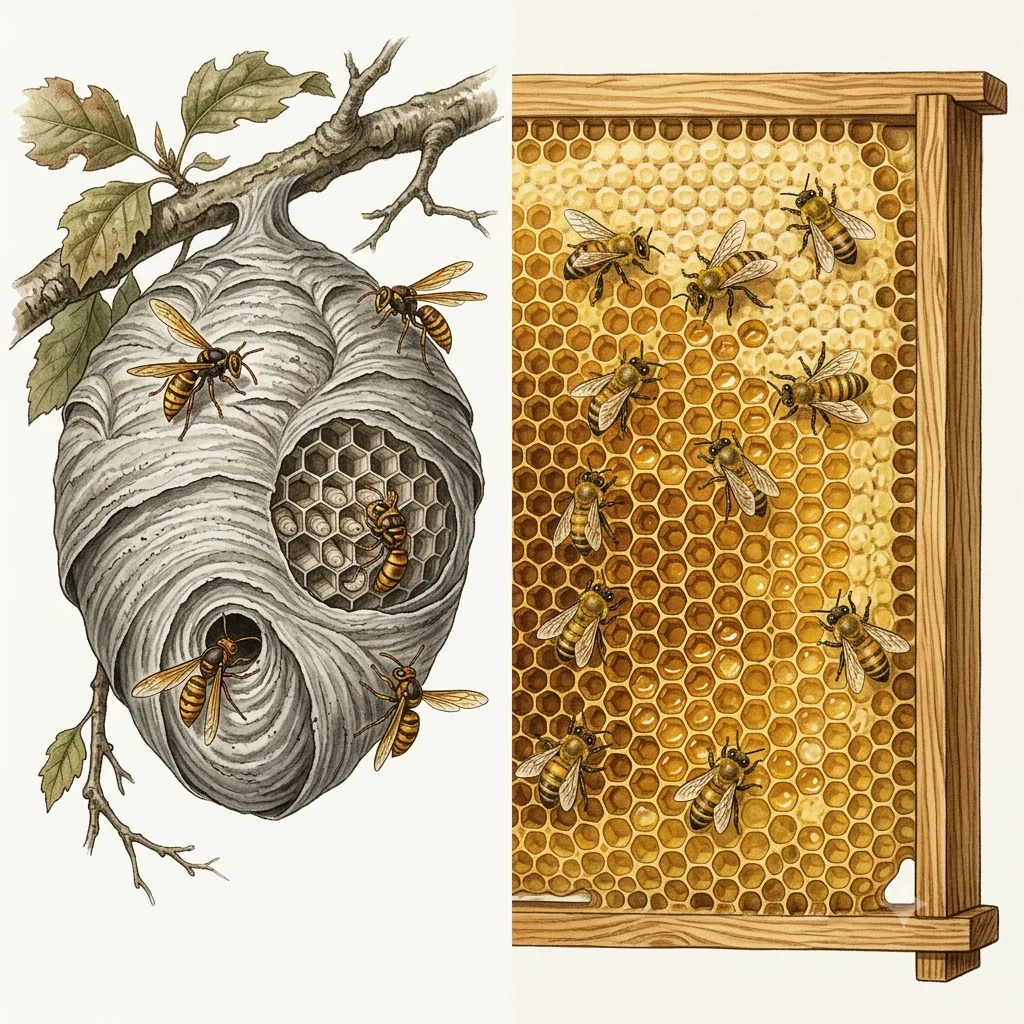
The wasp and the honey bee also differ in terms of nests. The wasp builds a paper-like structure from chewed wood fibers; the nest usually looks gray, layered and with an outer shell. It can choose sheltered places such as a tree branch, under a roof, the edge of the eaves or underground. The honey bee, on the other hand, builds comb from beeswax; regular hexagonal cells and hive architecture stand out. This difference makes it easier to track them even from a distance. The colony cycle is not the same either. The structure of a honey bee colony is very orderly and long-lasting; in the wasp, the seasonal wave is more pronounced. In other words, both are social insects, but their architecture does not come from the same school. If you suspect a nest, don’t approach it. Especially where there are children, a history of allergy or a lot of activity, the job is left to a professional. Here caution wins, not heroics.
Wasp and honey bee: what to do if you get stung?
When a wasp or a honey bee stings, the first thing is to stay calm. Clean the area with soap and water, apply something cold and monitor the swelling and pain. If the stinger has remained after a honey bee sting, don’t squeeze it with your fingers; remove it by scraping with a thin, flat surface such as the edge of a card. With a wasp the stinger usually does not remain, but in both cases redness, itching and local swelling can be within normal limits. The real red line is shortness of breath, swelling of the lips and face, widespread itching, dizziness, palpitations or clouding of consciousness. That picture means emergency help. This is not a medical prescription but a field rule: don’t underestimate a sting, but don’t blow it up into panic either.
The related main articles are here: Wasp and Honey Bee. If you like, as a next step you can move on to narrower topics such as Vespa velutina, the Asian hornet, or treatment of honey bee sting shock. On the external sources side, Britannica’s Vespidae overview clarifies the wasp group, Britannica’s honey bee page the honey bee, and FAO Pollinators the pollination side. The short verdict is this: the wasp looks larger and more aggressive; the honey bee looks hairier and calmer. In the field, what tells them apart correctly is not the eye but distance.