Although ticks are called “bugs” in everyday speech, they are not insects in scientific terms; they are arthropods belonging to the order Ixodida within the class Arachnida. They have eight legs and are relatives of spiders and scorpions. There are more than 900 species worldwide. Their evolutionary line goes back about 100 million years; in other words, this group of animals is thought to have been around in the age of the dinosaurs as well. Visually, people put them in the same basket as insects, but knowing the correct class matters. That is because the tick, with its behavior and health impact, stands apart from the classic “flying, stinging bug” logic. This article is a general guide; for the detail people ask about most often in daily life, see our article What to Do After a Tick Bite? An Evidence-Based Guide.
What is a tick and why does it matter?
A tick is an ectoparasitic mite that feeds by sucking blood. The issue is not just the “bite”; it can act as a bridge between humans, pets and wildlife. That is why the tick is a critical animal from a public health perspective. The language of panic is not right; but ignoring it is not right either. The risk increases especially in rural areas, pastures, forest edges, animal shelters and places with pet contact. What makes ticks an important subject is both their biology and their potential to carry vector-borne diseases.
When ticks come up in Türkiye, the topics that stand out most are CCHF, Lyme and tularemia. But not every tick means the same risk. Species, region, season and attachment time are evaluated together. So the sentence “I saw a tick” is not enough on its own; which species, where, and how long it stayed attached are what matter. The right approach to ticks is proportion, not fear.
Tick species: the main types in Türkiye
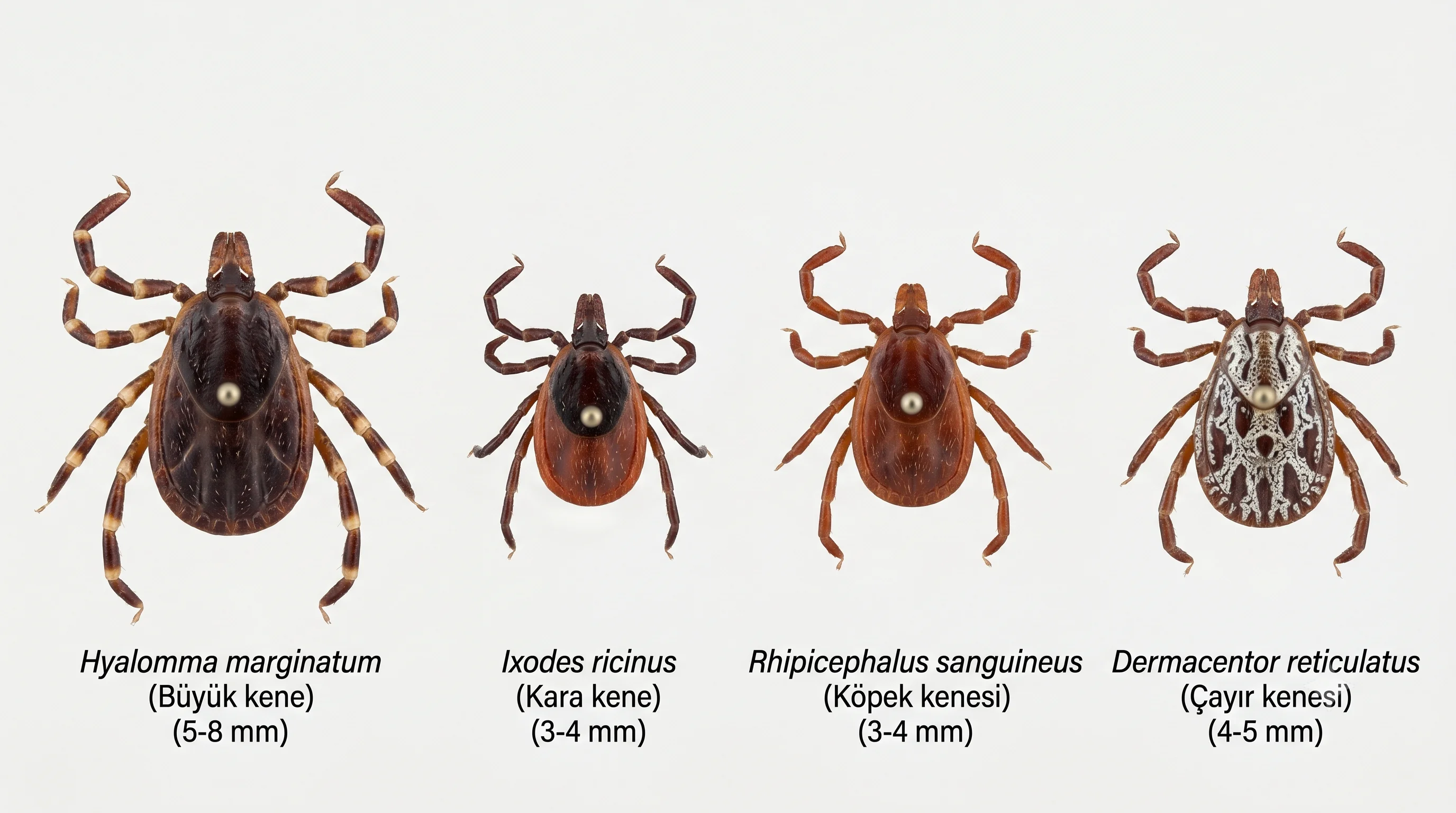
Four groups are mentioned most often in the field in Türkiye. These are Hyalomma marginatum, Ixodes ricinus, Rhipicephalus sanguineus and Dermacentor reticulatus. Although they look like members of the same family, their habitat, host preference and disease associations differ. In identifying a tick, knowing the species provides practical safety.
Hyalomma marginatum
Hyalomma marginatum is known as the big tick. It is seen more often in rural areas, around barns and in regions with animal contact. In Türkiye it is one of the vectors most associated with CCHF. That is why it matters especially for people with rural exposure in summer. This is the reason it is one of the most discussed species when ticks come up.
Ixodes ricinus
Ixodes ricinus prefers damp, wooded areas. It is counted among the main tick species associated with Lyme disease. In Türkiye it is not as widespread as in some parts of Europe, but its presence is not ignored. Within tick ecology, this species stands out for its sensitivity to moisture and vegetation.
Rhipicephalus sanguineus
Rhipicephalus sanguineus is known as the dog tick. It can be seen more often around pets and in urbanized environments. So ticks can become an issue not only in rural areas but also around apartment blocks and in places like gardens. Limiting tick risk to forests alone would be a mistake.
Dermacentor reticulatus
Dermacentor reticulatus can be found around meadows and pastures. It is among the species associated with tularemia. Again, the important point is this: not every species carries the same disease. If ticks are not read species by species, the picture remains incomplete.
Tick biology and life cycle
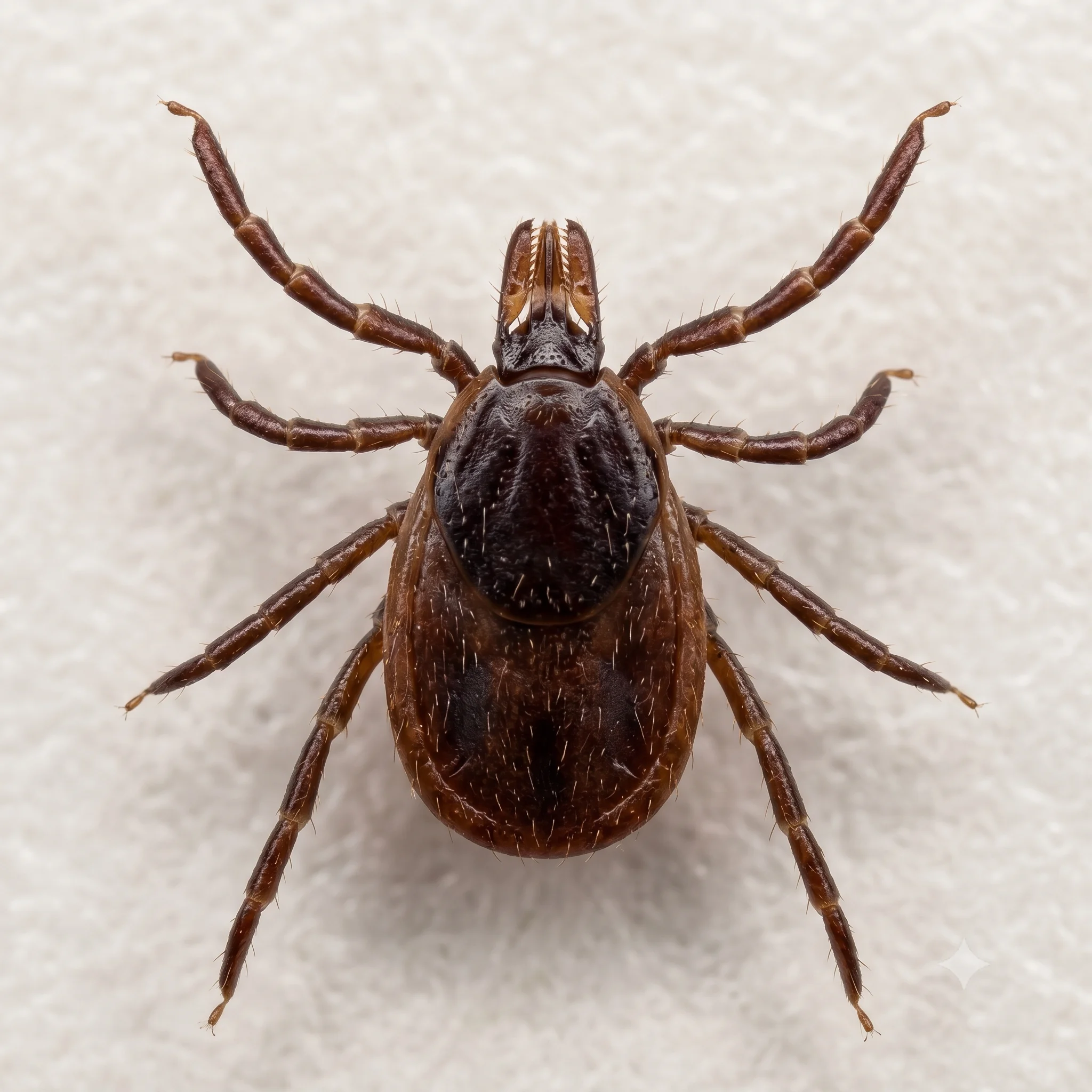
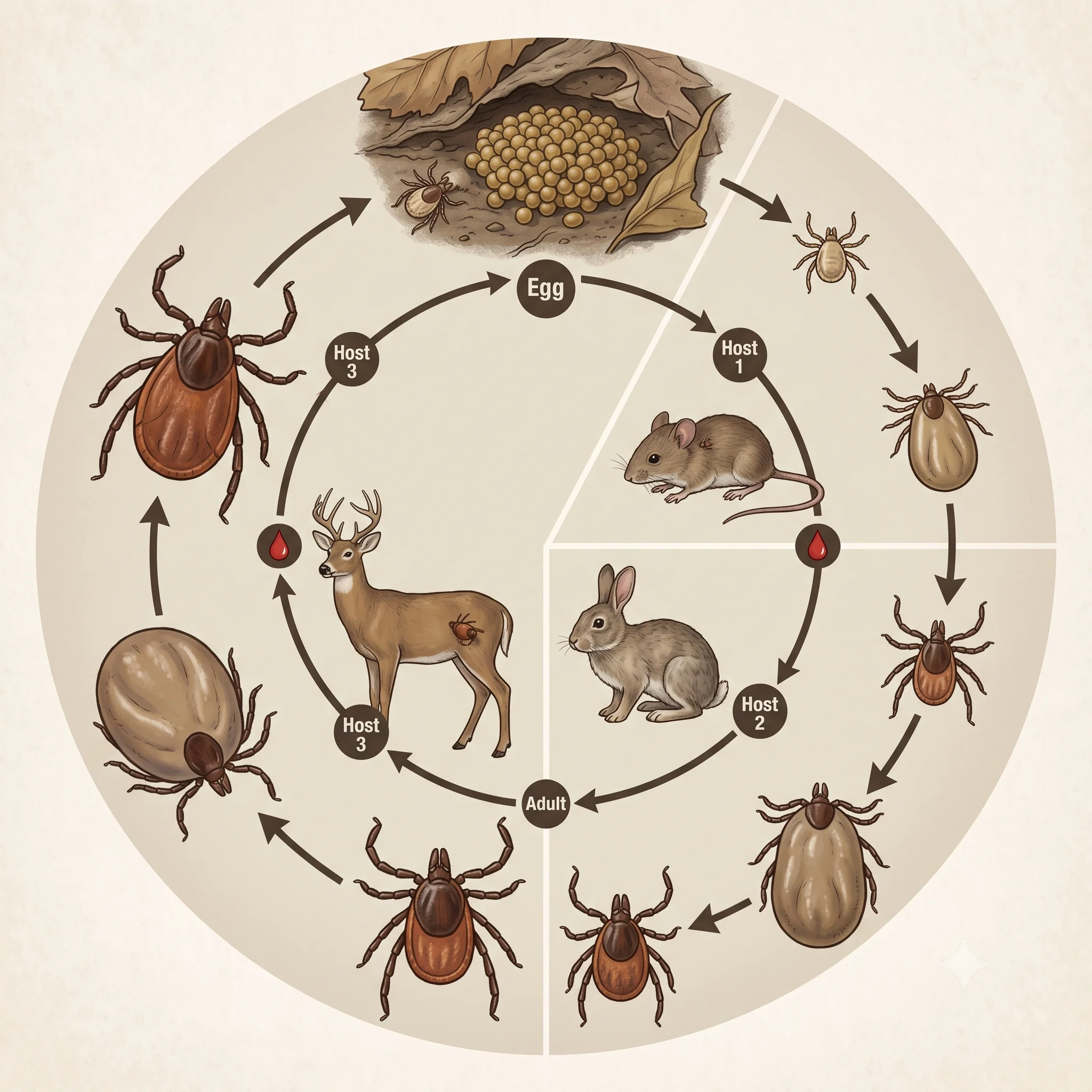
Ticks do not undergo complete metamorphosis. They have four stages: egg, larva, nymph and adult. The larva has 6 legs; in later stages this rises to 8 legs. Some species use a different host at each stage in a three-host cycle; others may progress with a single host across two stages. This biology makes the tick more complex than an ordinary ectoparasite.
Depending on the species and environmental conditions, a tick’s lifespan can be roughly 1-2 years. Being able to survive for months without a blood meal makes it environmentally resilient. In other words, the tick is an animal that “waits” until it finds a host; it manages its energy economy very well. This also makes control in the field harder.
The larval and nymphal stages matter too. Because they are small, they can be hard to notice. Nymphs in particular are easily missed with the naked eye. In tick control, looking only for adults is not enough; the small stages need to be considered as well.
Tick behavior and how ticks bite
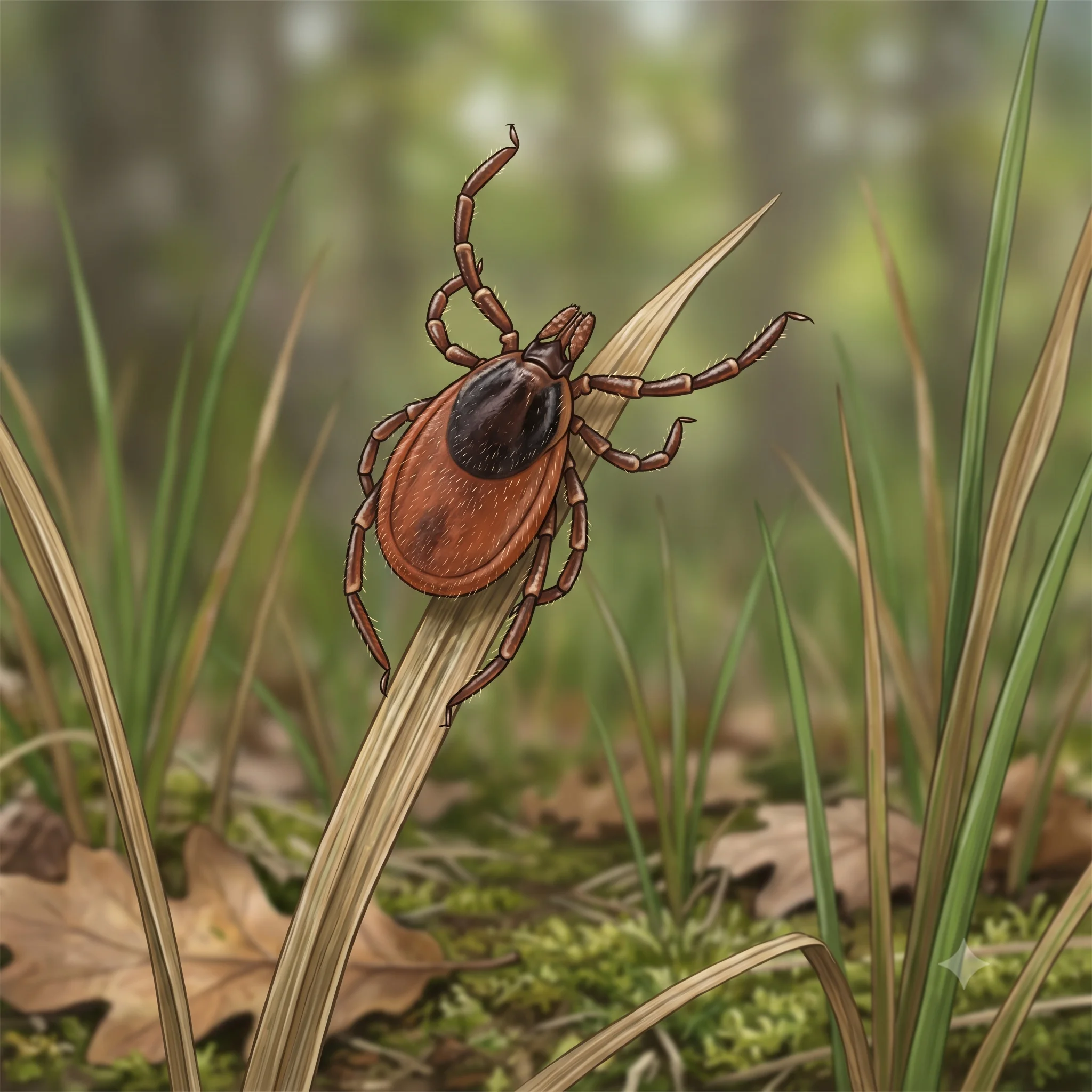
While searching for a host, a tick shows “questing” behavior. It waits on the tip of a grass blade, on a shrub or on low vegetation. It stretches out its front legs; when it senses heat, odor and vibration, it latches on. In other words, the tick does not actively run and hunt; it waits and latches on. This behavior is linked to thermoreception and chemoreception.
A tick may not cause any pain at the moment it bites. That is because some species secrete anesthetic and anticoagulant substances. As a result, people often notice the attachment late. Attachment time can vary from 1-7 days. As the tick fills with blood it swells and becomes more visible. This shows that by the “I’ve only just noticed” moment, the event may already have been going on for some time.
Another aspect of tick behavior is that environmental risk increases with the season. When the balance of temperature and humidity is favorable, activity rises. That is why checking your body after returning from forests, pastures and animal areas is a simple but powerful habit.
Ticks and humans
The tick is not a new threat to humans; throughout history it has remained an issue wherever there has been contact between humans, animals and forests. In Türkiye, the CCHF topic became more visible after the 2000s. This made the tick not only a biological but also a social health issue. The tick question affects a wide area, from rural labor to livestock farming, from gardens to picnics.
Home remedies are a big mistake here. Attempts with alcohol, oil, petroleum jelly, a cigarette or burning are not right. These practices disturb the tick and can cause it to secrete more. In tick removal, the aim is to remove the parasite in a controlled way without stressing it. In other words, the conversation is about method, not folklore.
The best approach in dealing with ticks is to reduce the risk of contact and not delay checking. Pets can also be part of this cycle. Someone who has been out walking a dog should not consider the job done without checking both themselves and the animal.
Tick-borne diseases
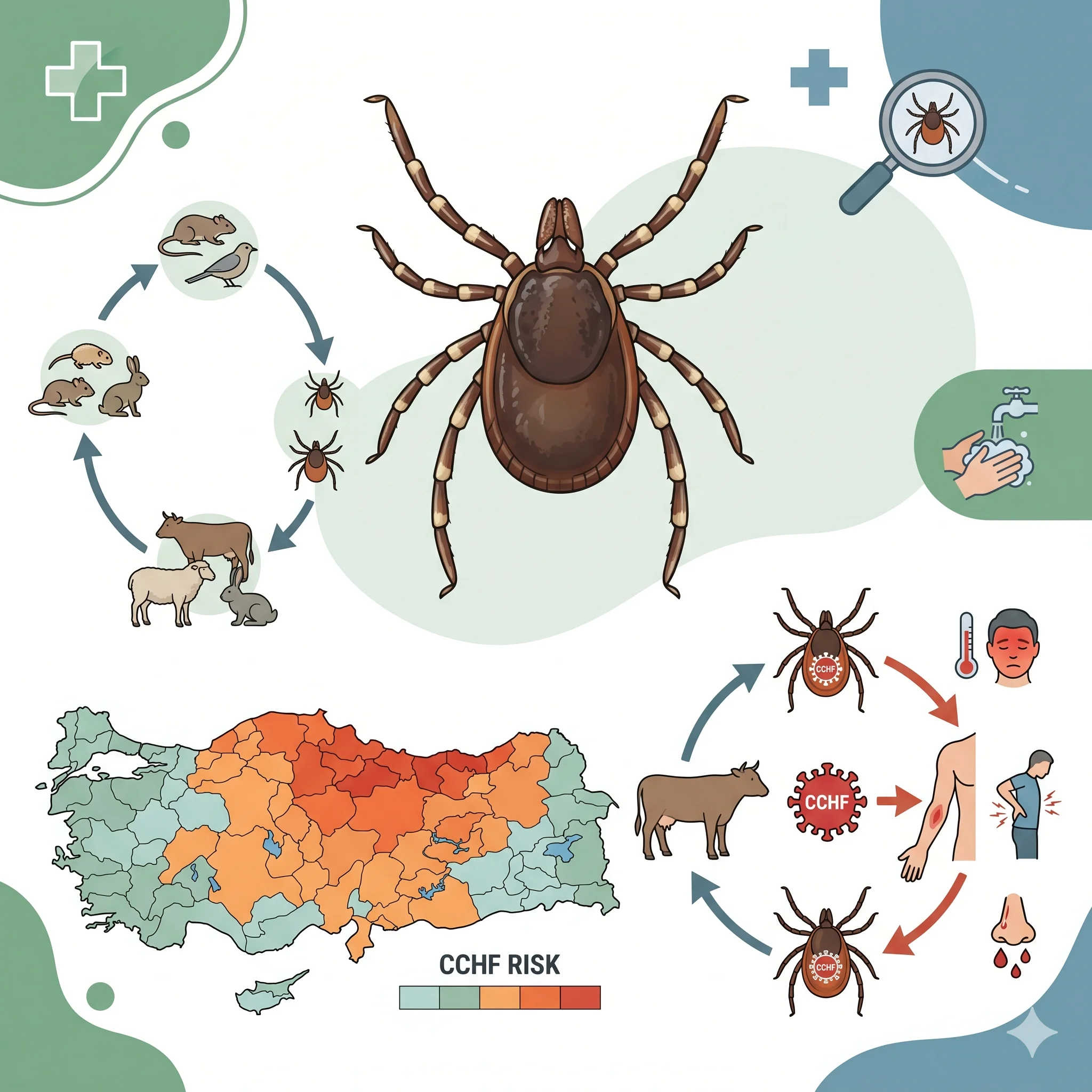
The most sensitive topic regarding ticks is vector-borne diseases. In Türkiye, CCHF stands out in particular. It is associated with Hyalomma marginatum and is monitored as a serious public health problem in some regions. Sources such as WHO, CDC and ECDC also track tick-borne infections separately. The main point here is not panic but evidence-based awareness.
CCHF is a disease in which the risk rises the longer the tick stays attached. In Türkiye the number of cases varies from year to year; so rather than memorizing an exact figure, it is better to check current official data. Lyme disease, on the other hand, is associated with Ixodes species and is not as common in Türkiye as in Europe, but it is not entirely dismissed. Tularemia can also come up via Dermacentor and other routes. Babesiosis is a rarer topic.
In tick-borne diseases, regional distribution matters. The same species can show a different risk profile even within the same country. That is why it is necessary to read sources, follow local health announcements and consult official guidelines. The external sources below are important for this reason: Ministry of Health of Türkiye, General Directorate of Public Health (in Turkish), WHO, CDC Tick-borne Diseases, ECDC.
For people who work outdoors, farmers, shepherds, hikers and those out with pets, a small routine makes a difference: shaking out clothes when you get home, checking exposed skin, looking at often-missed areas such as the hairline and behind the ears, and being more careful with children. A tick usually stays silent; you are the one who notices. That is why regular checking is a sturdier habit than seasonal fear.
The correct removal method for a tick bite
With a tick bite, the first job is fast and correct removal. Grasp the tick with fine-tipped tweezers as close to the skin as possible. Pull straight up; do not twist, crush or burn it. The aim is to remove the tick without breaking it apart. You need to move calmly and steadily while removing it. Panic makes the job harder.
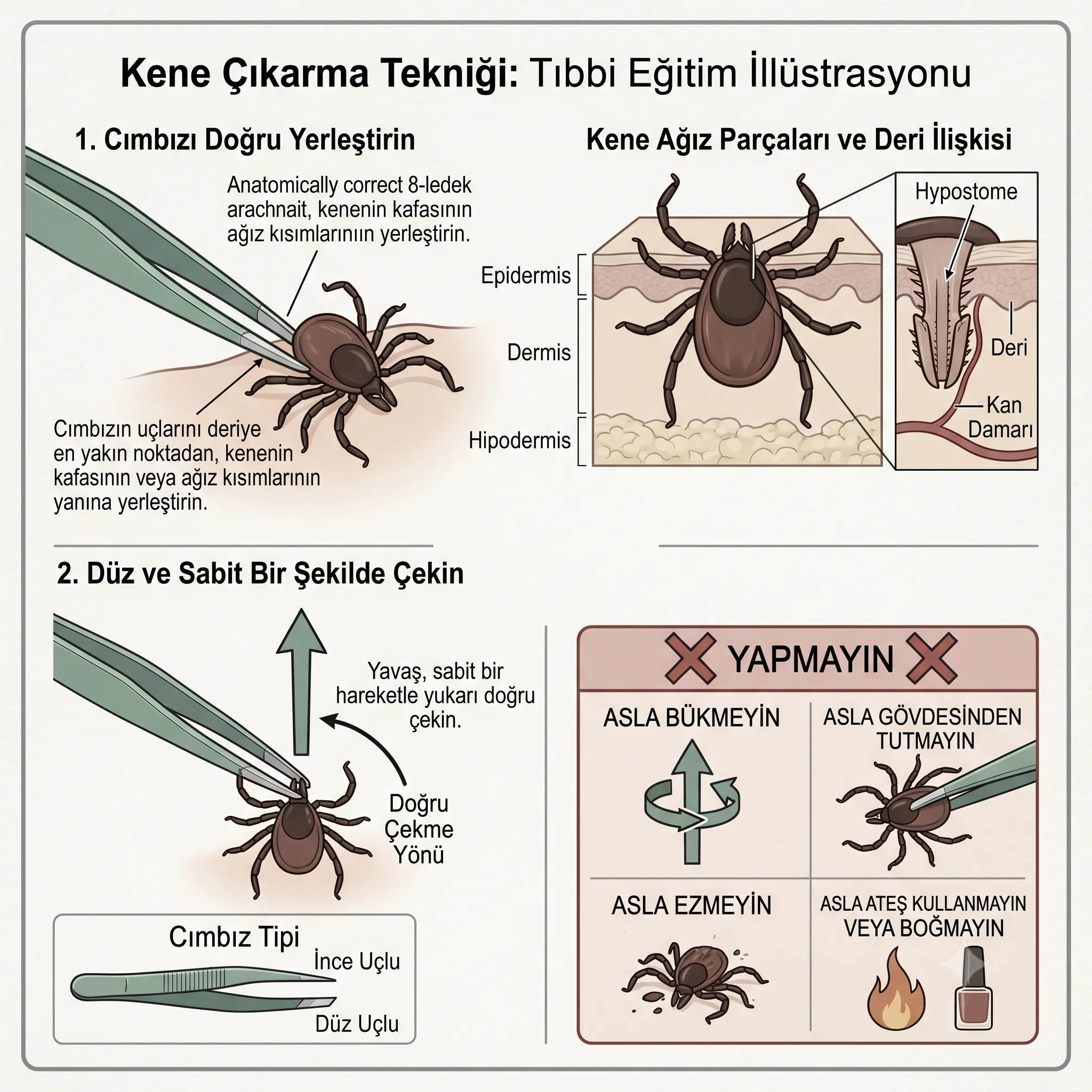
After removing it, clean the area. Then watch for 14 days for fever, fatigue, muscle pain, rash, itching or any new symptom. Tick removal is a health matter; but this text is not medical advice. If in doubt, a doctor or a healthcare facility is the right place to go. Delay is not advisable, especially if there is fever and a rash.
There is one more detail: in some cases it can be useful to keep the tick after it has been removed; it may be needed for species identification. But hygiene is important when doing this. Still, the main goal is not collecting a specimen but correct removal and correct monitoring.
Tick FAQ
What should you do first after a tick bite?
With fine-tipped tweezers, grip it as close to the skin as possible and pull straight up. Then clean the area and watch for symptoms. This is the evidence-based approach.
Should you use alcohol or oil to remove a tick?
No. These methods are not right. The tick may secrete more and the risk may increase. The right method is pulling straight up with tweezers.
How long does it take for a tick bite to transmit disease?
The time depends on the species and the disease. For CCHF, the risk rises the longer the tick stays attached; in infections such as Lyme, hours also matter. That is why quick removal is critical.
In which months are ticks active?
In Türkiye, activity is mostly between April and October; May-September may be the peak period. It varies by region and weather.
What are the ways to protect yourself from ticks?
Wear long trousers, choose light colors, use a repellent containing DEET or picaridin, check your body when you get back and examine your pets too. The way to reduce tick risk is a regular habit.
Tick-related topics and sources
Even though the main tick article ends here, the subject does not close here. This article is not meant to squeeze the reader into a single topic but to carry them on to the more detailed topics that follow. What to do after a tick bite, the removal method and the CCHF guide are covered in depth on separate pages. This way the page structure works; the main text provides the framework, and the subtopic pages go deeper.
Internal links:
- What to Do After a Tick Bite? An evidence-based guide — basic aftercare.
External sources:
- Ministry of Health of Türkiye, General Directorate of Public Health (in Turkish)
- WHO
- CDC Tick-borne Diseases
- ECDC
The tick is a small-looking animal with a big impact. It needs to be read in the right class, with the right species and in the right language of risk. The soundest approach is keeping your distance, checking your body and not delaying if there are symptoms.
Related Topics
If you want to read about this topic in a broader context, see the cluster articles: Mosquito: Biology, Species and Health Information.