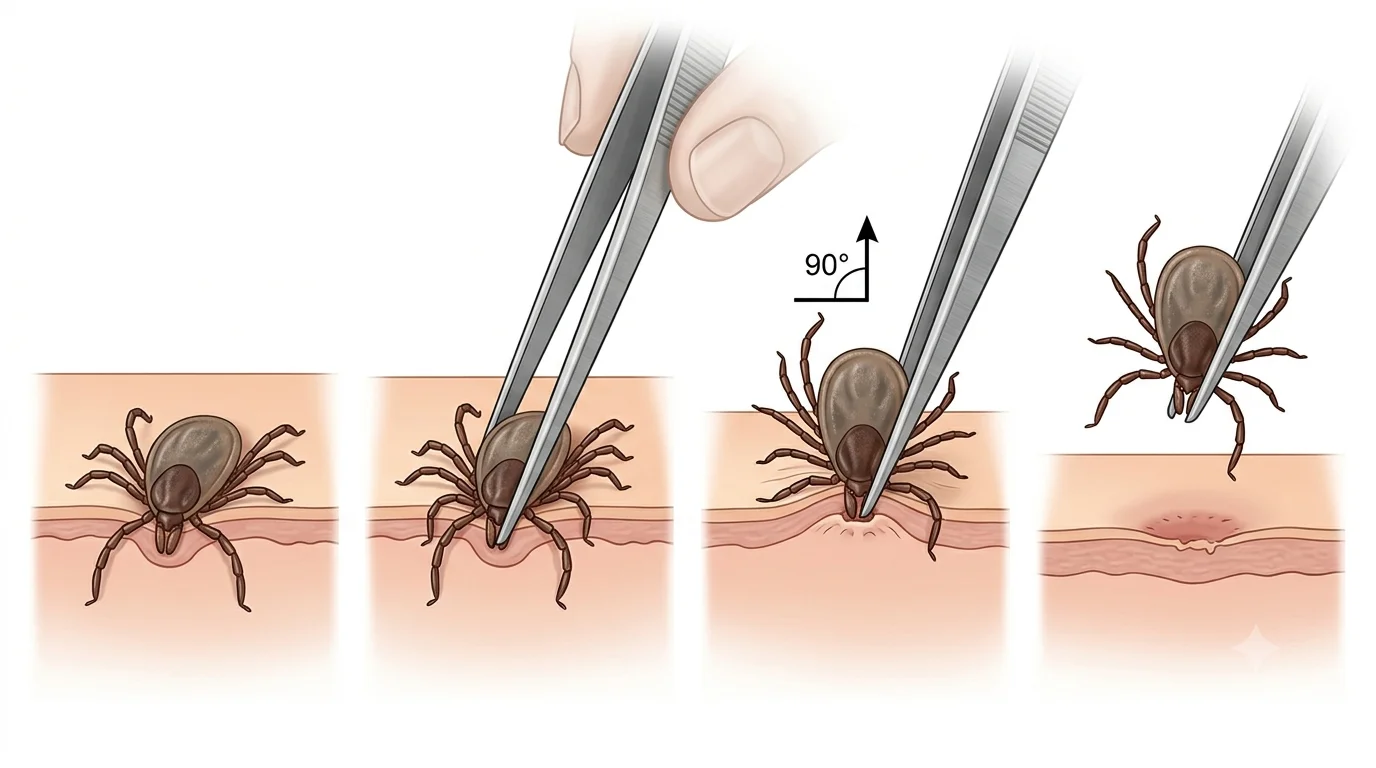
The first thing to do after a tick bite is to stay calm. Don’t panic, don’t crush the tick (critical for CCHF — the virus in tick secretions increases the risk of transmission into the blood), and don’t apply alcohol, oil, petroleum jelly or heat to it. If you have fine-tipped tweezers, grasp the tick at the point closest to the skin and pull it straight up with steady, even pressure; don’t bend, twist or jerk it. Once it is out, clean the area with soap and water, then wash your hands. Then, for 14 days, watch for fever, rash, weakness, headache, muscle pain and signs of bleeding. Important — the CCHF vs Lyme incubation difference: for CCHF (Crimean-Congo hemorrhagic fever), the incubation period is 1-9 days (usually 1-3) via a tick bite, and 5-13 days via contact with blood/body fluids. For Lyme disease, this period is 3-30 days (usually 7-14). So if no fever appears in the first 9 days after the bite, CCHF risk is most likely ruled out; but follow-up for up to 30 days is needed for the erythema migrans rash. This article is not medical advice; but the evidence-based field rule is: remove it correctly, clean, monitor, and see a doctor when in doubt. For details, the Tick: Biology, Life Cycle and Health Perspective page is the main reference.
The first 10 minutes after a tick bite
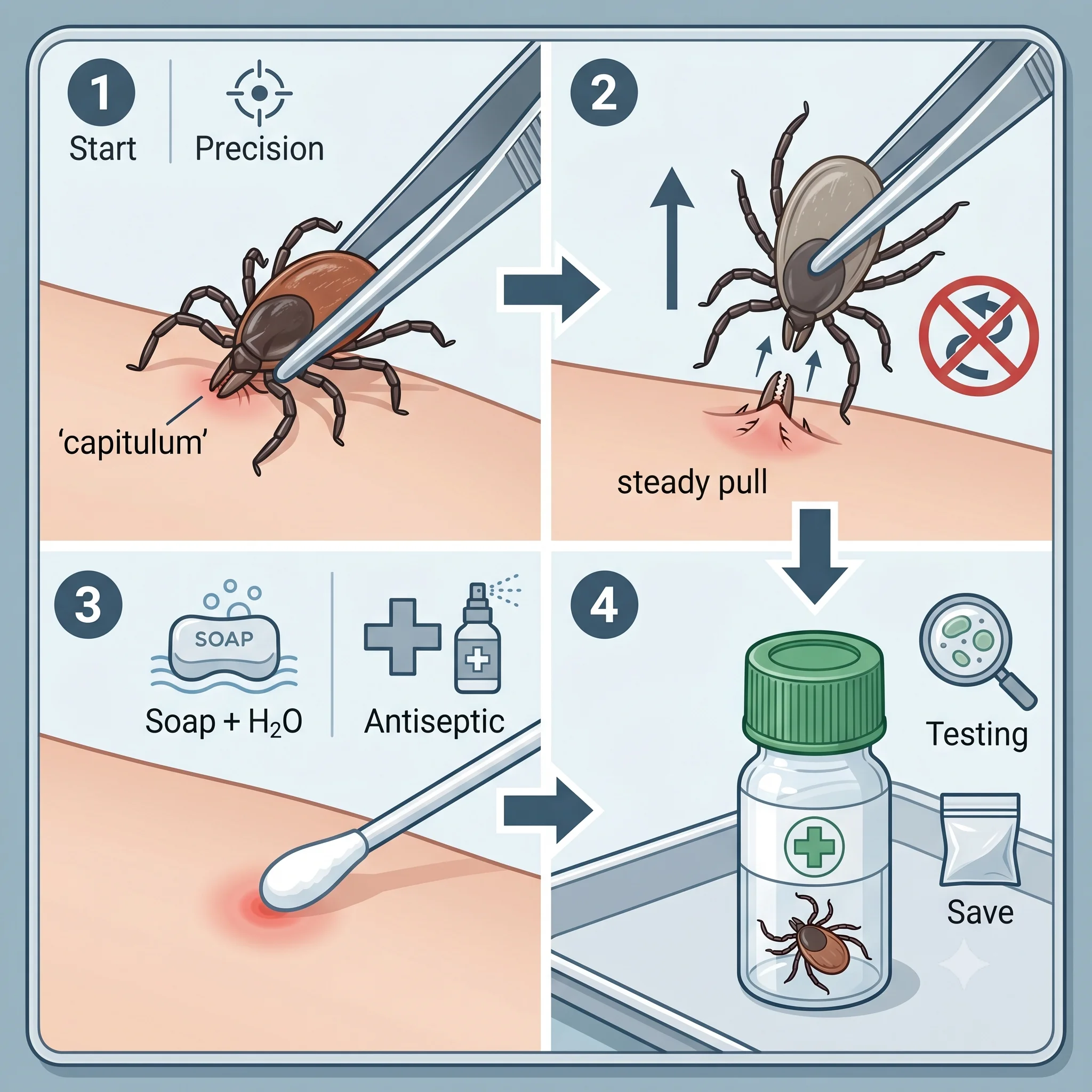
Don’t lose time after a tick bite. But don’t rush and do the wrong thing, either. First, get your supplies ready: fine-tipped tweezers, clean water, soap, antiseptic and, if possible, disposable gloves. If the tick is large, it is easy to spot; small nymph stages, however, can be missed. That’s why working under bright light helps. If the tick is in a hard-to-reach spot such as the hairline, behind the ear or the groin, use a mirror. Ask someone for help if needed.
The critical point in tick removal is to grasp it not by the body but as close as possible to the mouthparts. That way you don’t squeeze its body. If the root part stays in the skin, don’t panic; excessive poking increases the risk of infection. The basic rule is: controlled removal, gentle cleaning, follow-up. This approach is also consistent with the biology described in Tick biology and behavior; because of its attachment and secretion mechanism, a tick does not respond well to brute force.
What to do while removing a tick
You’ve caught the tick with the tweezers. Now it’s a matter of patience. Pull straight up. No bending, twisting or wiggling it side to side. The goal is to remove the tick without breaking it apart. Once it’s out, wash the skin with soap and water. Then apply antiseptic. A little redness may appear after the tick is removed; on its own, this is not cause for alarm. What really matters is whether any symptom grows over the following days.
If you like, you can keep the removed tick in a closed container. This can be useful for species identification. But the main goal is not collecting a specimen; it is correct removal and correct monitoring. If the tick broke into pieces, don’t keep scraping. In such cases, a doctor’s opinion is the better choice. The safety framework in the Tick life cycle and health perspective article applies here too: with a living creature of nature, method speaks, not brute force.
Why forbidden tick removal methods are wrong
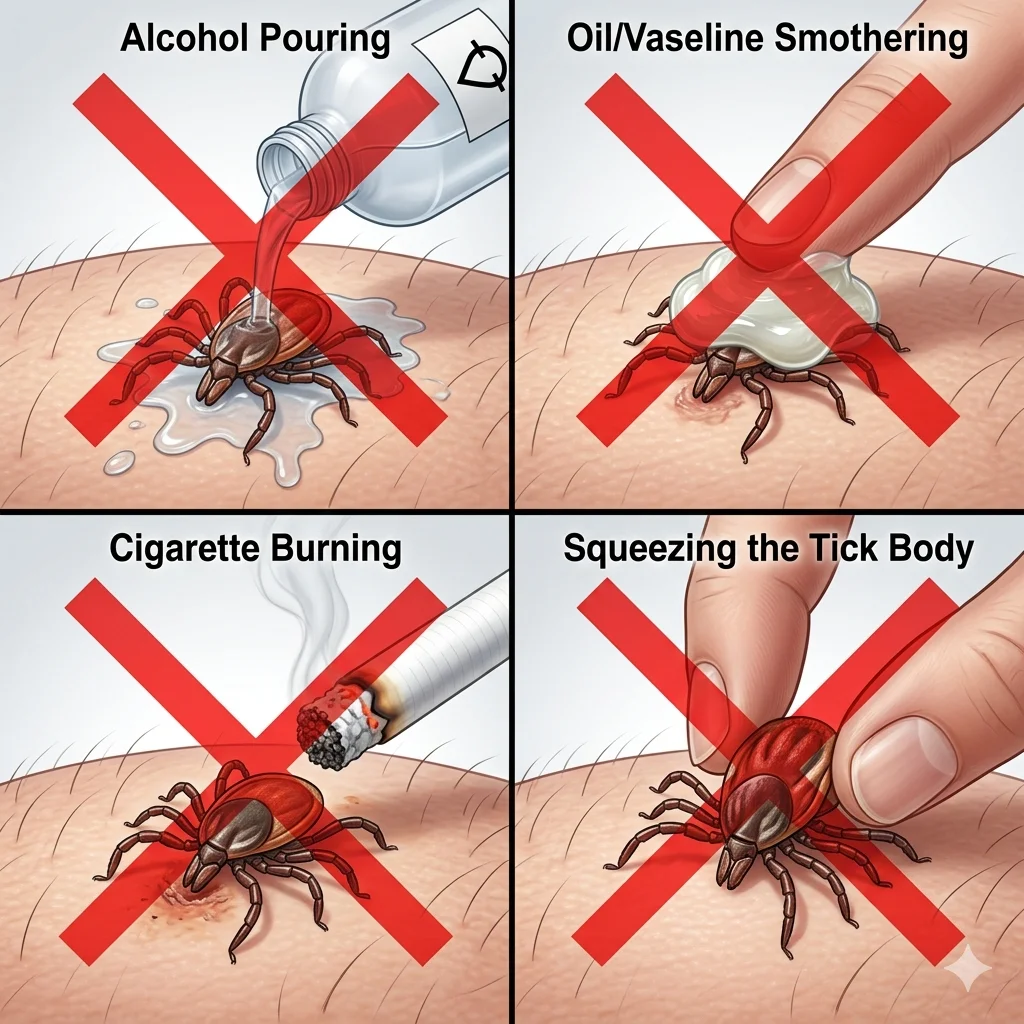
Methods such as dripping alcohol on the tick, smearing oil, smothering it with petroleum jelly, holding a cigarette to it or burning it circulate among the public. These are not correct. While the goal is to remove the tick calmly and in a controlled way, these methods irritate the creature and prolong the process. In the end you poke at the skin more and increase the risk of breaking the tick apart. So the problem isn’t solved — it grows.
Another mistake is squeezing the tick. Crushing its body increases the risk of the CCHF virus and other pathogens in the tick’s contents being inoculated into the skin/blood. The correct approach: fine-tipped tweezers, grasping close to the skin, pulling straight up. If you don’t have tweezers, the edge of a clean card can help temporarily, but this is a second option. The first choice is always fine-tipped tweezers. On this, the CDC Tick Removal Guide is clear and direct; the Turkish Ministry of Health, HSGM — CCHF information page (Turkish) and the WHO CCHF page also support the official framework. In Türkiye, the main vector of CCHF is Hyalomma marginatum (hard tick), and for Lyme disease Ixodes ricinus (zecke).
Follow-up and emergency symptoms after a tick bite
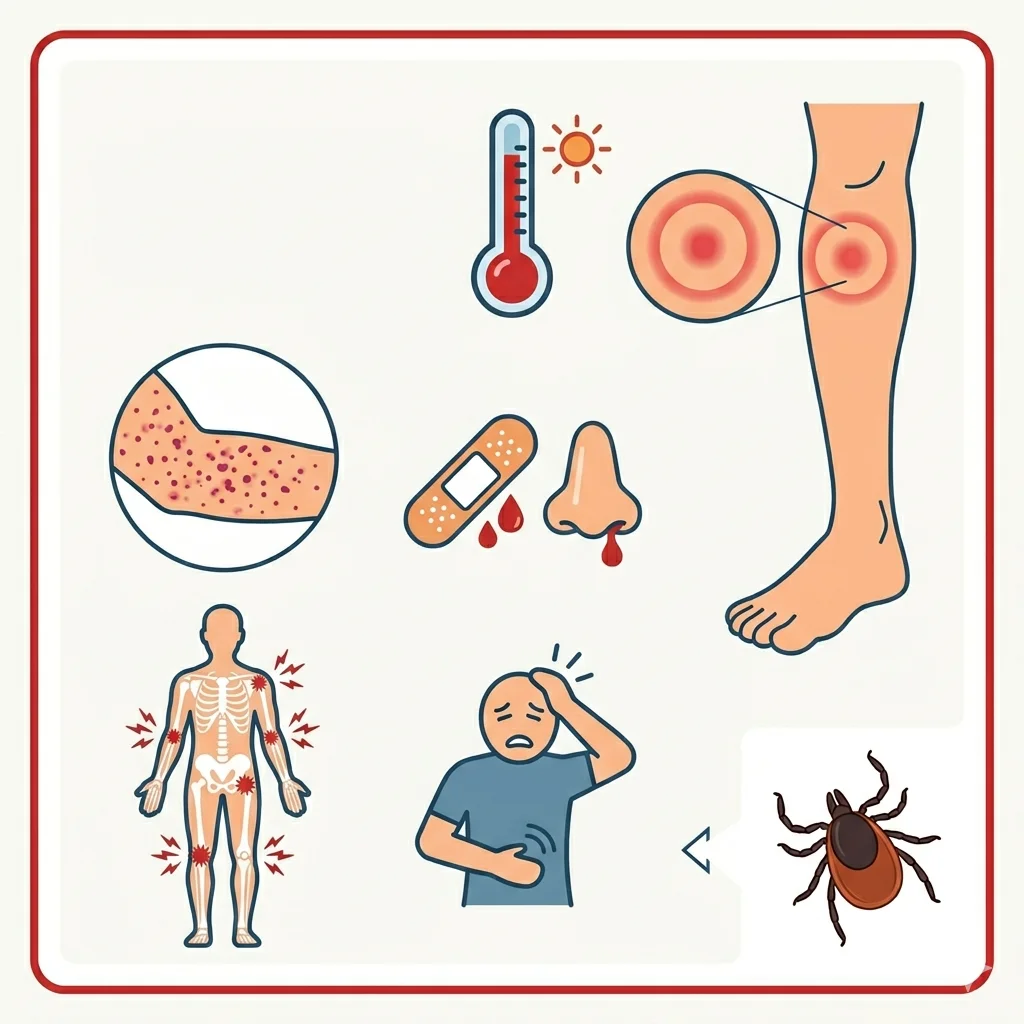
Monitoring continues after the tick is out. Saying “stay calm” at the start is right for the first response — but if advanced symptoms appear, time is critical. Monitor for 14 days. Take it seriously if there is fever, weakness, headache, muscle pain, joint pain, rash, nausea, vomiting, diarrhea or bleeding. Especially if signs such as rash and bleeding come together with fever, don’t delay. At this point, go to a healthcare facility. With some tick-borne diseases, early assessment can be critical.
The emergency symptom list should be taken seriously.
Emergency threshold table:
- Bleeding (nose, gums, urine) or fainting → your country’s emergency number
- High fever + rash + coming from a CCHF-endemic area → go directly to the emergency department (isolate at home, inform healthcare staff in advance — CCHF spreads from person to person through blood/body fluids)
- Mild fever or a small rash → see a doctor within 24 hours
In Türkiye, season and region matter for CCHF risk; that’s why monitoring after rural contact, livestock work and time outdoors is done more carefully. What’s needed here is discipline, not panic. For related background, read Tick: the main health guide together with the upcoming CCHF guide (coming soon).
Tick FAQ and related notes
What should you do first after a tick bite?
Grasp the tick with fine-tipped tweezers at the point closest to the skin, pull straight up, clean the area and watch for symptoms. That is the first response.
What should you do if the head stays in when removing a tick?
Clean the area with soap and water. Don’t poke at it too much. If the redness increases, there is discharge or a fever starts, have a doctor look at it.
Which methods should not be used for ticks?
Alcohol, oil, petroleum jelly, cigarettes, burning and squeezing should not be used. These are not the correct technique.
Is a tick from a pet dangerous?
Yes, because pets can carry ticks and bring them into the home. Check your animal regularly and, if needed, use veterinarian-supported protection.
Two related notes belong here: Tick prevention methods (coming soon) and Other tick guides (coming soon). The tick topic looks small, but the wrong intervention makes it bigger. The most reliable order of steps doesn’t change: remove it correctly, clean, monitor for 14 days, and get medical support if symptoms appear.