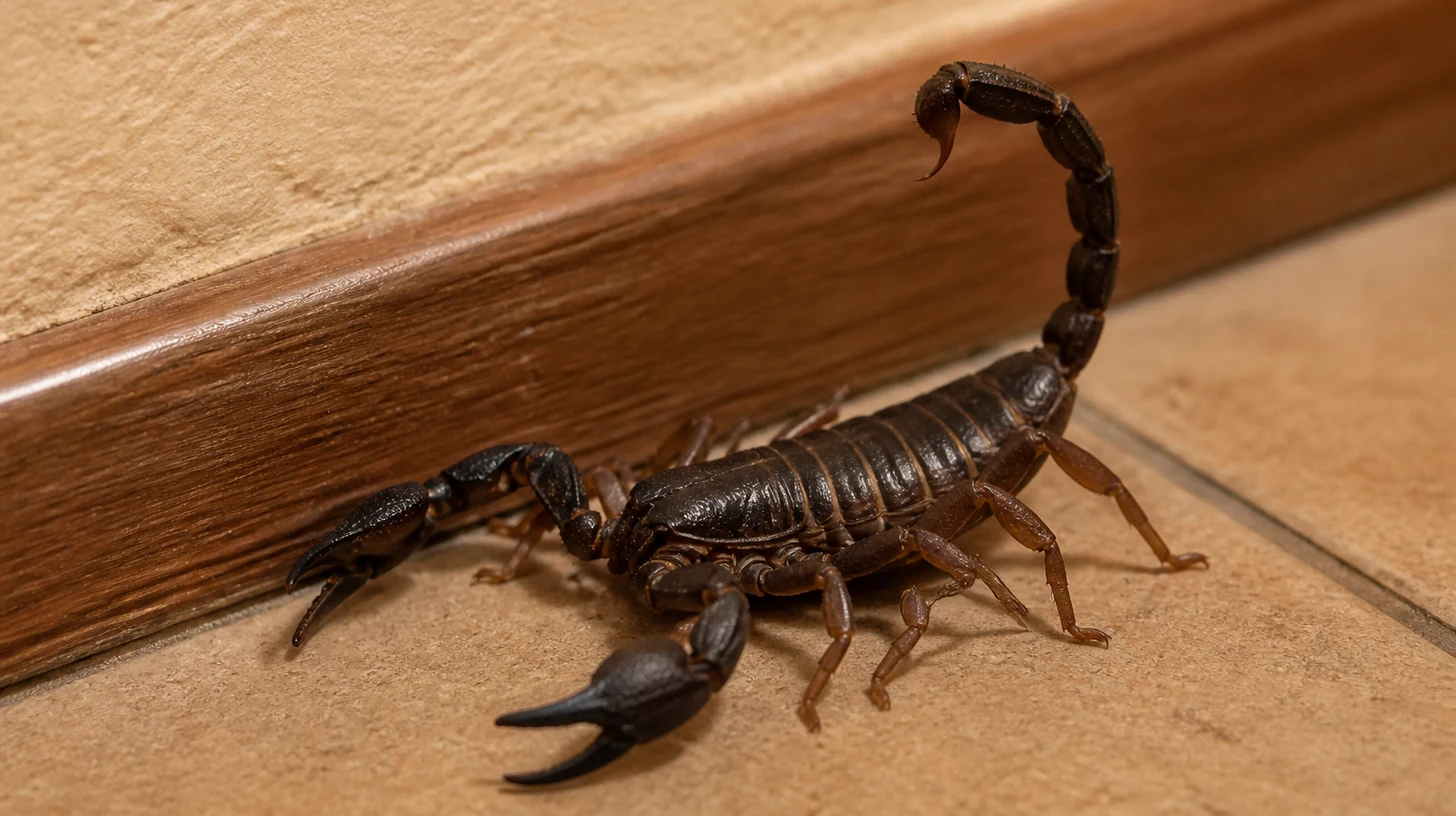
If you’ve seen a scorpion in the house, first don’t approach it; don’t try to catch or crush it with your bare hands. Scorpions, like spiders, belong to the class Arachnida and are recognized by their eight walking legs, their pincer-bearing pedipalps and the stinger at the tip of the tail. Seeing a single scorpion does not prove that there is a nest inside the house; but it is a good signal to check under doors, plumbing penetrations and hiding places around the house. In Türkiye, scorpion species and sting risk can vary by region. If you can’t identify the species with confidence, not handling it and preventing risky contact is the best start. To recognize another eight-legged arthropod that is not a scorpion, you can also look at the tick guide.
Why do scorpions appear in the house?
Scorpions are predatory arthropods; they mostly feed on small invertebrates. It isn’t right to explain their arrival in the house only with “the house is dirty” or “there are bugs in the house.” Stones, wood, rubble, leaf litter and the base of walls around a building can create shelters where they can hide during the day. A scorpion may enter a building while roaming an environment where it finds suitable prey and hiding places. Gaps under doors, wall cracks, window frames and pipe-cable penetrations are possible entry points. Boxes, wood and belongings that have been left outside can also be carried in unnoticed. For another example of how a building’s surroundings affect pests, you can look at the reasons cockroaches come into the house.
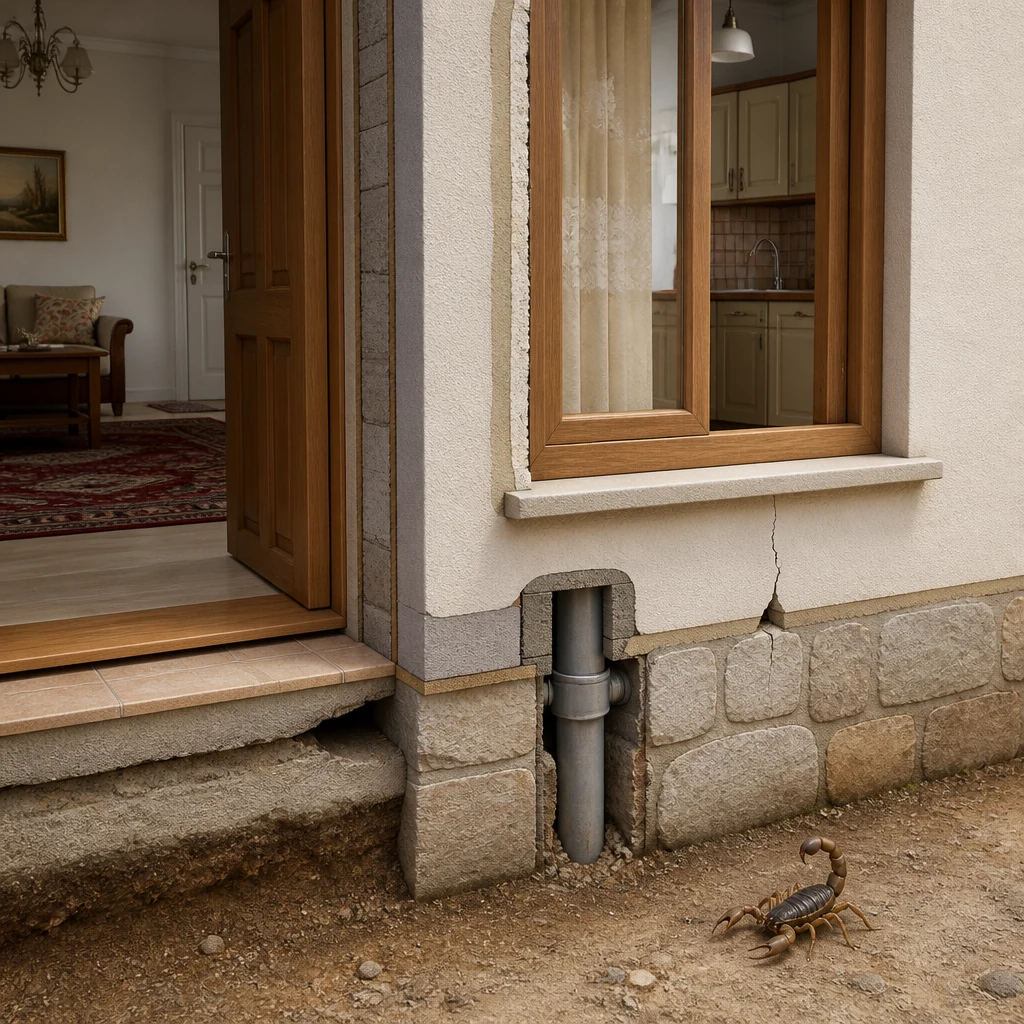
It can’t be said that there is a “scorpion nest” inside every house where a scorpion is seen. Seeing one scorpion also doesn’t necessarily mean that its mate or a large number of young are nearby. Species, season, weather conditions and the local environment should be assessed together. Repeated sightings in the same room or building, however, suggest that the entry point or suitable hiding places outside may still be active. In that case, instead of only removing the visible individual, you also need to inspect the building’s surroundings.
How do you recognize a scorpion?
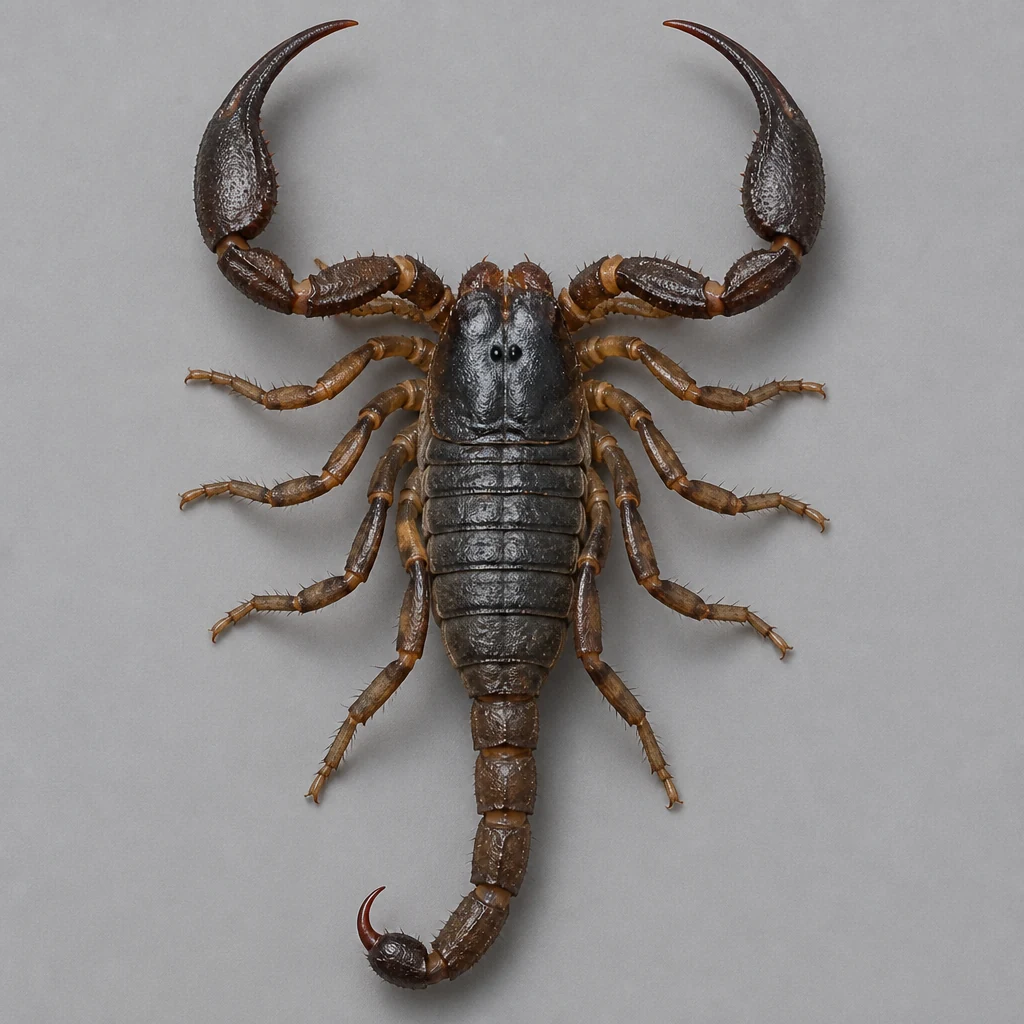
A scorpion has pincer-bearing pedipalps at the front of the body, eight walking legs and a segmented tail that can curve backward. The telson at the end of the tail contains the venom glands and the stinger. Scorpions are not insects; they have no antennae or wings. If the details in the image can’t be made out from a distance, don’t pick it up to inspect it up close. Color alone does not indicate the species or the effect of the venom. Different families and species occur in Türkiye; academic sources draw attention to regional diversity and species distribution in Anatolia. A single general definition of a “house scorpion” doesn’t fit the whole country.
Most scorpions tend to hide; during the day dark and sheltered spots are more likely, and at night movement is more likely. Checking areas where contact can be expected — such as shoes, gloves, bed edges, piles of laundry or belongings left on the floor — is especially useful in spaces where people sleep on the floor or where things are stored. This check doesn’t mean searching for the scorpion by hand: look over the item carefully from a distance before holding it directly.
Life cycle and behavior
Scorpions are not like insects that reproduce by laying eggs; embryo development and the way they give birth can differ between species. Newborn young being carried on the mother’s back for a while is a known behavior in scorpions. The young molt as they grow; that’s why interpreting a small individual seen in the house as “a different species” may not be correct. Because lifespan, number of young and time to maturity vary with species and environmental conditions, giving exact numbers for a home sighting of an unknown species isn’t reliable.
Scorpions don’t see humans as prey; stings mostly happen in the context of defense or accidental contact. Reaching barehanded for a shoe on the floor, lifting stones or wood in the dark and trying to corner a scorpion can increase the risk. Approaching a scorpion while trying to kill it also brings contact closer. Leave a safe distance, take children and pets out of the area, then get professional support or local health advice.
Distribution in Türkiye and the home environment
Because of its different climates and geographies, Türkiye is home to more than one scorpion species. Scientific studies examine the scorpion fauna of Türkiye, species distribution and the biology of some species; for example, field and laboratory research has been published on Mesobuthus gibbosus, known as the Anatolian yellow scorpion. This information belongs to specific species and sampling areas; on its own it does not show the species of a scorpion seen in a home, its degree of danger or how often it occurs across the country.
The risk around a home isn’t measured only by geographic region. Conditions such as a ground floor, direct connection to a garden, a retaining wall, a stony area, a storeroom and unused outbuildings can affect access. Even so, it is not impossible to see one in an apartment or on an upper floor; in-building plumbing, common areas or belongings being moved are among the possible routes. In this research I could not find a verifiable official statistic giving the rate at which scorpions are seen in homes across Türkiye; emergency department studies from specific regions or years cannot be used in place of a nationwide prevalence rate.
Sting risk and the health approach
With a scorpion sting, pain, burning, redness or numbness may appear in the affected area; the findings vary with the species, the amount of venom received and the person’s condition. More caution is needed with children and people with health vulnerabilities. General symptoms such as difficulty breathing, widespread muscle spasms, vomiting, excessive sweating, a change in consciousness or rapid deterioration require emergency assessment. If a sting is suspected, ask for guidance by calling your country’s emergency number or your local poison control center. Official health-institution information about Türkiye’s poison information line (in Turkish) is in the sources section.
Don’t cut the stung area, try to suck out the venom, apply a tourniquet or apply random chemical/herbal substances. Follow the instructions of the health worker on the phone about whether ice or any other intervention is appropriate; this article is not a diagnosis or treatment recommendation. Don’t try to catch the scorpion. If there is a photo taken safely, from a distance, showing it to the healthcare team can help; don’t approach it for a photo and don’t cause delay. For a scorpion sting and its symptoms, get a professional health assessment instead of relying on species identification.
Protection and control plan at home
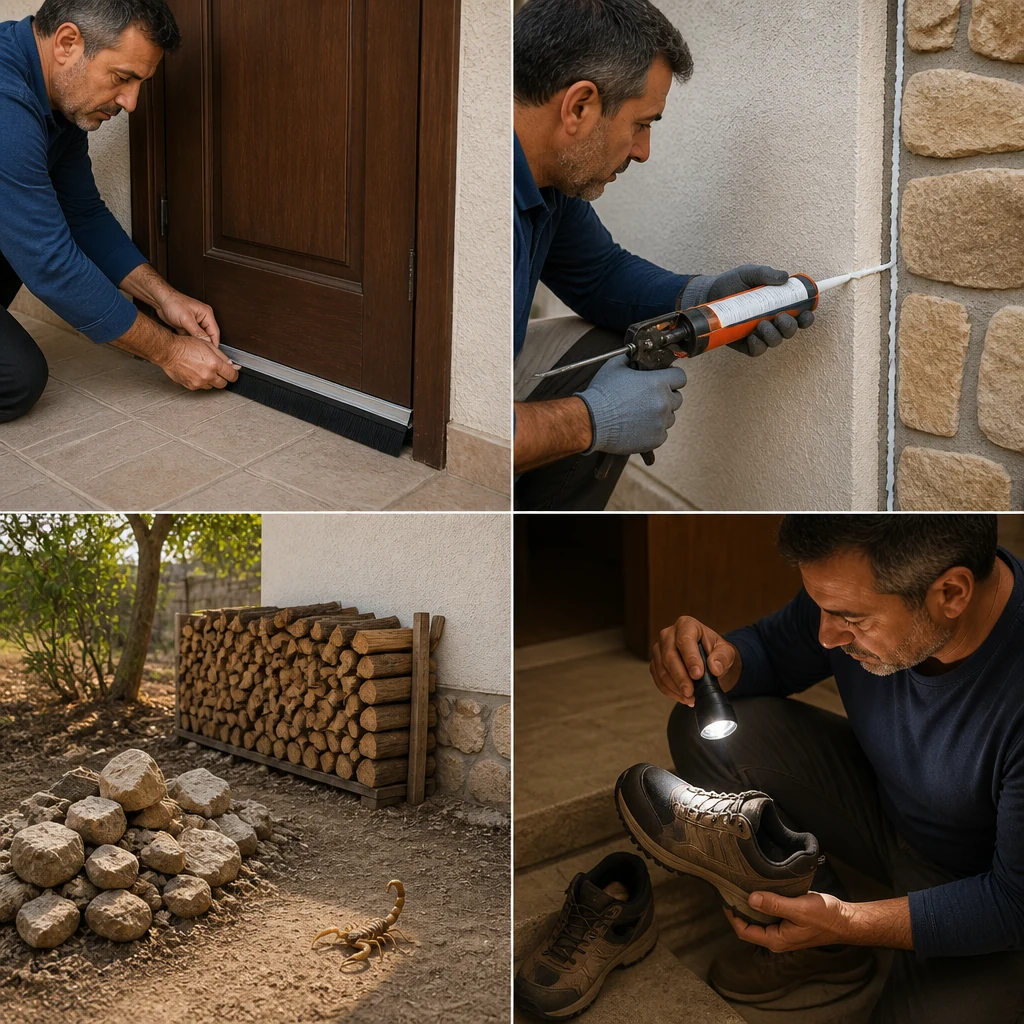
The priority is to reduce entry points and lower the chance of encounters. Spraying alone doesn’t eliminate all hiding places or the route into the building. Don’t carry out indoor treatment outside the product label and regulations; keep children, pets and food away from the chemical treatment area. If there are repeated scorpion sightings, ask a licensed pest control specialist for an on-site inspection. Keeping wood and stone piles around the house away from the base of the walls, sealing gaps and observing regularly is a more solid control plan. In the cockroach management guide you can also find the approach of tackling the source and the entry line together.
Practical steps for protection:
- Fit a suitable sweep to gaps under doors; seal openings around exterior doors.
- Repair wall cracks, baseboard gaps and pipe-cable penetrations.
- Use sturdy screens with a suitable mesh size on windows and basement vents.
- Keep wood, stones, rubble, leaves and unused items away from the building’s exterior wall.
- Check shoes, gloves, bedspreads and clothes left on the floor before putting them on; if possible, keeping the bed away from the floor and the wall reduces contact points.
- Keep storerooms and basements tidy; don’t pile items directly on the floor and against the wall.
- Teach children and pets not to touch scorpions; tell children to let an adult know when they see one.
- Record repeated sightings with the date, room and conditions; in a professional inspection this information helps find the source.
If you’ve seen a single scorpion, first make things safe and inspect the entry points. If there are encounters several times, on different days or in more than one room, or if in a home with children or pets you don’t want to take on risk management alone, get a professional assessment. With other creatures in the house, too, entry points and hiding places need to be assessed together; but in scorpion control the species’ sting risk must also be taken into account. Without seeing the species and the building’s conditions, a specialist cannot make reliable promises about a “definitive solution” or the treatment needed. If treatment is to be done, a licensed product, the label instructions and applicator safety are essential; don’t mix unknown chemicals or put your hand into the place where the scorpion is hiding.
When is a professional assessment needed?
| Observation or situation | First approach | Threshold for professional support |
|---|---|---|
| A single scorpion, noticed from a safe distance | Move people and pets away; don’t intervene by hand, review the entry points | If the scorpion can’t be removed safely or there is uncertainty about the species and risk, get a specialist’s opinion |
| Repeated sightings on different days or in more than one room | Record the date, room and conditions; check door, window and plumbing openings | If it recurs, ask a licensed pest control specialist for an on-site inspection |
| Children, pets or a person with limited mobility in the home | Close off the contact area; keep people away from the scorpion | If the scorpion is in an accessible area or safe isolation can’t be ensured, get specialist support without delay |
| Suspected sting or symptoms in a person | Move the person to a safe area without approaching the scorpion | A health assessment is needed, not pest control; advice from your local poison control center, and with severe/general symptoms, your country’s emergency number |
This table is not a pest treatment prescription; whether treatment is needed should be decided by a specialist who assesses the building and conditions on site.
For repeated sightings, in addition to sealing the entry routes, you can compare the source and entry-line approach in the guide to getting rid of cockroaches; the methods do not transfer directly to scorpions. For general pest management steps in the building, you can also look at the cockroach guide; the species-specific measures there are not recommendations for scorpions.
Frequently asked questions
Does seeing a scorpion in the house mean there is a nest in the house?
No. A single scorpion does not prove that there is a nest or breeding inside the house. Check the home’s entry points and the hiding places around the walls.
Where do scorpions get into the house?
Gaps under doors, cracks, the area around windows and plumbing penetrations are possible routes. They can also be carried in with wood or belongings that have been left outside.
What should I do if a scorpion stings?
First move the person to a safe area; ask your local poison control center for guidance. If there is difficulty breathing or there are general symptoms, call your country’s emergency number; don’t cut, suck or apply a tourniquet.
If there is a scorpion in the house, is pest treatment necessary?
Not every single sighting automatically requires pest treatment. With repeated encounters, it is more appropriate to have the entry points and hiding places assessed by a specialist.
Do scorpions come out at night?
Many species may be more active at night and may hide in sheltered places during the day. This is a general tendency; it is not a strict rule for every species and every location.
Sources
- Karataş A, Karataş A. “Türkiye Akrepleri” (Scorpions of Türkiye). Turkish Bulletin of Hygiene and Experimental Biology, DergiPark (in Turkish). https://dergipark.org.tr/tr/pub/thdbd/article/968098
- Karataş A et al. Study on the biology and ecology of Mesobuthus gibbosus. DergiPark (in Turkish). https://dergipark.org.tr/tr/pub/commagene/article/406174
- Clinical/epidemiological study of scorpion sting cases in Diyarbakır. Turkish Journal of Trauma and Emergency Surgery. https://www.tjtes.org/jvi.aspx?pdir=travma&un=UTD-52333
- Health information on scorpion stings. CDC/NIOSH, “Insects and Scorpions at Work”. https://www.cdc.gov/niosh/outdoor-workers/about/insects-and-scorpions.html
- Information on Türkiye’s National Poison Information Center hotline. Divriği Sadık Özgür State Hospital, affiliated with the Turkish Ministry of Health (in Turkish). https://divrigisadikozgurdh.saglik.gov.tr/TR%2C389626/alo-114.html