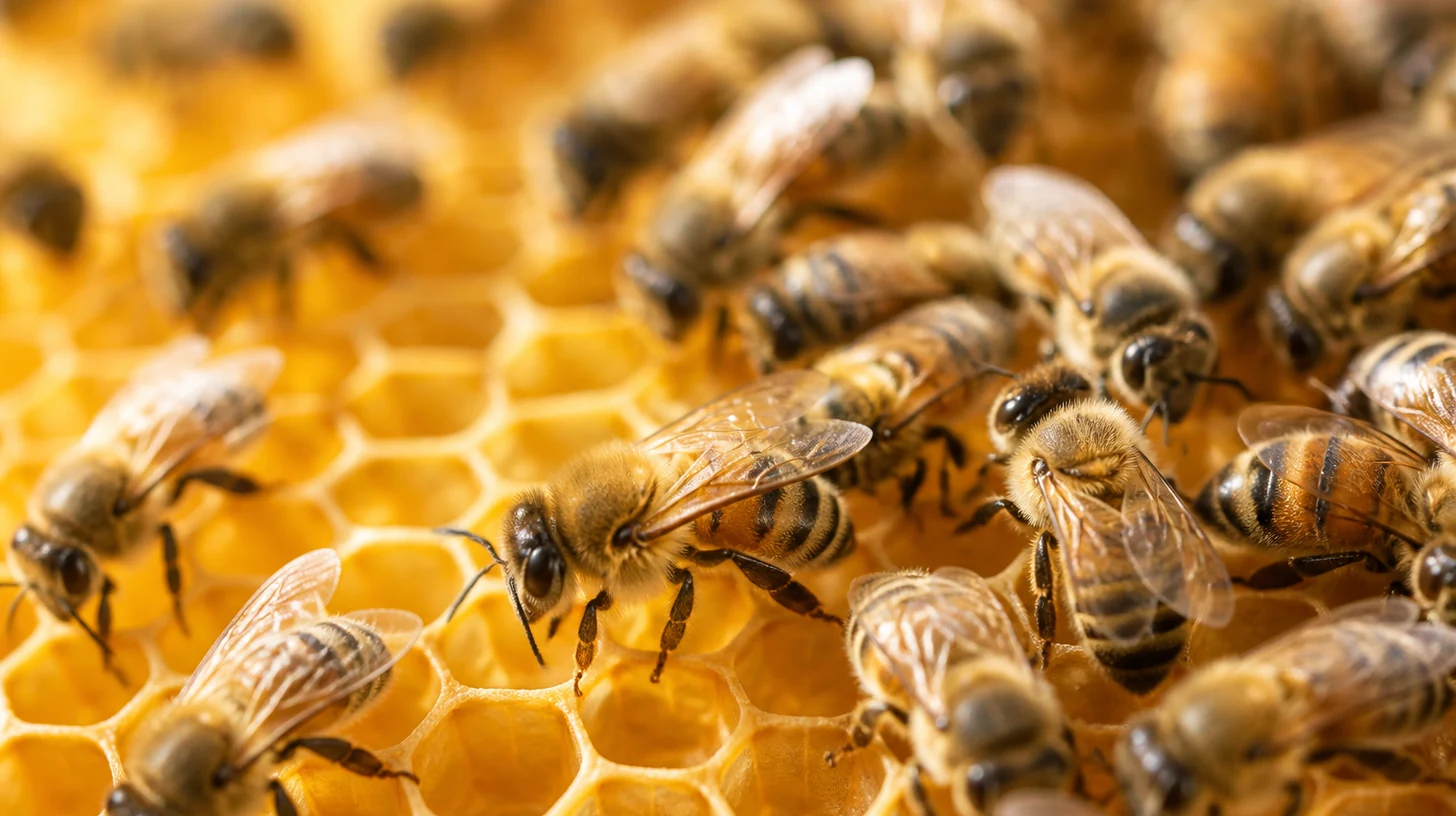
A queen bee develops when a young female larva is raised as a queen by the colony; her main role in the hive is to lay eggs. But the queen is not just a big bee: her development is set up by the worker bees, her pheromones affect the colony’s behavior and her appearance changes depending on whether she has mated. So how does an ordinary female larva turn into a queen, what exactly is her job in the hive and how do you tell her apart from the workers? The honey bee’s colony organization and communication gives the general framework of this division of labor.
How does a queen bee develop?
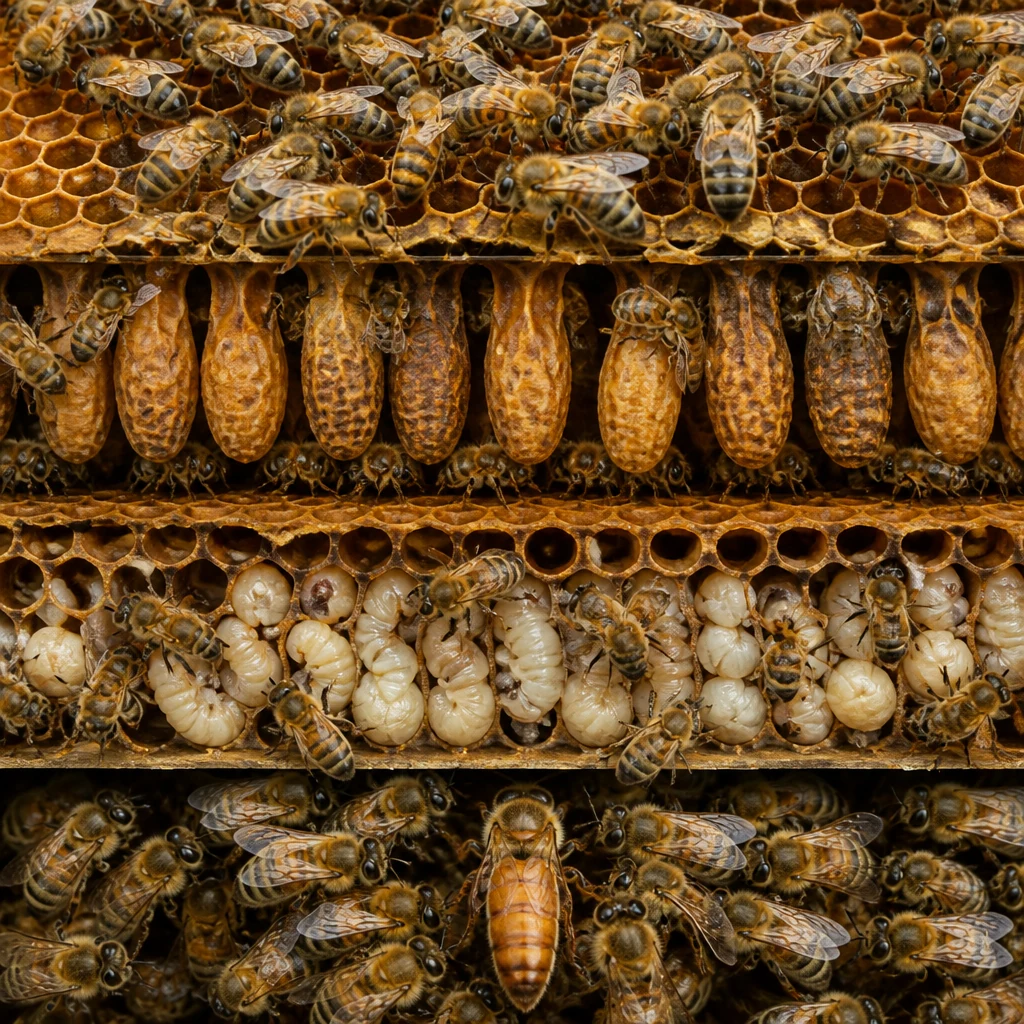
The queen is not a separate species but a female honey bee with developed reproductive capacity. Queens and worker bees can both develop from fertilized eggs; the difference is determined by nutrition and rearing conditions during the larval stage. The colony raises a female larva of suitable age in a special, downward-hanging queen cell. Throughout its development the larva is fed abundantly with royal jelly. The feeding of larvae that will become workers, by contrast, changes in the later stage.
About 16 days pass from the laying of the egg to the adult queen emerging from the cell. This is shorter than the roughly 21-day development of a worker bee. Queen rearing can begin when the colony is preparing to swarm, or when the current queen is failing or has died. If there are several queen cells, the first young queen to emerge may attack the other queen candidates; in the end, a single queen usually remains in the colony. A newly emerged virgin queen does not start laying eggs right away: she matures in the hive for a few days, then goes out on mating flights. If mating succeeds, she stores the sperm in a special sac in her body and fertilizes the eggs later on. Weather and colony conditions can affect this process. Penn State Extension details this nutrition and timeline of queen development.
What is the queen bee’s role in the hive?
The queen’s main job is to lay eggs. Female workers develop from fertilized eggs, and drones from unfertilized eggs. Under suitable conditions, a productive queen can lay more than 2,000 eggs a day in the peak season; this number is not the same every day or in every hive. Brood care, comb building, foraging and hive defense, on the other hand, are mainly the workers’ jobs.
The queen also produces chemical signals called pheromones. These signals affect the workers’ behavior and reproductive order; workers gathering around the queen is one of the visible examples of this chemical communication. The workers feed the queen and prepare the cells in which eggs are laid; the queen, for her part, does not take on brood care. That is why it is not right to say “the queen runs all the work in the hive.” The workers carry out the colony’s daily work; the queen plays a central role in terms of reproduction and chemical communication. The queen’s presence ensures the colony’s continuity, but on its own it is not enough to keep the colony going. We compare the differences between the lifespans of worker, drone and queen bees in a separate article.
How do you spot the queen bee?
The queen usually looks larger than the workers; the most obvious clue is her long, tapering abdomen, which can extend beyond the tips of her wings. Workers are smaller and their abdomens usually do not go past the line of the wings. The queen can move quickly on the comb; the workers around her may face her and touch her with their antennae. Still, deciding on the basis of a single sign is misleading: the age of the bees, the angle and the light change how they look.
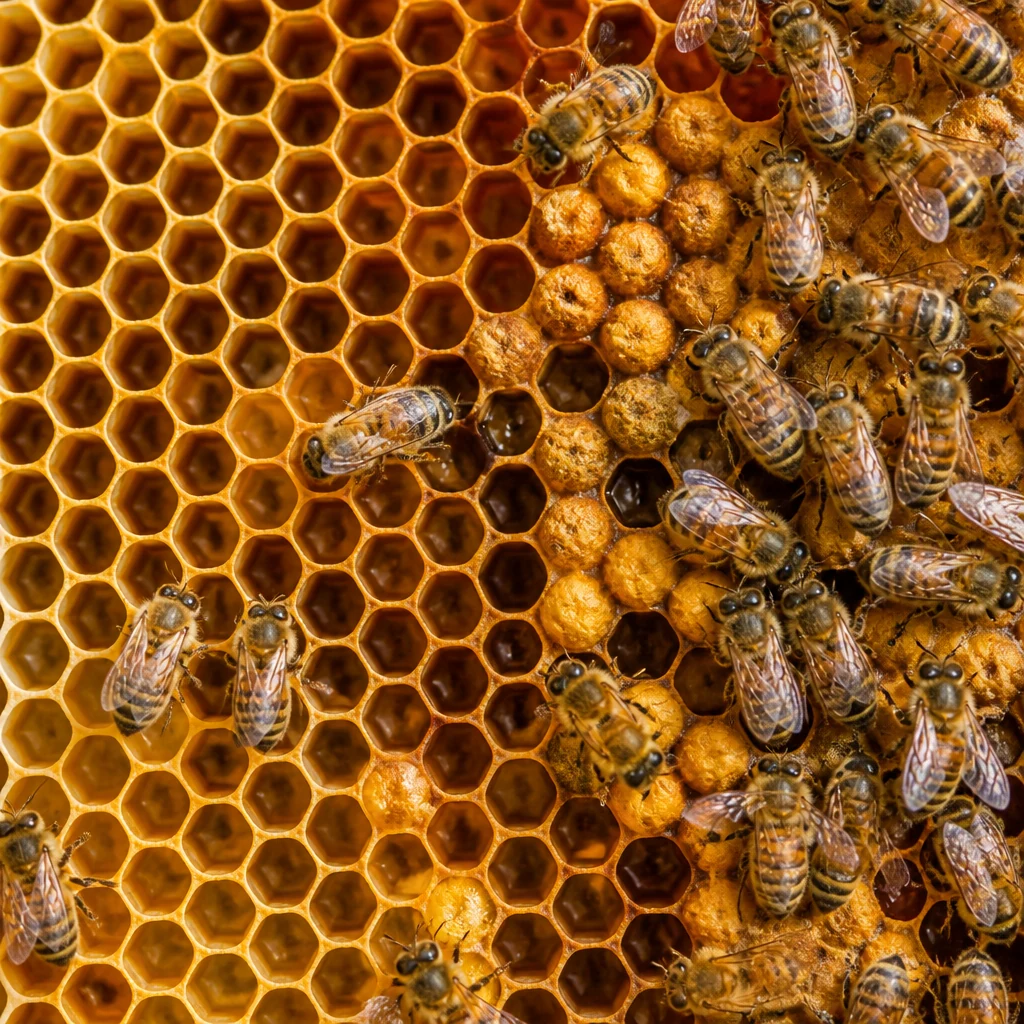
A young queen that has not yet mated may have a less full abdomen than a laying queen, and finding her on the comb becomes harder. A laying queen usually moves around the cells; recently laid eggs also provide a clue. But seeing eggs alone does not identify the queen. In beekeeping, queens are sometimes marked for easy counting; if there is no mark, the bee’s size, abdomen shape and behavior are assessed together. Because interfering with a hive without experience can stress the bees, it is safer to settle for observation only.
How do you tell the queen, worker and drone apart?
| Feature | Queen | Worker | Drone |
|---|---|---|---|
| Sex and reproduction | Female; lays eggs if mated | Female; mostly does not reproduce | Male; mates with the queen |
| Appearance | Usually the longest abdomen | Smaller and slimmer | Stockier body, large eyes |
| Main role | Egg-laying, pheromone production | Care, defense, food and comb work | Mating |
| Development time | About 16 days | About 21 days | About 24 days |
These measures are a general comparison for the honey bee; not every individual looks the same size. A long abdomen is a good clue for recognizing the queen, but it is not conclusive proof on its own. To understand colony life as a whole, you can go back to the honey bee guide.
Sources
- Penn State Extension: An Introduction to Queen Honey Bee Development — queen development, egg-laying, pheromones and appearance.
- Utah State University Extension: How Can I Identify a Queen Bee? — telling the queen apart by her appearance.
- MAAREC: The Colony and Its Organization — colony roles and egg-laying.
- UC Riverside: How honeybees really crown their queens — the role of queen cells in development.