DEET and picaridin mosquito repellent comparison; cover image focused on skin, clothing and family use

DEET vs Picaridin: A Mosquito Repellent Guide

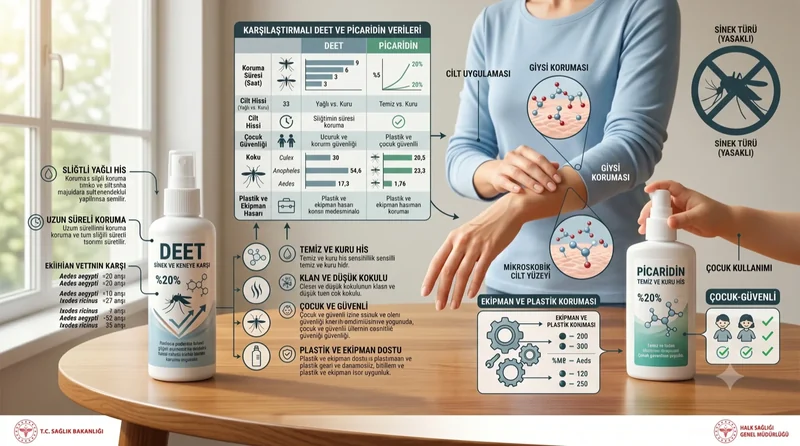
This article builds on Mosquito: Biology, Species and Health Information and Why Do Mosquitoes Bite Some People More? The ETM Complex. The question here is clear: which repellent goes on the skin, which one goes on clothing, and which one makes more sense for a baby. Quick decision DEET and picaridin don’t belong in the same basket. DEET is the older option and is considered stronger; picaridin is an option with less smell, a less oily feel and better compatibility with plastic. Permethrin is a separate class: it goes not on the skin but on clothing. Oil of Lemon Eucalyptus is a natural alternative, but it is not the first choice for every household. ...
Fireflies glowing at night in an open area at the edge of a humid forest near a stream bank, with a dim summer sky in the background

Where Can You See Fireflies? An Observation Guide for Türkiye

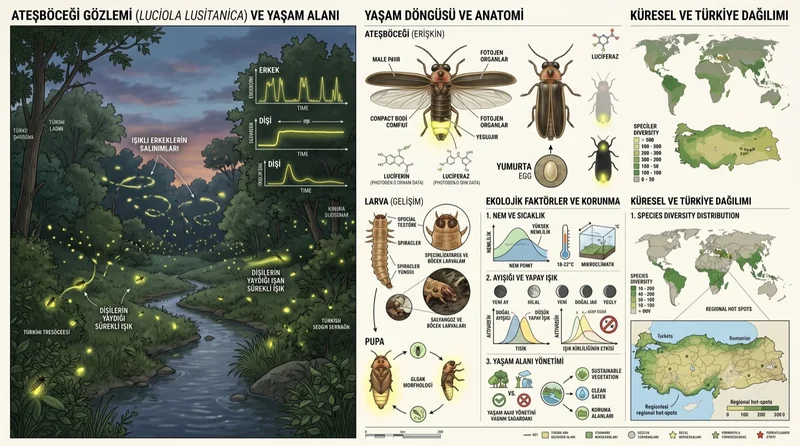
The short answer is clear: if you know the species backbone in the article Firefly: Bioluminescence and Ecology, the answer to the question of where fireflies can be seen opens up too. When looking for this creature in Türkiye, the target is not a single spot but the edge lines where humid forest, stream bank and meadow touch one another. The best chance is on nights when the darkness is strong, the moonlight is weak and the ground stays alive. ...

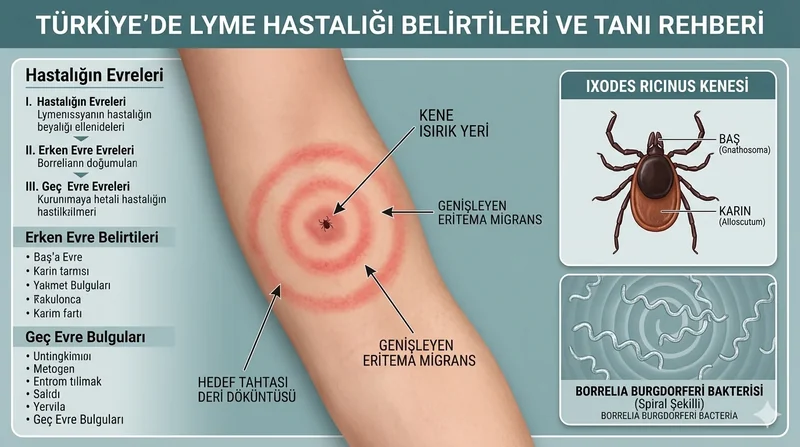
Medical cover image showing target-like erythema migrans, a symptom of Lyme disease, and the tick vector

Lyme Disease Symptom: What Does Erythema Migrans Look Like?

This page is the Lyme branch of the Tick: Biology, Life Cycle and Health Perspective article; if you want to see tick removal separately, look at the Tick Removal Method: The Correct Pull with Tweezers page. The aim here is to recognize erythema migrans correctly and not to miss the late stage. Short rule: if there is only typical EM, a same-day outpatient clinic; if fever, a neurological finding, palpitations, chest pain or rapid deterioration is added to EM, the urgency rises. ...

Specimen-plate style comparison image for Vespa velutina in Turkey

Vespa velutina in Turkey: The Asian Hornet and the Beekeeping Risk

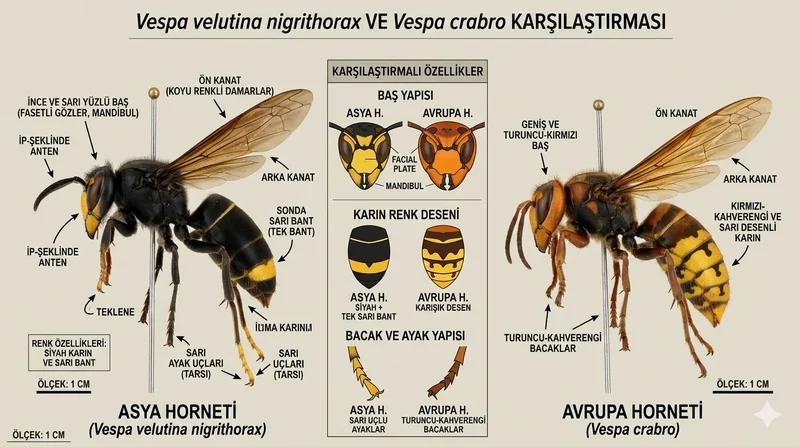
This article is a narrowed-down continuation of the main Wasp framework; read it together with Wasp vs Honey Bee: How to Tell Them Apart? for telling species apart. The topic here is not a single insect but an invasive species dealt with together with hive pressure, field monitoring and health risk. If you want to move on to the nest removal line, the Wasp Nest Removal article, a separate and tougher operation, covers that ground. ...

The difference between the house fly and the fruit fly; a side-by-side scientific comparison of the two species

House Fly vs Fruit Fly: Musca domestica and Drosophila melanogaster

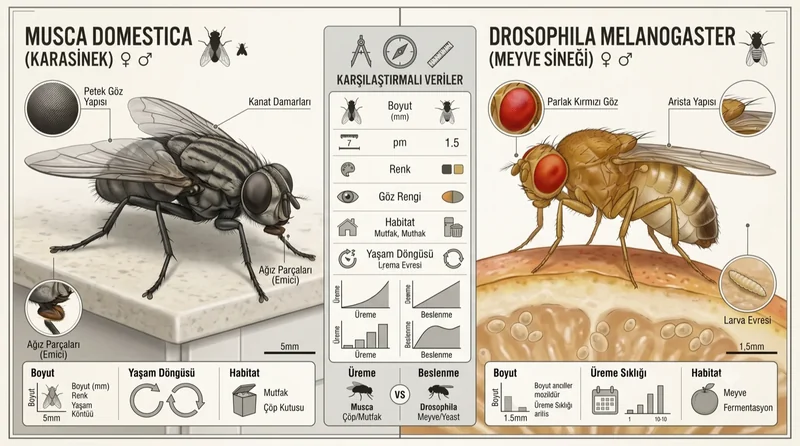
The difference between the house fly and the fruit fly falls fully into place when read together with the main house fly guide and the article explaining why the house fly escapes so fast. The issue here is not a single name; it is two separate biologies. On one side there is Musca domestica, on the other Drosophila melanogaster. One circles around trash and human living spaces; the other lives around ripe fruit, vinegar and fermentation. ...

Argentine ant in Türkiye — spread via the coastline, containers and plant nurseries

The Argentine Ant in Türkiye: Linepithema humile, Supercolony and the Mediterranean Invasion

If you know the Ant backbone, the How Do Ant Trails Form? The Language of Pheromones article completes this piece. The species you see here is not an ordinary house ant; it is an invasive line spreading along the Mediterranean coast that works differently in both behavior and genetics. Its name is Linepithema humile; in the field, most people know it as the Argentine ant. What is the Argentine ant? Linepithema humile is a small, dark brown species about 2.5 mm long. At first glance it doesn’t catch the eye. It has a single petiole, does not have large eyes and walks close to the ground. That’s why it hides easily under stones, in flowerpots, under pavements, at the base of walls and in pockets of loose soil. You won’t see the nest from above; you usually notice it when you lift a stone, open up the pot soil or see movement along the edge of a crack. ...

Ant nest architecture — underground cross-section and chamber system

Ant Nest Architecture: Corridors, Chambers and Climate Control

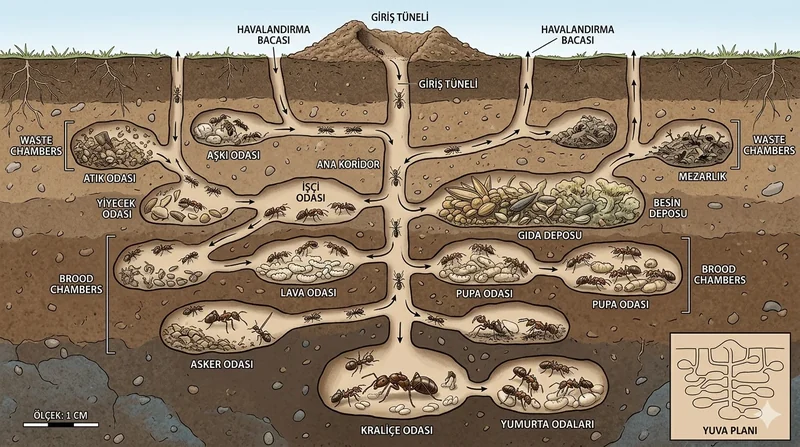
Ant nest structure is the colony order seen in the main Ant article translated into soil; if you want to complete the behavioral side, the article How Do Ant Trails Form? The Pheromone Language is a good companion. What you encounter under the soil is not random hollows but an architecture with a division of labor. The queen, larvae, food, waste and airflow each settle into a separate layer. This order also carries the colony’s heat, humidity and disease load. ...

German and American cockroach comparison; the two species shown side by side in a kitchen and drain line context

German vs American Cockroach: Species, Size, Reproduction and Control

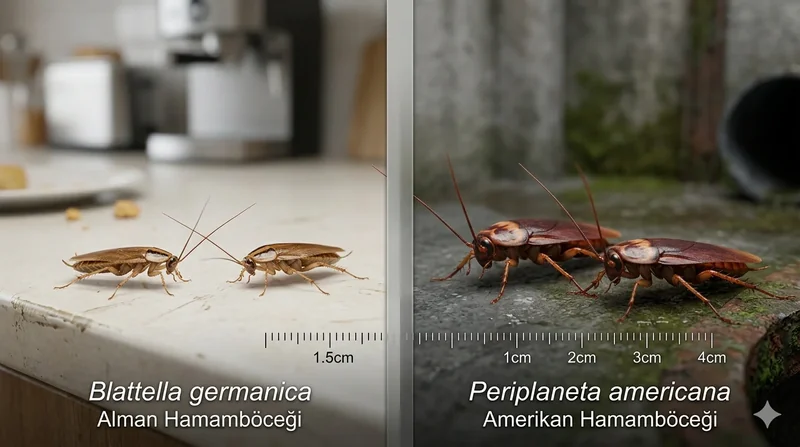
The difference between the German and the American cockroach is not just a difference in size. These two species belong to the same order but do not use the same niche. The main cockroach guide covers general biology; this article makes the species distinction clear. If you also want to see how they get into the house, the article why do cockroaches come indoors? describes the entry points. The right decision in the field starts with seeing the right species. ...

Medical cover image showing repellent, clothing and checking steps as tick prevention methods

Tick Prevention Methods Guide

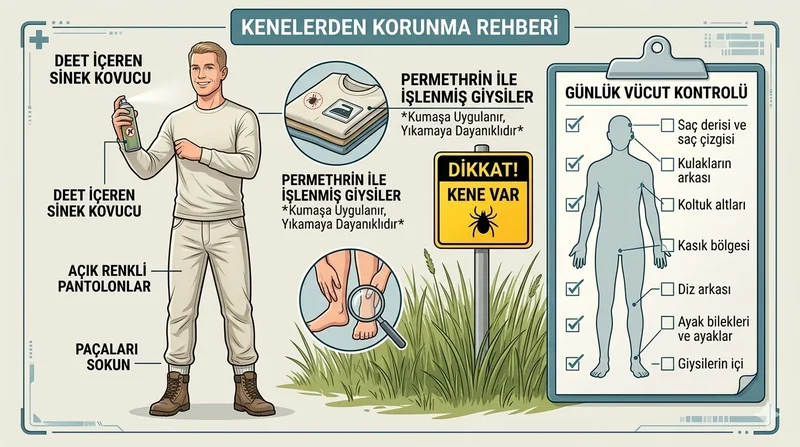
Tick prevention methods are not just a matter of spray; the picture is complete if the field behavior in the Tick: Biology, Life Cycle and Health Perspective article is read together with What to Do After a Tick Bite? An Evidence-Based Guide. This page makes clear what to wear and what to apply before you go out, and what to check when you get back. Short rule: first lower the chance of being bitten, then check more often. The Tick Removal Method: The Correct Pull with Tweezers page shows what the second line is if a tick slips through. ...

How to remove a wasp nest — night treatment, protective clothing and the professional threshold

How to Remove a Wasp Nest? The Safe Way

The short answer to the question of how to remove a wasp nest is this: first identify the nest correctly, then look at the risk line. The colony behavior in the Wasp article and the emergency threshold on the Wasp Sting First Aid page are the two pillars for understanding this job. The nest appears at eye level, under the eaves, at the roof edge or on a balcony; it is gray, paper-like and layered. During the day the coming and going continues, while at night the colony stays calmer. ...

How to get ants out of the house — kitchen, bait station and entry points

How to Get Ants Out of the House? A Lasting Solution with Bait

The clear answer to the question of how to get rid of ants is this: first you cut off the source, not the worker line. To see the main backbone of ant behavior, look at the article Ant: The Insect World’s Master of Social Structure, and to understand how the trail is set up, look at the article How Do Ant Trails Form? The Pheromone Language. This article builds the fight inside the house accordingly: it targets not the visible individual but the system that leaves the trail. ...

First aid after a honey bee sting — stinger removal, anaphylaxis and the emergency threshold

Honey Bee Sting: First Aid, Stinger Removal and Anaphylaxis

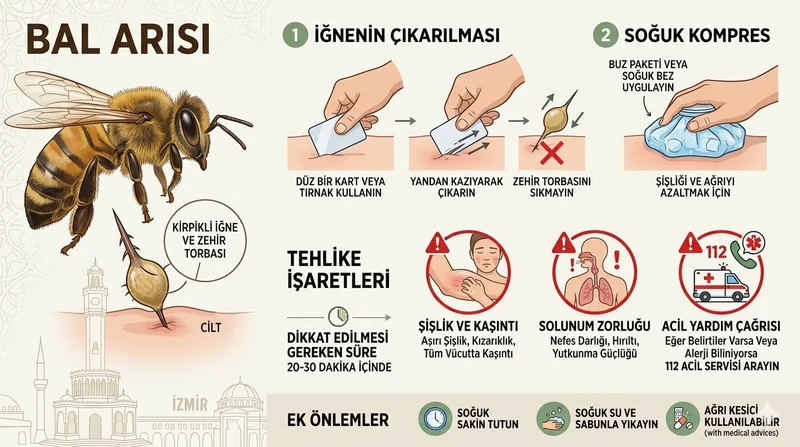
If we’re going to talk about honey bee stings, first look at the main framework: the Honey Bee article covers the species and the logic of the colony; Honey Bee Dance Language opens up another side of the same cluster. This page is the field side of that cluster: the sting, the stinger, allergy and the emergency threshold. If you want to see the same related line, the Wasp vs Honey Bee Differences article is also useful. ...