Scientific cover image illustrating the green glow of GFP from the jellyfish Aequorea victoria

What Is GFP, the Green Fluorescent Protein?

The short verdict is this: if you know the luciferase logic in Firefly: Bioluminescence and Ecology, you will understand in one move why GFP is different; Pheromones, Dance and Light in Insect Communication, on the other hand, shows that in nature a signal is not carried in a single form. This article covers the laboratory side of that same family of signals. If you want to broaden the background, the chemical and behavioral side of signaling is also laid out in the Ant and Honey bee articles. ...

Comparison of the house fly compound eye and the human eye

Compound Eye vs Human Eye: How the House Fly Reads the World

The speed question on the House Fly page actually rests on the physics of the eye. The article on the house fly’s fast escape opens this up from the behavior side. The same optical question gives a different result for the honey bee. The firefly, on the other hand, carries a night signal. On the mosquito side, the balance of approach and avoidance rests on a different biology. In this article we reduce the compound eye vs human eye difference to a single sentence: one reads a wide field and motion, the other reads detail and depth. ...

Ways to attract ladybugs to the garden

How to Attract Ladybugs to Your Garden

If you want to attract ladybugs, the point is not a single insect but setting up the right environment. The logic in the Why Are Ladybugs Considered Lucky? article applies here too: this creature is an aphid hunter; so for it to come to the garden, it needs prey, flowers, water and a place to hide. The short answer is clear: first build the habitat, then wait for the insect. If you want to see the species details, go back to the main Ladybug article; this article looks at the field side of attracting them. ...

Harmonia axyridis — the invasive ladybug with variable coloring

Harmonia axyridis as an Invasive Species: Why Is the Asian Lady Beetle a Problem?

This article takes the species distinction mentioned on the Ladybug main page one step further: Harmonia axyridis, i.e. the Asian/multicolored lady beetle, is one of the most debated invasive species within the same family. Reading the logic of invasive species through the framework we saw in the Ant and Mosquito articles is useful here too. The rule is simple: not every shiny insect is beneficial, and not every beneficial insect stays beneficial everywhere. ...

Ant pheromone, honey bee dance and firefly light in the same frame

Pheromones, Dance and Light in Insect Communication

Ant pheromones, the honey bee dance and the firefly flash give three separate answers to the same basic problem: transmitting information reliably. To read these three examples together, it is enough to consider first the pheromone logic of the ant trail, then the Honey bee dance language and Firefly light code pages. In each case it is communication; the carrier, the duration and the margin of error change. Chemical trails in the ant: low cost, high durability Ants build communication on a chemical map. Pheromones take on tasks such as trail marking, alarm, aggregation and colony identity. When a worker finds a resource it leaves a trail, the others read that trail with their antennae, and as the line strengthens the route turns into a real road. Alarm pheromone spreads danger quickly; an aggregation signal gathers individuals at the same spot. The strength of this system is that a single message grows as it is reused. Air currents, surface texture and rain change the quality of the trail; in other words, the error rate depends on the environment. ...

Firefly habitat squeezed between artificial city lights and the dark summer night

Light Pollution and Firefly Conservation: Giving Back the Flash Code

The short verdict is this: the species backbone in the Firefly: Bioluminescence and Ecology article is cut off by light pressure in this article; the flash language in Why Do Fireflies Glow? The Secret of Bioluminescence becomes unreadable under artificial light. To understand the field, the line of Where Can You See Fireflies? An Observation Guide for Türkiye together with Pheromones, Dance and Light in Insect Communication also needs to be put on the same table. This topic is not only about fireflies; it also shows how other creatures such as the Honey Bee, the Ant and the Ladybug live with night and environmental signals. ...

Cover showing the distinction between maggot therapy and myiasis

Maggots and Health: The Line Between Treatment and Myiasis

The first clear distinction here is this: in health, “maggot” leads to two different doors. Behind one door are Diptera logic, as with the house fly, and the larval stage; behind the other are infection and wound management. To see the logic of carriers, the mosquito article; to see the difference in biting species, the wasp article; and to complete the biological setting, the honey bee article bring the same picture together. This article is medical information; it does not make a diagnosis. If there is an open wound, fever, shortness of breath, rapidly spreading redness, a change in consciousness, or eye or throat involvement, call your country’s emergency number. ...

Mass emergence of Magicicada

17-Year Cicada: The Periodical 17-Year Cicada Phenomenon

The topic people search for as the 17-year cicada is actually a narrower biology story that starts with the main Cicada article and settles in through the sound mechanism and egg-laying behavior. The star here is the genus Magicicada, which lives only in North America. If you’d like to read the topic from the opposite side as well, the Why Do Fireflies Glow? article, which explains why the sound is so powerful, is a good neighbor too; one speaks with light, the other with sound. ...

First aid steps after a wasp sting — washing, cold compress, emergency symptoms

Wasp Sting First Aid: What to Do, When to Call the Emergency Number?

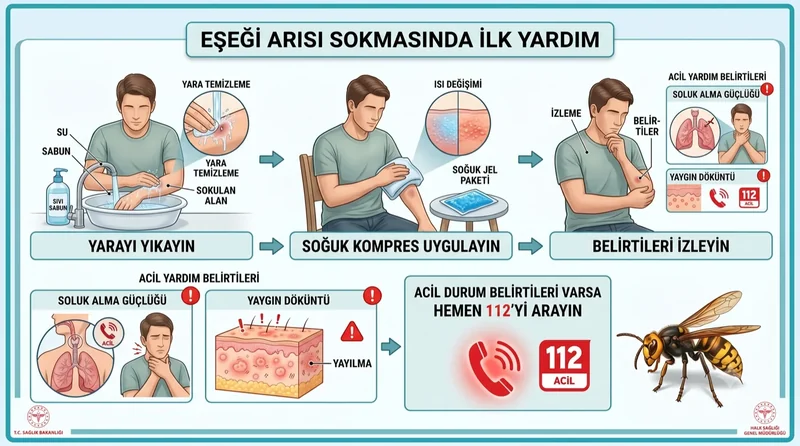
The short answer to the question “stung by a wasp, what should you do?” is this: first clean the area, then identify your reaction, then don’t miss the emergency threshold. For the general picture of the species, see the Wasp: Social Structure and Relationship with Humans article, and to see the difference from the honey bee clearly, see the Wasp vs Honey Bee: How to Tell Them Apart? page. Here the topic is first aid directly, because a wasp doesn’t sting once and leave; given the chance, it can sting again. ...

Female cicada laying eggs with her ovipositor on a slender twig

Cicada Egg-Laying Behavior

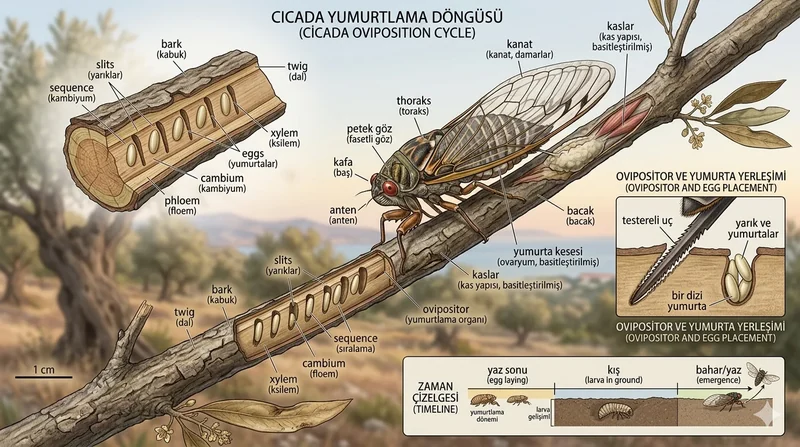
The short answer is clear: the Main Cicada article gives the general backbone of the life cycle; here, linking up with Why Do Cicadas Sing Constantly? The Sound Mechanism, we read cicada egg-laying behavior step by step. Because egg laying, the sound call, mating and underground development are parts of the same chain. Seen through the eyes of a field biologist, the matter is not a single moment but a cycle. In the classical sense, univoltine means single-generation; but for cicadas the more accurate framework is that the adult stage is short and the development period is long. In some species this wait is in the 1-4 year band; some periodical lineages in North America, on the other hand, wait 13 or 17 years. So the creature we call the cicada becomes visible in summer with a few weeks of sound, but spends the main part of its life hidden. ...

How to get rid of cockroaches — the kitchen, the bathroom and hidden entry points

How to Get Rid of Cockroaches: A Clear Protection Guide for Your Home

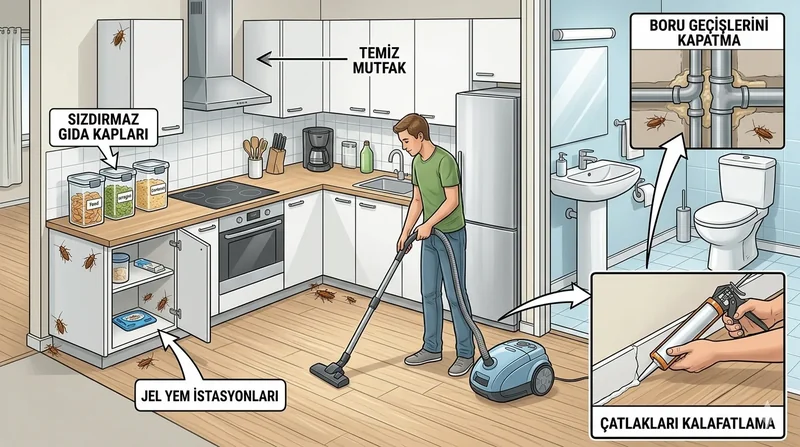
The short answer to the question of how to get rid of cockroaches is this: first you cut off the source, then you seal the entry points, and last you bring the pressure down with bait and traps. This guide builds on the main cockroach article and clarifies what to do inside the home. If you have not yet read the part about why the insect gets into the house, the why do cockroaches come indoors article also describes the beginning of the same chain. The goal here is not to chase insects one by one but to make the environment unattractive to them. ...

Pesticide risk between the honey bee and farmland

Honey Bee Protection: Pesticide Effects, Neonicotinoids and Colony Health

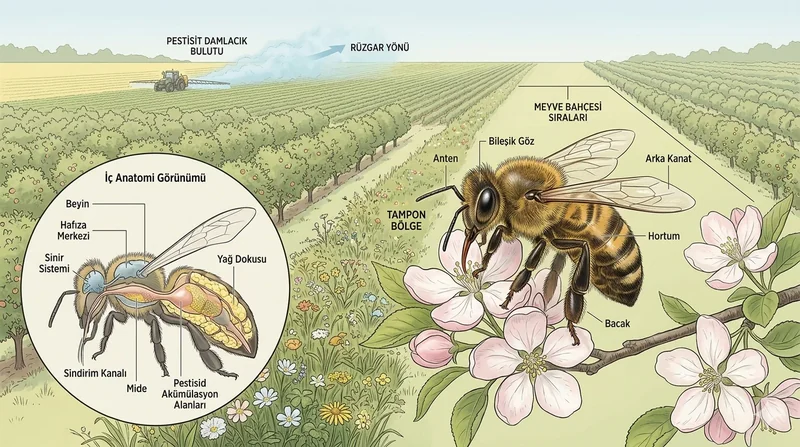
The short verdict is this: the honey bee protection pesticide issue can’t be explained with the name of a single product; it is read through the whole functioning of the Honey Bee colony and behavioral details such as the Honey Bee Dance Language. The problem is not only that the bee dies, but that it loses its way, can’t find food and that the colony weakens. That’s why the topic is both biology and agricultural management. ...