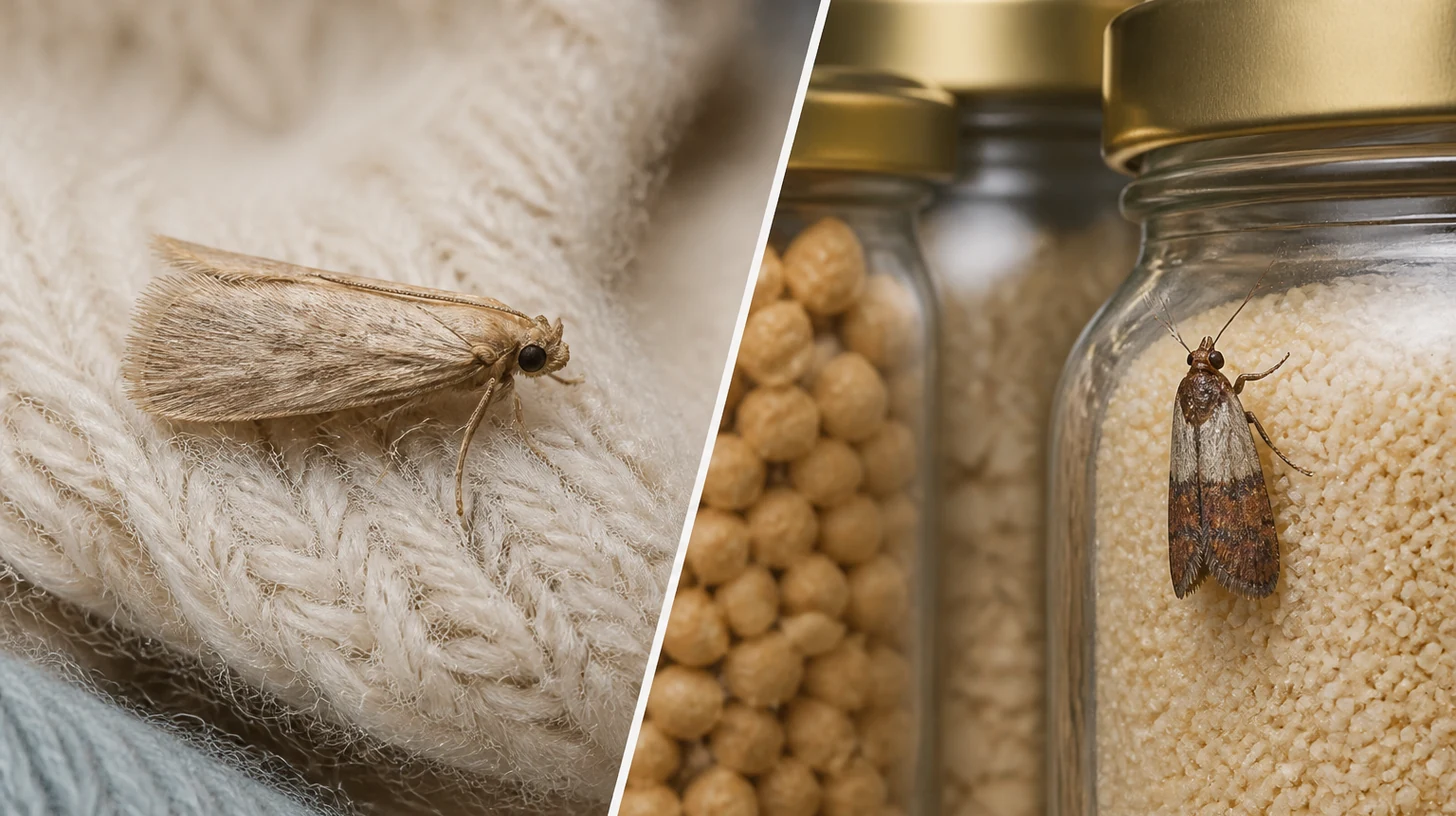
“Moths in the house” is used as if it were the name of a single insect; but indoors there are two separate lines of problems: the clothes moth and the pantry moth. The short answer is this: killing the small flying moth is not enough; you need to find the source and remove it. In this respect, controlling moths in the house is, like fleas in the house, a matter of breaking the life cycle; like bed bugs, it requires tracking hidden cracks, but it does not show blood-feeding behavior.
What are moths in the house?
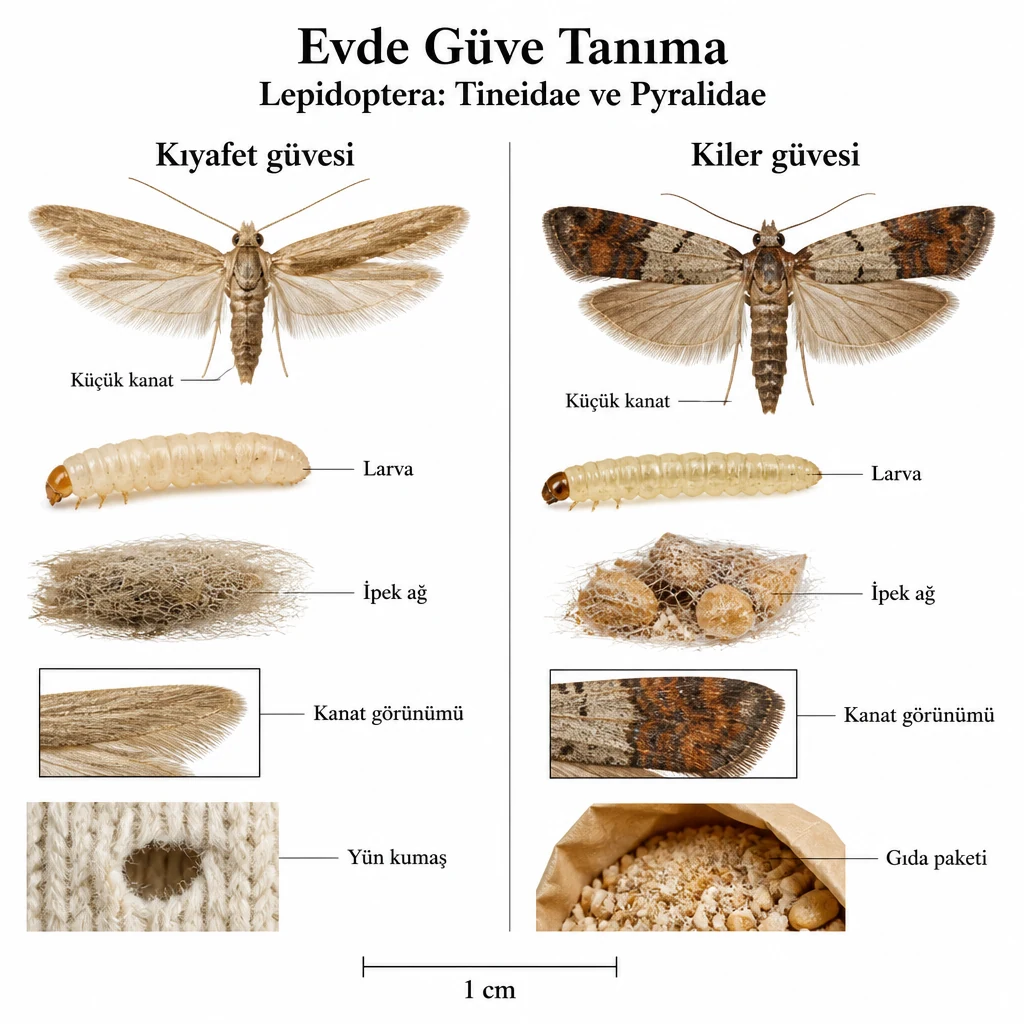
When it comes to moths in the house, most people think of a small, pale-colored butterfly-like insect. Scientifically, these are moths belonging to the order Lepidoptera. Two groups stand out in household problems. The first is clothes moths; a common example is Tineola bisselliella, the clothes moth known as the webbing clothes moth. The second is pantry or dry food moths; a common example is Plodia interpunctella, the pantry moth known as the Indianmeal moth.
Putting the two in the same basket is a mistake. The clothes moth targets keratin-containing or animal-derived material such as natural fibers, wool, hair, fur, silk, rugs and feathers. The pantry moth develops in dry food such as flour, rice, pasta, pulses, nuts, spices, chocolate, birdseed and pet food. The solution for one lies along the wardrobe and textile line; the solution for the other lies along the pantry and packaged food line.
How can you tell you have moths in the house?
A sign of moths is not just seeing a small moth flying around the house. With clothes moths, the real sign is irregular eaten patches on a wool sweater, a rug, felt, fur or feather filling, and the fine silk webbing left by the larva. The adult moth does not eat fabric; the damage is mostly done by the larva. That is why, even if few moths are seen flying in the wardrobe, damage can continue underneath.
With pantry moths, the signs are different. You may see fine webbing inside packages, clumped flour or semolina, small larvae, holes in package corners, pupal cases between shelves and moths flying in a zigzag in the kitchen. UC IPM states that pantry pests often enter the home with an infested package and that, by the time they are seen, they may have spread to other packages. That is why looking only at the visible package is not enough.
The practical distinction is this: if moths appear in the wardrobe, in woolens, in rugs and in dark textile areas, think of the clothes line. If moths appear in the kitchen, on the dry food shelf, in a spice box, in a pet food sack or in birdseed, think of the pantry line. Both lines can also be present in the same home at the same time; but the control plan should be written separately.
Why does the life cycle matter?
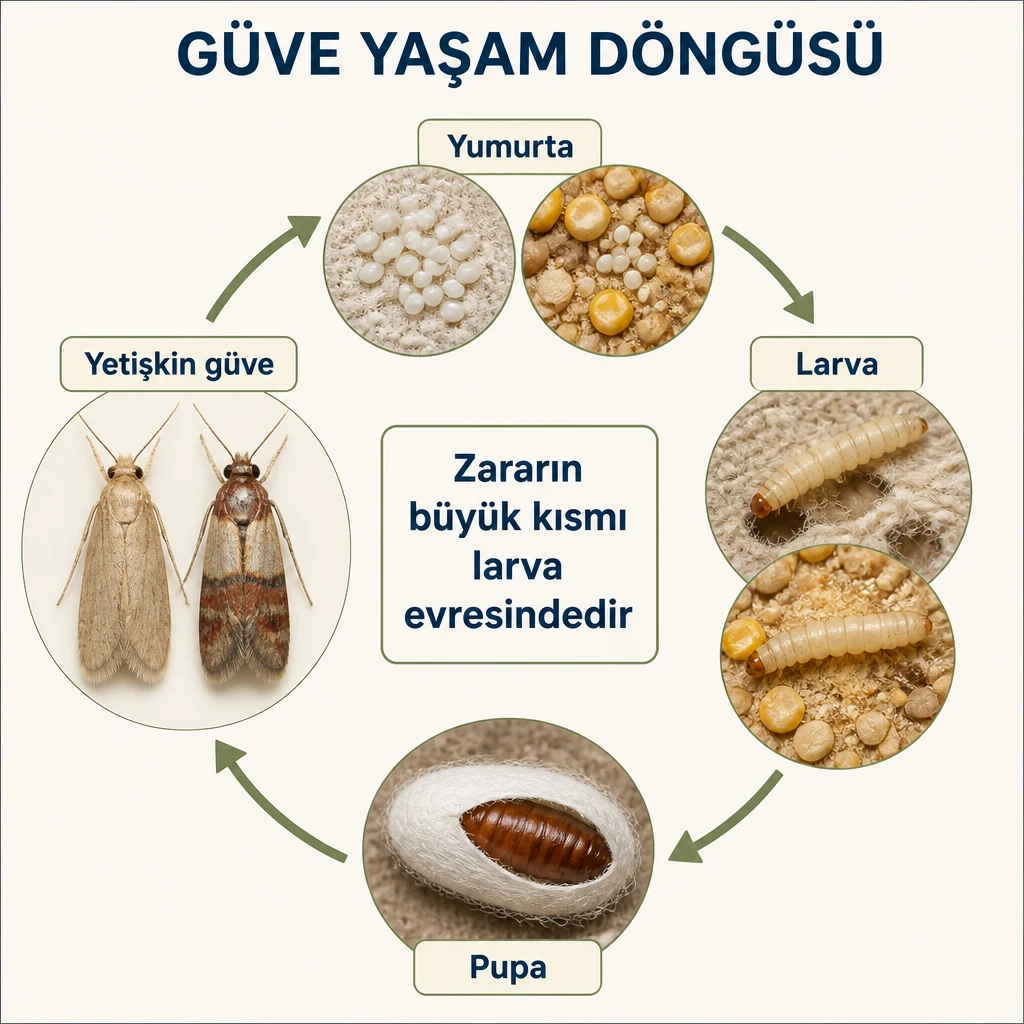
Moths go through egg, larva, pupa and adult stages. The flying individual the homeowner sees is usually the adult. Most of the damage, however, happens in the larval stage. The larva feeds on food, bores holes in fabric, leaves silk webbing and pupates in a suitable spot. That is why spraying to knock down the flyers brings short-term relief; it does not cut off the source.
The clothes moth likes dark, quiet and rarely cleaned areas. Under heavy furniture, along the baseboards, rug edges, the bottom of wardrobes, woolens not worn for a long time and cracks where animal hair accumulates are risky. To prevent clothes moths, UC IPM recommends regularly cleaning rarely cleaned areas, reducing larval food by washing or dry cleaning, and protecting stored items.
With the pantry moth, the cycle starts inside the package. As the larva feeds, it can leave the package and move to gaps between shelves, the edges of lids or cracks in cupboards to pupate. That is why throwing out the infested package and leaving the shelf without wiping it is an incomplete job. New infestation becomes easier especially if products such as flour, grains, pulses and nuts are kept in open bags.
Where do moths in the house come from?
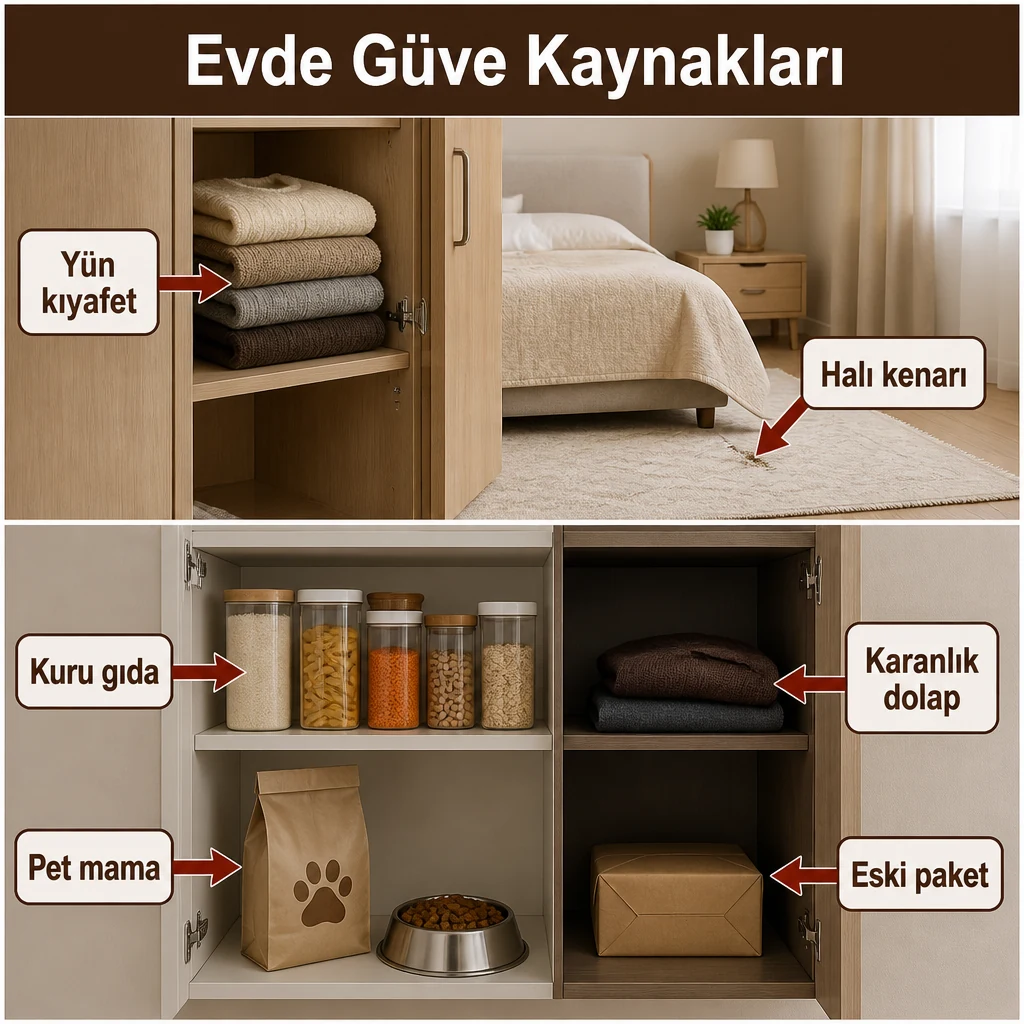
Moths in the house usually do not actively invade the home from outside; they arrive with material that people bring into the home. The pantry moth can be carried in with an infested package of dry food, nuts, spices, birdseed or pet food. The clothes moth can be carried in with second-hand woolens, rugs, feather items, textiles from storage or natural-fiber products that have not been cleaned for a long time.
An occasional moth coming in from outdoors is also possible; but a lasting problem indoors requires food and a hiding place. Open packages, shelves with crumbs, dark wardrobes, accumulated animal hair and textiles that stay unmoved for a long time meet this condition. The basic principle in the How to get rid of cockroaches guide applies here too: you cut off not the animal but the conditions that sustain it.
Health perspective
Risk
House moths are generally not animals that bite people. The main risk is the loss of textiles and food. Because dry food in which pantry moths have been seen may contain larvae, droppings, webbing and debris, that product should not be eaten. On the clothes moth side, woolens, rugs, antique textiles and feather materials can be damaged.
Prevalence data specific to the topic are limited. GBIF records confirm the family Tineidae for Tineola bisselliella and Pyralidae for Plodia interpunctella, and that both are accepted species within the class Insecta, order Lepidoptera. No robust, nationwide public health statistic giving an indoor occurrence rate for Türkiye could be found. For this reason, the indoor rate of another species or another country has not been carried over here.
Pesticide risk also falls under the health heading. Mothballs or similar moth products are not to be considered innocent just because they give off a smell; they are pesticide products. They should not be used out in the open, within children’s reach, next to pets, in a food cupboard or off-label. Spraying aerosols at random, especially in the kitchen, is a bad idea from a food safety perspective.
Prevention and control
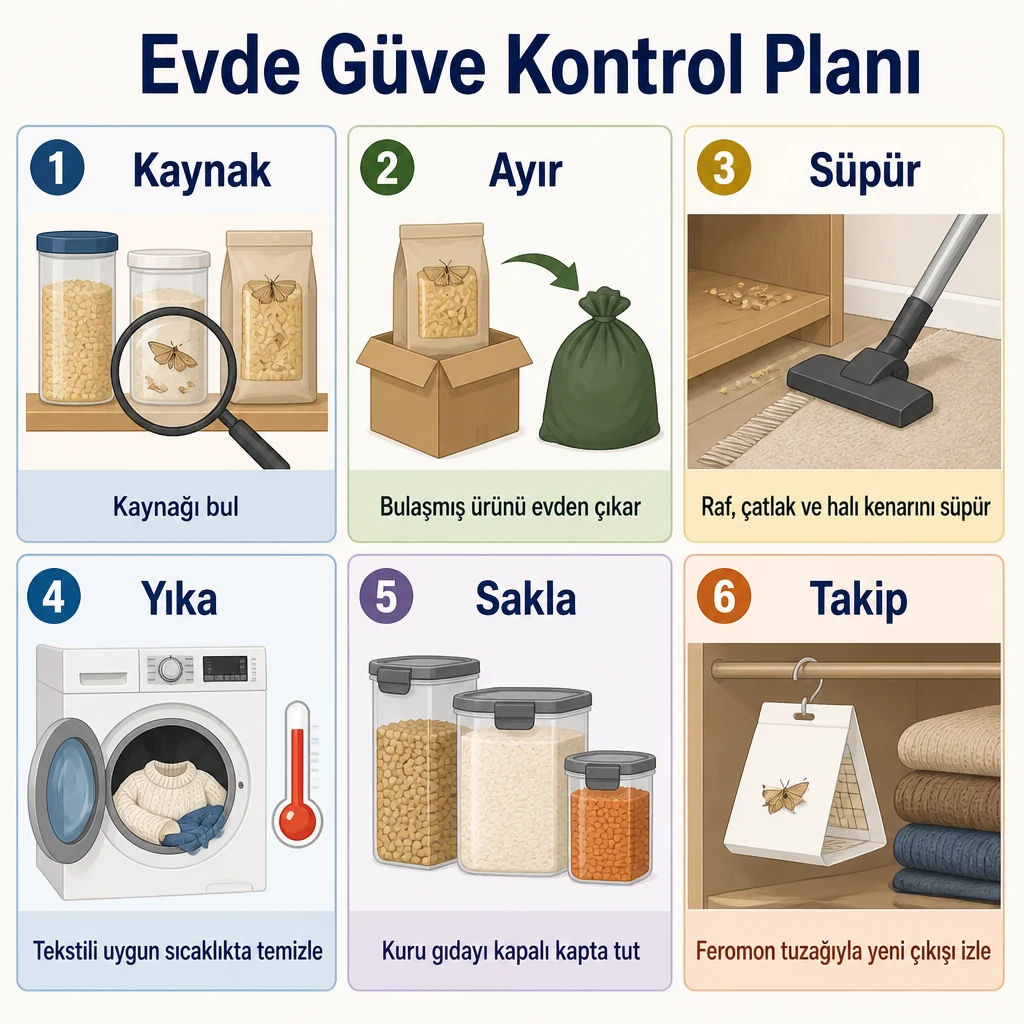
Control rests on six steps: find the source, separate the infested material, clean the area, store sound items sealed, apply the appropriate cleaning treatment, then follow up. The tracking logic described in the How to get rid of ants article works here too; with moths, the trail is not the flight itself but the larvae and the source material.
First control steps at home
With pantry moths, empty the entire dry food shelf. Check flour, rice, pasta, pulses, nuts, spices, chocolate, dried fruit, pet food and birdseed one by one. Don’t open and shake out a package with webbing, larvae, holes or clumping inside the house; bag it and take it out to the outdoor trash. Small quantities of products that are suspicious but look sound can be set aside in a secure container and monitored; with heavy infestation, don’t take the risk.
With clothes moths, check woolens, silk, feathers, fur, felt, rug edges, under sofas and the bottom of wardrobes. Wash infested textiles according to the product label, send them for dry cleaning, and apply heat or freezing methods according to expert sources. An unsuitable temperature can damage delicate textiles; so professional cleaning is the better choice for valuable rugs, antique fabrics and fur.
Concrete checklist:
- Don’t settle for the room where you saw the flying moth; check wardrobes, shelves and neighboring rooms.
- Seal the infested food package or heavily damaged material and take it out to the outdoor trash.
- Vacuum shelves, cracks, baseboards, rug edges and the bottom of wardrobes.
- Put the vacuum bag or canister contents in a sealed bag and take it out of the house.
- Store dry food in glass, metal or hard plastic containers with tight-fitting lids.
- Keep natural-fiber textiles in clean, dry and closed covers.
- Choose a pheromone trap suited to the species; don’t use the trap as a substitute for cleaning the source.
- Monitor for new emergences for two to three weeks.
Pesticides, baits and the professional threshold
The cockroach or ant bait approach is not used for moths. Clothes moths and pantry moths do not form social colonies and carry bait back to a nest. On the pantry side, applying the wrong product in a food area is also risky. For this reason, the options considered are not bait but removing the source, hygiene, sealed storage, a suitable trap and, when necessary, a labeled professional treatment.
The pheromone trap is useful but misunderstood. The trap attracts male moths and shows whether the population is continuing. It does not on its own destroy an infested package, a larva-infested rug or the pupal case at the bottom of a wardrobe. A trap that stays empty is a good sign; one that fills up tells you the search for the source is not over.
The threshold for professional help is as follows:
| Situation | What does it mean? | The right move |
|---|---|---|
| Larvae in a single package | Local pantry infestation | Remove the package, clean the shelf, follow up |
| Webbing and larvae on several shelves | Widespread pantry moth | Inspect all dry food, switch to sealed storage |
| Recurring holes in woolens | Clothes moth cycle | Clean the wardrobe, rugs and textiles together |
| Antique rug or valuable textiles | Risk of material damage | Get expert cleaning or conservation services |
| New flights continue after cleaning | A hidden source may remain | Consider pheromone monitoring and professional inspection |
| Need for spraying in a food area | High risk of the wrong product | Don’t take action other than a labeled, authorized treatment |
Apartment building and common area perspective
Moths generally do not behave like an apartment-wide colony; but the source can be at the scale of the building. If there are old rugs, birdseed, pet food, boxes of dry food or bags of textiles in a shared storage room, they can be carried into the apartments. Natural-fiber items that sit for a long time in basements and storage areas are suitable for clothes moths. Storing dry food or feed in common areas also increases the risk of pantry moths.
That is why, if the source is in a shared storage room, the problem can come back even after cleaning a single apartment. Storage organization, sealed storage, discarding broken packages, regular vacuuming and humidity control should be discussed with the building management. This is not as colony-centered a problem as the cockroach; but managing shared sources is still important.
Frequently asked questions
Are moths in the house harmful?
The adult moth generally does not bite people; but the larva can damage textiles or dry food. To read the damage correctly, you need to look at the source material rather than the flying adult.
Are moths repelled by smells?
Lavender, cedar scent or similar solutions are not a control plan on their own. Without cleaning, removing the source and sealed storage, a scent only provides temporary disruption; it does not clean infested material.
Are moth eggs visible?
Because the eggs are very small, reliable identification with the naked eye is difficult. That is why webbing inside packages, larvae, pupal cases, fabric damage and adult flights are evaluated together.
Can I sift infested food and use it?
It is not recommended. Larvae, droppings, webbing and particles may remain. It is safer to remove dry food in which moths have been seen from the home.
When will moths in the house be completely gone?
If the source has been found and removed, flights should decrease within a few weeks. If new moths keep emerging, a second source such as a hidden package, the bottom of a wardrobe, a rug edge or a shared storage room should be looked for.