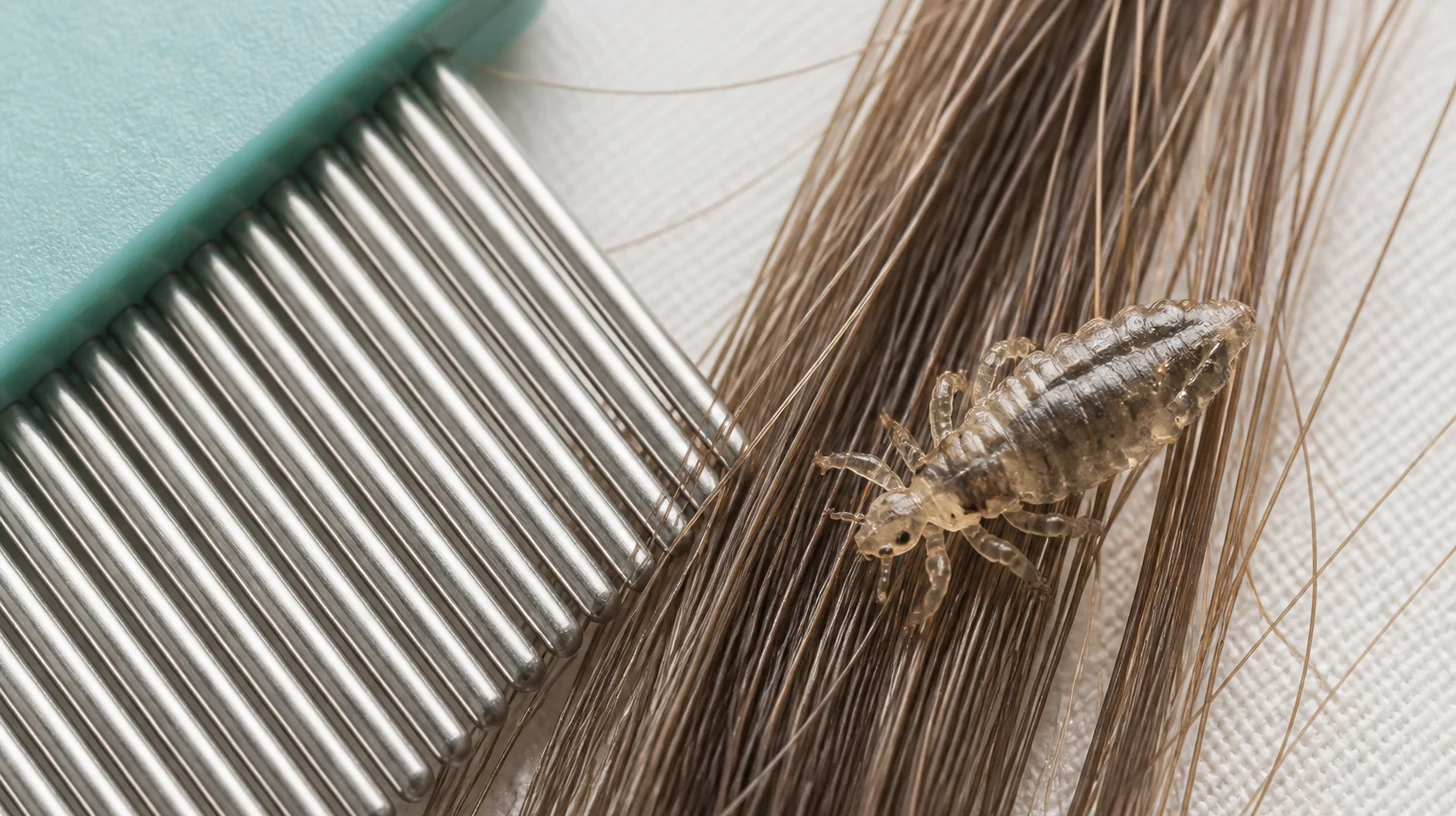
Lice in the house should not be thought of as an ordinary household insect that comes out of the wall or breeds in the carpet. The short answer is this: when lice are suspected in the house, the main goal is not spraying the rooms, but finding live head lice in the hair or nits stuck to the hair, checking contacts on the same day, and managing close belongings such as the comb, hat and pillowcase that were used. Bites and itching can be confused with other species; that’s why you need to tell them apart from creatures such as bed bugs, fleas in the house and ticks.
What are lice in the house?
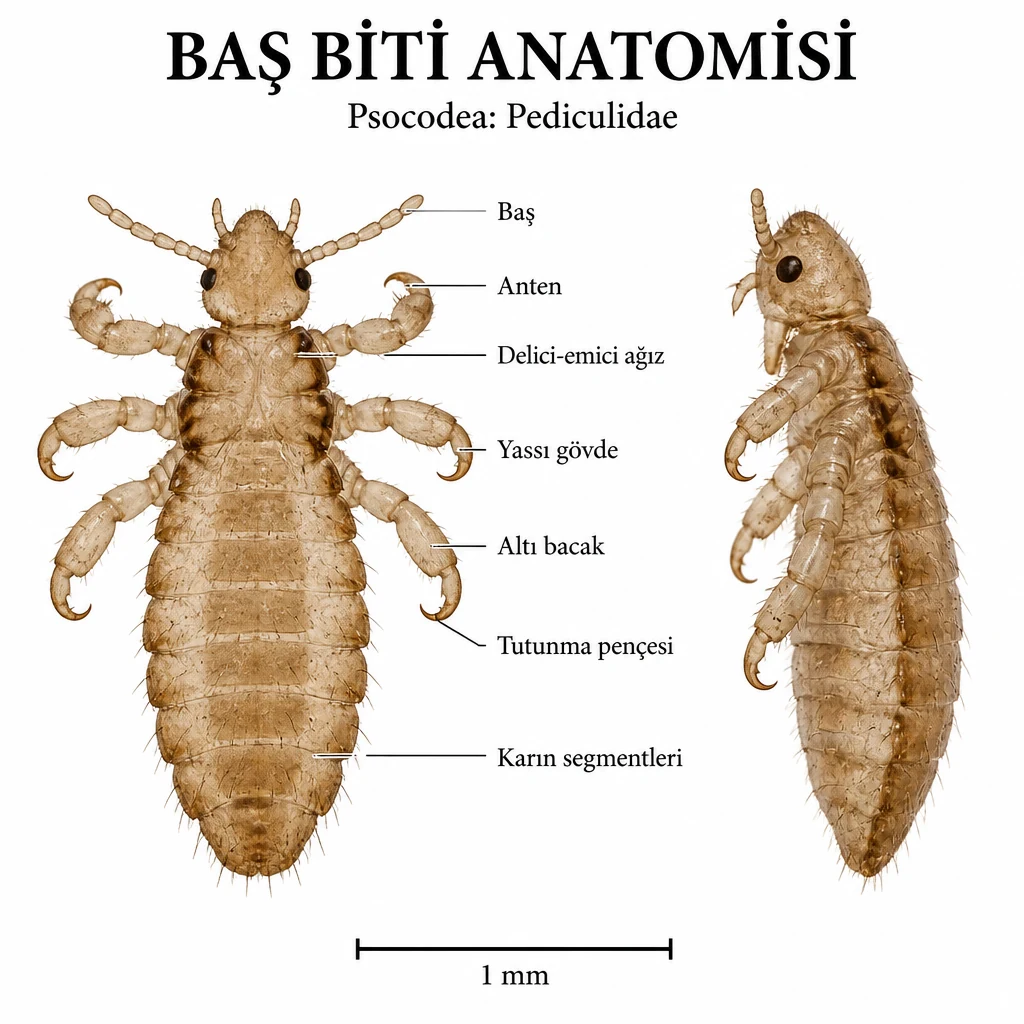
In practice, lice in the house usually means head lice. The head louse, whose scientific name is Pediculus humanus capitis, is a small, wingless, blood-feeding insect that lives on the human scalp. It can’t fly or jump; the strongest route of spread is close head-to-head contact. That’s why school-age children, family members living in the same home and close-contact care settings come up more often.
Head lice are not an automatic result of a dirty home or dirty hair. They can also live in clean hair. This distinction is important, because a misplaced sense of shame makes people hide the problem and delays treatment. The right approach is a calm check: are there live lice, where are the nits, who in the home is a close contact, are the personal belongings being used shared?
How do you tell there are lice in the house?
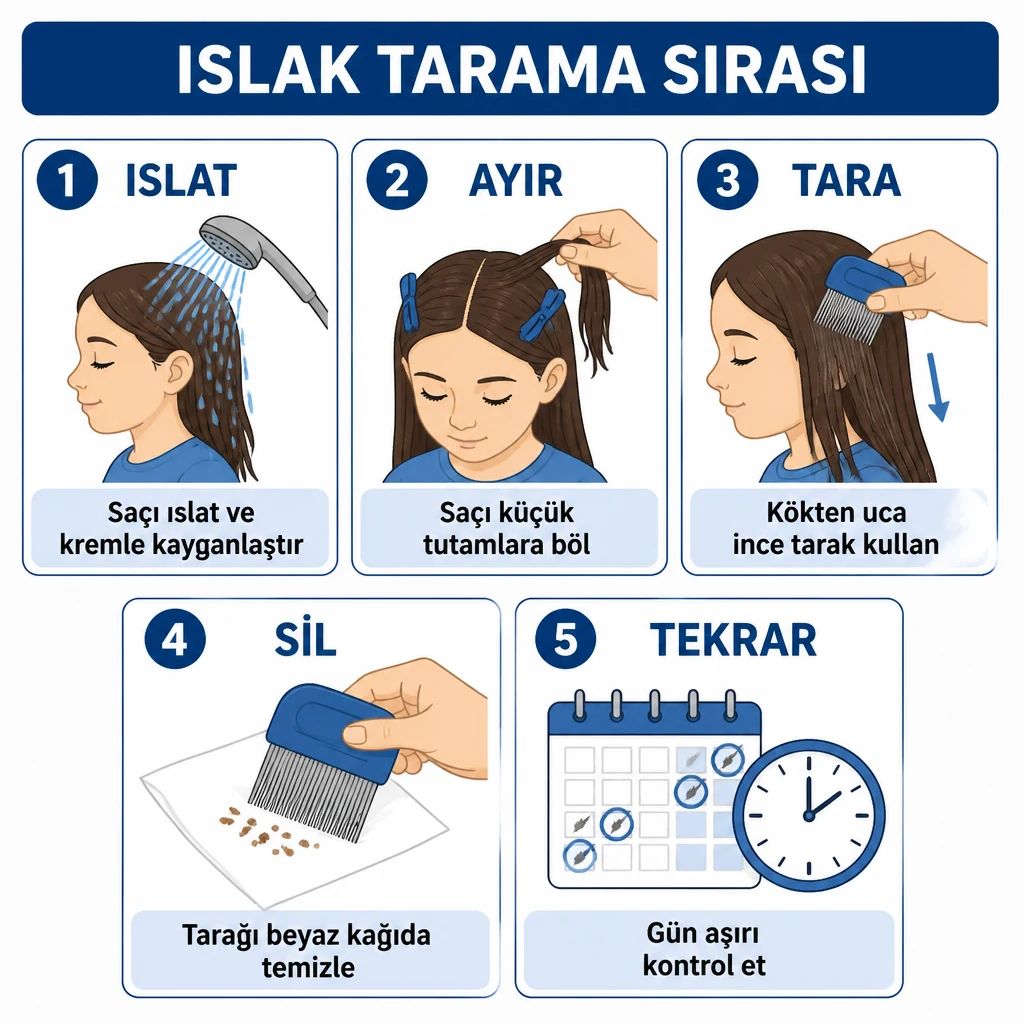
The most solid finding is seeing a live louse. Head lice move quickly and hide in the hair; that’s why looking over dry hair from above is often not enough. The nape of the neck, behind the ears and the roots of the hair are checked in good light. A fine-toothed lice comb gives a clearer result over a white towel or white paper.
A nit is a louse egg and stays stuck to the hair strand. It doesn’t fall out easily like dandruff. However, not every white dot means an active infestation. Old, empty shells far from the roots of the hair may be traces of a past infestation. For an active case, live lice, nits close to the roots of the hair and new itching are assessed together.
The following are seen as signs of lice in the house:
- Itching on the scalp, especially around the nape of the neck and behind the ears.
- Small white or brown nits stuck to hair strands.
- A live louse the size of a sesame seed moving in the hair.
- Redness, scabbing or irritation from scratching.
- Similar complaints in more than one person in the same home or class.
Itching alone is not enough. The immune response described in the why do mosquito bites itch article can also be seen with other bites. That’s why a decision is not made by looking only at itching without searching for visible signs of the parasite.
Why does the life cycle require follow-up?
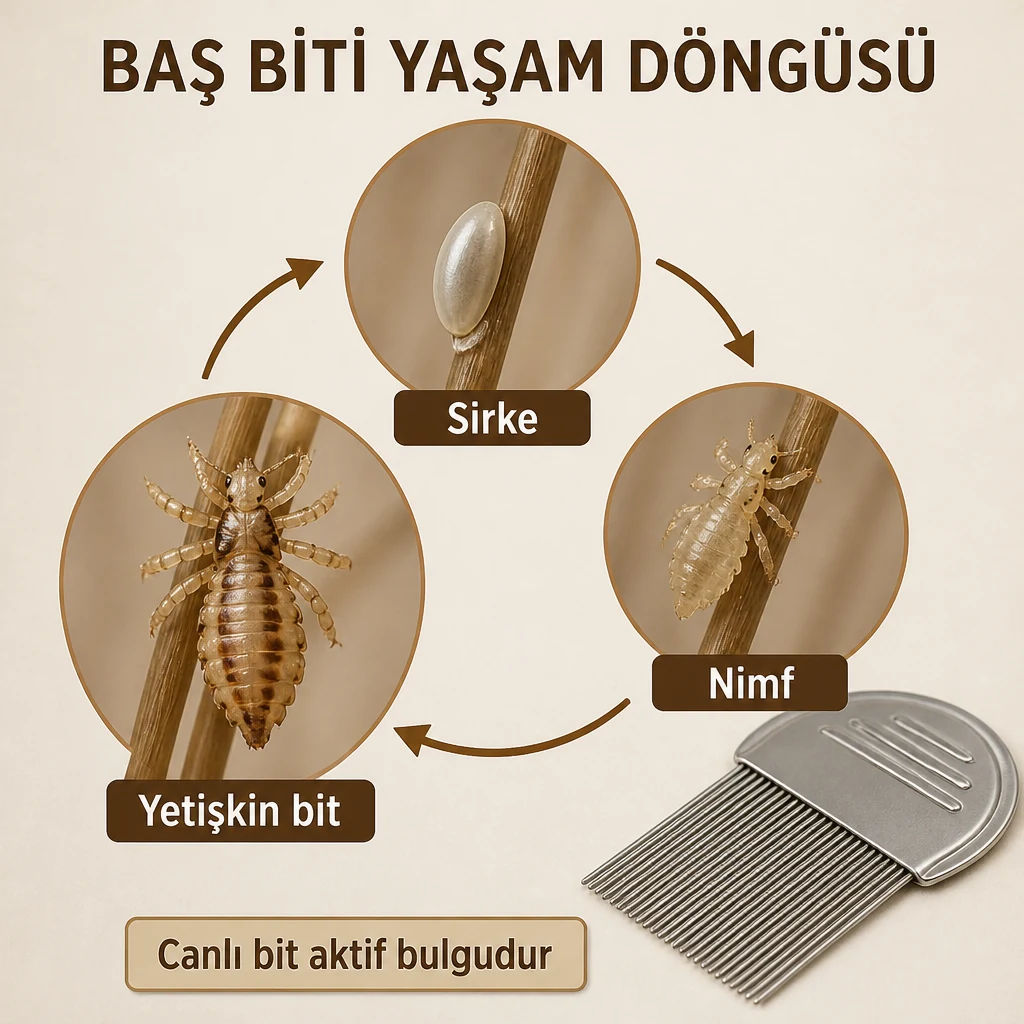
The head louse life cycle has nit, nymph and adult stages. The nit sticks to the hair strand. The nymph that hatches from the egg grows and turns into an adult louse. This cycle explains why a hasty one-day cleaning is sometimes not enough. Even if the live lice decrease, new individuals can hatch from nits remaining in the hair.
That’s why checking is not a one-time thing. Even if a suitable product was used, the repeat interval stated in the package leaflet or by the healthcare professional is followed. If wet combing is being done, it is repeated a few days apart. That’s also why it is important to check everyone in the home on the same day; a live louse missed on one person can undo everyone else’s effort.
How do lice spread in the house?
Head lice spread most often through close hair-to-hair contact. Children bringing their heads close together while playing, close contact in the same bed, hugging within the family and prolonged contact during care increase the risk. Items such as combs, brushes, hair clips, beanies, hats and pillows are a secondary route; the main route is still close contact.
Inside the house, head lice don’t look for food like cockroaches do, and they don’t set up colony trails like ants do. That’s why the bait and source-sealing logic in the how to get rid of cockroaches or how to get rid of ants guides does not apply directly here. With head lice the source is human hair; cleaning the surroundings helps, but the center is checking the hair.
If lice are found on a child who goes to school, there is no panic, but the information is not hidden either. Close contacts are checked. If the school or care facility has a notification rule, it is followed. The NHS source states that it is not necessary to keep a child with head lice away from school; however, contacts need to be checked on the same day and treated if necessary.
First plan at home: hair, contacts, belongings
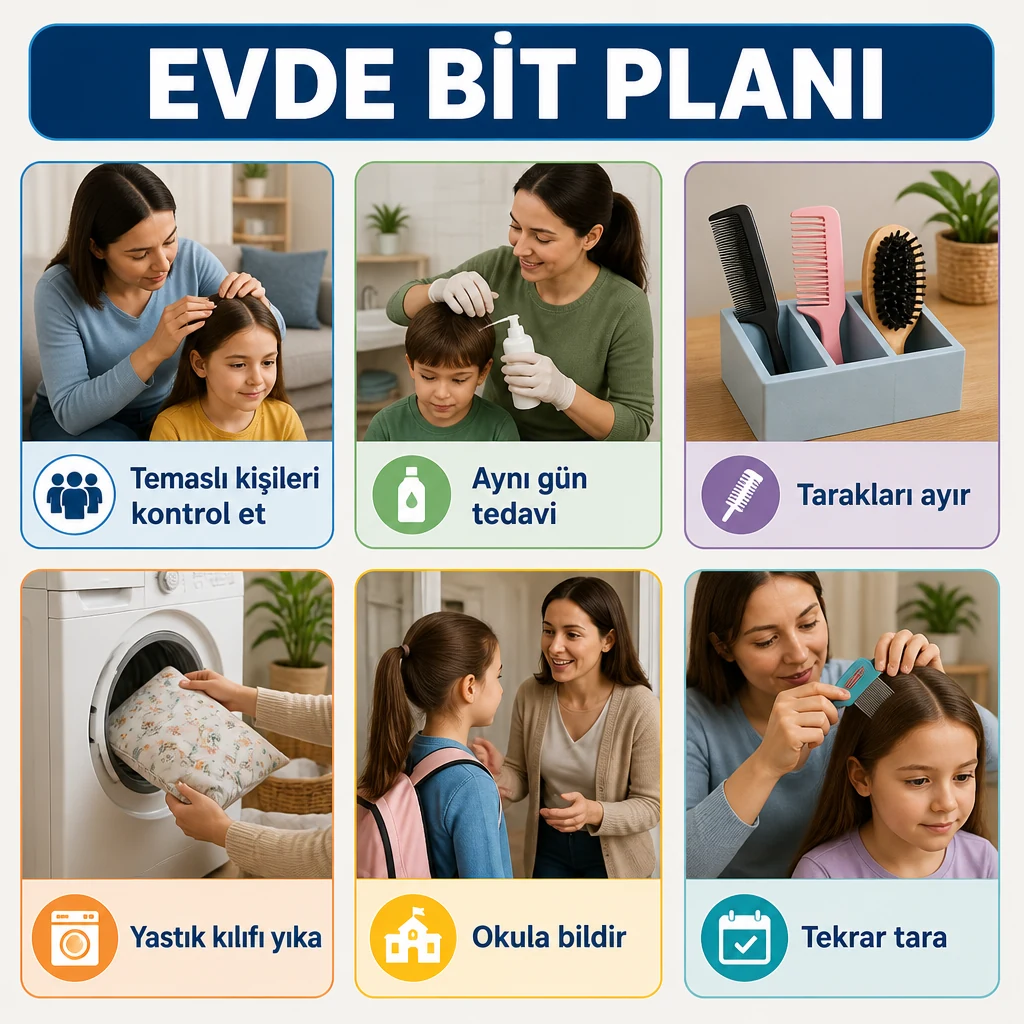
Managing lice in the house has three pillars: confirming the live finding in the hair, checking close contacts, separating personal belongings. In the first step, no spray is applied at random. Live lice are looked for by eye or with a comb. If live lice or significant nits are found, a treatment plan is set up in line with the pharmacist, the doctor or the product’s package leaflet.
The practical order to follow is:
- Divide the hair into sections in good light.
- Examine the line of the nape of the neck and behind the ears.
- Comb from root to tip with a fine-toothed lice comb.
- Check what comes out on the comb on white paper.
- Comb through close contacts in the same home on the same day.
- Set aside combs, brushes, hair clips and hats for each person’s own use.
- Wash the pillowcases and towels used in recent days.
- If there are instructions, repeat the treatment at the stated interval.
The NHS states that head lice can be removed by wet combing and that some lotions or sprays may require a repeat application. DermNet also emphasizes that family members should be dealt with in the same period and that simple washing does not remove nits on its own. So the core of the plan is mechanical combing, the right product and repeat checks.
How much house cleaning is needed?
With head lice, house cleaning should not be overdone. Spraying the whole house with pesticide is unnecessary in most cases and can pose a risk for children, pets, people with asthma or sensitive people. Head lice depend on human hair; they are not managed like a household pest that develops in the carpet for weeks.
Still, close belongings need to be kept in order. Pillowcases, beanies, hats, towels and hair accessories used in recent days are set aside. Those that can be washed are washed. Combs and brushes are cleaned and used by one person only. Items that can’t be washed can be kept in a separate bag for a short time. The goal here is not to make the house sterile, but to reduce the chance of carrying them back from hair to hair.
Health Perspective
Risk
Cockroach or ant bait is not used for head lice. Lice feed on blood; they have no social colony behavior of carrying bait. Spraying broad pest control products inside the house is not the main solution either. If there is a product to be applied to the hair, it must be licensed for human use, it must be suitable for the person’s age and health condition, and contact with the eyes and airways must be avoided. If there is a baby, a pregnant person, a breastfeeding person, a child with an allergic constitution, or a chronic illness, the opinion of a doctor or pharmacist is obtained.
Mayonnaise, vinegar, kerosene, cologne, concentrated essential oil and similar home remedies are risky. Some irritate the skin, some are flammable, and some delay the effect. Mechanical combing is part of a safe plan; random chemicals or caustic substances are not.
Prevention & Control
The main line for prevention and control is this: confirm live lice, comb through contacts on the same day, separate personal belongings, clean combs and brushes, wash the textiles used in recent days, repeat the treatment instructions at the stated interval, and follow the notification rule of the school or care facility.
| Professional threshold | What to do |
|---|---|
| Live lice seen repeatedly in the same home | Checking contacts on the same day and the treatment interval are clarified with a healthcare professional. |
| No result despite using the product correctly | Product choice, the repeat dose and the possibility of resistance are discussed with a pharmacist or doctor. |
| Sores, pus, widespread redness or fever on the scalp | A healthcare professional is consulted without delay. |
| A baby, a pregnant person, a breastfeeding person, an allergic child, or a chronic illness | The opinion of a doctor or pharmacist is obtained before using a product. |
This article is a guide for decisions and control at home, not a substitute for diagnosis and treatment.
The situation in Türkiye
Head lice are not a foreign problem for Türkiye. A systematic review on pediculosis capitis in Türkiye reports rates in schoolchildren that vary between different regions and years. This data is not the definite cause of a single case at home; but it shows that the issue is a real and recurring problem from a public health perspective.
At home the right line is simple: don’t be ashamed, don’t hide it, don’t exaggerate it. Confirm live lice, comb through close contacts, use the right product at the right interval, separate personal belongings and check again a few days later. Managing the hair and the contact line, instead of spraying poison room by room, is the more correct route with head lice.