The ladybug is a beetle belonging to the family Coccinellidae within the order Coleoptera, one that people easily love but whose ecological impact should not be underestimated. It has more than 6000 species worldwide; in other words, the small red spotted form we see is not a single type. The most talked-about shared trait is that it hunts aphids, also known as plant lice. That’s why the ladybug is not just “cute”; it is a useful predator in farming and in the garden. Its evolutionary history also goes back quite far; the group’s roots reach back about 60 million years. In short, this beetle is not a showcase color but a working part of nature. This article is a general guide; for the detail most often asked about in daily life, you can look at our article Why Is the Ladybug Considered Lucky? Folklore and Science.
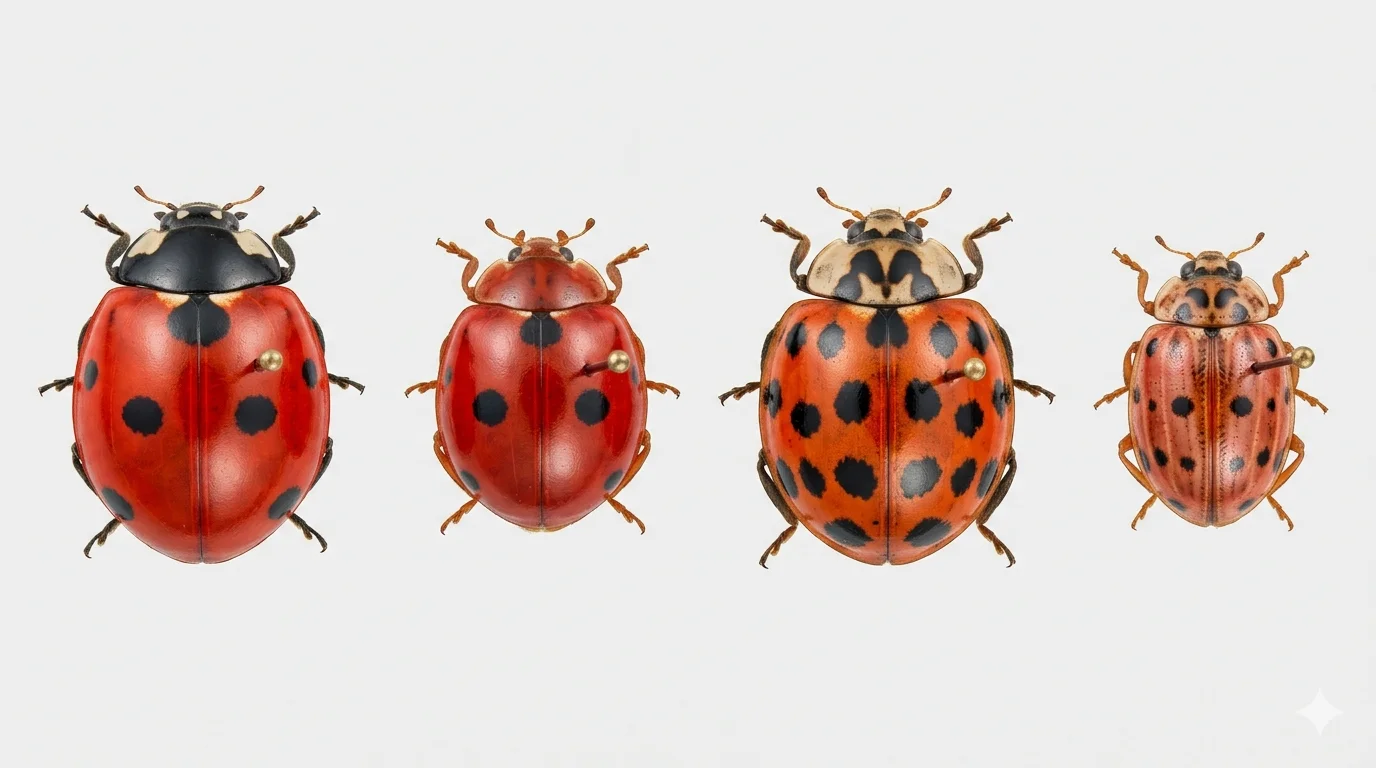
When you look at the field in Turkey, you don’t see just one ladybug; the names of several main species stand out. The classic look of black spots on red is the Coccinella septempunctata most people have in mind. The two-spotted Adalia bipunctata looks plainer. Harmonia axyridis, on the other hand, stands apart because of its Asian origin, variable coloring and invasive behavior. Hippodamia variegata is smaller and more delicately built. Knowing the species difference matters, because behavior, color variation and ecological role are not the same. Everyday language calls them all “ladybug”, but in the field things are different.
What is a ladybug and why is it so familiar?
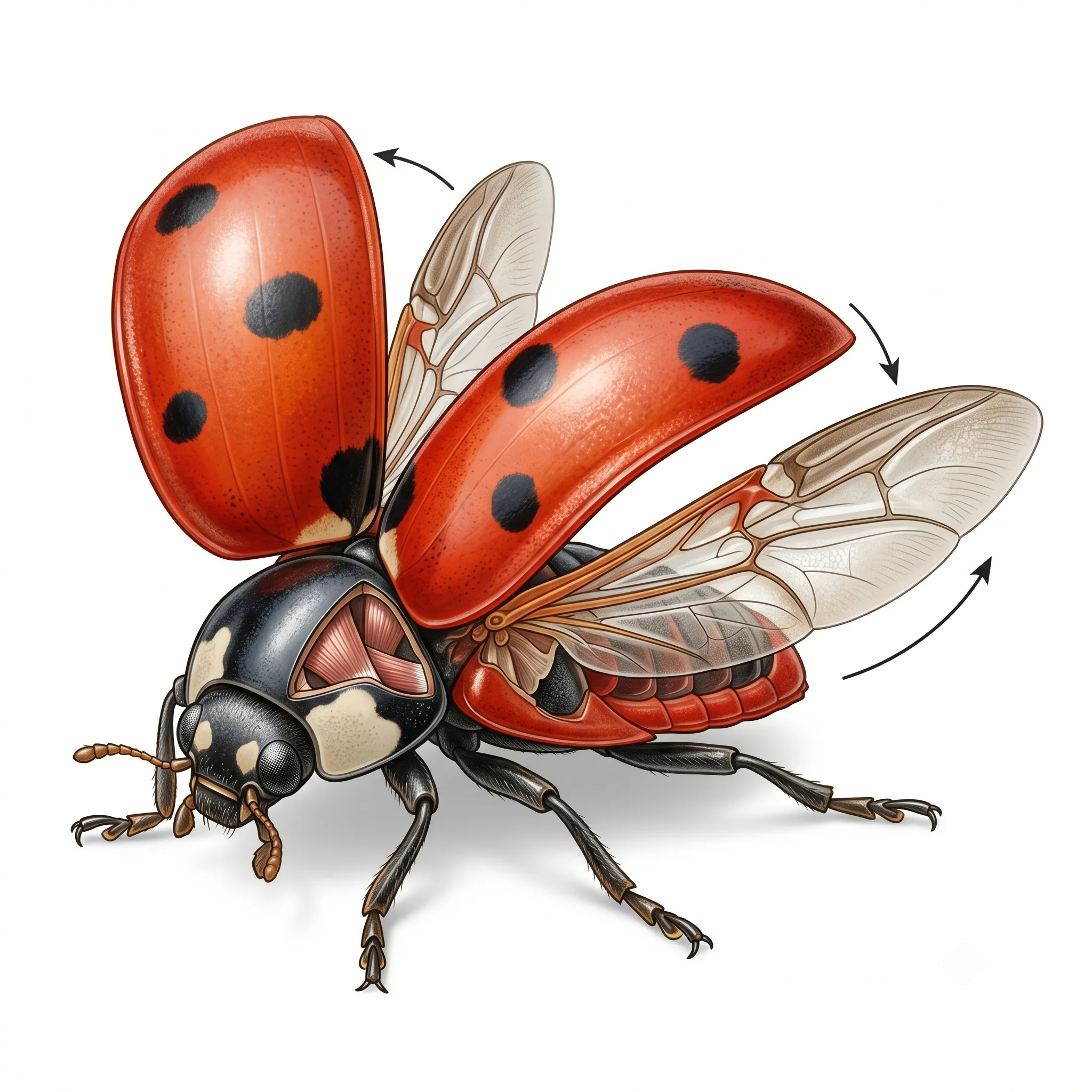
When you think of a ladybug, what comes to mind first is red armor, black spots and a slow walk. In fact, that armor is the hardened front wing cover, the elytra. Underneath are thin flight wings. This structure both protects the beetle and keeps it ready for flight. Its mouthparts are of the chewing type; that’s why it is suited to feeding on leaves, pollen and especially soft-bodied pests. People love this beetle partly because of how it looks, and partly because they noticed early on the side of it that is useful to humans.
If the scientific classification is kept simple, the picture becomes clear: order Coleoptera, family Coccinellidae. Coleoptera is the group of “sheath-winged insects”. Members of Coccinellidae are usually small-bodied, rounded and brightly colored. This brightness is not a random ornament in nature; it is a defensive message. To recognize the beetle, looking only at the color isn’t enough; body form and spot arrangement are also needed. Because several different species go around under the same common name.
How do you tell ladybug species apart?
Ladybug: Coccinella septempunctata
This species gives the most classic ladybug image. Seven black spots on red wing covers make it look like the “real ladybug” in the public eye. It is commonly seen in farmland, meadows and gardens. It is a strong aphid hunter and plays an important role in local ecosystems. Because its spot count is fixed, it is not an age indicator; it is a species marker. That’s why counting the spots to estimate age is not right.
Ladybug: Adalia bipunctata
The two-spotted species looks plainer. Although the red form is common, dark-colored individuals can also be seen. This diversity shows that there can be color polymorphism within the same species. It can go unnoticed when encountered in the garden, but its role as a predator should not be underestimated. Looking small does not mean its impact is small.
Ladybug: Harmonia axyridis
It is also known as the Asian lady beetle. Its color and spot count can vary a lot; that’s why it can be hard to recognize at first glance. The problem is this: in some regions it behaves invasively, competes with native species and can suppress them. As with many species moved with good intentions for biological control, if things don’t go in a controlled way, the balance breaks down. You need to be careful when talking about this species; it can be beneficial, but uncontrolled spread in the field carries risk.
Ladybug: Hippodamia variegata
It is a smaller and more slender species. It can be variable in color and pattern. That’s why, in field observation, looking at a single photo and making a definite decision is wrong. Identifying the species requires looking from several angles. Even within the ladybug group, appearance can vary greatly.
How do ladybug anatomy and color defense work?
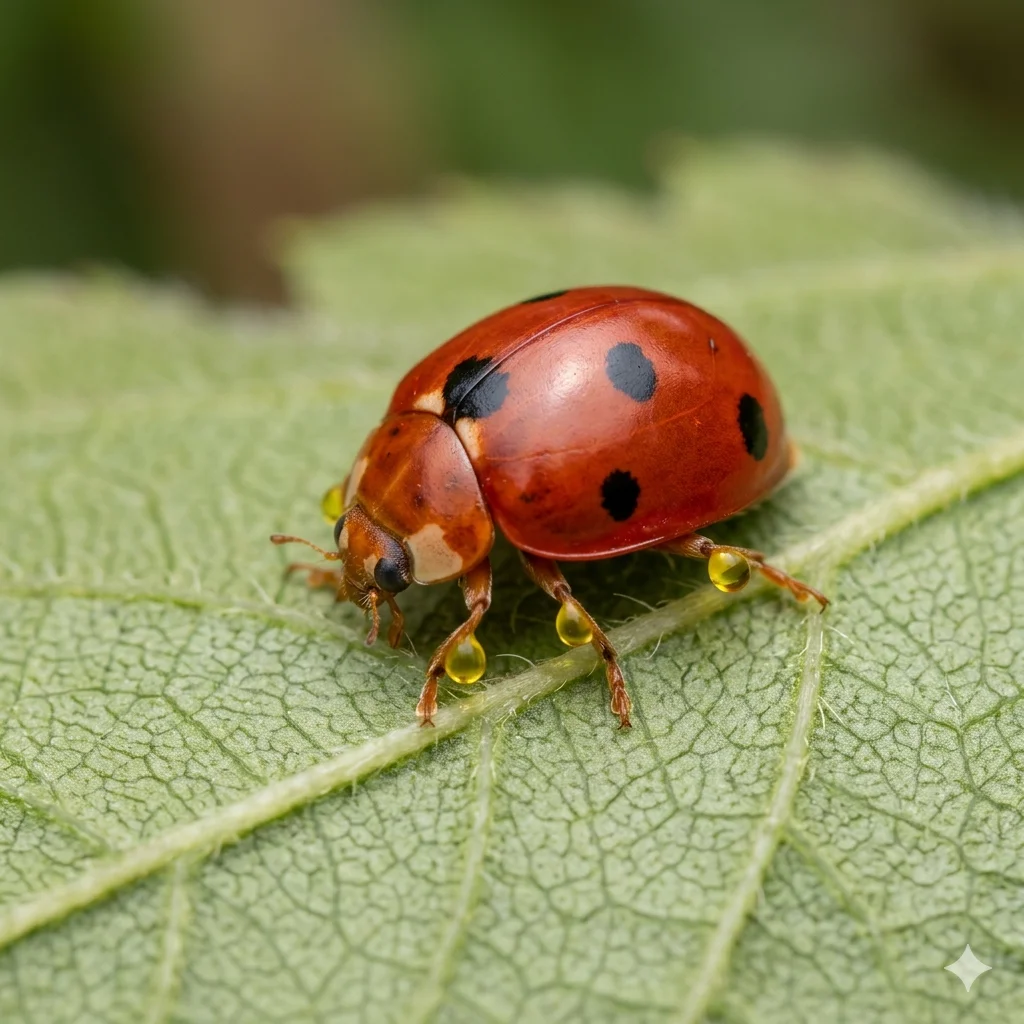
The ladybug’s bright red, orange or yellow tones are a warning signal known as aposematism. In nature’s language, it sends the message “if you eat me, you’ll be in trouble”. This color is more for deterrence than camouflage. Birds and other predators can learn this beetle and stay away from it because of its bad taste or defensive fluid. There is a direct relationship between color and defense; shape also strengthens this signal.
Under threat, the ladybug uses another defense: reflex bleeding. In this, a yellowish haemolymph fluid comes out of the leg joints. This fluid is not quite “bleeding”; it is a body fluid loaded with the beetle’s defensive chemicals. Its smell and taste are unpleasant for the predator. In some people it can cause skin irritation. The function here is not attack but deterrence. In short, the beetle’s defense is not loud but chemical.
How do the ladybug life cycle and carnivorous behavior progress?
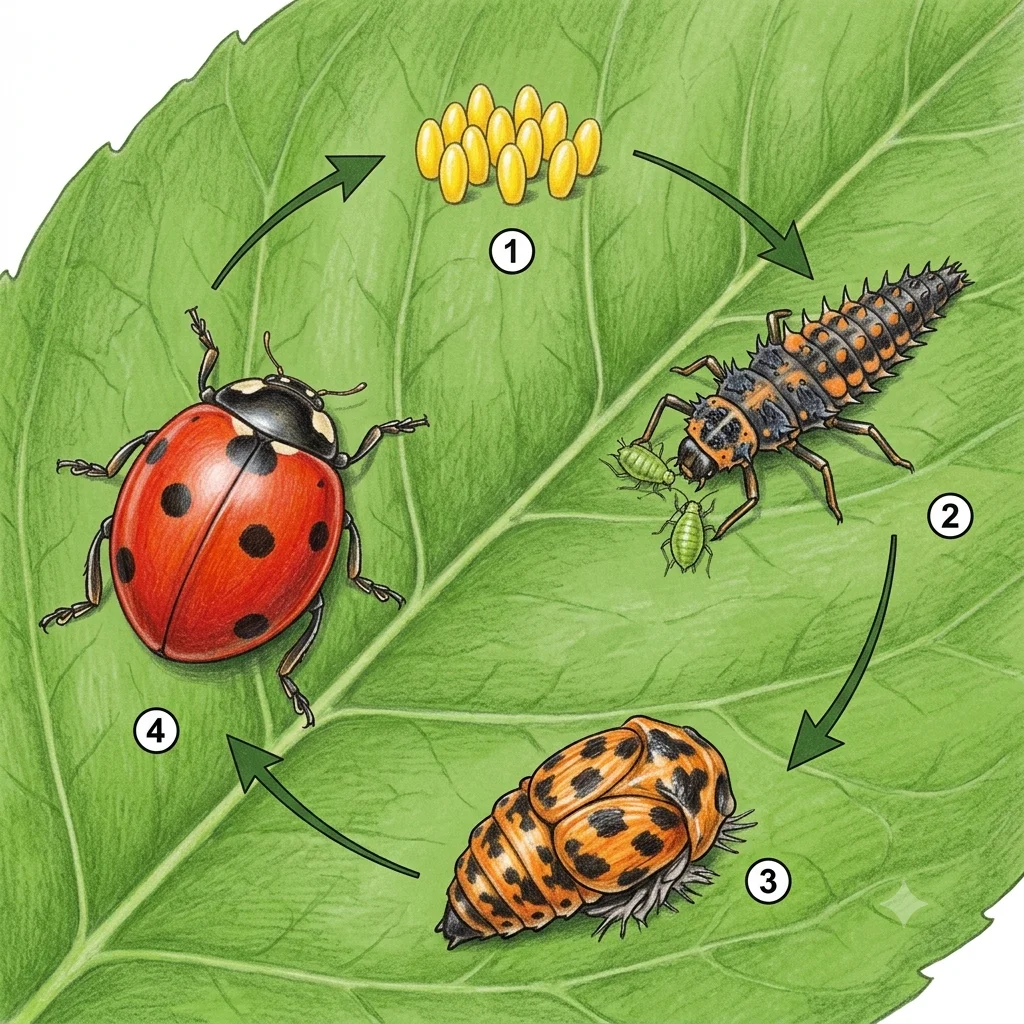
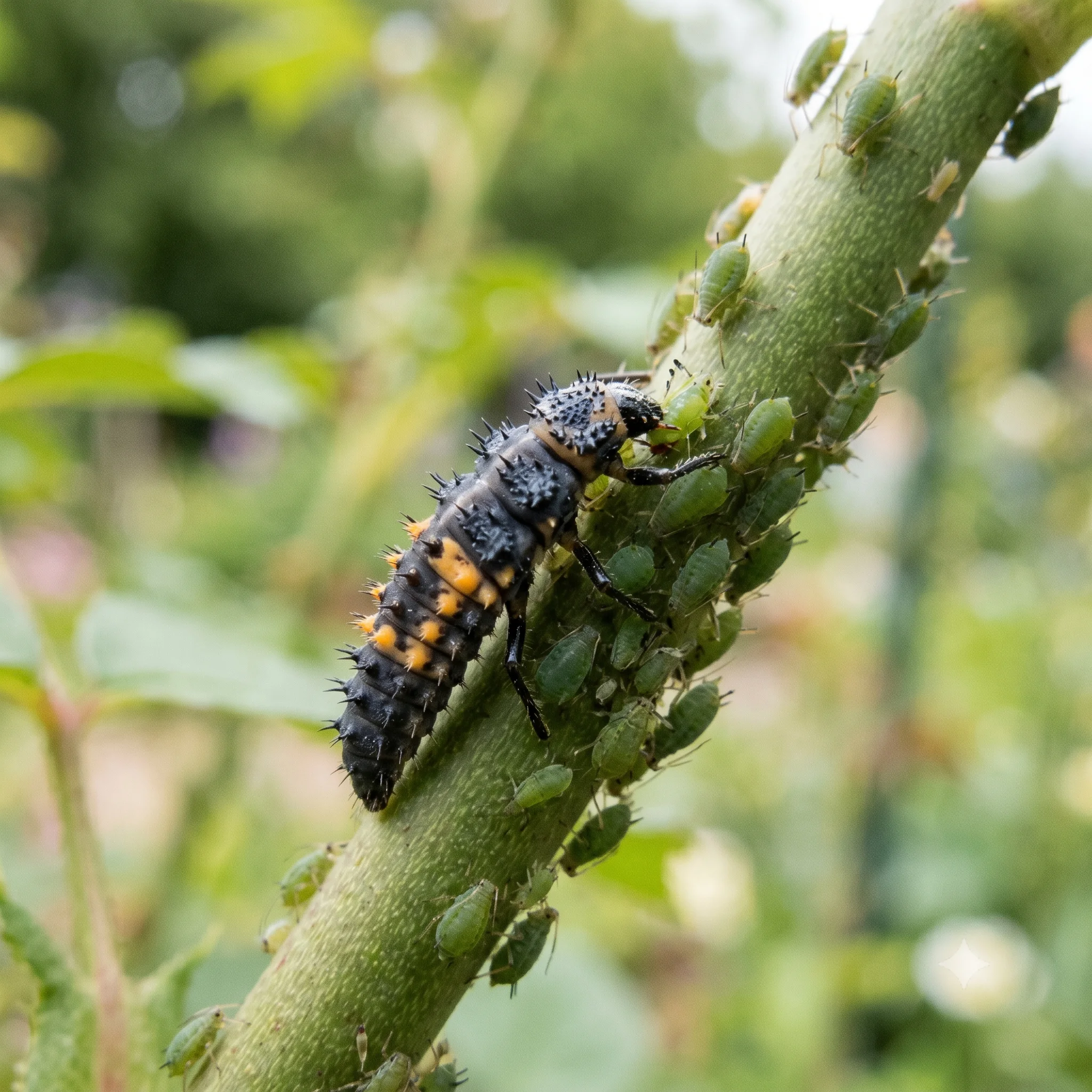
The ladybug undergoes complete metamorphosis. It has egg, larva, pupa and adult stages. Eggs are usually laid on the underside of leaves, close to an aphid colony. Because the hatching larva’s job is clear: to hunt. The larva’s appearance surprises most people; it looks like a small alligator. But this “scary” look actually belongs to an extremely beneficial predator. During the larval period, a large number of aphids are consumed in a short time.
The larva grows within a few weeks, then moves into the pupal stage. In this stage movement decreases and the body is rebuilt. Then the adult emerges. Adults also stay carnivorous but can also consume nectar and pollen. This diversifies their energy supply. Although the average lifespan varies by species and conditions, a range of one to two years is often cited. In other words, the ladybug is not a short-lived decoration; it is an active worker that fills the season.
Why is the ladybug important in aphid control?
When it comes to ladybugs, the most critical topic is aphid control. Aphids, or plant lice, weaken plants by sucking their sap, curl leaves and sometimes carry disease. Ladybug larvae and adults eat these pests. That’s why seeing a ladybug in the garden is usually good news. Especially in dense aphid colonies, it creates natural pressure and can reduce the need for chemical intervention. It is an important player within integrated pest management (IPM).
There’s a practical distinction here: the ladybug is not a miracle on its own but a helper that works in the right habitat. Flowering strips, plants carrying aphids and low chemical pressure keep it in the garden longer. If you wipe out every creature so the garden looks “clean”, you also drive away the predatory beetle. In other words, attracting ladybugs isn’t just about releasing the beetle; you also need to set up the environment where it will stay. Natural balance comes not from one small detail but from the whole arrangement.
You need to be cautious when giving numbers. Consumption varies a lot depending on species, temperature, prey density and habitat condition. Still, the general consensus is that an adult can consume thousands of aphids over its lifetime. Larvae are also known to eat hundreds of aphids in a short time. This is not a laboratory sentence; it gives real results in garden practice. That’s why ladybug release is used as a biological control tool in some agricultural applications. It is not a stand-alone solution in place of pesticides, but it is a balanced tool.
Why is ladybug folklore so strong?
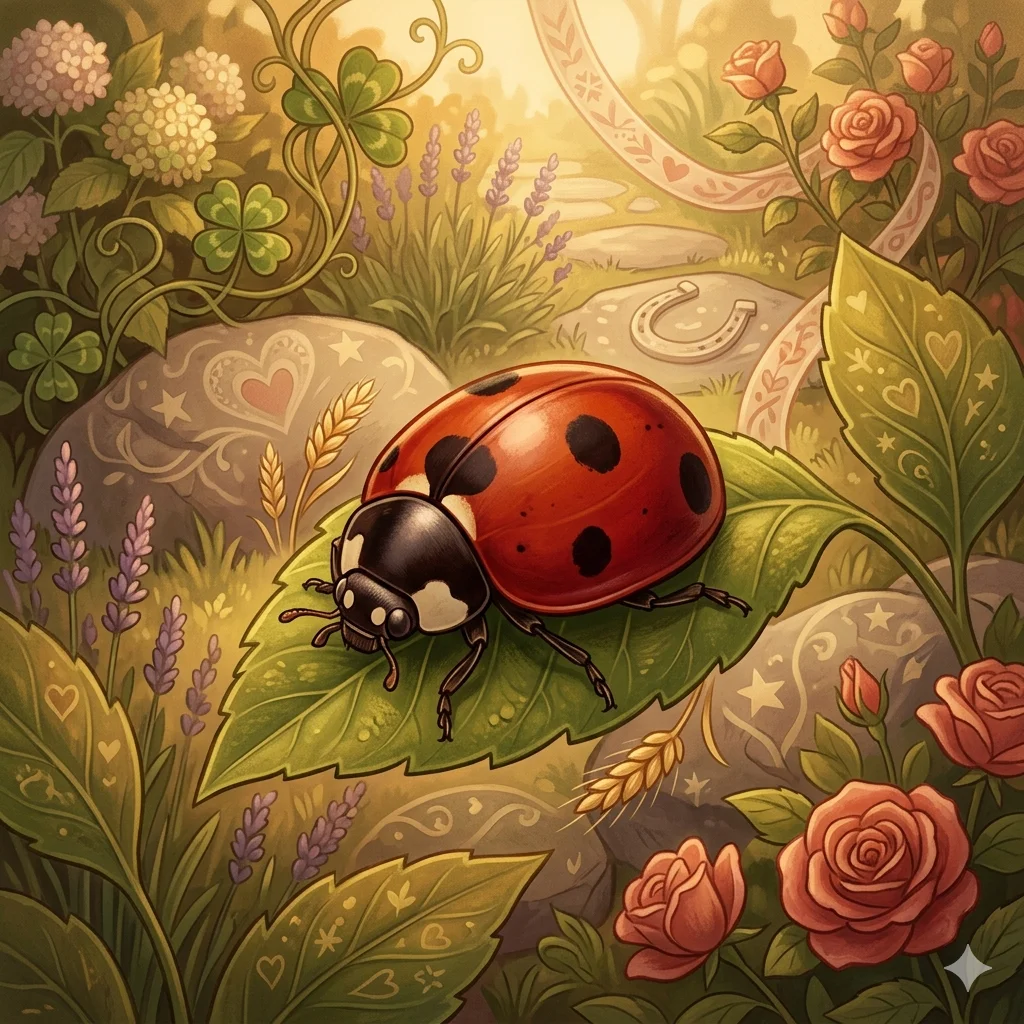
The ladybug is not only an ecological figure but a cultural one. In Europe it was associated with the Virgin Mary, and the English name “ladybug” also comes from this. In Anatolia it is believed that if it enters the house it will bring good news, and in some tales even that it heralds a marriage. In Japan the name “tentou-mushi”, meaning “the bug that climbs toward the sun”, is used. The common point across different cultures is the same: it is perceived as a harmless, beneficial and beautiful-looking creature.
This affection didn’t form for nothing. People first saw its usefulness in the garden, then gave it meaning. Scientific observation and folk narrative fed each other here. Despite its small body, the ladybug turned into a symbol of hope. That’s also why it sparks curiosity rather than fear when it lands on a child’s hand. It creates a common language between nature and culture that is rarely seen.
Does the ladybug pose a risk to people?
Most ladybugs pose a low risk to people. Stinging behavior is not typical. Some species, especially Harmonia axyridis, may show a tendency to bite lightly or release defensive fluid. In this case the problem is usually not serious; but there may be irritation on sensitive skin. The smell of the defensive fluid can also be found unpleasant. In other words, the danger isn’t great, but you also shouldn’t talk as if “nothing will happen”.
People with allergies need separate attention. Although rare, a reaction can occur. That’s why I’m giving a field note here, not medical advice: with symptoms such as unusual redness, widespread itching, swelling or shortness of breath, a doctor’s support is needed. Rather than crushing a ladybug you see indoors, it’s better to take it outside. You both protect the beetle and reduce unnecessary contact.
Ladybug FAQ and related topics
Why is the ladybug considered lucky?
Because the human eye first saw its usefulness, then turned it into a symbol. Since it reduced aphids, it came to be called the “bug that brings good news”.
Does a ladybug sting people?
Generally no. In some species there may be a mild bite or irritation, but this is not common.
Do a ladybug’s spots show its age?
No. Spot count is related to species and individual pattern, not age.
Are ladybug populations declining?
It varies by region. Habitat loss and pressure from invasive species can affect local populations.
Three articles connected to this topic link here: Why Is the Ladybug Considered Lucky? (Folklore and Science), Harmonia axyridis invasion , Attracting ladybugs to the garden . This way this article becomes both a basic definition and a gateway to further reading.
Sources and closing for the ladybug
For a basic reference, Britannica’s Coccinellidae page is a good starting point. The Royal Entomological Society offers institutional content about the insect world. In the Turkish context, TÜBİTAK (in Turkish) and its related publications provide a reliable start for local reading. This trio is enough to see the general framework; field observation and local records also matter separately.
The final word is clear: the ladybug is not a small dot of color but a working ecological mechanism. It suppresses aphids, balances the garden and leaves a good association in people too. It looks cute, but its real strength lies in its usefulness. Understanding it means noticing who works quietly in nature.
Related Topics
If you want to read this topic in a broader context, look at the cluster articles: Honey Bee: Society, Communication and Ecological Importance.