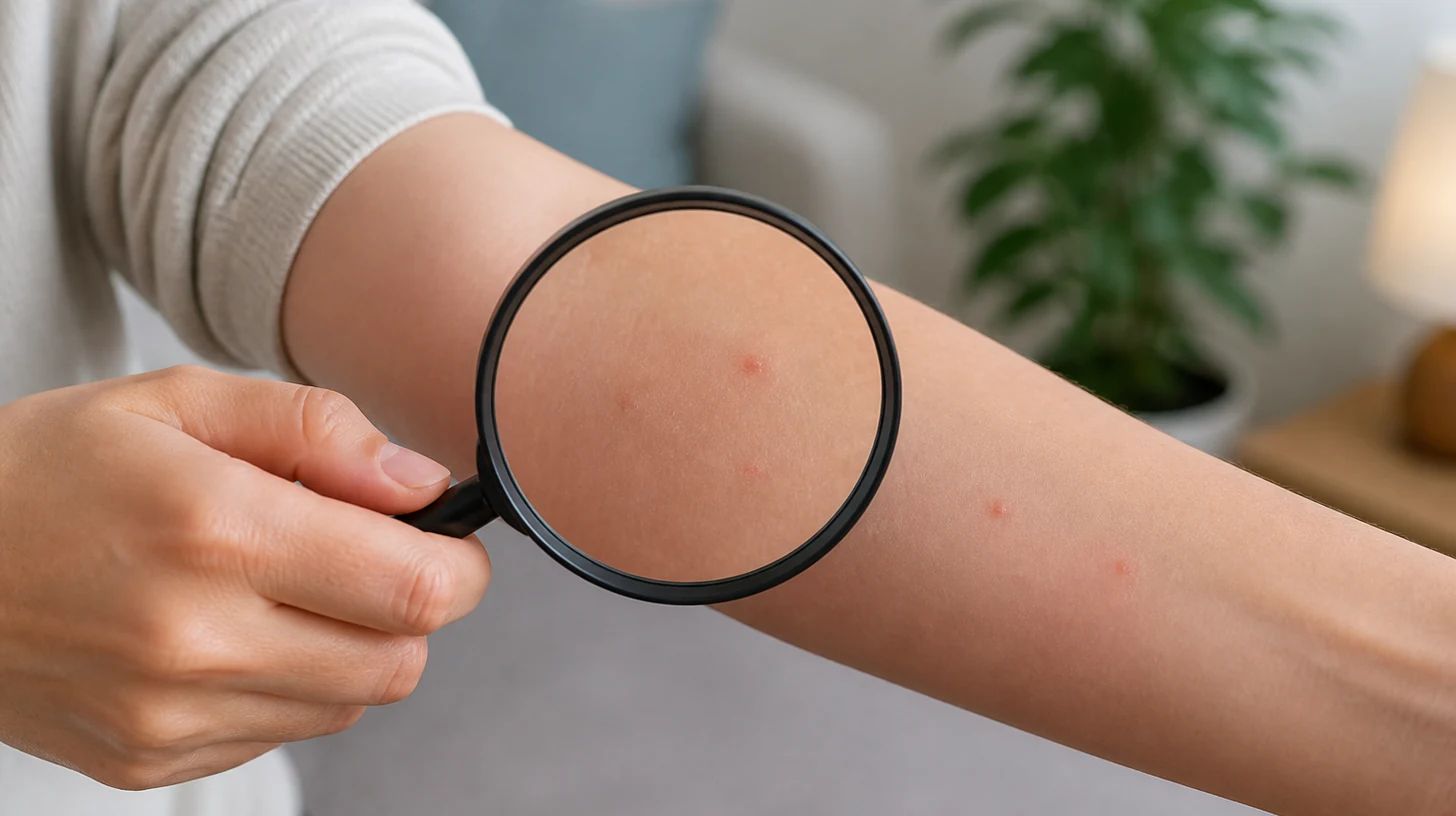
When identifying an insect bite, looking at the shape of a single bump and naming the exact species is not reliable. Different creatures such as mosquitoes, fleas and bed bugs can cause itchy redness; some skin problems can also look similar. More useful clues are where the mark appeared, when it was noticed, whether there are signs of insects in the surroundings and whether the person has any other complaints. As when examining the signs of fleas in the house, you also need to observe the surroundings; but a mark on its own is not a diagnosis.
How do you tell insect bites apart?
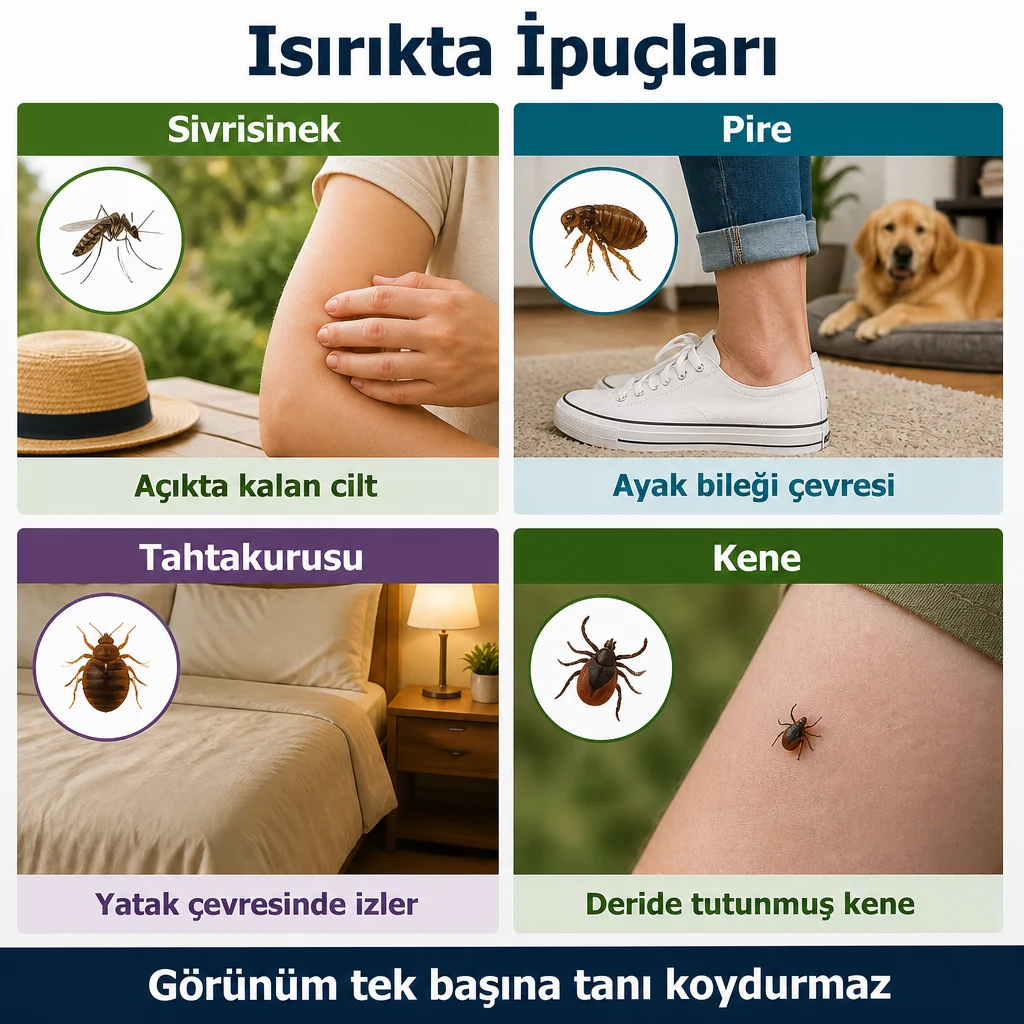
First consider three pieces of information together: the location and distribution of the change on the skin, when it appeared, and environmental findings. For example, if marks noticed after a night’s sleep go together with creatures or shed skins found around the bed, looking into bed bugs makes sense. Clusters around the ankles and scratching in a pet can raise the possibility of fleas. A single bump on exposed skin can fit mosquito contact. None of these is definitive proof on its own.
Itching, redness, mild swelling and tenderness are common local reactions. A person’s skin response can vary with factors such as their age, sensitivity, previous exposures and scratching. The same creature can leave different marks on two people; some people may not develop a noticeable mark. That’s why matching your skin one-to-one against photos on the internet can mislead you.
Common marks and clues
Mosquito
Mosquito contact is usually noticed as an itchy, raised area on exposed skin. There may be one mark or more than one; the size of the marks and the intensity of the itching vary from person to person. Having been outdoors, an open window and having seen mosquitoes recently provide context. But since similar bumps can also form after other contacts, a decision is not made by appearance alone.
If you’re curious about how the itching develops, you can also look at the article explaining why mosquito bites itch; the way it itches does not prove the species on its own.
Flea
With flea contact, small clusters of itchy marks can appear, especially around the ankles and lower legs. Having a cat or dog at home, the animal scratching often, or seeing signs of fleas on bedding and carpets guides the investigation. The location of the marks can raise a suspicion of fleas; but it does not confirm the source without checking the animal or the environment. In checking for fleas in the house, you look not only at the skin but also at the areas where the animal rests.
Bed bug
Bed bug bites cause reactions of different kinds on the skin; although they are often said to appear in a line or a cluster, this pattern is not present in every case and is not a diagnostic criterion on its own. Stronger evidence is finding live bed bugs, shed skins, eggs or droppings in mattress seams, bed base joints and nearby cracks. Noticing a new mark in the morning does not by itself show that it is bed bugs. Examine the signs of bed bugs and the environmental findings together.
Tick
A tick is most often noticed while it is attached to the skin. This is different from the short-contact marks of creatures such as mosquitoes or fleas. Don’t crush or burn the tick, and don’t apply oil or chemicals to it. Grip it with fine-tipped tweezers as close to the skin as possible and pull it out with a straight, steady motion; if mouthparts remain, don’t try to cut the skin to remove them, get medical support. Note the date of contact. If fever, marked fatigue or a rash appears later, go to a healthcare facility. You can also look at the steps for removing a tick and monitoring after contact separately. The risk of ticks and tick-borne disease varies by region and by species; a disease cannot be diagnosed from a photo.
Bee and wasp
A bee sting is usually noticed as pain at the moment of contact and limited swelling; the stinger may have stayed in the skin. Rapidly spreading swelling after a sting, widespread hives, shortness of breath, swelling of the face or throat, or dizziness can be a sign of an emergency allergic reaction. In that case, don’t wait at home; call your country’s emergency number. Stings inside the mouth or around the throat also require prompt medical assessment.
What to look at when comparing marks?
| Clue | Possible explanation | Enough on its own? |
|---|---|---|
| Itchy raised bump on exposed skin | Various contacts, including mosquitoes | No |
| Small clusters around the ankles | Possibility of fleas; other causes are also possible | No |
| Mark noticed after sleep and findings around the bed | Bed bugs can be investigated | Not without environmental evidence |
| Creature attached to the skin | Tick contact | The creature must be safely removed and the area monitored |
| Pain at the moment of the sting, a stinger or rapid swelling | May be contact with a bee or wasp | Allergy signs are an emergency |
When should you get medical help?
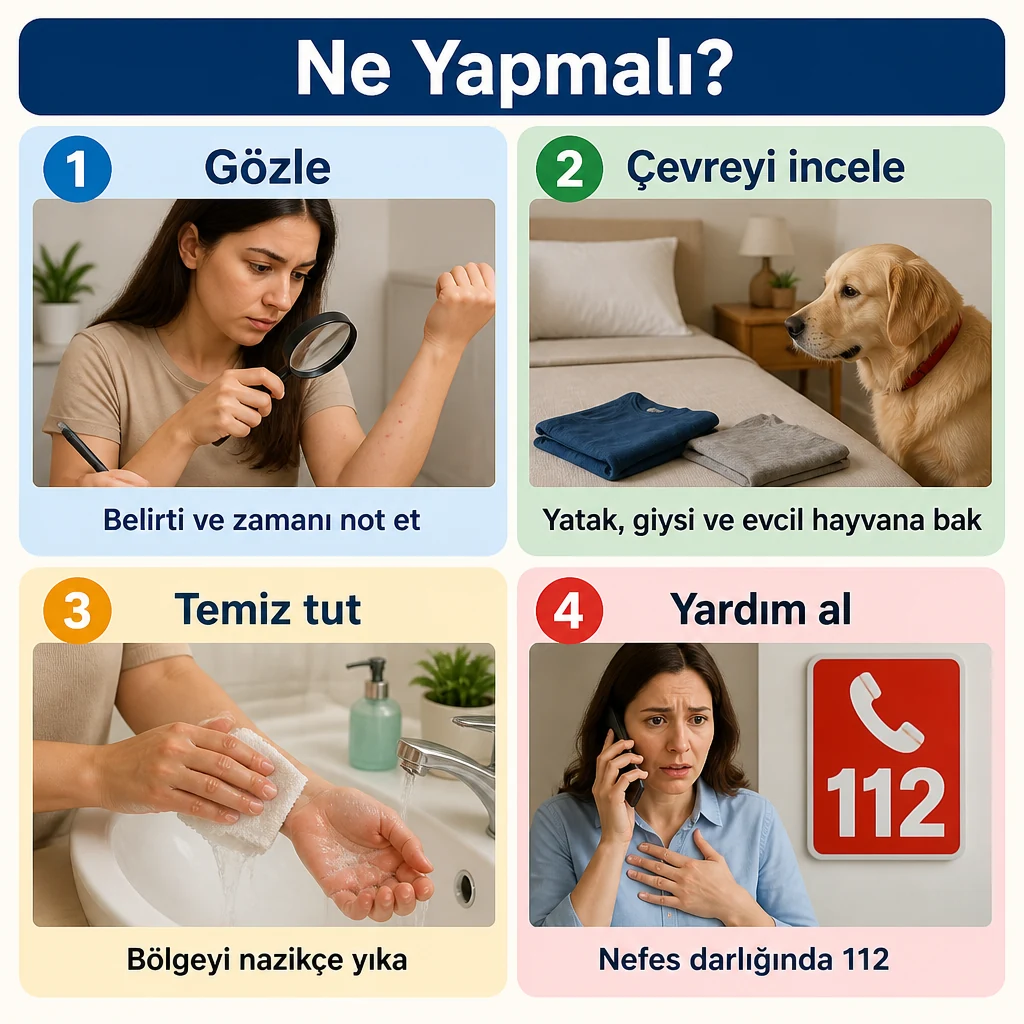
If there is difficulty breathing, wheezing, swelling of the tongue or throat, or widespread hives together with dizziness or a feeling of fainting, ask for emergency help. Symptoms like these can point to a serious allergic reaction. Unlike mild local itching, symptoms affecting breathing and circulation should not be left to wait. Match the level of help to the symptoms:
| Situation | What to do? |
|---|---|
| Shortness of breath, tongue/throat swelling, fainting or rapid worsening | Call your country’s emergency number; don’t try to go in your own vehicle. |
| A serious or widespread symptom that is not an emergency but needs prompt assessment | Go to the emergency department; if symptoms get worse, call your country’s emergency number. |
| Increasing pain, warmth, pus, spreading redness or fever; a new symptom after tick contact | Get an assessment from a doctor or healthcare facility; if things get worse, ask for emergency help. |
If increasing pain, warmth, pus, spreading redness or fever develops at the bite site, a doctor’s assessment is needed. If fever, a rash, headache or marked fatigue appears after tick contact, tell healthcare staff when the contact happened and, if possible, where you were. For children, older people, people with a suppressed immune system or those with a history of serious allergy, it is advisable to discuss the threshold for seeking help with a healthcare professional early.
The NHS emphasizes that serious allergic symptoms after insect bites and stings need emergency assessment. To decide which medicine is right in your own situation, ask a pharmacist or a doctor; especially for children, in pregnancy, with a chronic illness or while taking other medicines, don’t pick creams and medicines at random.
Safe first steps at home
If the symptom is mild and limited, gently clean the area with soap and water, try not to scratch and apply a cold compress for a short time. Don’t let ice touch the skin directly. Taking a photo of the area and noting the time makes it easier to track any change. If the symptom is growing or a new systemic complaint is added, don’t insist on home care.
When looking for the source, check mattress seams, the area around sheets and the bed base; the areas where your pet rests; exposed skin and clothing. In particular, also check clothes and laundry around the bed. If you find a bug, photographing it safely without crushing it or putting it in a closed container can help an expert identify it. Don’t burn or cut the skin, and don’t apply substances such as bleach, cologne or insecticide to it. Using pesticides on the body that are not made to be applied to skin is dangerous.
Misleading clues and keeping records
The number or color of the marks, or a small dot in the middle, does not identify the insect on its own. The skin reaction can also change over time: redness that is small in the first hours can become more noticeable later or become irritated by scratching. This change does not necessarily mean there is a new bite. Taking photos in the same light and from a similar distance helps compare whether there is growth; it does not help make a definitive diagnosis from a photo.
The cause of a similar-looking rash is not always an insect. Contact dermatitis, hives, folliculitis and other skin conditions can also cause itching or bumps. If there is a new detergent, cosmetic, contact with a plant or use of a new medicine, note that too. If the symptom keeps coming back, is spreading or looks unusual, have a family doctor or a dermatologist assess it. Don’t start antibiotics, a cortisone cream or an antiparasitic medicine based on a photo you saw on the internet.
Keep these five pieces of information in an observation note: the time and day the marks were first noticed; the body area where they were first seen; how the itching, pain and swelling progressed; whether other people in the same environment were affected; physical findings in the bed, on the pet or in the outdoor environment. This record is useful in a medical consultation and when an expert is called in for pest control. Because people can react differently in the same environment, the absence of marks on someone else does not on its own rule out the possibility of bed bugs or fleas.
With a suspected tick, this record is especially important. Write down where and when the contact happened, whether the tick attached to the skin and when it was removed. If symptoms develop, pay attention not only to the shape of the redness but also to changes such as fever and your general condition. Reliably telling tick species apart with the naked eye can be difficult; don’t try to infer the disease risk from the appearance of the species or from the bite mark alone.
If new marks keep appearing at home, first check the surroundings regularly and record the evidence. Treating the whole house with insecticide without seeing findings around the bed can cause unnecessary chemical exposure. If you suspect fleas on a pet, don’t apply products meant for people to the animal; get a plan suited to the species and weight from a vet. If the source cannot be found and the problem continues, see a healthcare professional for a diagnosis, and a qualified pest control professional for a household pest inspection. The two assessments answer different questions: one looks into the cause of the skin complaint, the other into whether there are pests in the environment.
Frequently asked questions
Are marks in a row of three bed bugs?
No. This appearance can suggest the possibility of bed bugs but does not give a diagnosis. The physical findings around the bed and other possible causes should also be assessed.
If no bite mark is visible, does that mean there was no insect contact?
No. Not everyone’s skin response is the same; in some people the mark may be mild or go unnoticed. The absence of symptoms does not on its own rule out contact.
Which cream should I use for the itching?
The choice of medicine depends on age, health status, the location of the area and the symptoms. Ask a pharmacist or a doctor; especially for children and around the face, don’t apply products at random.
What should I do after a tick has been removed?
Record the date of contact, keep the area clean and keep monitoring yourself. If fever, a rash or marked fatigue develops, go to a healthcare facility and mention the tick contact.
Can I find out the exact species of insect from the bite mark?
Usually not. To identify the species you need the creature or its signs in the surroundings, the circumstances of contact and, if necessary, an expert examination. The appearance of the skin on its own is not a reliable species identification.