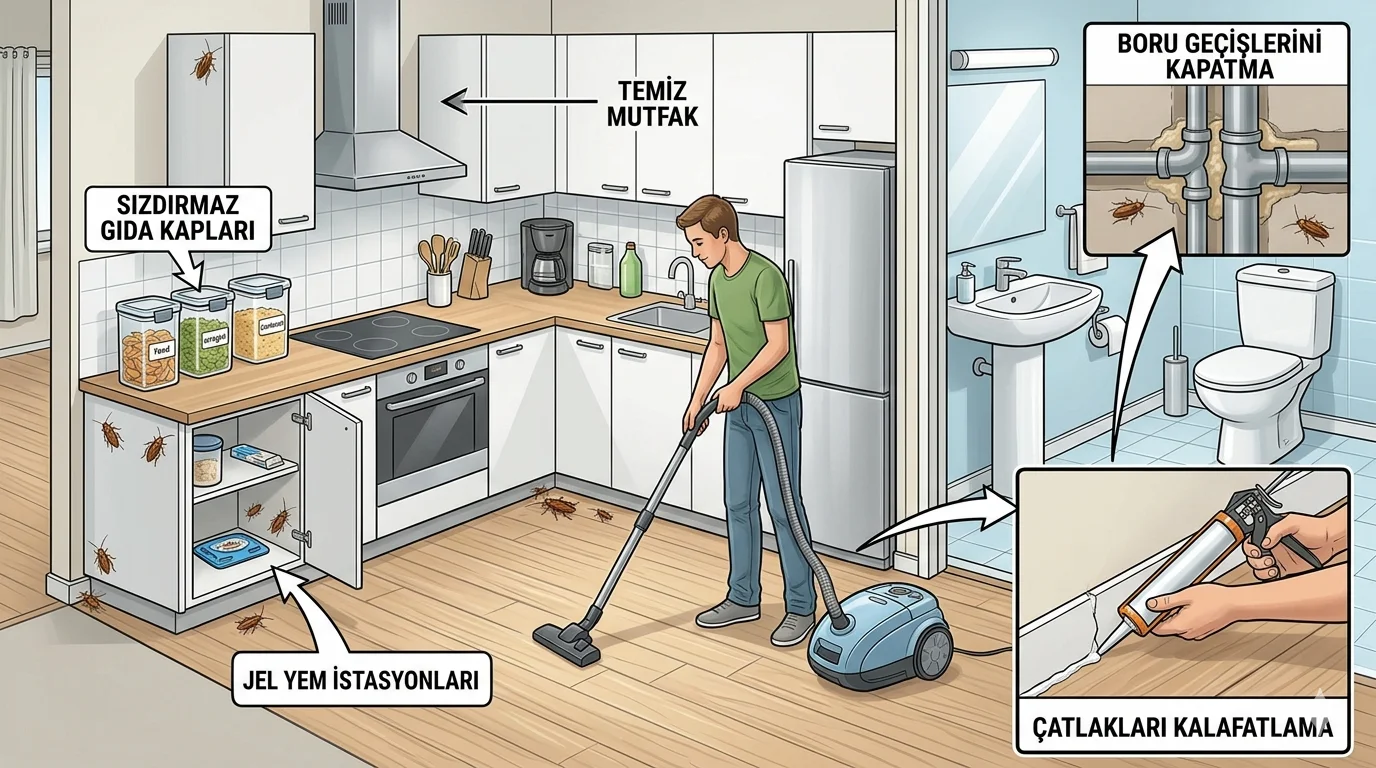
The short answer to the question of how to get rid of cockroaches is this: first you cut off the source, then you seal the entry points, and last you bring the pressure down with bait and traps. This guide builds on the main cockroach article and clarifies what to do inside the home. If you have not yet read the part about why the insect gets into the house, the why do cockroaches come indoors article also describes the beginning of the same chain. The goal here is not to chase insects one by one but to make the environment unattractive to them.
Risk: How serious is the health side?
The cockroach is not thought of as a species that bites directly; the real risk is mechanical carriage and allergens. As it walks over surfaces, it can carry a load of bacteria and dirt. Droppings, shed skin and secretions, on the other hand, can worsen respiratory complaints in sensitive people. In the studies summarized by AAFA, exposure to cockroach allergen in inner-city homes is reported in the 17-41% band. This rate is taken seriously especially in homes with childhood asthma.
The health side needs to be read in two parts. The first is the exposure risk: kitchen surfaces, the baby area, the pet food bowl, open trash, standing water. The second is the protection risk: as the insects multiply, the allergen load increases, and the population that is unseen at night starts to show up in the daytime. That is why the “I saw one, it’s no problem” approach is weak. Seeing one often suggests that there is a bigger setup hiding behind it.
Prevention & Control: What do you do in line with AAFA and EPA?
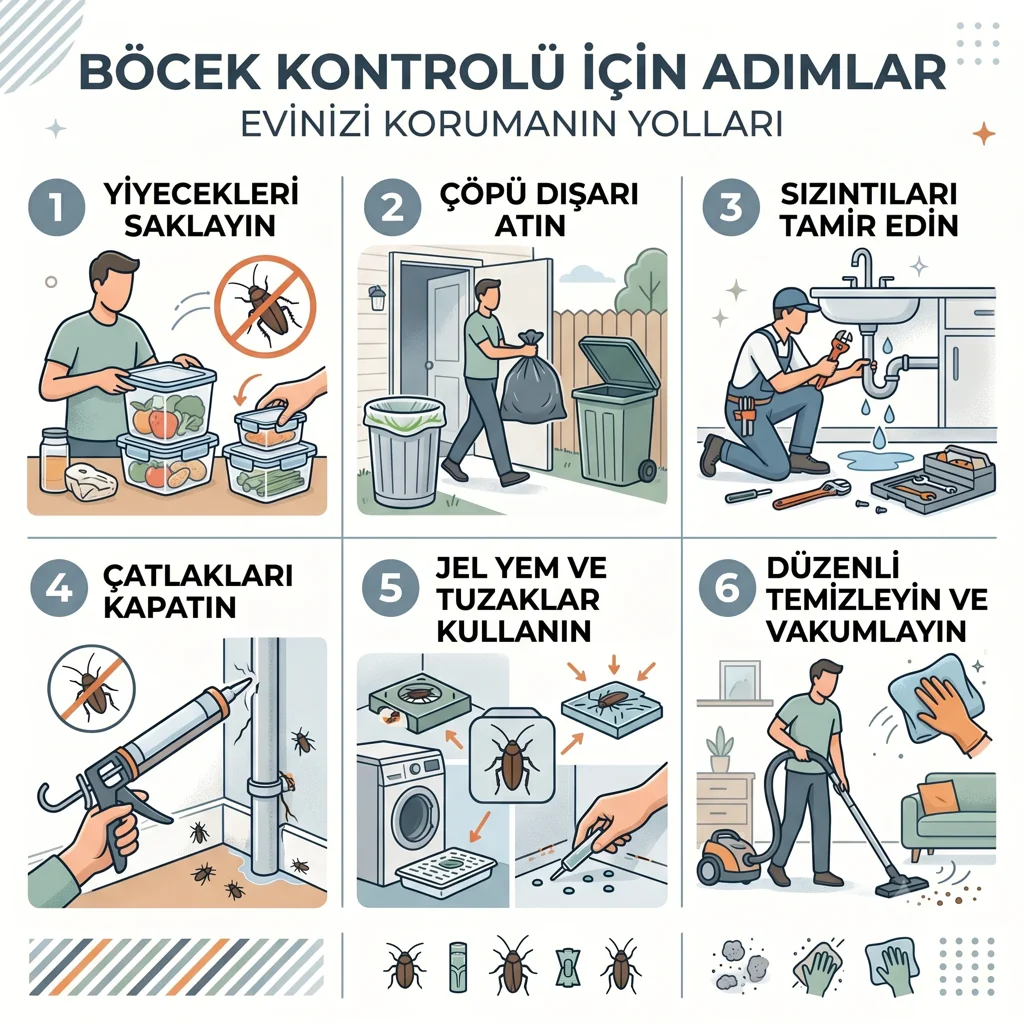
The most solid line is environmental management. What is needed is not a chemical attack but the trio of cleaning + sealing + bait and traps. The six steps below are consistent with the AAFA and EPA logic:
- Keep food in closed containers. No open packages, no bread left out, no pet food bowl left on the counter overnight.
- Keep the trash closed and take it out regularly. Especially don’t leave organic waste in the home overnight.
- Stop water leaks. A dripping tap, a leaking drain trap and dampness under the sink are a magnet for cockroaches.
- Seal cracks. Narrow baseboard gaps, the area around pipes, cable passages and the space behind cabinets with silicone.
- Use bait and traps. Choose gel bait, enclosed bait stations and physical traps; don’t use spray/aerosol pesticides.
- Vacuum and keep surfaces dry. Regular cleaning reduces crumbs and the allergen load.
What these six steps have in common is this: they try not to kill the insect but to break down its living conditions. If there are children and pets, don’t leave chemicals out in the open. Don’t go beyond the product label. Even with bait or traps, access control is essential.
When should you call professional pest control?
A threshold needs to be set here. A few individuals in the home and a colony within the building are not the same thing. The table below gives a practical limit for professional help:
| Signal | What it means | Action |
|---|---|---|
| Seeing a cockroach during the day | The hiding places may be filling up | Survey the area, cut off the source, start monitoring |
| Finding an ootheca | Breeding is continuing | There is a breeding source; consider a professional plan |
| Seeing 5+ adults within 1 week | Population pressure may have risen | Get help with an IPM approach |
| Still seeing activity after 2-4 weeks | Bait/cleaning alone was not enough | Call a licensed company |
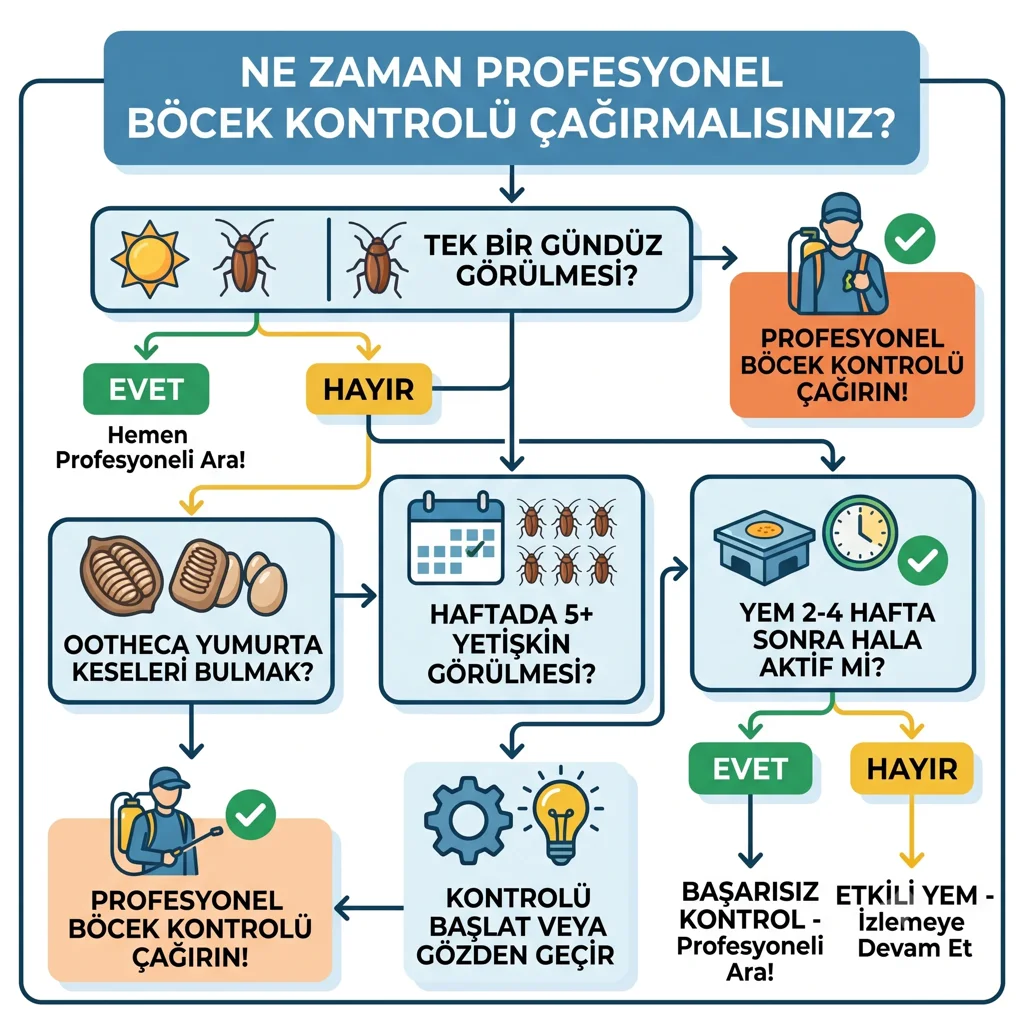
IPM, that is, integrated pest management, works not with a single product but with multiple measures. When the threshold is exceeded, the goal is not random spraying but targeting the right species and source. At this point, getting in touch with the building management is also part of the job.
The apartment building and colony perspective
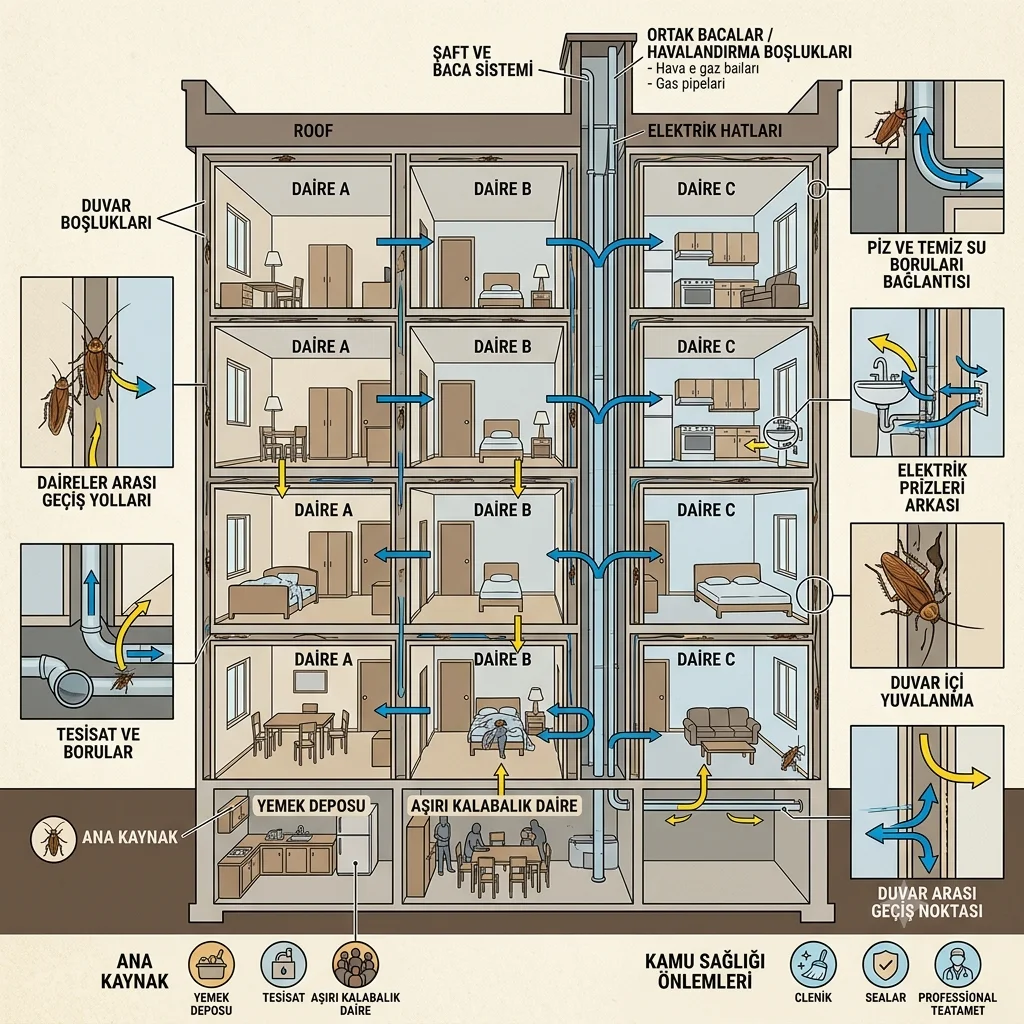
The cockroach is most of the time not a single-apartment problem. It moves between apartments through shared plumbing, wall voids, shafts, the stairwell and the waste line. So if there is a source in a neighboring apartment, it can come back even if your home is clean. If you are seeing them in an apartment, reporting it to the building management is not pointless; it is the right thing to do. Treating a single apartment without checking the common areas usually gives a temporary result.
That is why you should think at the scale of the building. Don’t stockpile cardboard boxes. Have the back of the washing machine, under the dishwasher, behind cabinets and around the plumbing checked. Lines that cannot be seen inside the apartment work like a highway for the colony. At this point, enclosed bait stations and physical traps are a safer and tidier method than spraying.
Practical order of application
First clean around the kitchen and bathroom. Then shut off the water leak. Next, check inside cabinets, the baseboards and around the pipes. In the last stage, set up gel bait or enclosed traps. Instead of spraying and walking away, keep monitoring. If crumbs and moisture have not been cut off, cockroaches will come back. If there are individuals roaming in the daytime, ootheca and recurring activity, the job has gone beyond home cleaning.
The boundary of the apartment and the boundary of the colony are not the same. This difference needs to be read well. Cleaning one room does not solve the whole building. Putting bait in the right place also reduces the off-target chemical load. In a home with children and pets, this matters even more.
The most common mistakes
The biggest mistake in cockroach control is targeting the insects one by one and leaving the source. Seeing one and immediately spraying it, even if it kills that insect, may not break the colony line. In some cases it even scatters individuals into different cracks and makes the job harder. The second mistake is limiting kitchen cleaning to the visible surfaces. Behind the fridge, under the sink, the baseboard line and appliance gaps are the real areas.
The third mistake is keeping piles of cardboard boxes and bags indoors. Cardboard is both a hiding place and a means of transport. The fourth mistake is reading the building as if it were a single apartment. It is hard to expect a lasting result without checking shared shafts, pipe passages and sources in neighboring apartments. If you see an ootheca, it shows that breeding is continuing; here cleaning alone is not enough, and the breeding point must also be shut down. That is why regular checks are more valuable than a one-time intervention.
FAQ
How do you get rid of cockroaches?
Cut off the source, reduce the water, seal the cracks, use gel bait or enclosed traps. Instead of spraying, make the environment unlivable for them.
What attracts cockroaches?
Food scraps, water leaks, damp voids and warm hiding places. The kitchen and the area under the sink are especially strong magnets.
Why do they appear in a clean home?
Cleaning is sufficient, but not on its own. A neighboring apartment, plumbing voids and being carried in with packages also play a role.
Why does seeing one during the day matter?
Seeing a nocturnal insect during the day suggests that the population has grown or that the hiding places are full.
What should I do if there are children and pets?
Don’t use sprays. Choose enclosed bait stations and physical traps. Keep products out of reach.
When should I notify the building management?
Report it right away if there are recurring sightings, a suspected shared wall line, the area around a shaft or a source in a neighboring unit.
The essence of this guide is this: cockroaches are not chased away; their living conditions are broken down. If the source is cut off, entry is narrowed and control is done at the scale of the building, the pressure drops. For a wider framework of species and biology, the best way is to read it together with the main cockroach article.