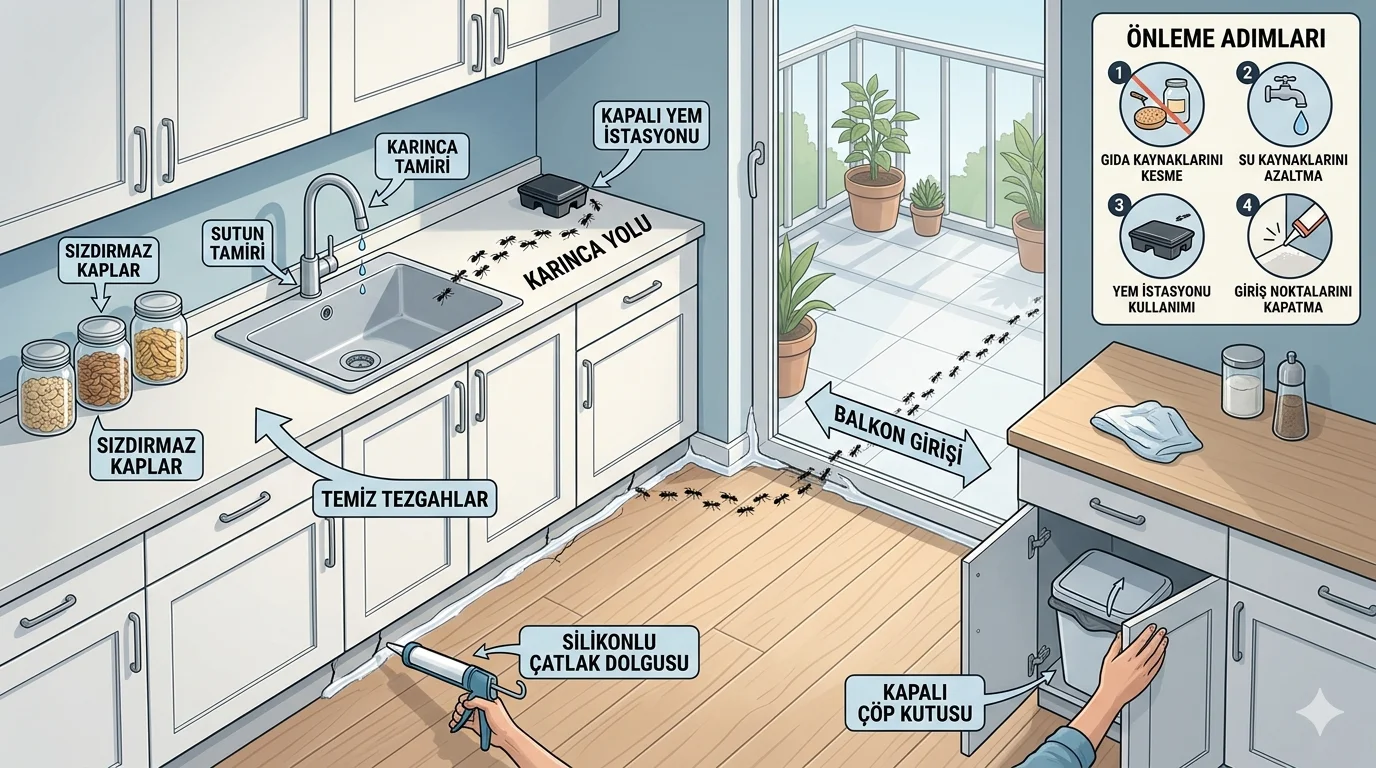
The clear answer to the question of how to get rid of ants is this: first you cut off the source, not the worker line. To see the main backbone of ant behavior, look at the article Ant: The Insect World’s Master of Social Structure, and to understand how the trail is set up, look at the article How Do Ant Trails Form? The Pheromone Language. This article builds the fight inside the house accordingly: it targets not the visible individual but the system that leaves the trail.
Direct answer: What is the most effective method?
The most effective method is to use bait. The logic here is simple: worker ants take the bait, carry it to the nest and come into contact with the other individuals in the colony. That’s why slow-acting active ingredients such as boric acid or imidacloprid are preferred. A fast-killing spray only knocks down the ant you see on the surface; the colony behind it usually remains. And the result is this: you wipe out one line, then watch the colony come out again through another door.
Why is spraying directly wrong?
Spray brings relief in the short term but does not solve the problem. Because the fight against ants is not a job of counting insects one by one. Most of the working individuals are busy with scouting and carrying. When you scatter them with spray, the trail looks cut, but the nest stays alive. In some cases, instead of dropping, the colony’s pressure spreads over a wider area. That’s why spray is considered only in urgent and limited situations; it is not the main strategy.
Another problem is the safety side. Leaving aerosol in the kitchen, the pet food area, the children’s room and on floors where pets roam is not a good idea. Bait, on the other hand, goes to the target in a more controlled way if it is kept in a closed capsule or in a closed bait station. The measure here should be not killing what you see but disrupting the colony’s flow.
6+ actions: What should the order be inside the house?
- Put the bait trail in the right place. On top of the line ants pass along most, but not randomly in the middle of it. Counter edges, the base of skirting boards, under the sink, the balcony door and around pipes are the first places to check.
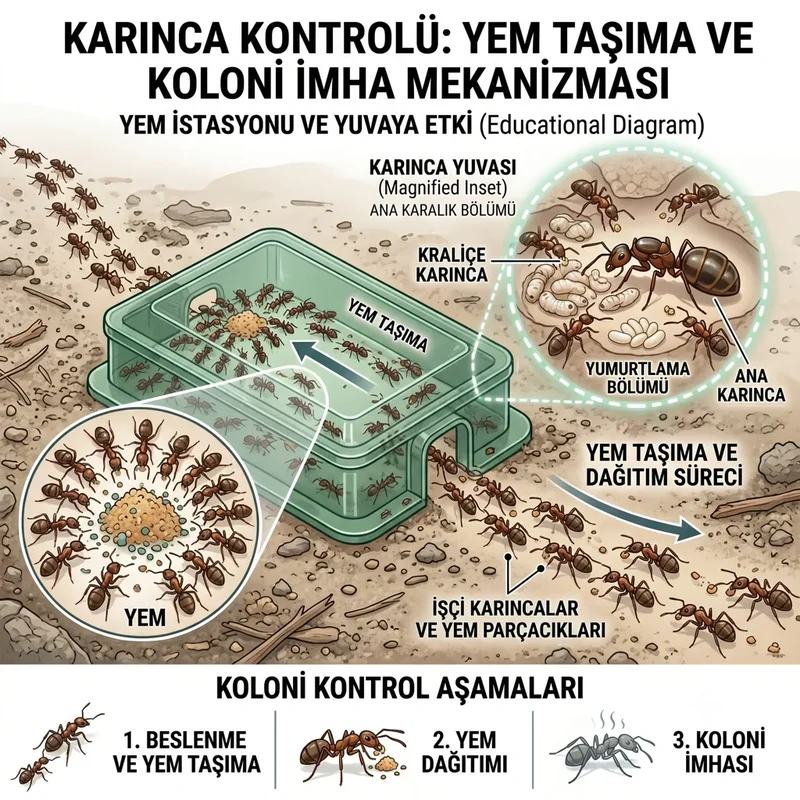
Ant bait trail — the carrying line of worker ants - Check for water leaks. A dripping tap, damp under the sink, the balcony drain and water pooling under the refrigerator are centers of attraction for ants.
- Wipe up crumbs at night. In the kitchen especially, sugar, bread crumbs, pet food residue and a film of grease left overnight feed the trail.
- Seal cracks with silicone. Pipe passages, skirting board joints, the gaps between tiles and window edges are entry lines.
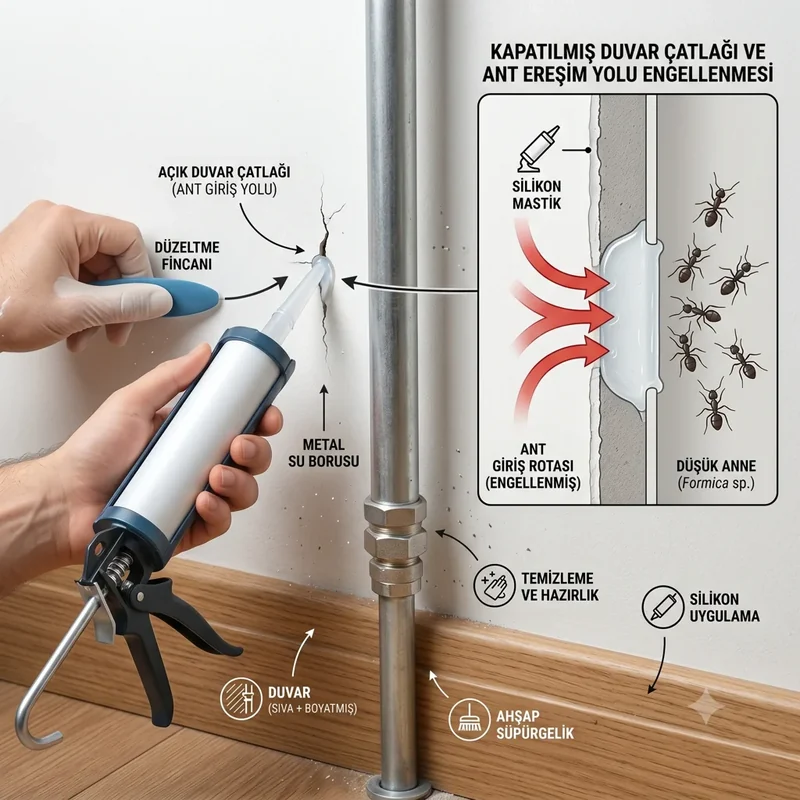
Ant entry point — a crack sealed with silicone - Clean behind the oven and the refrigerator. There you find crumbs, warmth and hidden passages all at once.
- Keep the trash lidded and take it out weekly. The longer organic waste sits, the more it works like an open buffet for the colony.
- Reduce piles of cardboard boxes and bags. As hiding places shrink, the route narrows too.
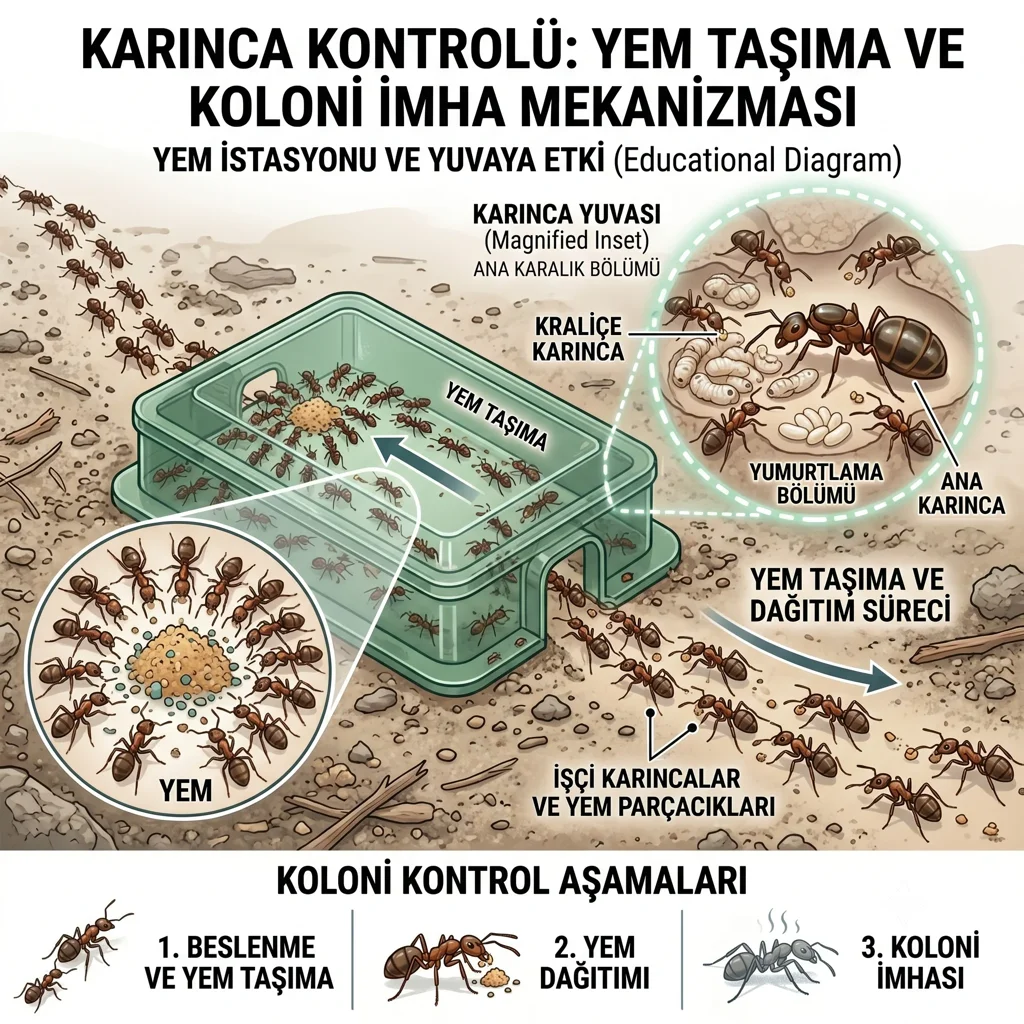
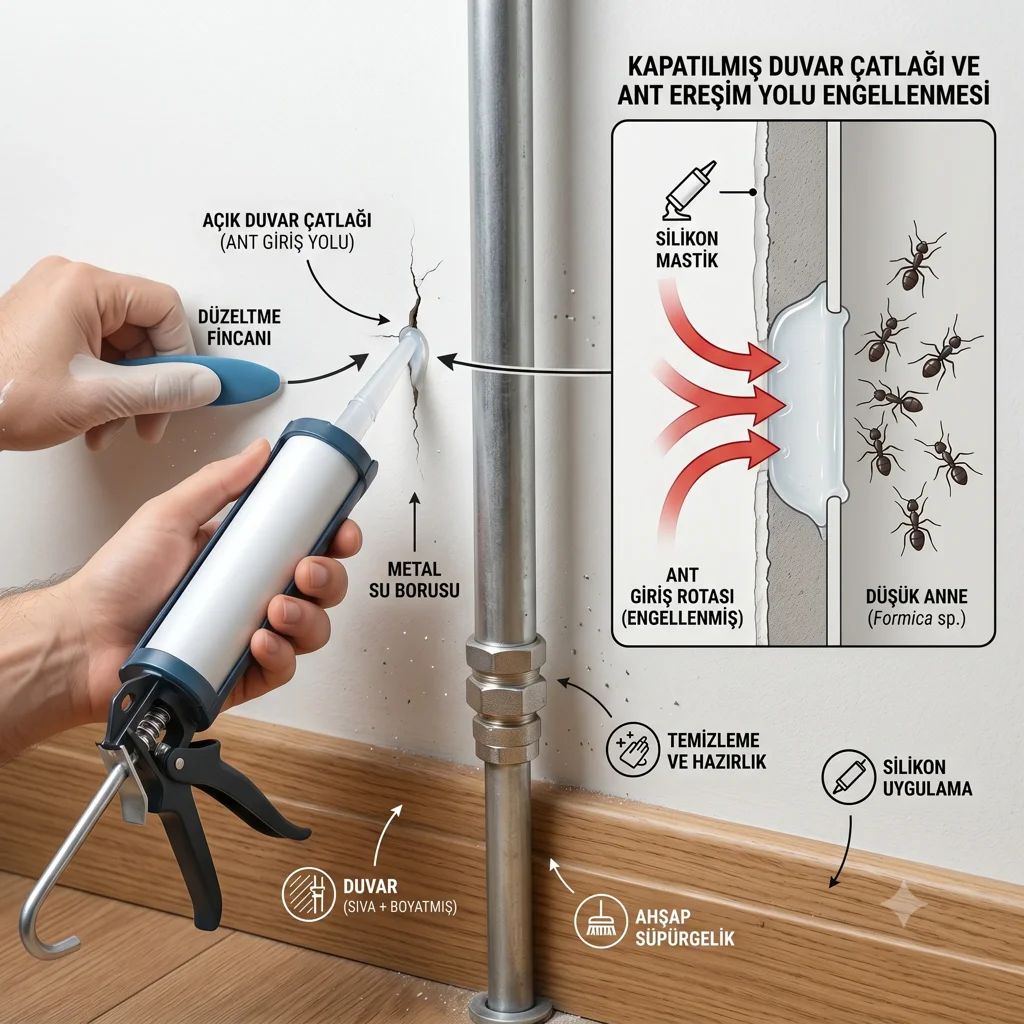
The critical point in this order is this: first disrupt the living conditions, then give the bait to the right target. Just spraying insecticide is a move made without reading the system.
Why does slow-acting bait work?
Slow-acting bait uses the ant’s nature. The worker individual finds the source and starts returning to the bait. If the product is inside a closed capsule or has been placed at the right spot in gel form, the worker carries it into the colony. This way the effect is not limited to a single individual. The queen, the larvae and the worker line feel the same pressure.
Substances such as boric acid and imidacloprid are used for this logic. But the bottom line here is clear: whatever the product label says goes. Homemade mixtures, random doses and chemicals left out in the open are not a good idea. In a home with children and pets, use nothing but closed bait stations.
How do you choose the spot and follow up?
Don’t put the bait down randomly in the middle. Put it on the line the ants go back and forth along; but not on a surface you have just cleaned, sprayed heavily or left wet. The best spot is the edge of the passage line. The base of the kitchen skirting board, under the sink, the balcony door, around the trash and behind appliances are suitable for this. The goal is for the worker to take the bait and go back; not to startle it.
Don’t expect a miracle on the first day. With a correct setup, the movement first changes, then decreases. Sometimes the effect shows within a few days, sometimes over a longer time. If you spoil the bait with other chemicals in the meantime, you break up the setup you built yourself. So the measure in follow-up is this: is the number of new lines dropping, is night-time activity decreasing, are they coming out again at the same spot? The answers to these questions tell you whether the bait is working or not.
The apartment perspective: the issue is not a single apartment
In an apartment building, ants are a system that travels between the walls. You keep your own kitchen clean, but a new line comes from the shared shaft, the plumbing cavity or the apartment next door. That’s why treating a single apartment without seeing the building scale usually stays half-done. Especially if there are ants in several apartments on the same line, the building management needs to be informed.
This is not an exaggeration. In a building with shared walls and pipelines, the colony does not belong to one apartment; it settles inside the building. So the solution must also be built with building logic. If necessary, cleaning, sealing and bait application are done in more than one apartment on the same day. If you see it as a single-apartment job, it will come back.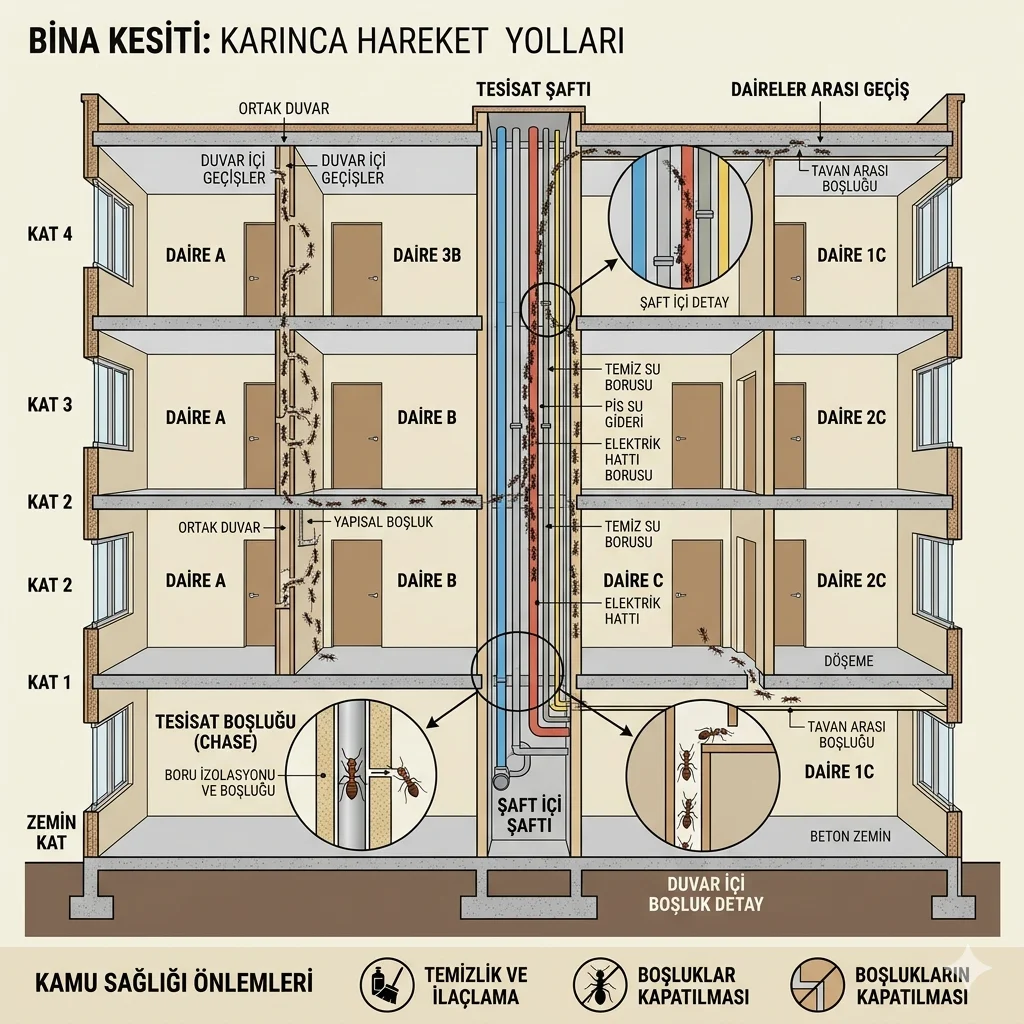
Chemical safety: what changes if there are children and pets?
You don’t want spray left out in the open, random gel and bait stations within reach. The safe approach is to use a closed capsule, narrow the access point and control the application area. Don’t leave open chemicals on floors that children’s hands will touch or pets will lick. Read the product label, don’t play with the dose, don’t make mixtures.
And there’s this: bait calls for an unseen result, not a hasty one. Don’t expect “it’s over” on the first day. With a correct setup, the movement changes within a few days, but real control is understood through a few weeks of monitoring. If you keep suppressing the area with spray while the bait is working, you break your own setup.
The most common mistakes
The first mistake is crushing the ant where you see it. This erases the symptom and leaves the cause. The second mistake is doing kitchen cleaning according to what is visible during the day. The crumbs left at night matter more, because ants mainly work at those hours. The third mistake is forgetting about water. People look at food; ants look at moisture too.
The fourth mistake is setting up bait without sealing the cracks. When the entry line stays open, the colony finds another route. The fifth mistake is thinking of the apartment building as a single apartment. This is the most expensive mistake, because it puts you into the same cycle again and again.
Final order: what will work?
Set up the bait first. Then cut off the water. Next, wipe up the crumbs. Seal the cracks. Clean behind the oven and the refrigerator. Keep the trash closed. If on top of these six steps you also see the building line, ant pressure drops permanently. This is the short answer: the answer to the question of how to get rid of ants is not spray but closing down the system.
FAQ
Spray or bait for ants?
Bait. Spray only knocks down the visible individual; bait goes to the colony.
When do ants come to bait?
At night and in the early morning hours, most household ants are more active.
How long does bait take to work?
It depends on the product and the size of the colony. Slow-acting products are measured not in a few days but by monitoring.
Why are ants always in the kitchen?
Because water, crumbs, warmth and an entry line are all together there.
Is a single apartment enough in an apartment building?
Most of the time it is not. If there is a shared wall and shaft, the building scale is needed.
Sources
The backbone of this article is this: ants are not “chased out” of the house; their life line is cut. The bait is put in the right place, the water is cut off, the crumbs are wiped up, the cracks are sealed. The result comes from there.