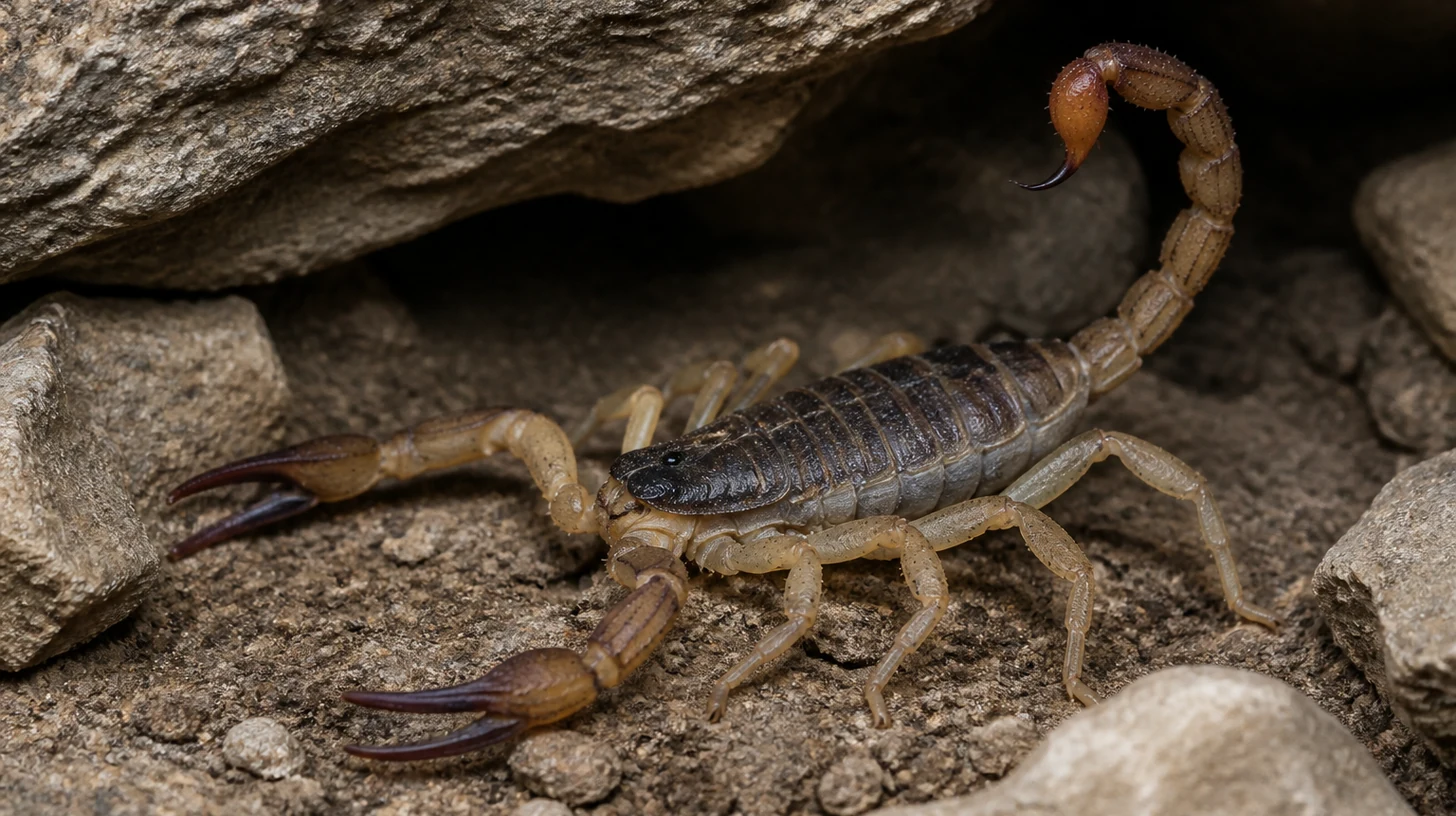
A scorpion can live a few years depending on its species; in some species lifespan goes well beyond that, and roughly 3–110 young can be seen in one birth. These wide ranges are not fixed values to be applied to a single scorpion. What is really surprising is that the young climb onto their mother’s back as soon as they are born and that some females can produce more than one brood from a single mating. How long does a scorpion live, how many young does it have, and when do the young leave the mother? The answers vary from species to species. You can find a safe approach to a scorpion you come across at home in the scorpions in the house guide.
How many years does a scorpion live?
It is not possible to give a single number for scorpion lifespan that covers every species. San Diego Zoo reports lifespan in a range of 5–25 years depending on the species; this does not mean that all scorpions live 25 years. Although some general sources give shorter averages, the results change as the species, living conditions and measurement method change. That is why speaking definitively, “it lives this many years”, for a scorpion whose species has not been identified is misleading.
Scientific comparisons also support this diversity. A study examining data compiled from 94 species found that body size alone does not mean a longer life or a larger brood. Moreover, because some life-history values in the study came from a small number of species, the researchers’ comparative power was limited. In short, you cannot conclude that a large-looking scorpion lives longer just by looking at its size.
How many young does a scorpion have?
Scientific reviews have reported numbers of young per birth ranging from roughly 3–4 to 105–110. In many species broods of more moderate size are seen; however, this range does not mean that every species has this many young. For example, the study on the northern scorpion Paruroctonus boreus examines only 36 females in a particular Montana population. It would not be right to carry the results of this single population over to the species in Türkiye.
| Comparison | Reported example range/value | How should it be interpreted? |
|---|---|---|
| Young per birth across species | Roughly 3–4 to 105–110 | The extremes reported in the review; not the typical number for every species |
| Brood seen in many species | Roughly 15–50 | General tendency; varies by species and conditions |
| Paruroctonus boreus | 36 females examined in a local study | A single species and a single population; does not apply to Türkiye as a whole |
That is why a single answer like “a scorpion definitely has 20 young” is not reliable. The female’s species, age and breeding conditions can affect the number. In addition, no simple rule explaining every species has been found between the number of young and the scorpion’s size.
Do scorpions lay eggs, and how do they give birth?
Scorpions generally give birth to live young; they don’t reproduce like insects that leave their eggs in the soil. The gestation or embryo development period can last a few months in some species and much longer in others. A scientific review of reproduction reports that development can extend from a few months to almost two years. Such a wide difference makes it inadvisable to give a birth calendar without knowing the species.
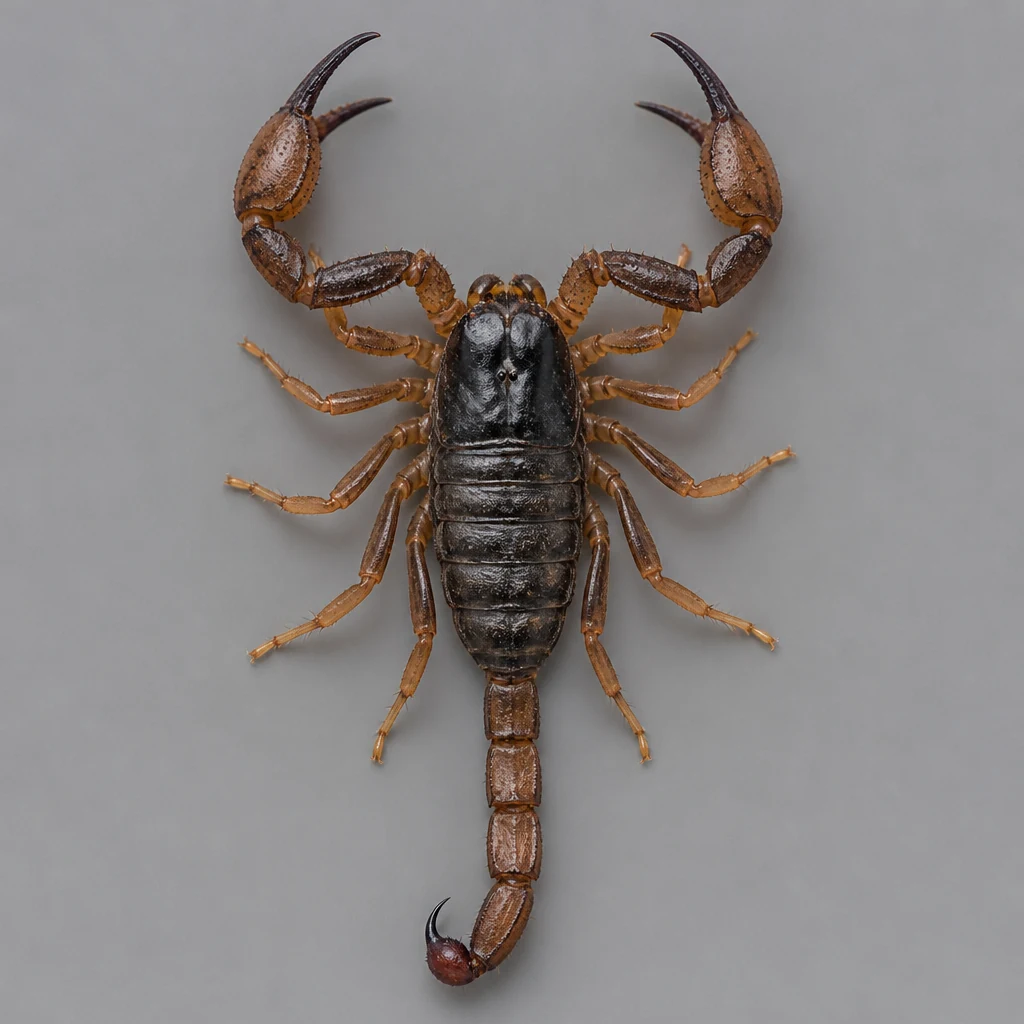
During birth the female can raise her body and form a “birth basket” into which the young can drop. The young are born one by one, then climb onto the mother’s back via her legs or pedipalps. During this time the young, which are soft and pale in color, can remain dependent on the mother until their first molts are complete. San Diego Zoo states that the young mostly disperse after the first molt.
Does a female scorpion settle for a single birth?
Not always. In some species the female can store the sperm received during mating in her body and produce more than one brood after a single mating. Lourenço’s review reports that in some genera three to five births from a single fertilization have been recorded under laboratory conditions. This is not a trait seen in every scorpion species; it is an observation belonging to particular groups.
Carrying the young on the mother’s back is also one of scorpions’ distinct care behaviors. Nevertheless, the number of young, the gestation period and how long the mother stays with the young vary by species. Copying the life calendar of a species studied on another continent onto every scorpion seen in Türkiye is not scientifically sound. If you wonder where scorpions can hide in the cold season, take a look at the article on seeing scorpions in winter and overwintering behavior.
Is a small scorpion seen at home a baby?
Looking small alone doesn’t show its age or species; it may be a young one, a small-built adult or a different species. Don’t pick it up to examine it closely. Seeing a scorpion inside the house also doesn’t by itself prove that a birth took place in the house. If there are repeated sightings, note the date and place, keep children and pets away, and for safe control options look at the scorpion’s entry routes into the house and the steps for protection.
Frequently asked questions
How long do baby scorpions stay on their mother’s back?
They generally stay on the mother’s back until their first molts. The exact duration can differ by species and conditions.
How many times a year does a scorpion give birth?
There is no fixed number valid for all scorpions. It has been reported that in some species more than one brood can form from a single mating; this trait cannot be generalized to all species.
Are scorpions’ lifespan and number of young linked?
A simple link valid for every species has not been shown. The study comparing 94 species found that larger species do not necessarily live longer or have more young.
Sources
- Lourenço WR. “Reproduction in scorpions, with special reference to parthenogenesis.” European Arachnology, 2000 (2002), pp. 71–85. https://www.european-arachnology.org/esa/wp-content/uploads/2015/08/071-085_Lourenco.pdf
- Monge-Nájera J. “Scorpion body size, litter characteristics, and duration of the life cycle (Scorpiones).” Cuadernos de Investigación UNED, 2019. https://www.scielo.sa.cr/scielo.php?script=sci_arttext&pid=S1659-42662019000200101
- Barron JN, Weidlich AL. “Reproductive traits in the northern scorpion (Paruroctonus boreus).” Western North American Naturalist, 2009. https://scholarsarchive.byu.edu/wnan/vol69/iss3/16
- San Diego Zoo Wildlife Alliance. “Scorpion.” https://animals.sandiegozoo.org/animals/scorpion