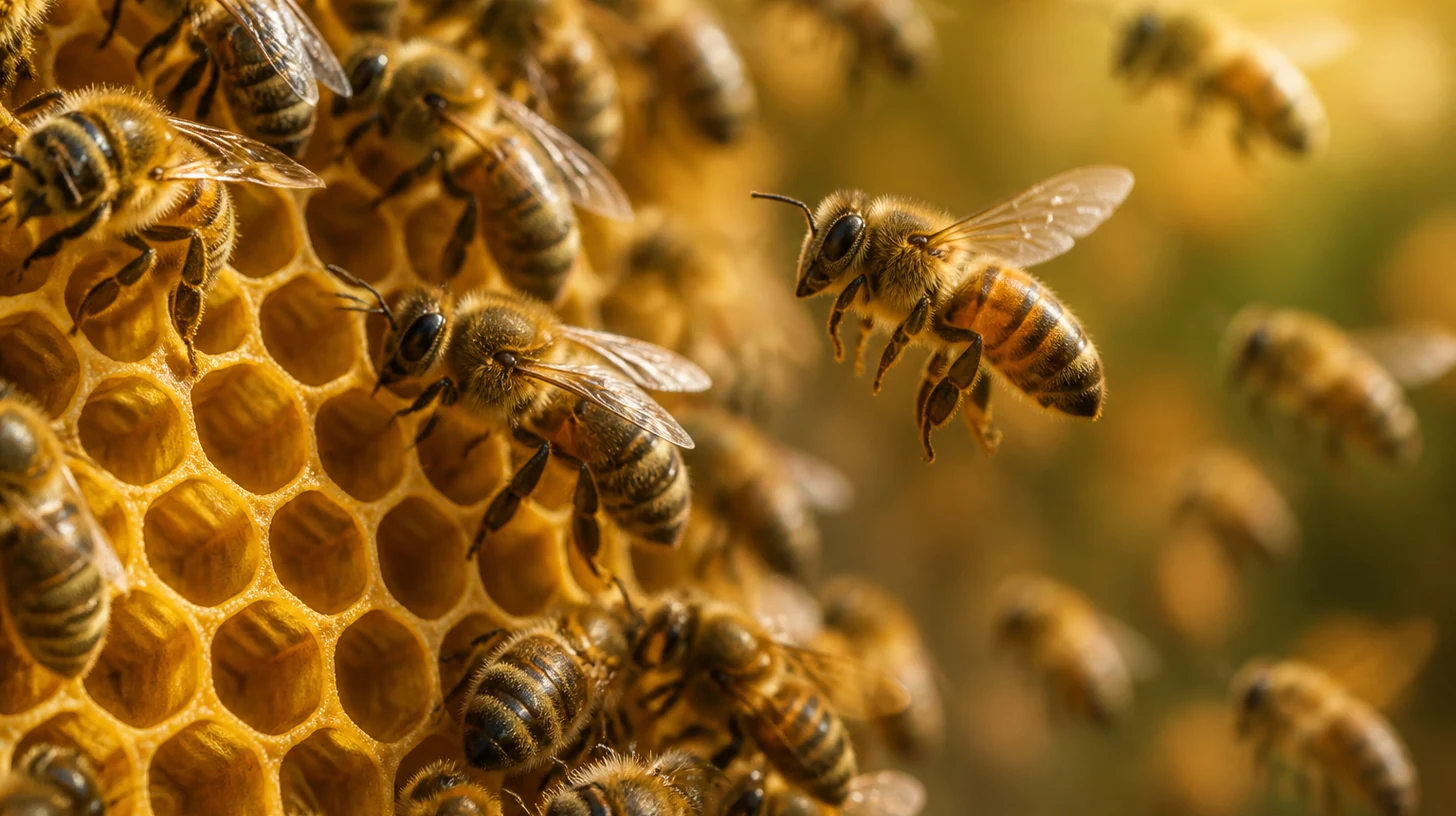
A honey bee makes honey by transforming flower nectar with enzymes and reducing the water in it; it stores the ripened honey in comb cells and caps it with beeswax. The surprising part is that this transformation is not the work of a single bee, but a shared process that the workers in the hive carry out in turn. You can see the division of labor inside the colony in the general guide to the honey bee.
What does a honey bee collect to make honey?
Worker bees mostly collect nectar, the sugary liquid produced by flowers. The source of some honeys is honeydew, secreted by insects that suck plant sap. Pollen, on the other hand, is not a raw material of honey; bees carry it to the hive for protein and other nutrients. This distinction also makes it easier to understand the honey bee’s colony organization and tasks.
The forager worker takes up nectar with its long tongue and carries it in the honey stomach (crop), a compartment separate from the digestive system. When it returns to the hive, it passes the load to house worker bees. This mouth-to-mouth food transfer between bees is called trophallaxis. As the nectar is passed on, enzymes secreted by the bees begin to mix into the liquid.
How does nectar turn into honey in the hive?
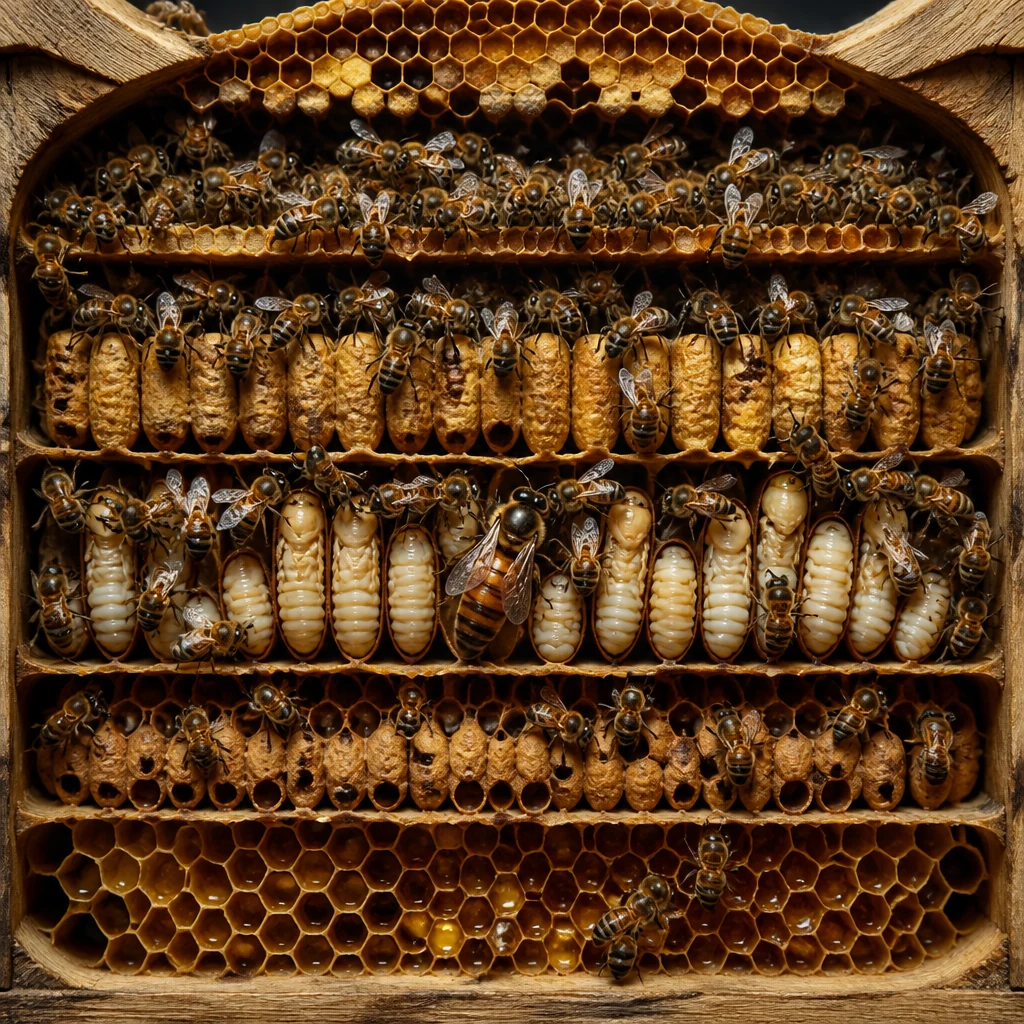
First, enzymes change the sugars in the nectar. For example, invertase (sucrase) helps split sucrose into simpler sugars such as glucose and fructose. That’s why honey is not simply nectar with the water evaporated; it has also been chemically changed by the bees’ enzymes. The details of the transformation can vary depending on the content of the nectar and the conditions in the colony.
The bees deposit the liquid into comb cells and make it spread out in a thin layer. Workers fan their wings to create an air current in the hive; this speeds up the evaporation of water from the nectar. The ripening of honey cannot be tied to a single fixed duration: the flower source, humidity and air circulation affect the result. A peer-reviewed study shows that honey bees can also remove part of the nectar’s water during flight, before returning to the hive.
The water content of nectar at the moment it arrives in the hive is not the same for every flower. The plant species, the time of day and the weather affect the initial sugar concentration. So the bees’ work in the hive is less about processing every load with the same recipe and more about turning a variable liquid into storable food. A 2025 study also observed that concentration in comb cells can vary with the bee species and the cell size; the result does not show that a single cell size is superior for all hives.
Fanning the wings is not just blowing air over the nectar. The bees in the colony regulate air circulation together; the air entering and leaving the hive contributes to removing the humidity that builds up inside. While the nectar sits in the comb cells, workers can process it again and spread the liquid out in a thin layer. In this way, the action of the enzymes and the reduction of water become parts of the same ripening process. You can see how a bee community sustains this cooperation in the article on the honey bee’s dance language; the dance serves to communicate the direction and distance of a food source to other workers.
When is the comb capped?
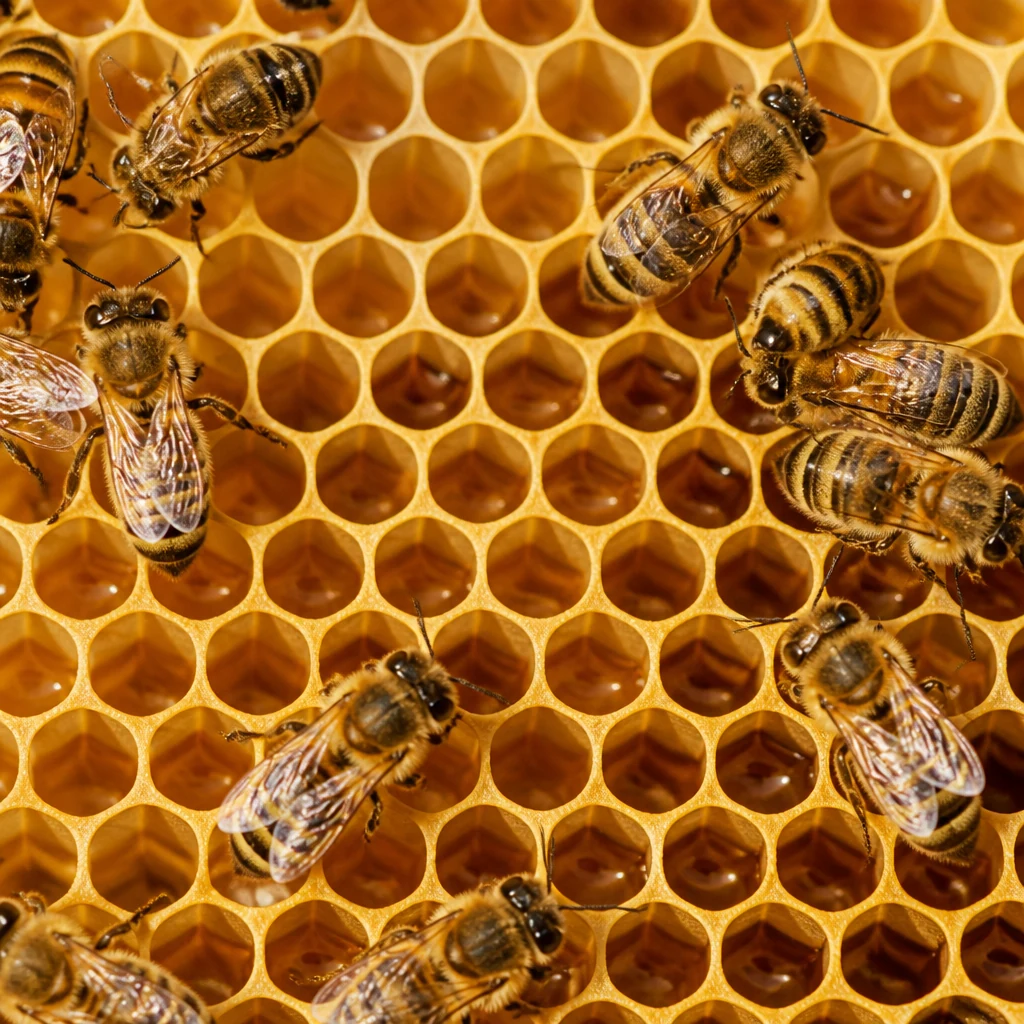
When the water content of the nectar has dropped far enough and the honey has ripened, workers cap the mouth of the comb cell with a thin layer of beeswax. FAO’s beekeeping resource describes the capping of the cell when the water content of honey falls below 20 percent as a sign of ripeness. This is not a production target valid under all conditions, but a general threshold; the content of the honey and the ambient conditions can vary. A low water content helps reduce the chance of fermentation.
| Stage | What the bees do | Result |
|---|---|---|
| Nectar collection | The worker takes nectar from the flower and carries it in its crop | Sugary liquid arrives at the hive |
| Transfer and enzymes | Nectar is passed between workers; enzymes are added | The composition of the sugars begins to change |
| Ripening | Nectar is spread into comb cells, and its water is reduced by air currents | Thicker honey forms |
| Capping | Workers cover the comb cell with beeswax | The food store is protected |
Why do bees make honey?
Honey is the colony’s energy-dense food store. In periods when flowers become scarce or when the weather does not allow flight, the colony can use this store. Workers also store pollen alongside honey; the two foods do not serve the same function. Honey mainly provides energy, while pollen carries the proteins needed for brood development and colony nutrition.
In short, the process consists of these steps: collecting nectar, passing it between workers, transforming it with enzymes, evaporating the water to ripen it, and capping the comb. You can also read how the honey bee announces a food source by dancing in the article on the honey bee’s dance language.
Sources
- FAO — Honey: Definition, Uses, Quality and Handling — transfer of nectar, enzymes, reduction of water and capping of the comb cell.
- University of Arkansas Extension — Work it, Girl! — transfer between workers, enzymes and ventilation.
- Nicolson, Human & Pirk, 2022 — Honey bees save energy in honey processing by dehydrating nectar before returning to the nest — study on foragers evaporating water before returning to the hive.
- Yang et al., 2025 — Impact of Comb Cell Diameter on Nectar Evaporation Efficiency in Honey Bees — concentration of nectar in comb cells and enzyme activity.