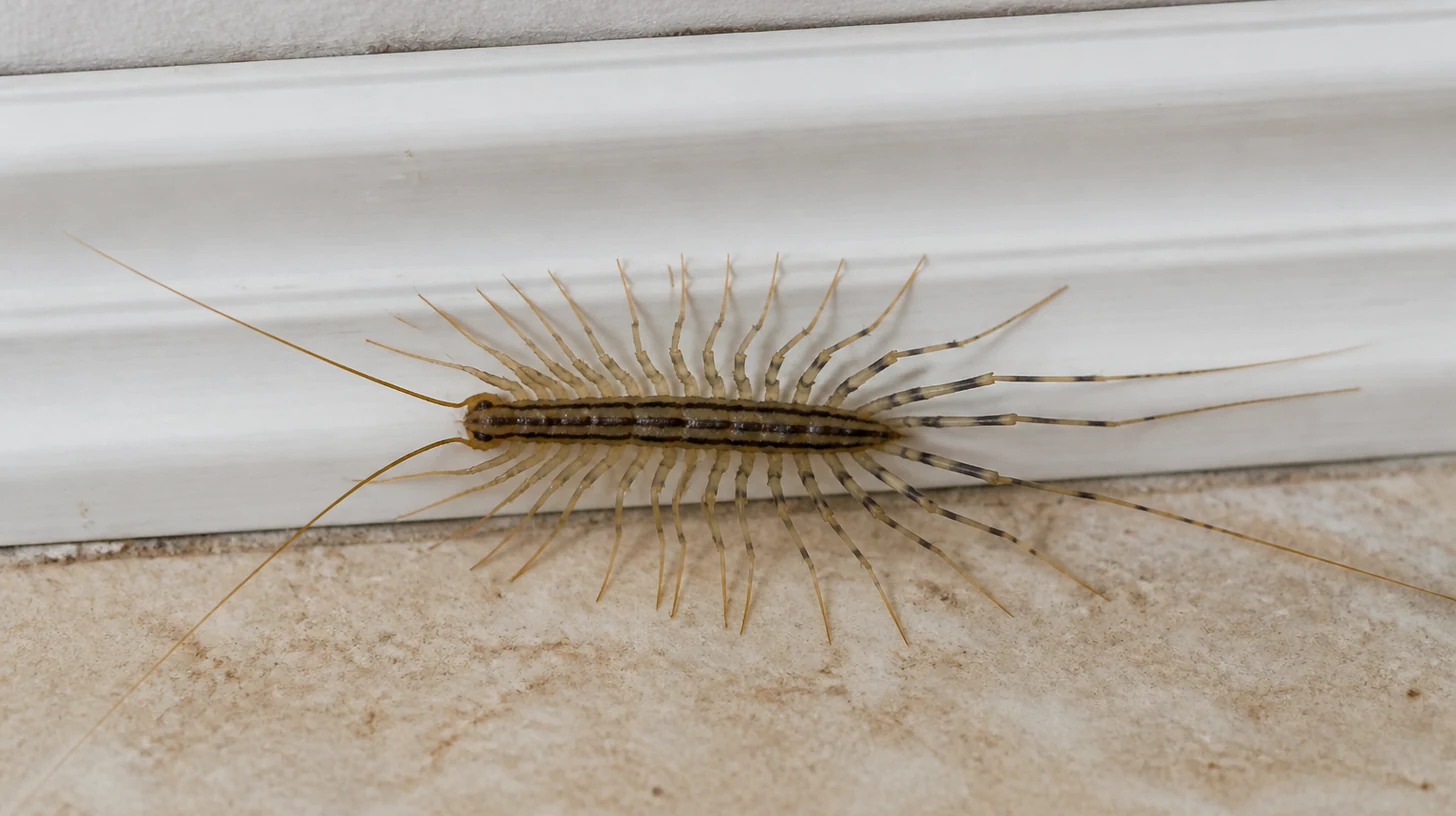
If you have seen a centipede in the house, don’t try to catch it with your bare hands first; watch this fast-moving animal from a safe distance. The house centipede encountered in homes is mostly known as Scutigera coleoptrata: it stands out with its long antennae, striped body and very long legs. Seeing a single centipede does not prove that there is a nest inside the house or that the house is dirty. It is more accurate to assess damp areas, small prey animals and possible entry gaps together. To tell other arthropods in the house apart, you can also look at the spider guide, the silverfish guide and the scorpions in the house guide.
Why do centipedes appear in the house?
House centipedes are predators; they catch small arthropods such as insects and spiders. Seeing them in a home may suggest that there are animals nearby that could be prey; but it does not by itself prove why the centipede came. Damp, dark and rarely disturbed spots such as the bathroom, the basement, the laundry room and the area around plumbing can be suitable for hiding. Leaks, condensation or inadequate ventilation can keep these conditions going.
Openings at the base of exterior walls, the gaps under doors, window frames and pipe penetrations are possible entry routes. Boxes or items that have been left outside can also help carry small animals indoors. You cannot determine which way a centipede came just by looking at the room where it was seen. If it is seen again and again in the same area, examine both the moisture inside the house and the surroundings of the building.
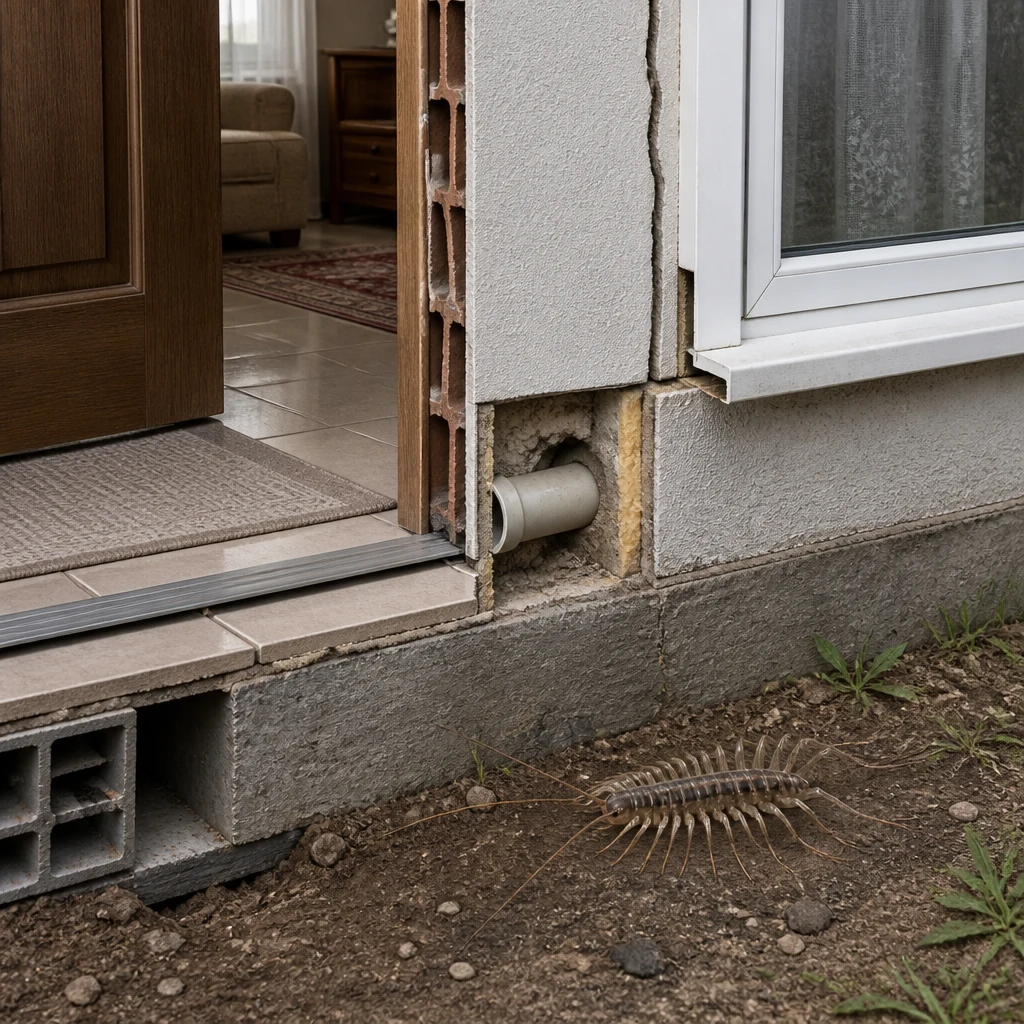
This sighting is not a reason to panic; it is a starting point for a regular and measured check of the surroundings. Observing the same area again over a few days helps separate a one-off entry from outside from ongoing conditions. You don’t need to approach the animal while keeping a record.
This short record reduces wrong conclusions in the next inspection.
Instead of drawing firm conclusions about moisture, prey animals and entry gaps from the spot where you saw a centipede, check each of them separately. For example, the moisture in a bathroom corner may come from a plumbing leak, while an animal at the base of an exterior wall may come from the door threshold; the sighting alone does not tell you which of these is at work. When you can’t identify the source, show your records to a professional instead of using pesticides at random.
How do you recognize a house centipede?
The house centipede’s body is relatively flat; dark stripes may be seen on a yellowish-grey background. Its long antennae and the very long legs that spread out from the sides of its body give it a hairy or fast look. For Scutigera coleoptrata, 15 pairs of legs in adults are the typical identifying feature. This number should not be generalized to all centipede species seen in homes.
Centipedes belong to the class Chilopoda. They carry one pair of legs on most body segments and are predators. Millipedes (Diplopoda), on the other hand, mostly have more cylindrical bodies; they have two pairs of legs on most body segments and usually feed on decaying plant matter. Although the two names are used interchangeably in everyday speech, they are different animal groups. Don’t try to hold a fast-moving animal up close and count; if you need a photo, take it from a safe distance.
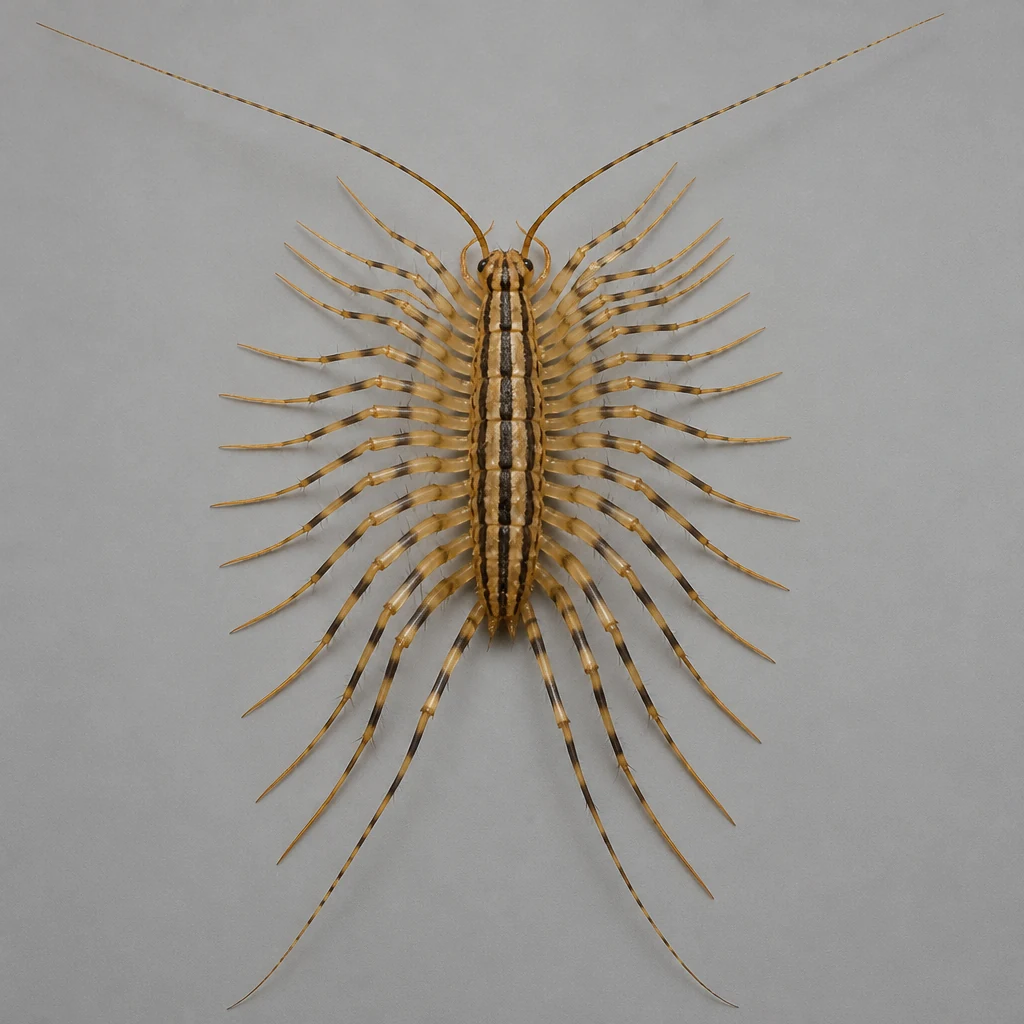
The house centipede uses venomous, jaw-like appendages at the front when catching its prey. This does not make it an animal that seeks out people. Centipedes usually avoid contact; being cornered or handled can trigger defensive behavior. For this reason, instead of going after it with a slipper, your bare hands or a chemical spray, move people and pets away from the area and choose a safe solution.
Way of life and role inside the home
The house centipede goes through egg, larva and adult stages; development time and breeding details depend on conditions. It is not possible to infer its age or how long it has been in the house from a single sighting. It moves around where it finds prey and can hide; being seen in damp areas makes it worthwhile to examine these environmental conditions, but on its own it is no substitute for measuring moisture.
Being a predator does not mean it should be kept in the house. Its appearance can be disturbing; also, some people do not want direct contact with animals. If you want to remove it, don’t touch it with bare hands. If it can be done safely, you can take it outside with a closed container and a stiff piece of cardboard, or, if you can’t reach it, you can ask for help. Don’t corner the animal where there are children or pets.
Because the house centipede feeds on small prey animals, the possibility that other arthropods lie behind repeated encounters can also be considered. This does not mean in every case that there is a cockroach or other pest infestation. For example, why cockroaches come indoors is a separate species and a separate control topic; don’t automatically apply the control method given for one species to the centipede.
Health risk and prevention
Although the house centipede has venomous appendages that immobilize its prey, it does not behave like an aggressor that targets people. A bite or similar contact may occur rarely; the effect of contact can vary by person and situation. If severe or increasing pain, marked swelling, a widespread rash, difficulty breathing or another general symptom develops, see a health professional; in an emergency such as shortness of breath, call your country’s emergency number. This article is not a diagnosis or treatment recommendation. If contact has occurred, don’t take risks to catch the animal.
To prevent centipedes from appearing in the house, first sort out the environmental conditions. Fix leaks, dry spots that stay wet for a long time, and ventilate the bathroom and basement. Seal the openings under doors and around plumbing appropriately. Reduce cardboard and clutter in storage; keep the base of walls in a state that can be checked regularly. If small prey animals are seen often, identify them correctly too and take separate measures aimed at the source. To avoid confusing it with different problems such as signs of termites in the house and structural traces, don’t make a definite diagnosis without seeing the animal or the damage.
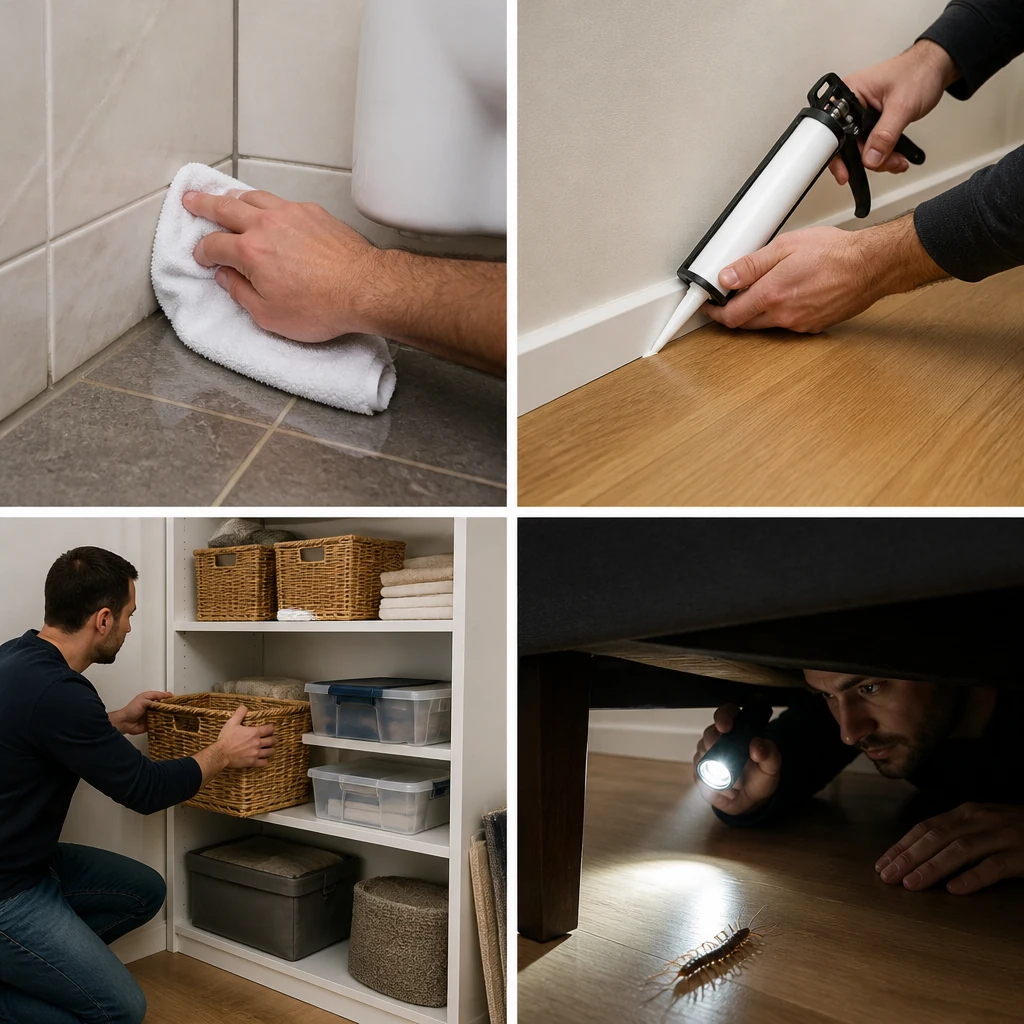
Don’t spray an unknown insecticide on the centipede at random. If product use is being considered, the label, the target animal, the application area and child and pet safety should be taken into account; don’t mix products indoors. Seeing a single centipede is not automatically a reason for pest treatment. With repeated sightings, entry routes, moisture sources and animals that could be prey are assessed first. If necessary, ask a qualified pest control professional for an on-site inspection.
When should you call a professional?
A single sighting and a recurring problem are not the same thing. The number of sightings, the area where it was seen and sensitive people in the home should be assessed together. The thresholds below are not a diagnosis or a pest treatment prescription; they show when it would be reasonable to seek a professional assessment.
| Sighting | Repetition / condition | Appropriate next step |
|---|---|---|
| A single centipede, seen from a safe distance | No repeat in the same place | Don’t touch it; check moisture and openings during routine maintenance |
| Seen again within a few days or weeks | Recurring in the same room or in different rooms | Note the date and place; inspect for moisture sources and small prey animals |
| Centipedes are seen in inaccessible gaps | There is a plumbing or wall gap that cannot be sealed | Ask a qualified professional for an assessment of the structure |
| A child, pet or contact-sensitive person is at risk | The animal cannot be safely isolated | Close off the area; get professional support, don’t use chemicals at random |
| Suspected bite and symptoms present | Pain is increasing, a widespread symptom or breathing problem is developing | Seek medical help; in an emergency, call your country’s emergency number |
Frequently asked questions
Does seeing a centipede in the house mean there is a nest in the house?
No. A single centipede does not prove that there is a nest or breeding inside the house. If sightings repeat, examine moisture, entry gaps and animals that could be prey together.
Does the house centipede harm people?
The house centipede uses venomous appendages to catch prey and usually avoids contact with people. If a suspected bite comes with severe pain, swelling or a general symptom, get medical help.
What is the difference between a centipede and a millipede?
Centipedes have one pair of legs on most body segments, millipedes two pairs on most segments. Centipedes are predators; most millipedes feed on decaying plant matter.
Why is the house centipede seen in the bathroom?
The bathroom can offer moisture and hiding places; small animals it can hunt may also be found there. However, a definite cause cannot be inferred from a single sighting.
If there are centipedes in the house, is pest treatment needed?
Not every single sighting means pest treatment is needed. If frequent encounters, inaccessible areas or the safety of sensitive people in the home are causing problems, ask for a professional assessment.
Sources
- University of Kentucky Entomology, “Centipedes”: https://entomology.mgcafe.uky.edu/ef645
- Wikipedia, “Scutigera coleoptrata” (general taxonomy and species information; in Turkish): https://tr.wikipedia.org/wiki/Scutigera_coleoptrata
- iNaturalist, Scutigeridae family record (not included in the verified source list because access is restricted): https://www.inaturalist.org/taxa/49554-Scutigeridae