Short answer: the honey bee is one of the best-known representatives of the genus Apis, belonging to the family Apidae within the order Hymenoptera. Its evolutionary origin goes back roughly 30 million years; human contact with beekeeping, meanwhile, has a history of at least 9000 years. Although in everyday language it is called just “the insect that makes honey,” the story is bigger: the honey bee is a pollen-carrying worker that helps plants reproduce sexually, a society living in a hive and an ecological element critical for agriculture. This article is a general guide; for the detail asked about most often in daily life, you can look at our article Honey Bee Dance Language: Karl von Frisch and the Figure-8 Waggle Dance.
Whether you describe the honey bee in heavy technical language or in plain language, the essence stays the same: this creature is not alone but a system that works as a colony. Seven species are recognized in the genus Apis worldwide; the most widespread and best-known species is Apis mellifera, the Western honey bee. In Türkiye, too, different subspecies and ecotypes within this group are found. This article gives a basic map for understanding this bee, which works more like a community than an insect.
What is the honey bee and why is it so familiar?
The honey bee is seen in the morning as a busy insect on a tree, on a flower or going in and out of the hive; but in fact its behavioral repertoire is rich. Thanks to its sucking-type mouthparts it deals with nectar and water, carries pollen and divides labor inside the hive. Many people associate it only with honey; yet honey is a by-product of the bee’s economic and biological role. When you look closely at the real value, pollination itself comes to the fore.
If the honey bee’s basic classification is kept simple: order Hymenoptera, family Apidae, genus Apis. In this family there is kinship with wasps and bumblebees, but they differ in behavior. Because Apis mellifera is the most widely kept species worldwide, it is at the center of the beekeeping literature. The short answer is this: the honey bee is not just an insect but a shared working tool of agriculture and nature.
What are the main honey bee subspecies in Türkiye?
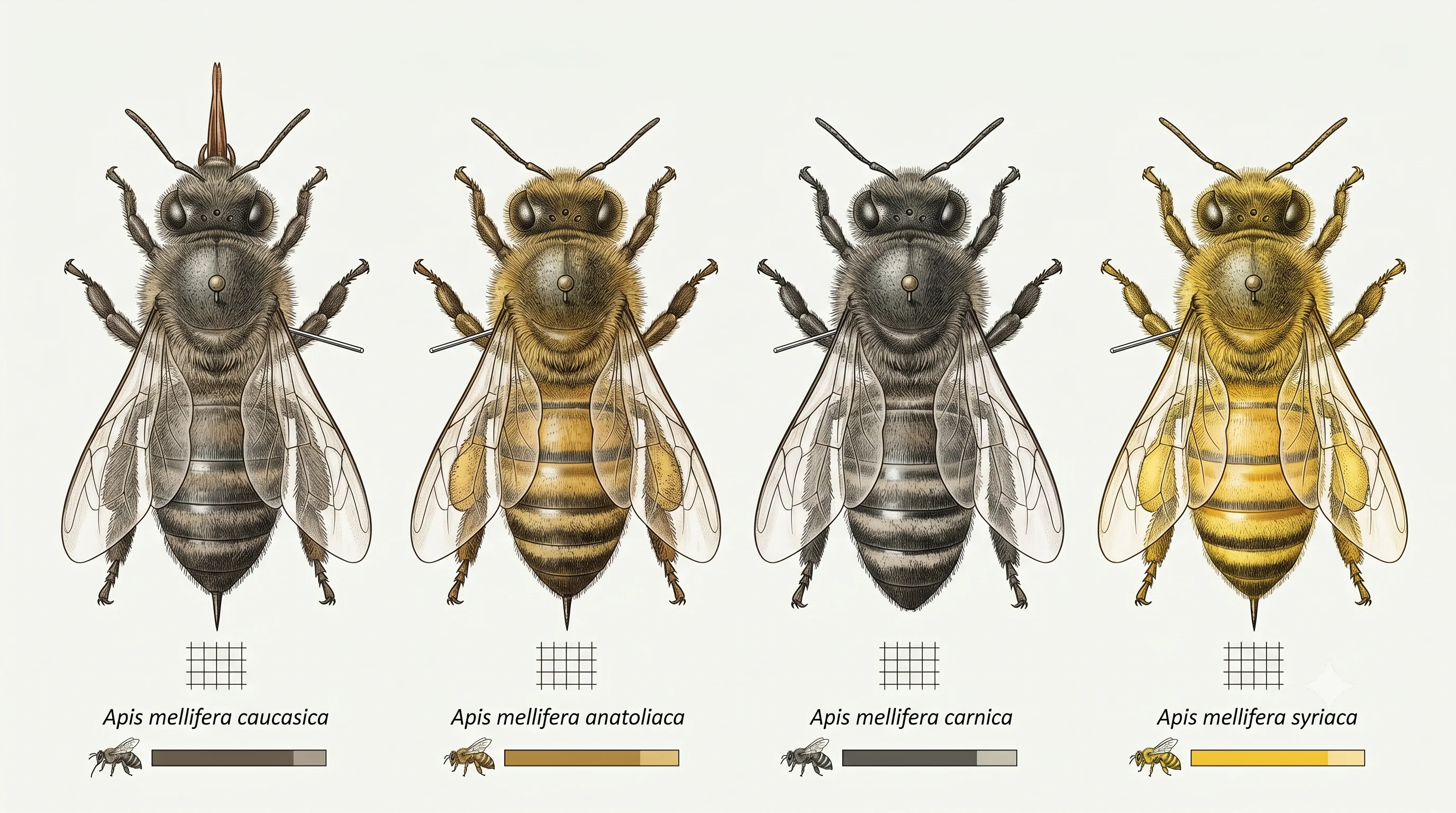
Because of both its climate pockets and its plant diversity, Türkiye is a rich area for the honey bee. In practice, the most often mentioned subspecies are the Caucasian, Anatolian, Carniolan and Syrian bees. Each of these has adapted to different climate, altitude and flora conditions. In the field the names can sometimes get mixed up; that’s why the taxonomic name and the common name need to be read together.
Apis mellifera caucasica — Caucasian bee
The Caucasian bee is associated especially with the Eastern Black Sea and regions with Caucasian influence. Thanks to its long proboscis, i.e. a longer tongue, it can have an advantage in taking nectar from deep flowers. Its long-distance flight ability and, in some lines, productive nectar-collecting behavior also stand out. Still, no single trait is the same in every colony; climate and selection make a difference.
Apis mellifera anatoliaca — Anatolian bee
The Anatolian bee stands out as a group adapted to local conditions. In some regions this subspecies can be found together with hybrid forms. In other words, in the field not every colony stands like a “pure” label; mixed patterns resulting from gene flow and environmental pressure are normal. Precisely for this reason, the Anatolian bee is a genetic resource that needs careful protection in local beekeeping.
Apis mellifera carnica — Carniolan bee
The Carniolan bee is associated with Thrace and areas with European influence; it is known for its calm temperament. The reason beekeepers take an interest in this group is that it generally shows more controlled colony behavior. But calm does not mean no defense at all. When the colony perceives a threat, it still activates its own defense mechanism.
Apis mellifera syriaca — Syrian bee
The Syrian bee is another subspecies associated with Southern Anatolia and warm climate pockets. It stands out for its heat tolerance and behavioral differences under climate stress. In this subspecies, the colony’s choice of place and timing, its foraging pace and its defensive response may be quite different. In short: in Türkiye the honey bee is not a single type but a mosaic that changes from region to region.
How does a honey bee colony work?
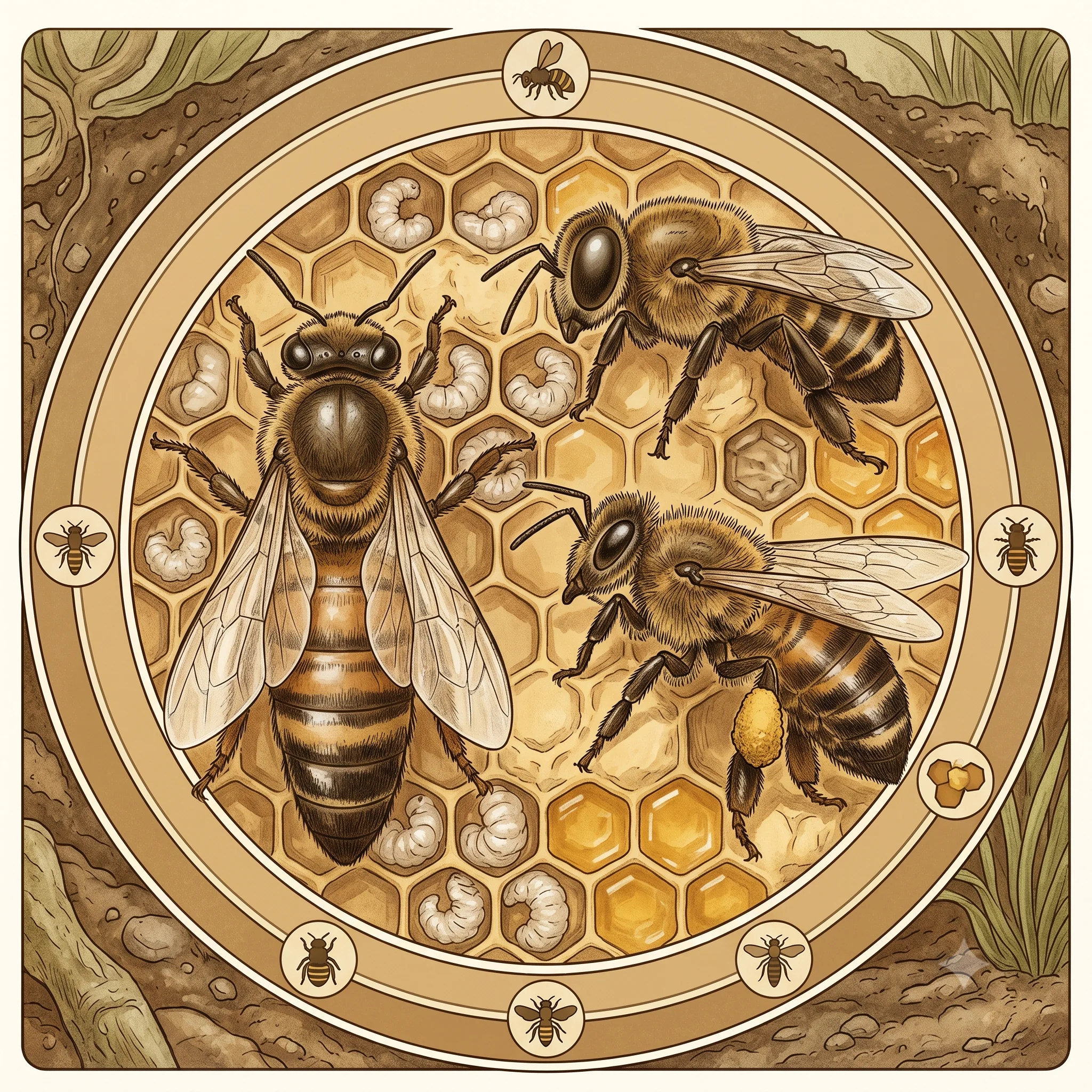
A honey bee colony is like a superorganism that can range from 30 thousand to 60 thousand individuals. This is not a metaphor; it really survives through collective behavior more than through individuals one by one. The queen produces eggs; the workers collect food, build the nest, care for the larvae, ventilate and mount the defense. Male bees, i.e. drones, mainly have the role of mating.
The queen appears to be at the center of the colony, but thinking of her as a leader who “rules” on her own is wrong. More accurately, the colony produces, feeds and keeps the queen alive according to its needs. The workers’ tasks, on the other hand, change with age: young individuals handle cleaning and feeding tasks inside the hive, while older ones go outside and collect nectar and pollen. This age-based task rotation increases the colony’s efficiency.
There is also an annual cycle. In spring the colony grows, in summer it reaches its peak, in autumn it shrinks as resources decrease, and in winter it goes into energy-saving mode. In other words, a honey bee colony works like a city that breathes with the seasons. Reading the honey bee only as an individual without understanding this structure remains incomplete.
Why is honey bee pollination ecologically critical?
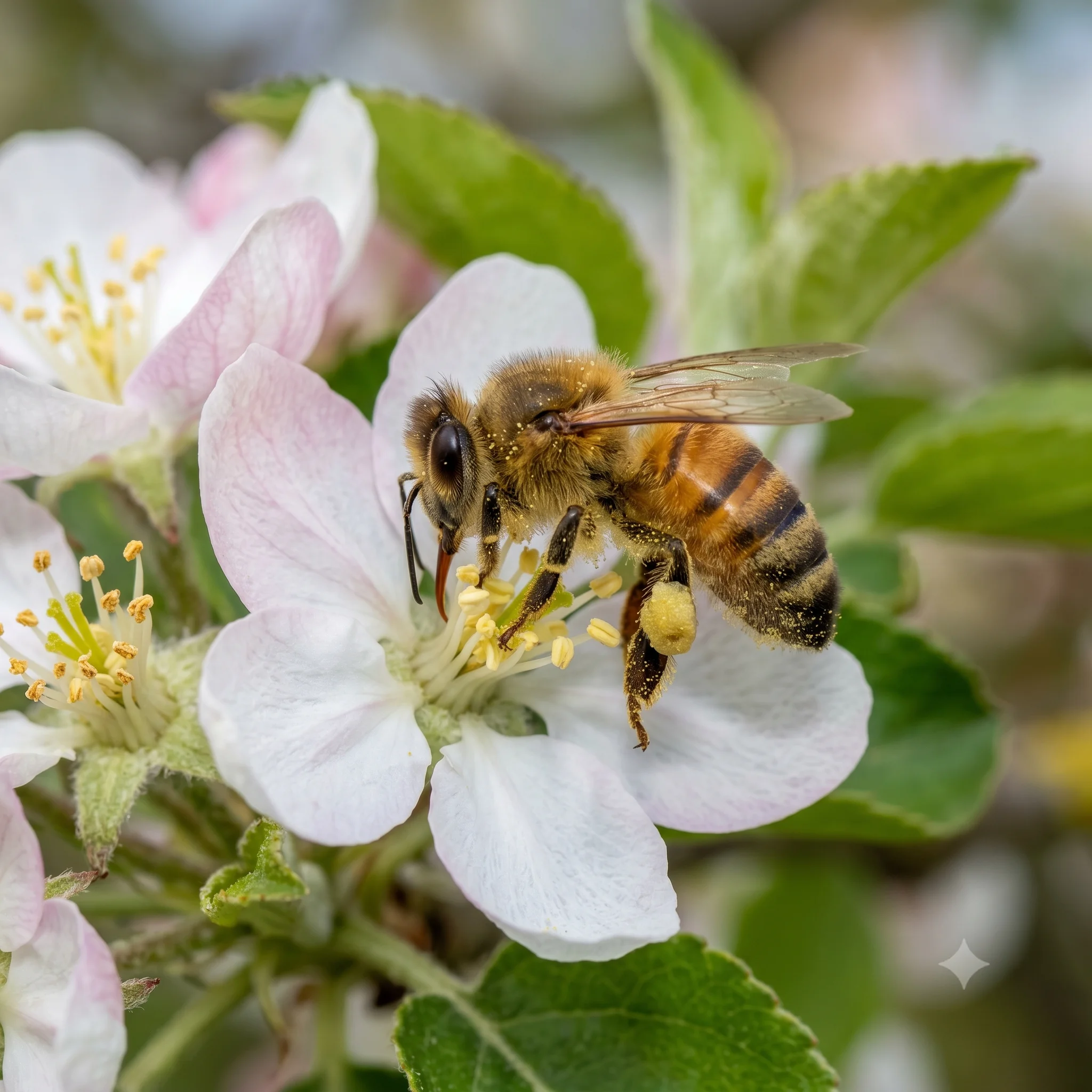
The honey bee’s greatest economic and ecological role is pollination. By carrying pollen between flowers, it helps plants reproduce. FAO data say that about 75% of edible plants depend at least partly on insect pollination; the honey bee is one of the best-known players in this chain. For fruit, vegetables, fodder plants and natural areas, this service is too vast to be fully expressed in money.
On the agricultural side, its effect is very concrete. In many crops such as apple, pear, cherry, almond, squash and sunflower, the movement of bees affects yield and quality. Without pollen transfer, fruit set weakens, seed quality drops and production fluctuates. That’s why the honey bee matters not only because it “makes honey” but also because it keeps the food chain standing.
The economic value is no exaggeration either. The global value of the pollination service is cited at the level of hundreds of billions of dollars per year; some studies put it in a band above 200 billion dollars. Even if the figure is rounded, the main message doesn’t change: without bees, the line of fruit and vegetables on the shelves narrows. In other words, the honey bee is a quiet but critical agricultural worker.
What does the honey bee dance language say?
One of the honey bee’s most striking features is its dance language. Karl von Frisch scientifically explained the abdomen-wagging dance that workers perform when they return to the hive, and shared the 1973 Nobel Prize in Physiology or Medicine. This dance is not a show but coded communication. When a bee finds a flower source, it performs a figure-8-like movement in the hive; angle, distance and sometimes quality information are carried in it.
Direction information is based on the angle relative to the sun. The bee’s angle on the vertical surface describes the food source’s relationship to the sun outside. Distance, meanwhile, depends on the duration of the waggle run: the longer the dance, the farther away the source may be. Quality is felt in the vibration and the number of repetitions. This system is one of the most complex examples of symbolic communication known in the insect world.
The critical point here is this: the honey bee is not “vibrating at random.” It is sharing information within the society. In other words, the dance language is the heart of the colony’s economy. Describing correctly where the food is matters as much as finding it. If you want to go deeper into this topic, the article Honey Bee Dance Language (Karl von Frisch and the Figure-8 Dance) is the directly related subtopic.
How does the honey bee make honey?
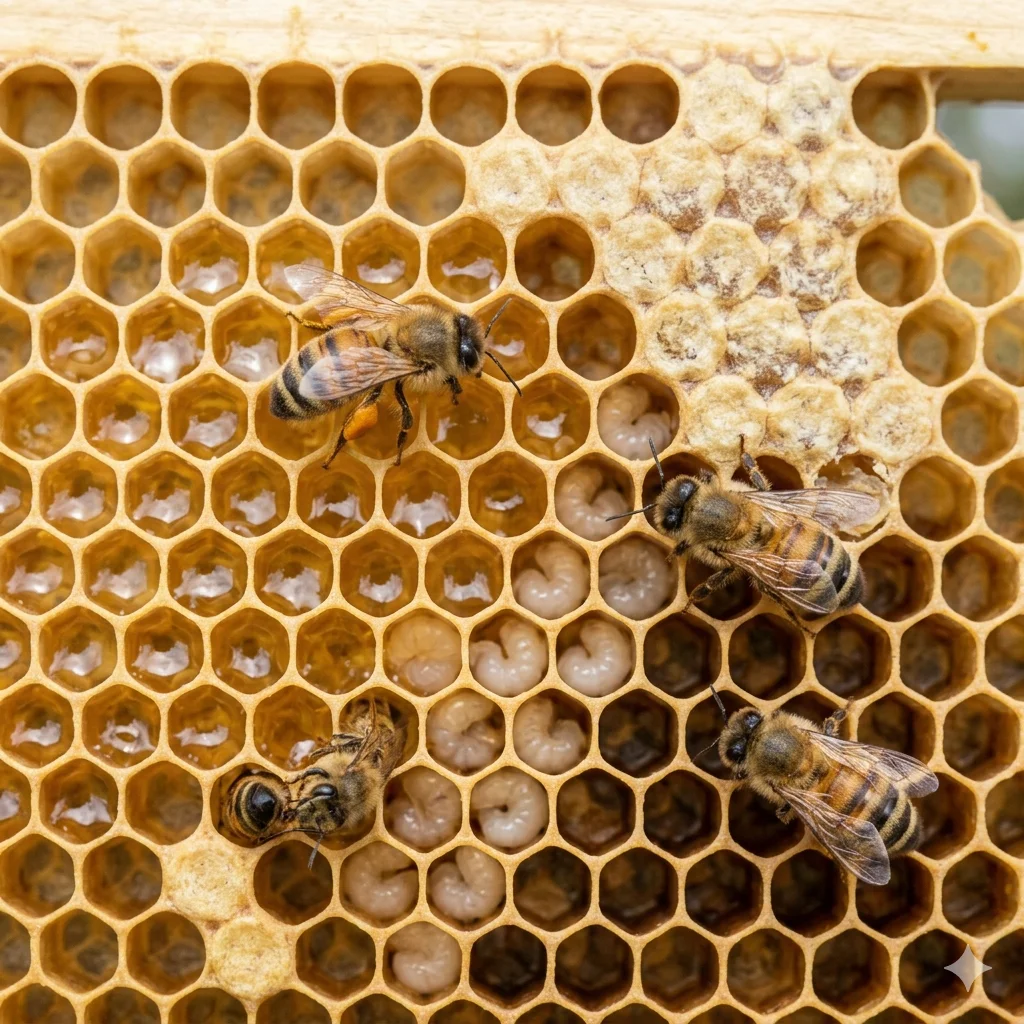
The honey bee makes honey from nectar. Workers bring the nectar they take from flowers to the hive, where enzymes come into play. Enzymes such as invertase open the path from sucrose mainly to glucose and fructose. Then the water content is lowered; nectar with a high water content turns into denser, longer-lasting honey. During this process worker bees ventilate by beating their wings, and processing continues on the comb.
It is no coincidence that the comb structure is hexagonal. The hexagonal form provides maximum volume with minimum wax. This geometry is cited as one of the most efficient architectural solutions in nature. Larval cells, honey storage cells and pollen storage areas are arranged in this layout. A hive’s annual honey production varies with conditions; in a healthy colony figures of 20-40 kg may be cited.
A worker bee’s total contribution to honey over its lifetime looks very small to human eyes. A single individual makes only a very small indirect contribution to honey production in its lifetime. This shows that honey is really the accumulation of millions of small tasks. In other words, the taste in the jar is the collective labor of the hive.
What is the honey bee sting and the health perspective?
The honey bee’s stinger is barbed, i.e. hooked. For this reason, when a honey bee stings once, the stinger and venom sac usually stay in place; the bee’s abdomen is damaged and the bee may lose its life. This shows that the honey bee takes defense to the “final point.” For most people a sting is painful but on its own is not a life-threatening emergency.
Still, the risk isn’t zero. In people with Hymenoptera venom allergy, a serious reaction, even anaphylaxis, can occur. That’s why the statement here is not medical advice but a plain field note: with a single sting, local monitoring is mostly enough; if there are multiple stings, widespread swelling, shortness of breath, dizziness or involvement of the lips and face, emergency help is needed. With symptoms like these, calling your country’s emergency number and getting a physician’s support should not be delayed.
The practical difference in removing the stinger also matters. Squeezing the stinger with your fingers can empty more of the venom sac. Scraping it out with the edge of a card, a plastic surface or a similar thin object is more correct. Then you need to keep the area clean and watch the symptoms. The honey bee teaches a lesson here too: a small detail makes a big difference.
Honey bee FAQ and related topics
Honey bee vs wasp: what’s the difference?
A honey bee is hairier, softer-looking and has a barbed stinger; a wasp may look shinier, with a smoother stinger, and larger. A honey bee generally defends its hive, whereas a wasp may be perceived as more aggressive depending on the situation.
How much honey does a hive produce?
Depending on the climate and nectar sources, a healthy colony produces roughly 20-40 kg of honey a year. In a hard season this can drop; in a good season it can rise.
What is the honey bee dance language?
The abdomen-wagging dance, i.e. the waggle dance, is a form of communication that codes the location of a food source. It carries direction, distance and quality information.
Why is the honey bee important?
Because without pollination, agriculture weakens. The honey bee is one of the quiet but indispensable actors of the food chain.
How is a honey bee stinger removed?
Remove it by scraping with the edge of a card, without squeezing it. If there are signs of allergy, get emergency support.
Alongside this main article, these links also remain relevant: Wasp vs honey bee differences — subtopic #15 and Honey bee protection — pesticide effects . Even for a reader who doesn’t care for the dance language, the colony logic and the pollination role are a big enough story on their own.
Sources for the honey bee and closing
For basic reading on the honey bee, these sources can be used: FAO Pollinators explains the role of pollination in agriculture; the Karl von Frisch Nobel page summarizes the dance language work; and the Turkish Ministry of Agriculture and Forestry (in Turkish) offers an official starting point for following beekeeping and the local agricultural context.
The closing is clear: the honey bee is not nature’s ornamental insect but a system insect. It sets up a division of labor inside the hive, carries data between flowers and contributes to keeping agriculture standing. Understanding it means understanding not just a species but the network it builds.
Related Topics
If you want to read this topic in a broader context, look at the cluster articles: Wasp: Social Structure and Relationship with Humans, Ladybug: Between Science and Folklore.