Fleas in the house are usually not a single jumping insect but a small cycle that spreads along the line of pets, carpets, sofas, beds and baseboards. The short answer is this: seeing an itchy mark on your leg is not a diagnosis on its own; you need to tell fleas apart from a species that hides in bed cracks like bed bugs and from an animal that attaches to the skin like a tick. For the logic of cutting off sources inside the home, the how to get rid of cockroaches guide shows the same principle: you target not the visible individual but the conditions it lives in.
What are fleas in the house?
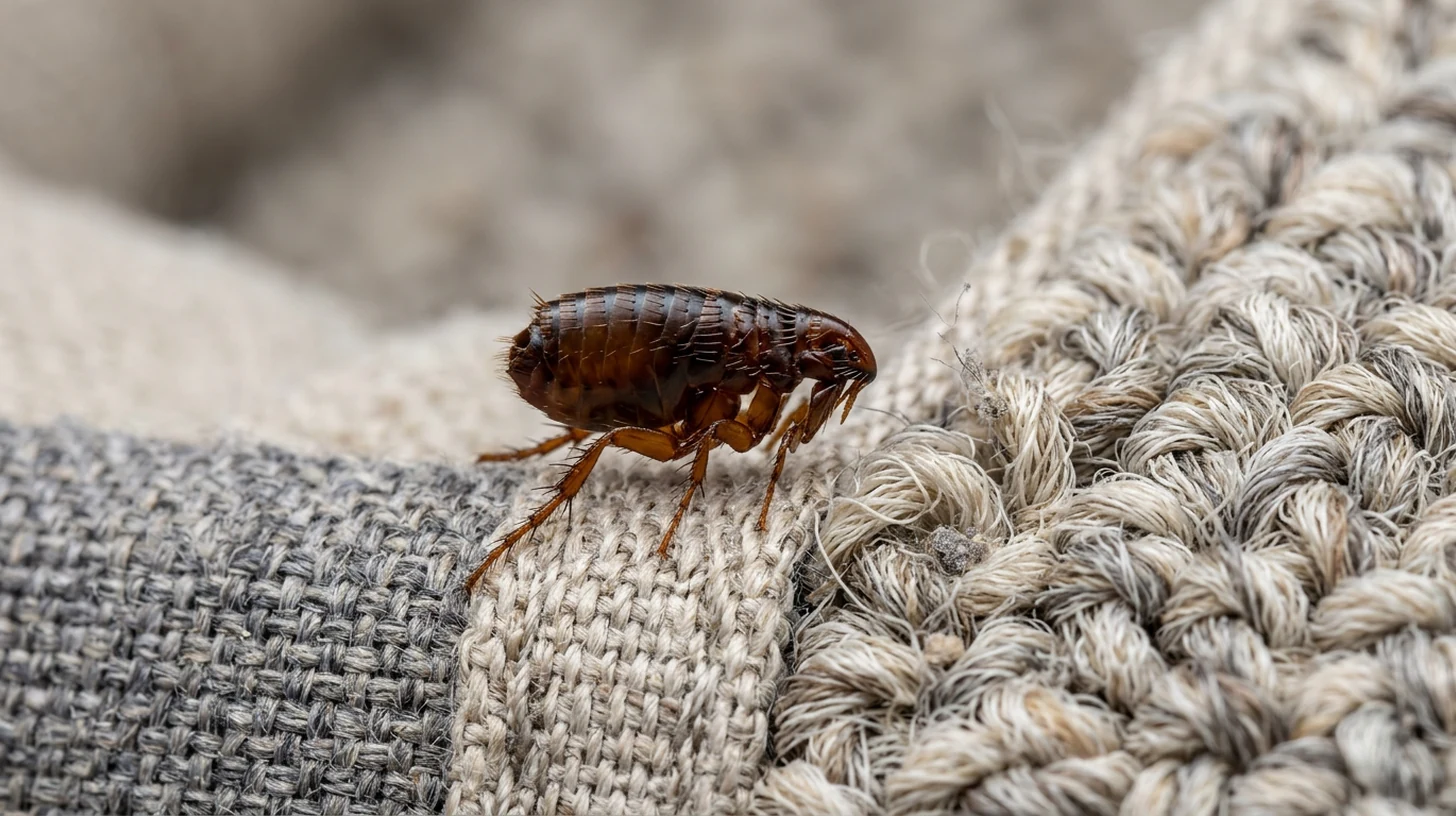
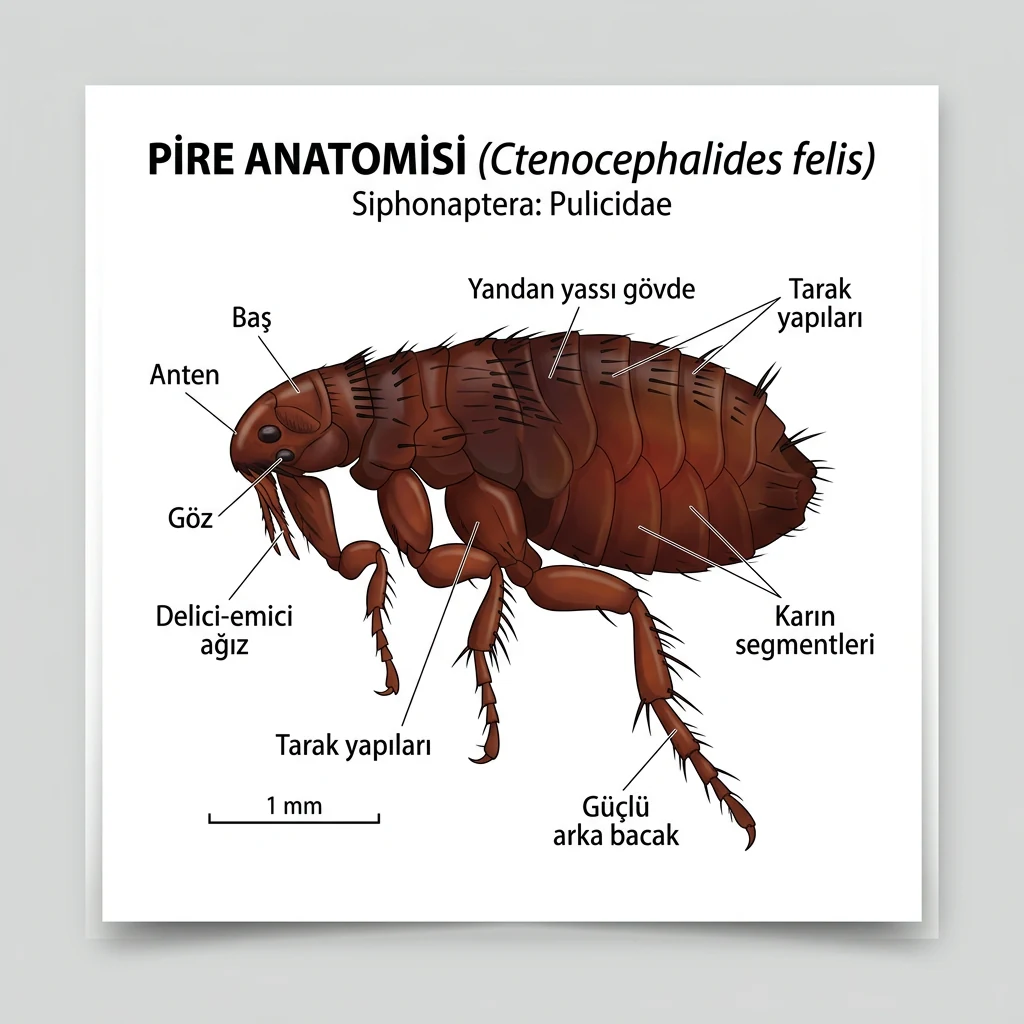
When people talk about fleas in the house, they most often mean the cat flea, scientific name Ctenocephalides felis. Although it is called the cat flea, it is also very common on dogs and can bite people too. Fleas are wingless, laterally flattened insects with strong hind legs, belonging to the order Siphonaptera. Because of their jumping ability, they seem to appear and disappear in a room in an instant.
The adult flea is small; it usually looks dark brown or close to black. It has a flattened body suited to moving through fur. The movement seen with the naked eye in the home is usually the adult stage. The real problem, however, is not only in the adult. The egg, larva and pupa stages can remain in carpet fibers, in the pet bed, under the sofa or along the baseboards.
How can you tell you have fleas in the house?
A sign of fleas cannot be read from a skin mark alone. A bite mark can be confused with mosquitoes, bed bugs, allergies or other skin problems. A more reliable reading is to assess the human symptoms together with the findings in the home and on the pet.
The practical signs are these:
- Small, itchy red bumps on the ankles, calves and legs.
- Frequent scratching, biting at the base of the fur or restlessness in a pet.
- Seeing dark specks jumping when you walk on the carpet in white socks.
- Black fecal particles like grains of black pepper in the pet bed.
- Recurring bite complaints under the sofa, at carpet edges and around the bed.
Fleas jump; bed bugs don’t. Ticks attach to the skin; fleas feed for a short time and move away. Cockroaches are more connected with the line of food and moisture; with fleas, the main line is the blood meal, the pet’s resting area and textile surfaces.
Why does the life cycle matter?
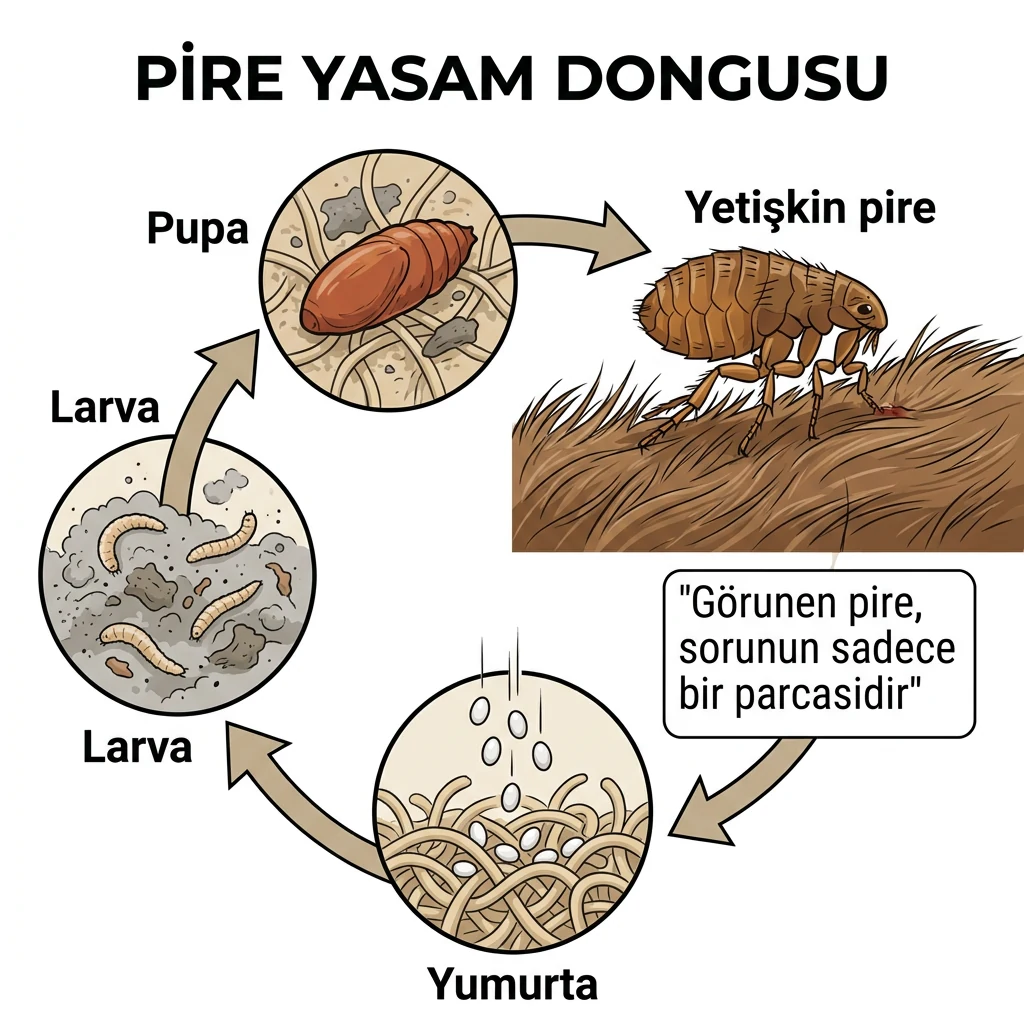
The reason flea control seems difficult is the life cycle. The cat flea goes through egg, larva, pupa and adult stages. The adult flea feeds on blood; the eggs usually fall off the animal into the surroundings. The larvae develop in carpet fibers, in the dust under the bed and around the pet bed. The pupal stage is better protected; that is why killing only the visible adult is not enough.
The UC IPM source states that vacuuming and textile cleaning inside the home should be concentrated especially in the areas where the pet rests. The same source explains that some treatments target the larvae but that new adults can continue to emerge from pupae for a while. That is why the “I sprayed once, it’s over” approach is weak. Follow-up is needed.
Where do fleas in the house come from?
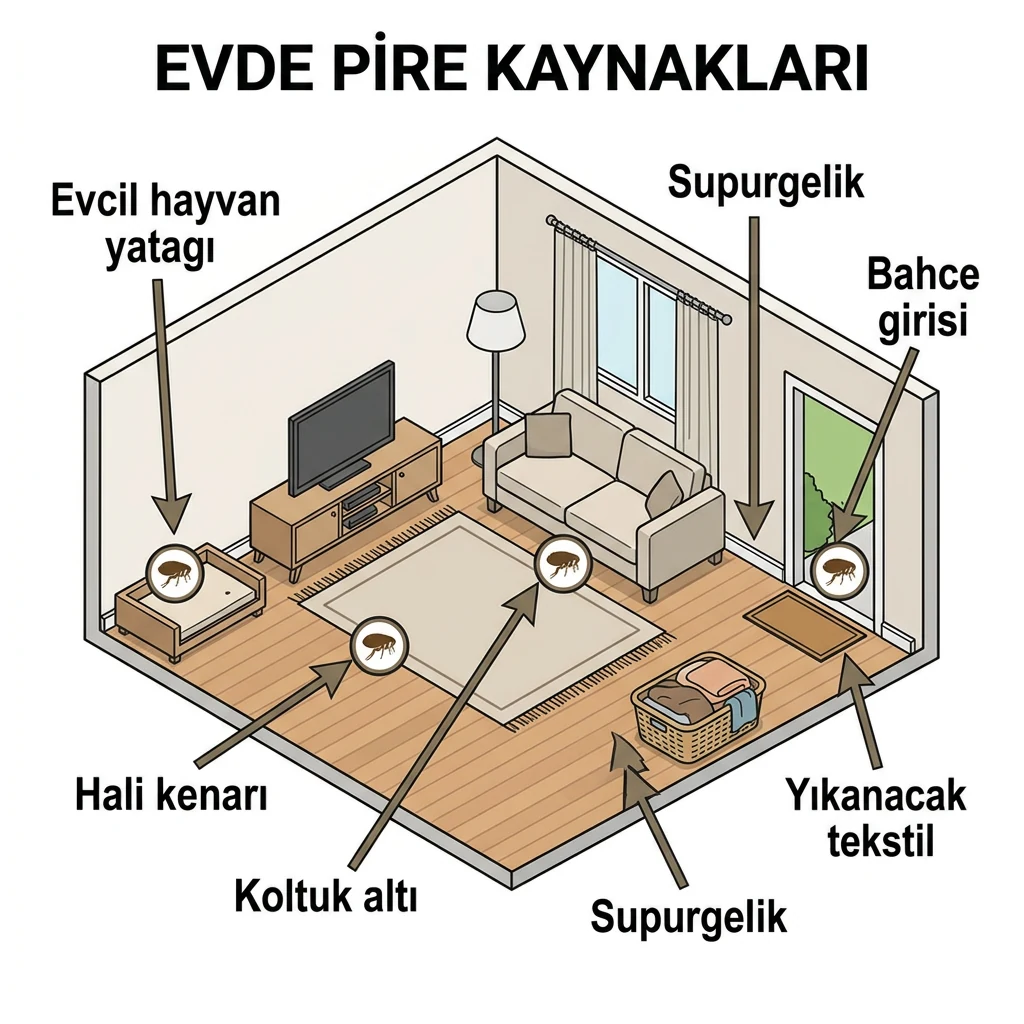
The most common source is the pet. A cat or dog can pick up fleas outdoors, in the apartment stairwell, in the garden or wherever it comes into contact with other animals. Flea eggs then drop off onto the places where the pet lies. For this reason, checking only the animal and neglecting the house, or vacuuming only the house and neglecting the animal, are both half-solutions.
There can be fleas even in a home without pets. A previous tenant may have kept a cat or dog. A stray cat may be sleeping in a common area of the apartment building. In a house with a garden, hedgehogs, mice, squirrels, stray cats or dogs may pass through. Second-hand carpets, sofas, beds or textiles also carry a risk. Because the pupal stage can stay dormant for a while, a “no pets but fleas” situation can be seen in a newly moved-into home.
Health perspective
Risk
A flea bite causes a small itchy bump in most people. It is most often noticed around the ankles and legs; to understand the itching mechanism in insect bites, the why mosquito bites itch guide also offers a useful comparison. The more you scratch, the higher the risk of skin irritation and secondary infection. In some sensitive people, more marked redness and swelling may be seen. In pets, flea allergy dermatitis, hair loss, restlessness and intense itching may be seen.
As topic-specific prevalence data, the Datça study from Türkiye reports the following: 73.7% of the fleas collected from owned dogs were Ctenocephalides felis, that is, the cat flea described in this article. This figure is not a rate of human bites in the home; it shows the distribution of flea species on dogs in the field.
Fleas are vectors associated with some disease agents; but not every flea seen in the home automatically means serious disease. The right line is this: don’t panic, but cut off contact. If there is a fever, a widespread rash, pus, rapidly increasing redness, shortness of breath, or a severe reaction in a child, you need to see a health professional. This article is an environmental control guide, not a substitute for diagnosis and treatment.
Prevention and control
The main way to reduce the health risk is not to interpret bites one by one but to break the cycle. If there is a pet, you need to use the product recommended by the veterinarian; choosing drops, a collar or a spray at random is not right. Cat and dog products are not interchangeable. In particular, some products containing permethrin can be dangerous for cats; that is why the label and the veterinarian’s guidance are important.
First control steps at home
Flea control runs on three fronts on the same day: the pet, textiles and floors. If you neglect one, the problem comes back.
- Check the pet and set up a plan with a veterinary product.
- Wash the pet bed, blankets, covers and washable textiles on a hot cycle.
- Vacuum carpets, under the sofa, baseboards, bed edges and the area where the pet rests.
- Put the vacuum bag or canister contents in a sealed bag and take it out to the outdoor trash.
- Don’t skip the gaps between sofa cushions and under the bed base.
- If there is a spot where stray animals sleep in the garden, on the balcony or at the building entrance, manage this line.
- Monitor for newly emerging adults for at least two weeks.

Pesticides, bait and the professional threshold
In flea control, the bait logic used for cockroaches or ants does not work. This is because fleas feed on blood; they have no social colony behavior of taking bait and carrying it back to a nest. That is why expecting a “flea bait” is wrong. The right approach is to target the adults on the animal and the environmental stages inside the home together.
If a pesticide is to be used, nothing is done without reading the product label. The target pest, the application area, the waiting period, and child and pet safety must be clear. Spraying aerosols at random creates a risk, especially in homes with respiratory sensitivity and next to food and water bowls. With carpet and sofa products too, the safety of children, cats, dogs, birds and aquariums should be considered one by one.
The threshold for professional support is as follows:
| Situation | What does it mean? | The right move |
|---|---|---|
| New fleas are seen despite 2 weeks of regular cleaning and a veterinary plan | Pupal emergence or the source may be continuing | Ask for professional pest control |
| No pets, but bites and jumping insects persist | Old furniture, a previous tenant, the apartment building or the garden may be the source | Investigate the source at the scale of the building |
| Activity in more than one room at the same time | The spread has gone beyond a single point | Make an area-based plan |
| There are children, a pregnant person, someone with asthma or multiple pets | Chemical risk management is more delicate | Use labeled products and professional support |
In apartment buildings, the issue may not be a single apartment. The basement, shafts, a shared garden, a pet food spot outside the door and places where stray animals sleep can increase flea pressure. Vacuuming a single apartment is a good start; but if the source is in a common area, the problem comes back.
Common mistakes
The first mistake is focusing only on the visible flea. The adult flea is visible; the egg, larva and pupa are usually not. The second mistake is treating the pet and neglecting its bed, blanket and the carpet. The third mistake is spraying chemicals at random and then giving up vacuuming and washing.
The right order is calmer: identification, source, cleaning, veterinarian, follow-up. Flea control in the house is not a one-move battle but a job of regular follow-up over a few weeks. That is also the practical takeaway of understanding fleas: the jumping adult is just a warning flare; the real fight is cutting the cycle that remains in the quiet corners of the home.