Short answer: the firefly is a group of insects belonging to the family Lampyridae within the order Coleoptera. In everyday speech it is called an insect, and scientifically it is an insect too. Its most special feature is that it can produce its own light in the dark and uses this light in mating communication. When we say firefly, we should think not of a single creature but of an old group made up of more than 2000 species; its origins go back roughly 100 million years. This article is a general guide; for the detail asked about most often in daily life, you can look at our article Why Do Fireflies Glow? The Secret of Bioluminescence.
What is a firefly?
The firefly is a creature that is active at night and can glow thanks to the light organ in its body. Its most familiar feature is bioluminescence; that is, it produces light by chemical means. The firefly is not a “fly”; it is a special group within Coleoptera. Its behavior changes across the larval, pupal and adult stages, but the bond it forms with the night is never broken.
When you read this in the field, one thing becomes clear: if there are fireflies, the environment is usually humid, vegetated and close to dark at night. Because they write their messages with light. Where there is light there is a message; where there is a message, mate finding and communication within the species work.
The main firefly species seen in Türkiye
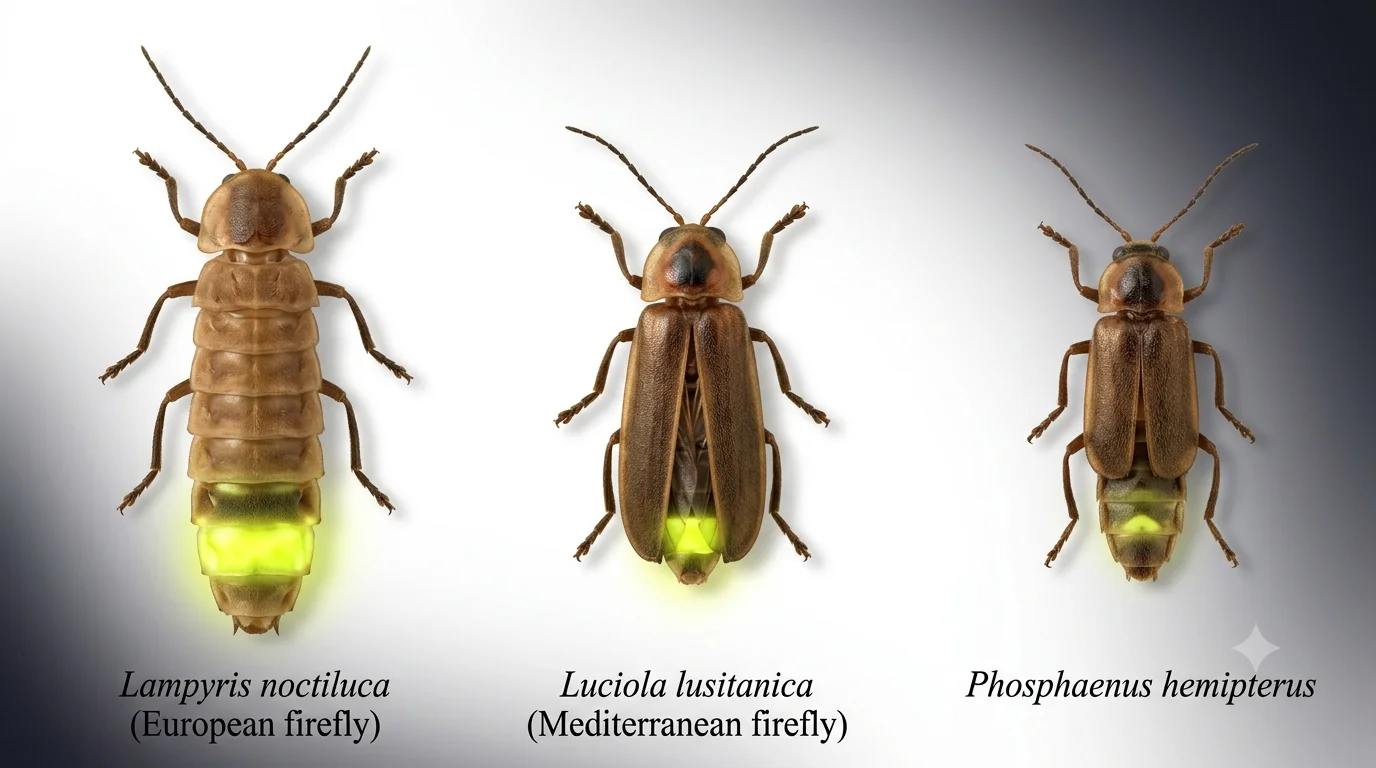
In Türkiye there are three names mentioned most often in the field: Lampyris noctiluca, Luciola lusitanica and Phosphaenus hemipterus. They do not behave the same way; one is more visible on the ground, one flies more, and one stays less bright. In other words, saying “I saw a firefly” is not enough; species, location and flash shape are read together.
Lampyris noctiluca
Lampyris noctiluca is known as the European firefly or the glow-worm. Its females have no wings, or the wings are greatly reduced; it draws attention among low plants close to the ground. It gives off a bright greenish light.
Luciola lusitanica
Luciola lusitanica is one of the species mentioned in the Mediterranean belt and known mainly for its flying individuals. It makes a short and fast flash pattern; the light does not stay on for long.
Phosphaenus hemipterus
Phosphaenus hemipterus is described as a species seen at lower brightness that moves about on the ground, in the low plant layer. It is easy to overlook; this can also increase the gaps in records.
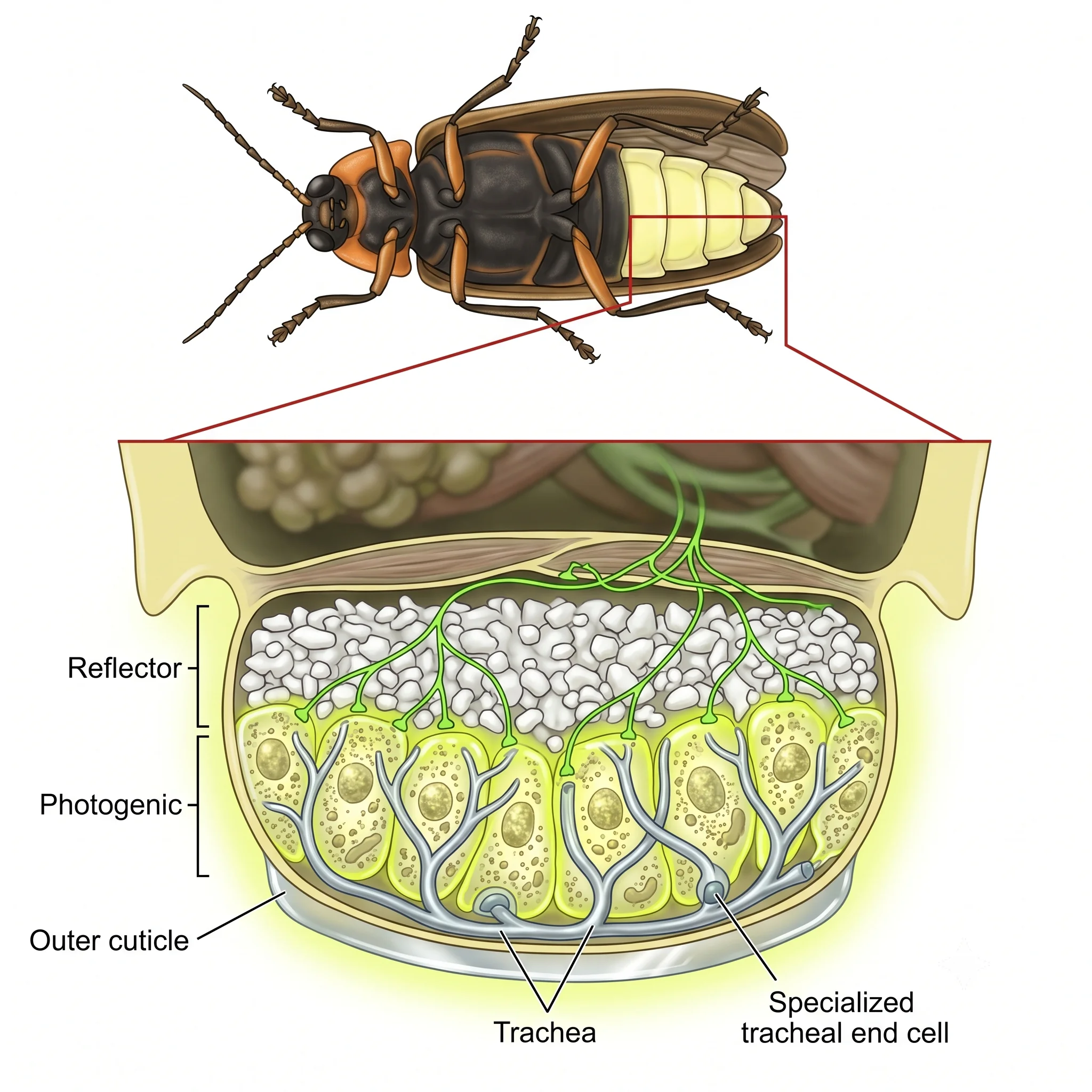
The science of firefly bioluminescence
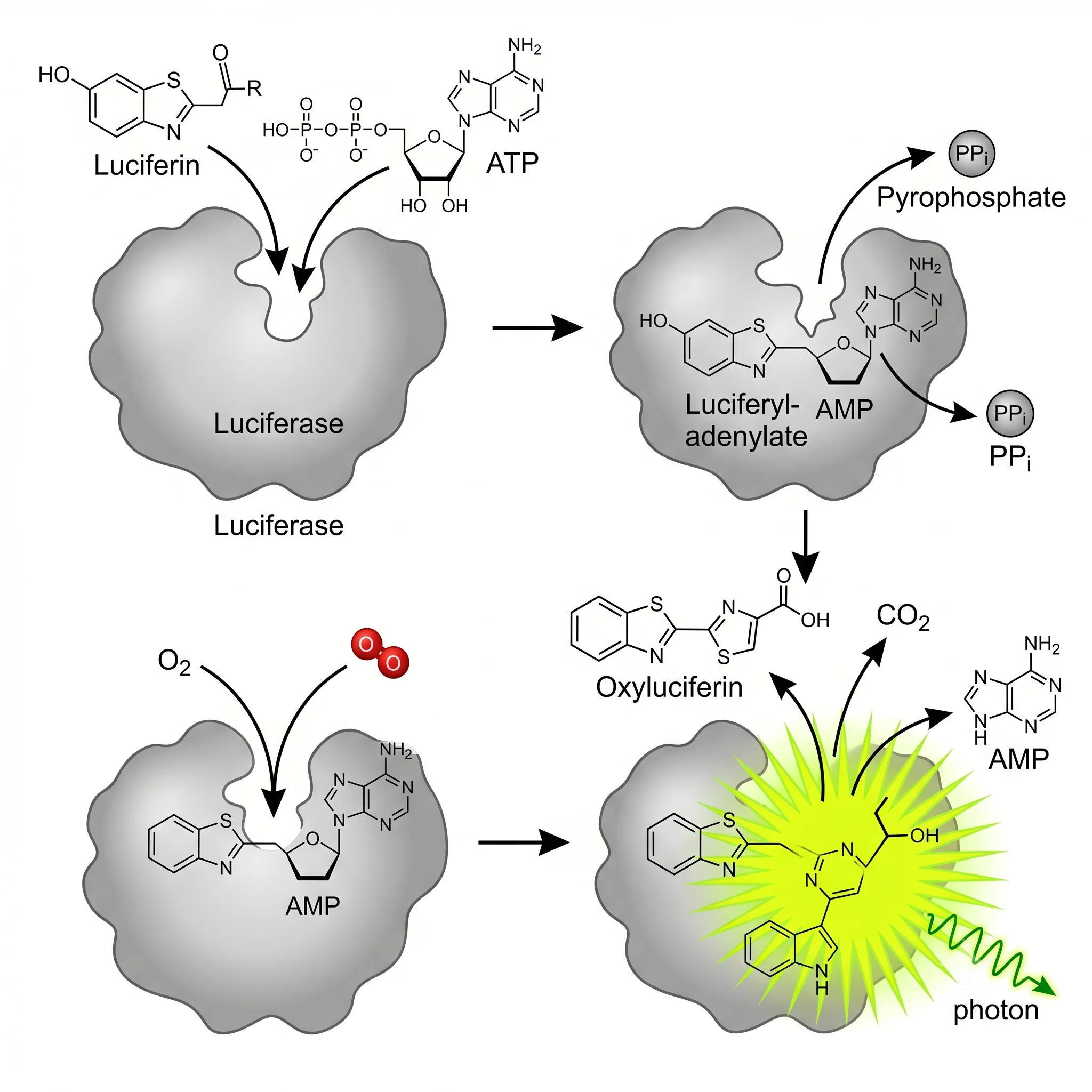
The key to understanding firefly light is the luciferin and luciferase reaction. When the luciferin molecule, the luciferase enzyme, oxygen and ATP energy come together, light can be produced. This process works very efficiently; heat loss is low, which is why it is called “cold light”. Luciferase can also be used as a medical biomarker.
The matter of color is interesting too. Depending on the species and tissue structure, green, yellow-green or turquoise-like tones can be seen. This difference in color is the result of ambient light, pigments and biochemical settings. Putting firefly light in the same category as an LED would be incomplete; because here the point is not only brightness but a direct means of communication. This is one of nature’s clever systems.
Firefly life cycle
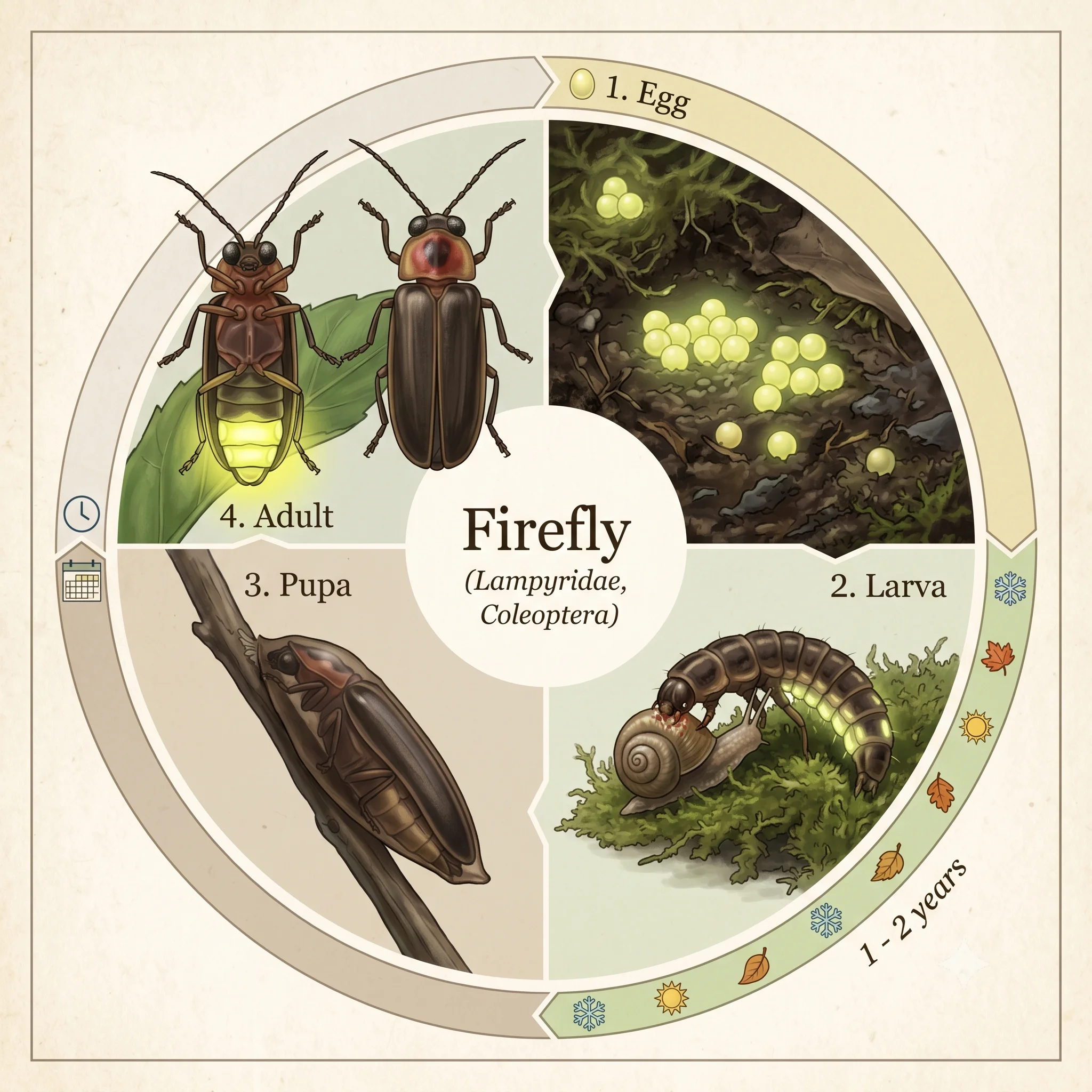
The firefly goes through complete metamorphosis. That is, it has egg, larva, pupa and adult stages. The longest and busiest part is usually the larva. The larva can live for about 1-2 years; during this time it feeds on snails and other small invertebrates. This point is important: behind the image of the glowing firefly there is actually a long predatory larval period.
The pupal stage resembles the quiet part of the transformation. Looking from the outside you would think nothing is happening, but inside the tissues are being rebuilt. The adult stage, by contrast, is very short; in most species it is around 1-2 weeks. In this period energy goes mostly to mating. In many species the adult’s mouth is greatly reduced, and feeding is almost absent. In other words, the adult firefly is on stage not to live a long life but to carry the species forward.
This life cycle also explains why humid and sheltered areas are important. The larva must be safe within the soil, the leaf litter and soft ground. So if the habitat is degraded, not only the glowing adults but also the silent larval years disappear.
The firefly flash language
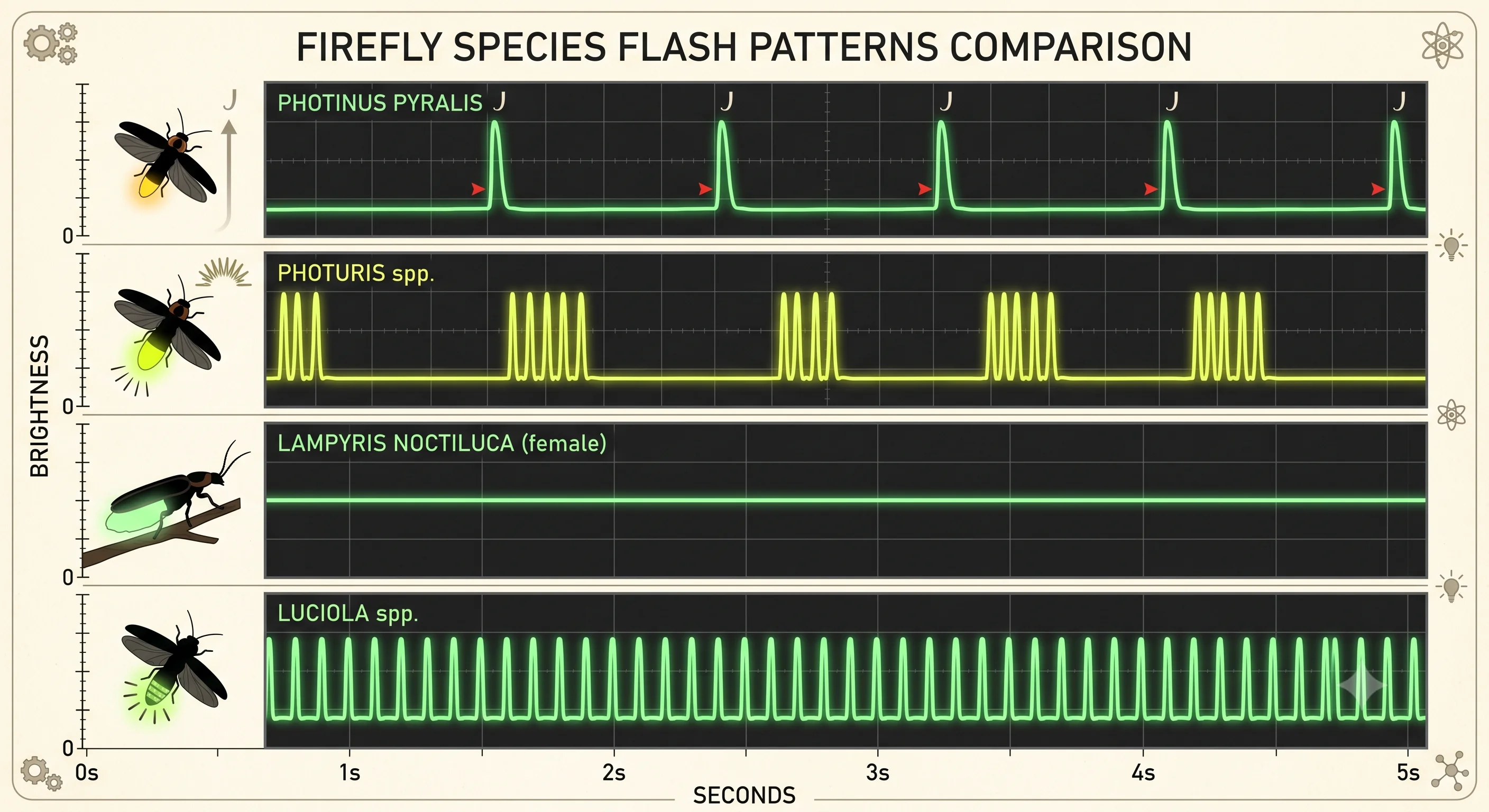
The firefly flash language is one of the cleanest examples of communication in nature. Male individuals fly in the air and send a species-specific flash pattern. In some species there is a single flash, in some a double flash, in others longer silences and intervals. The female waits close to the ground or on a plant and gives a reply suited to her own species. This may look like a simple romantic scene, but it is actually a many-layered selection mechanism.
Each species’ flash signature is different. Thanks to this, different species living within the same family can find mates without confusing each other. For the firefly, light is not decoration but protocol. The wrong rhythm means the wrong answer. That is why light pollution is a big problem; because artificial light in the background disrupts these delicate signals.
In some species, females can also attract the males of other species. The “femme fatale” behavior described in the Photuris group is given as an example of this; the female can use males of other species as prey. Such behaviors show that the firefly world is harsher than you might think. A small creature, but the game it plays is serious.
The firefly and its relationship with humans
In human memory the firefly is not a single object. It takes its place as childhood summer nights, a light glowing in a jar, a quiet miracle in the garden. The hotaru festivals in Japan show its strength in culture. That in some regions of Anatolia it is called by names meaning “oil-lamp bug” is a reflection of the same bond in the local language. In folk speech the firefly is special; because it enters into the emotional bond that humans form with the night.
On the science side, this creature is used in laboratories thanks to luciferase research. On the other side there is tourism; in some warm and humid regions, firefly watching tours are attractive to people. But there is a fine line here: observation must not turn into pressure. If firefly numbers are low, disturbing the environment just for a photo is not wise. The right relationship is to look and leave, to watch without interfering.
In this context the firefly gives people a lesson in both science and gentle attention. It reminds us not of the desire to see everything better in the dark, but of learning to stay quiet in the right place.
Why are fireflies declining?
The concern about declines in firefly populations is serious. One of the biggest causes is light pollution. Because the flash language needs darkness; when the night’s background fills with artificial light, the signal is lost. The second big cause is habitat loss. When humid areas, forest edges, reed beds and leafy ground are degraded, the larval period is disrupted. The third heading is pesticides. The larval and egg stages can easily be affected by a chemical load.
Conservation for fireflies doesn’t have to look like a big project. Sometimes leaving a corner of the garden dark, reducing outdoor lights at night and preserving the natural grass structure is a good enough start. Don’t clear away dry grass completely, don’t clean everywhere as if it were concrete, don’t switch on night spotlights needlessly. These may look like small decisions, but they make a difference for fireflies. The short message is this: darkness is not the enemy; for this species it is living space.
Firefly FAQ
Why do fireflies glow?
They glow thanks to the luciferin and luciferase reaction. This light is used mainly in mating communication. In other words, it is not decoration but a message.
What do adult fireflies eat?
In most species adult feeding decreases or disappears; in some species the mouthparts are greatly reduced. The larval stage, by contrast, is predatory and feeds on small invertebrates.
In which season can I see fireflies in Türkiye?
Generally your chances increase between May and August. Warm, humid and dark evenings are the most suitable time.
Are fireflies endangered?
On a global scale there are populations under pressure. Light pollution, habitat loss and pesticides are the main threats.
Is it harmful for a child to put a firefly in a jar?
A short and controlled observation is possible; but keeping it shut in for a long time is not right. Humidity, air and time should be limited, and then it should be released.
Firefly related topics and sources
This article sets up the main framework. For detailed subtopics, you can continue to these pages:
- Why Do Fireflies Glow? The Secret of Bioluminescence — subtopic #17
External sources also keep the reader on solid ground:
- IUCN Red List: https://www.iucnredlist.org/
- Britannica, Firefly: https://www.britannica.com/animal/firefly-insect
- TÜBİTAK Science and Technology (in Turkish): https://bilimteknik.tubitak.gov.tr/
As source notes, Lewis’s book Silent Sparks: The Wondrous World of Fireflies, Firefly Watch citizen science data and Lampyridae reviews give background to this topic. The conclusion is simple: the firefly is an insect that belongs both to science and to summer nights.
Related Topics
If you want to read this topic in a broader context, look at the cluster articles: Ladybug: Between Science and Folklore.