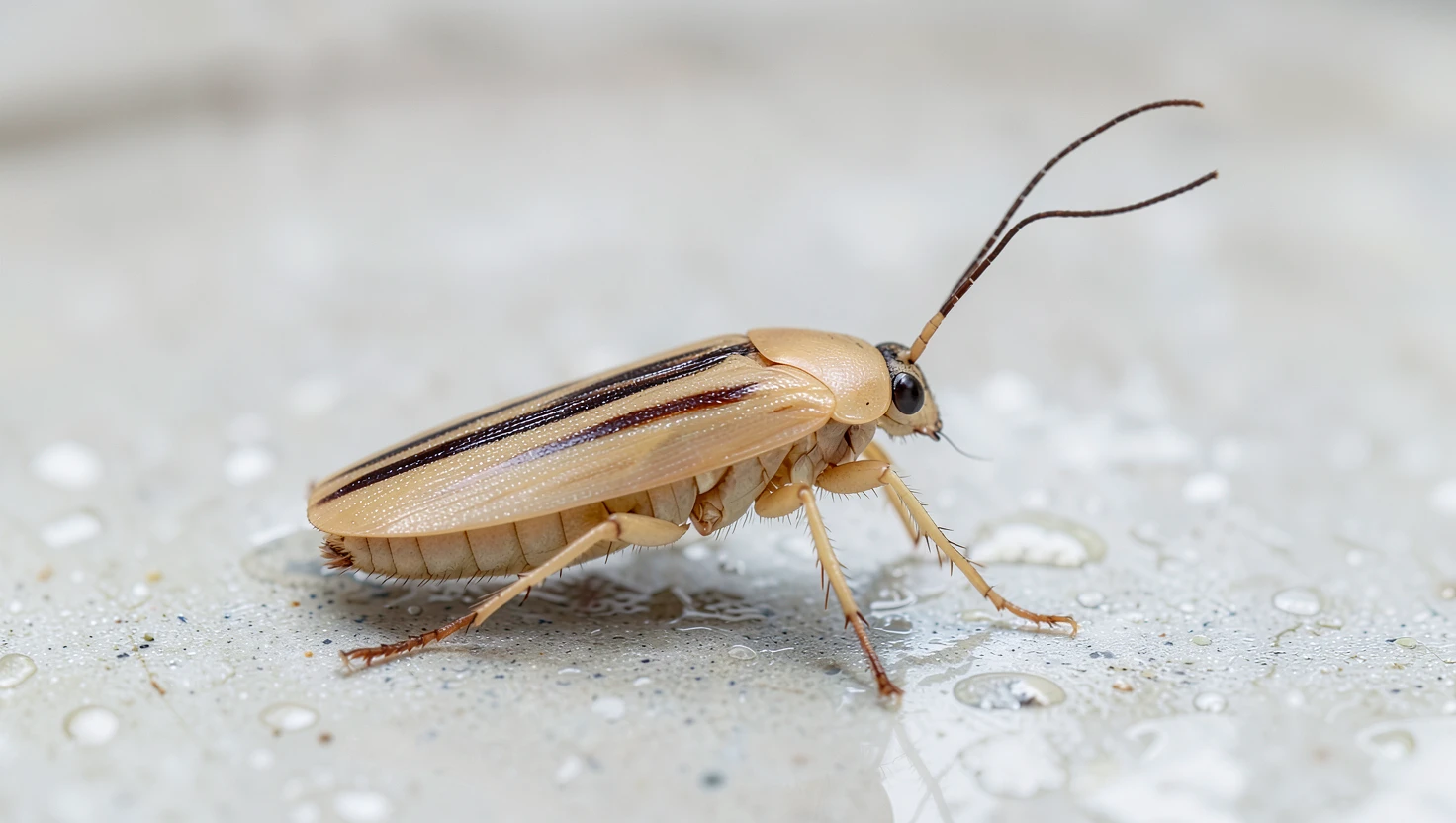
The cockroach is an insect group belonging to the order Blattodea, with more than 4500 species worldwide. Most of the species seen indoors have adapted to human settlements and prefer warm, damp and hidden areas. The flat body, long antennae and nighttime activity also match the everyday image of a “bug”. That’s why the word cockroach doesn’t bring a single species to mind; the small German species seen in the kitchen and the larger Oriental species found in the basement belong to the same group, but their behavior and appearance differ. Knowing the species difference reduces misidentification and makes correct interpretation easier. This article is a general guide; for the detail people ask about most often in daily life, see our article Why Do Cockroaches Come Into the House? Food, Moisture, Warmth.
What Is a Cockroach?
The cockroach is an insect group belonging to the order Blattodea, with a flat body, long antennae and mostly nocturnal activity. The thread-like antennae on the head constantly scan the surroundings; the flat body makes it easy to squeeze into narrow cracks. The forewings are more prominent in some species, but most of the species seen in everyday life move by running. In everyday language, “bug” often refers to this creature; in scientific classification, however, the name cockroach describes a broad order rather than individual species. Blattodea is a group closely related to termites — according to post-2007 molecular classification, termites are now a subgroup of the order Blattodea (Inward et al. 2007); this detail is taxonomically important, but it is not the first thing you look at when identifying one indoors. In practice, what matters is that it comes out at night, likes to hide and does not move toward strong light. That’s why it is often seen in kitchens, bathrooms and storage areas. It moves quickly in narrow spaces and quickly follows the smell of moisture and food. Its appearance is familiar, but its behavior is often hidden; this makes it one of the insects people notice most inside the home.
Species Found in Türkiye: 2 Common + 2 Less Common
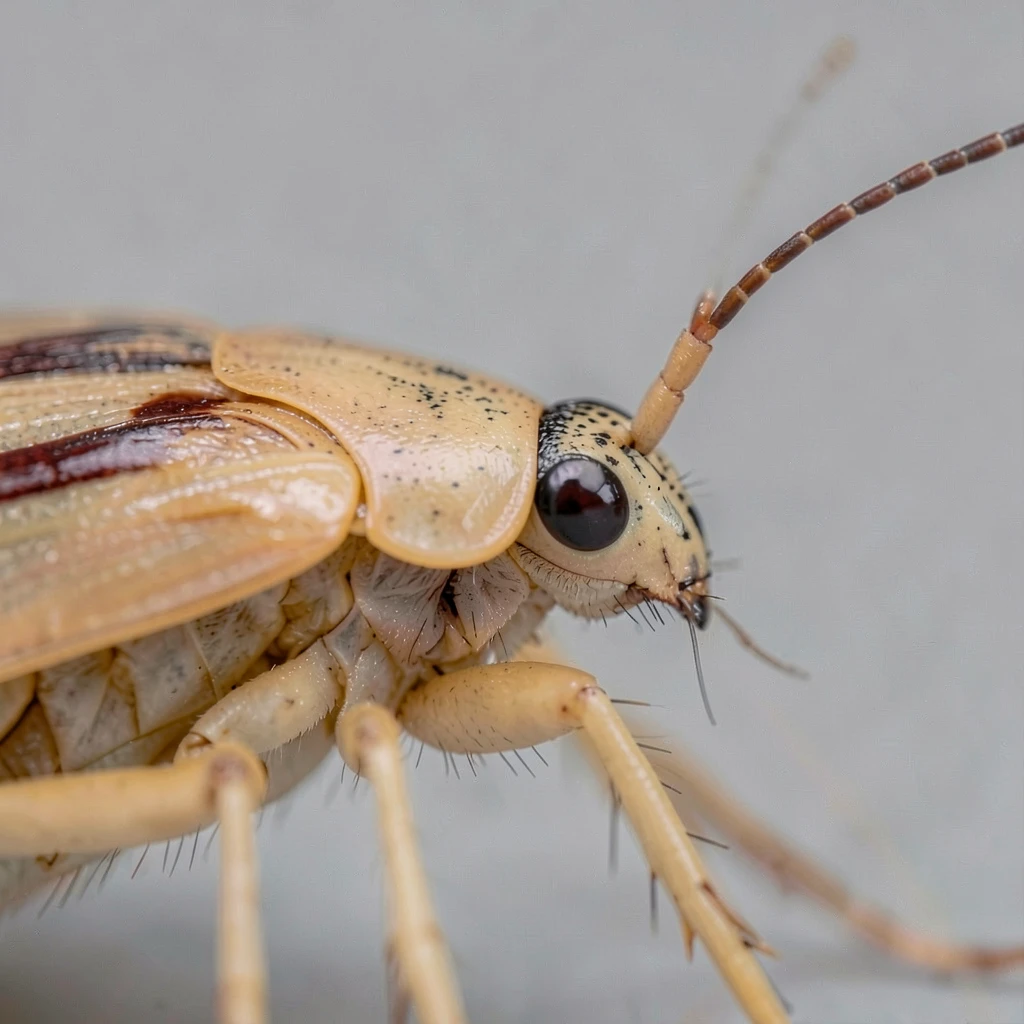
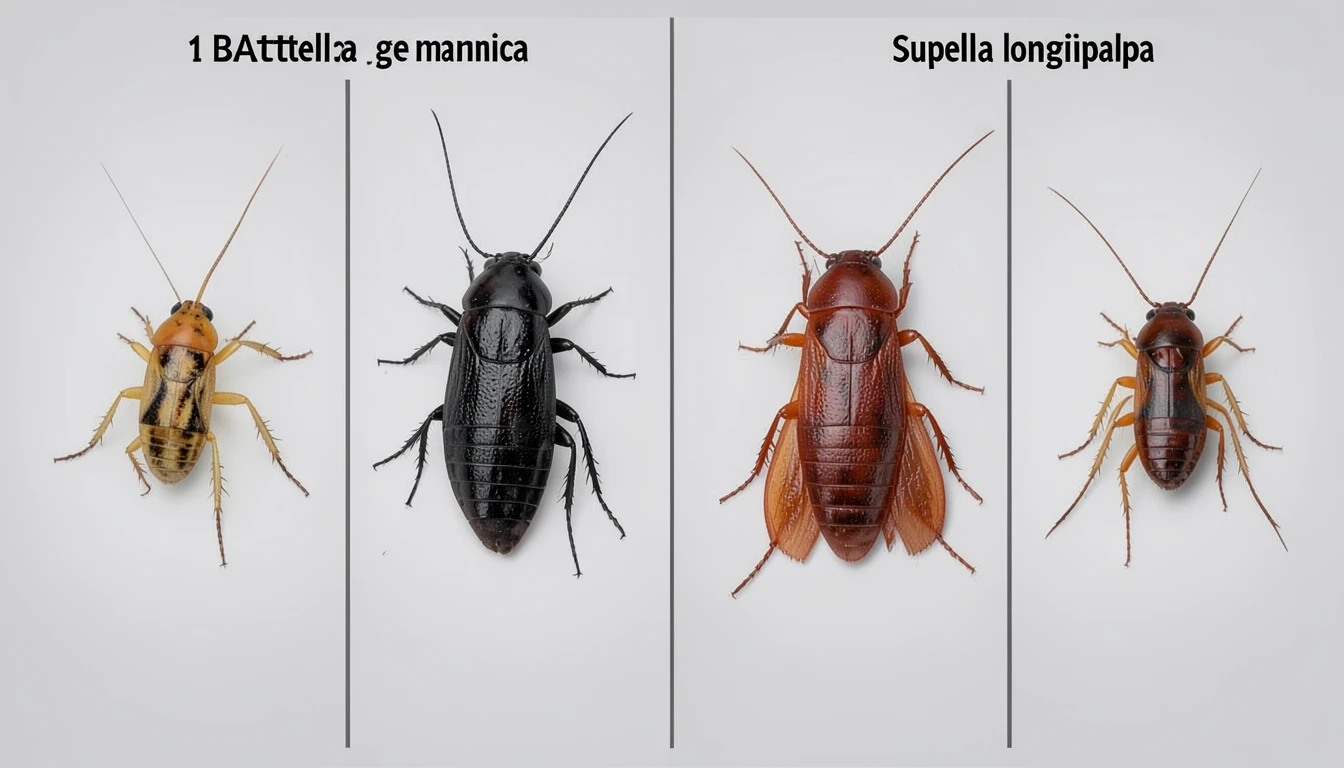
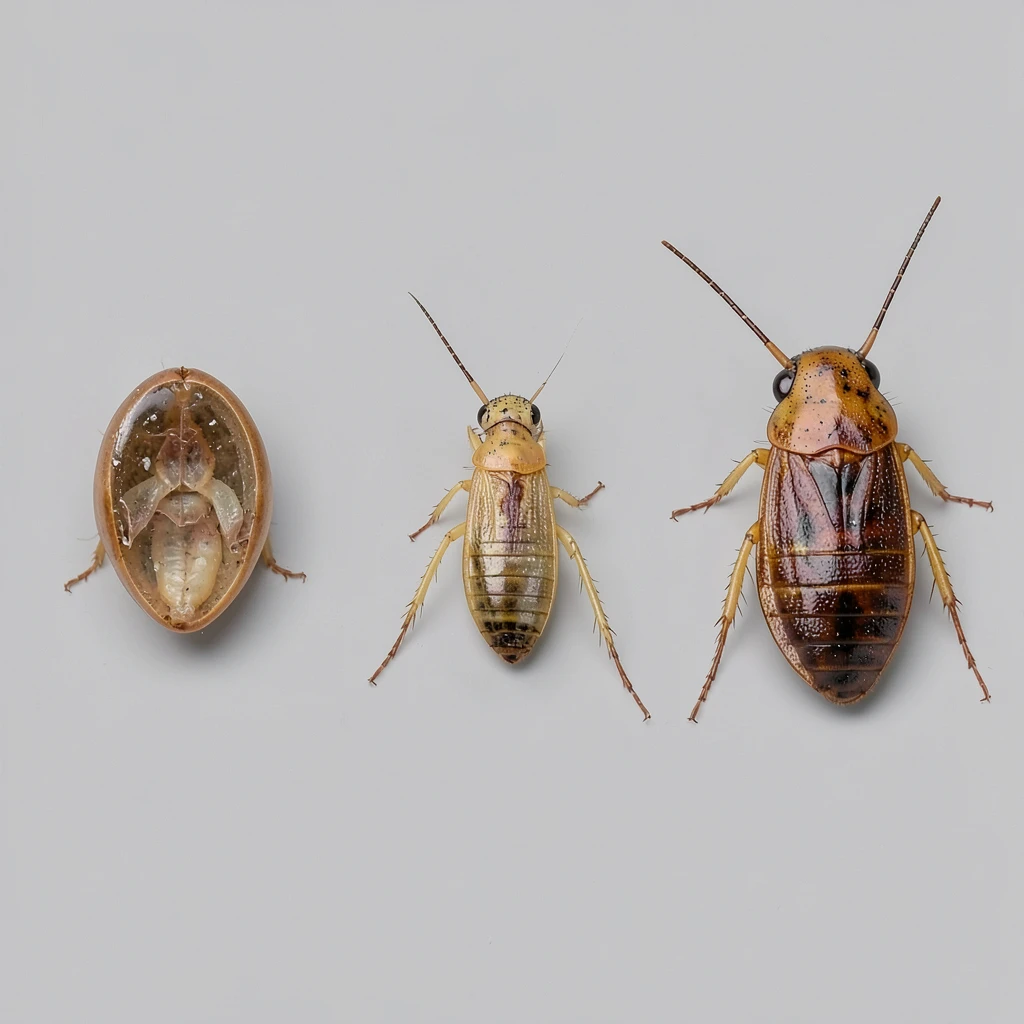
Four species stand out as the most commonly seen in and around homes in Türkiye: the German, Oriental, American and brown-banded species. They can be found in the same habitat, but their size, color, movement and hiding preferences differ. Species are told apart mainly by the lines on the pronotum, the band pattern, body color and length. The species most often encountered indoors is the German cockroach, with its small, light-colored build; the larger, darker species are generally associated with basements, sewers, storerooms or damp areas. The short breakdown below gives a framework good enough for identifying them at first glance in the field. The composite image also shows these differences together.
German cockroach (Blattella germanica)
The German cockroach belongs to the family Ectobiidae and is one of the most common indoor species. It is usually around 12-15 mm long; it is recognized by its light yellowish-brown body and the two parallel dark stripes on the pronotum. It is seen mostly around kitchens, behind ovens, inside cabinets and in appliance voids. Thanks to its small size it slips easily into cracks, so it can stay hidden out of sight during the day. It multiplies quickly in areas with warmth and food scraps. Once it settles in a home, it clings tightly to sources of water and food. In the field, this is often the first species checked for.
Oriental cockroach (Blatta orientalis)
The Oriental cockroach is a larger, dark-colored species belonging to the family Blattidae. It usually reaches 20-25 mm in length; because of its dark brown to nearly black color, it looks “tougher” from a distance. It likes damp, cool areas; under sinks, basements, drain lines and around bathrooms are typical spots. It moves more slowly than the German species but has a hardier build. Wing development can differ between females and males, so not every individual looks the same. Places where odor and moisture build up attract this species. Its presence indoors is mostly linked to infrastructure and moisture control.
American cockroach (Periplaneta americana)
The American cockroach is one of the largest common species in the family Blattidae and can grow up to 35-40 mm long. It stands out with its reddish-brown body, long legs and well-developed wings. Despite its name, it is found in many warm regions of the world; it can also be found in places such as drains, storerooms, sewers and the infrastructure of large buildings. Because it has wings, it can glide over short distances or quickly flap its wings, but this does not count as strong flight in the full sense. Because of its size, it is noticed more easily by people. Moisture, heat and dark areas are its main attractions. It is encountered especially in large, warm spaces.
Brown-banded cockroach (Supella longipalpa)
The brown-banded cockroach belongs to Ectobiidae and is a small species of about 10-14 mm. Its distinguishing feature is the light and dark bands seen on the body and wings. Unlike the German species, it adapts better to dry areas; that’s why relatively dry spots such as bedrooms, living rooms, the inside of furniture and the backs of electronic devices are also favored. It finds hiding places away from food as well; this allows it to spread into different spaces. Because it is small, it isn’t noticed at first glance, but in the right environment it can multiply quickly. The band pattern is one of the most practical clues for telling the species apart.
Biology and Life Cycle
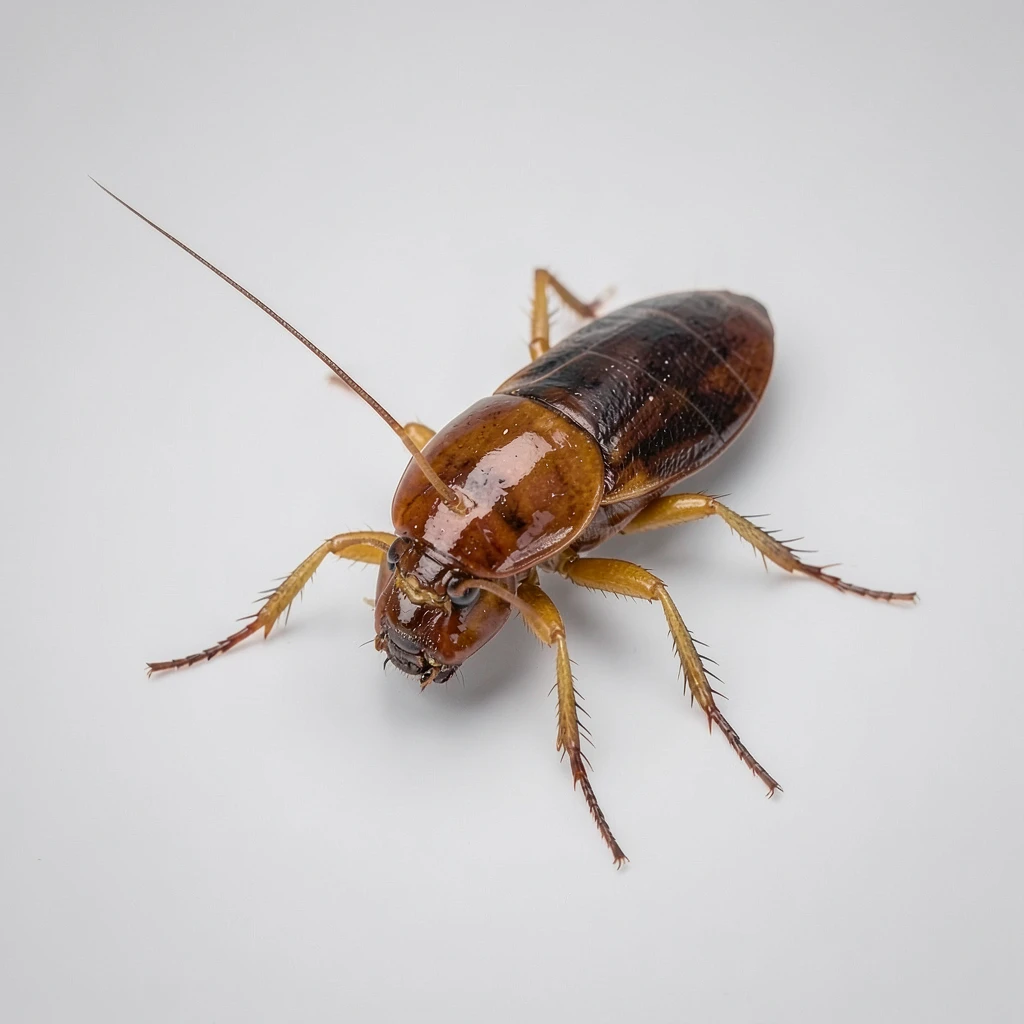
The cockroach life cycle proceeds in three main stages: ootheca, nymph and adult. The ootheca is the egg case; this structure produced by the female protects the eggs from external influences. Depending on the species, the time the case is dropped, how long it is carried and the number of eggs inside vary. In the German cockroach, the ootheca is usually carried by the female for a while; this behavior is an important part of the species’ reproductive strategy. After the eggs hatch, nymphs emerge. A nymph is a small, wingless or not fully developed form of the adult; it grows by molting several times. Temperature, humidity and food availability directly affect the rate of development. Under suitable conditions the German species can complete its cycle in a shorter time, while the American cockroach can live longer and develop more slowly. In the German cockroach, one ootheca may contain about 14-16 eggs; a female can produce about 5-8 oothecae over her lifetime. This corresponds roughly to a range of 80-128 eggs, but environmental conditions change this number. The American cockroach, meanwhile, can live 1-2 years in a suitable environment; in the German species, lifespan is often in the range of 100-200 days. In other words, reproductive rate is one of the main factors determining how the species spreads indoors.
Behavior
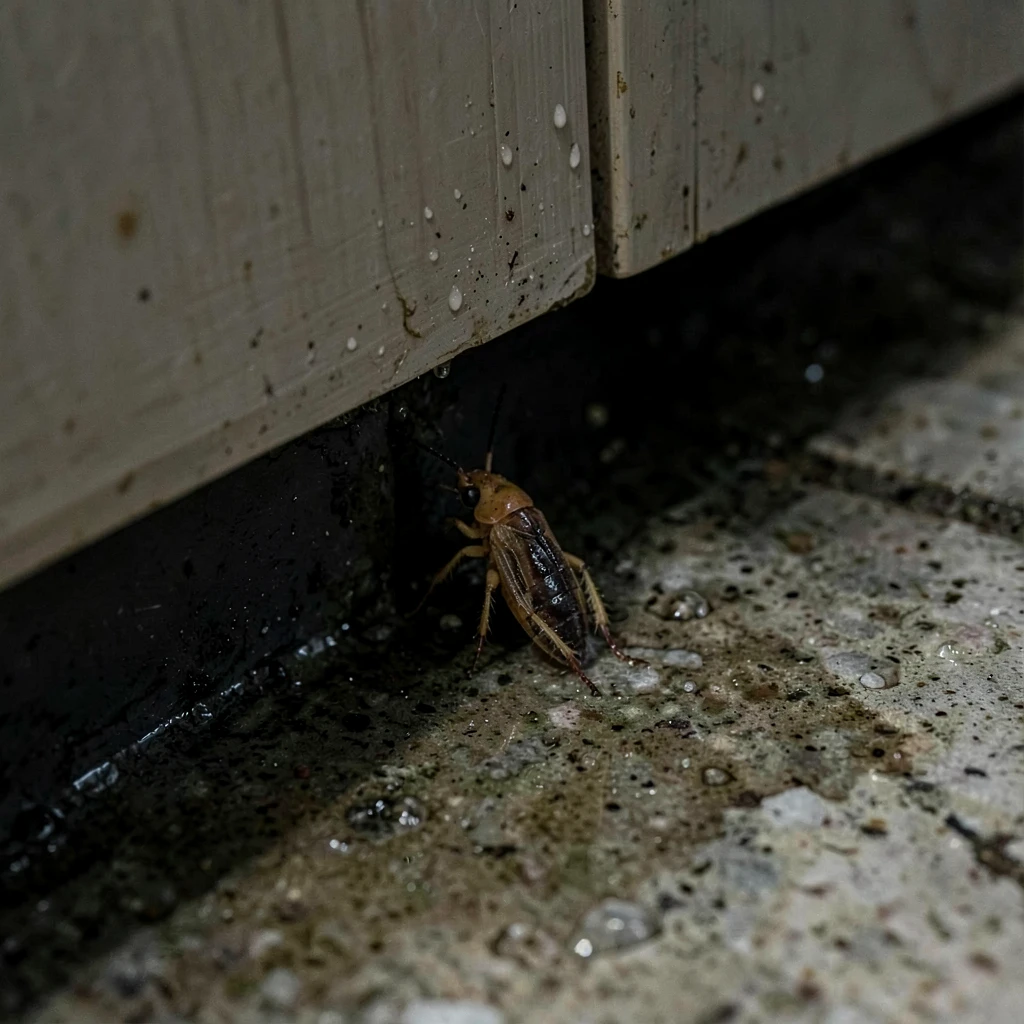
The cockroach is active at night; this is the light-avoidance behavior known as negative phototaxis. Its rapid retreat into hiding when the light is switched on is the clearest sign of this. When water, warmth and the smell of food come together in one spot, a suitable habitat forms for it. That’s why kitchens and bathrooms are not a coincidence but the result of biological preference. Under the sink, behind cabinets, around the refrigerator, gaps behind baseboards and cracks inside walls are the most commonly used hiding spots. The cockroach prefers to stay in narrow, sheltered spaces rather than on open, flat surfaces. Seeing it during the day is often a sign that numbers have increased. It is sensitive to odor and dampness; food scraps, water left out and corners that go uncleaned for a long time increase its attraction. Its behavior indoors is built around finding resources and staying unseen. That’s why where it hides matters as much as whether you see it. Understanding its behavior is the second critical step after identifying the species.
Relationship with Humans
The cockroach’s relationship with human settlements is very old. Archaeological and historical records show that this group has accompanied human dwellings for centuries. Environmental findings from the Egyptian and Roman periods suggest how well suited these insects were to food stores and warm interiors. In the Ottoman period, the hammam, its warm stone surfaces and damp areas may have paved the way for the insect’s popular name. The expression “hamam-böceği” (literally “bathhouse bug”) is this closeness settled into everyday language. In folklore this creature is usually remembered as an unwanted house guest; but the real point is that it has adapted extremely well to human-made spaces. So the issue is not simply being “dirty”; it is that it settles in quickly when it finds a warm, hidden and nourishing environment. Throughout history, places such as homes, storehouses and hammams have created ready-made living corridors for it. This is also why its name has stayed in everyday language: it is a creature that lives right beside human life but often goes unnoticed.
Health Perspective
In terms of health, the cockroach is not considered a directly biting species; the real issue is its role as a mechanical carrier and its allergenic effect. In other words, when it moves over surfaces, kitchen areas and around waste, it can mechanically carry microorganisms such as Salmonella, E. coli, Shigella and Streptococcus. This is especially important for hygiene in places where food is prepared. WHO and similar institutional sources emphasize that cockroaches can play a role in the environmental contamination chain. Another issue is allergens. Shed skin fragments, feces and secretions can worsen asthma and allergy symptoms in sensitive people. According to AAFA data, cockroach allergen in urban indoor environments is one of the main triggers of childhood asthma; in US inner-city homes, prevalence is reported at 17-41% (Do, Zhao, Gao 2016 — Allergy 71(4):463-74). This effect is more pronounced especially in children and with heavy exposure. Here, hygiene and exposure control matter rather than medical diagnosis. If symptoms keep recurring at home, or if there are allergy symptoms, you should consult a doctor. There’s no need to over-interpret; source control, cleaning and monitoring hidden areas are the basic line. ## Prevention and Control
Cockroach control starts not with a chemical attack but with environmental management. AAFA and EPA recommendations in 8 points:
- Airtight food containers — no open packages, no uncovered pots
- Covered trash can + don’t leave trash in the house overnight
- Fix leaking pipes and dripping faucets — cut off the water source
- Seal wall cracks and baseboard gaps with silicone — fewer hiding places
- Use bait traps (gel bait) — avoid spray/aerosol pesticides (they trigger asthma)
- Wash dishes without delay, leave kitchen surfaces dry
- Regular vacuuming + HEPA filter (allergen dust control)
- If you live in an apartment building, notify the building management — treating a single unit isn’t enough; the colony comes back from the neighboring wall void
When should you call professional pest control?
- If you’ve started seeing cockroaches during the day (they’re nocturnal — daytime sightings = a population sign)
- If you’re finding oothecae (egg cases)
- If you see 5+ adults within 1 week
- If they are still seen after 4 weeks of bait traps
If any of these thresholds apply, contact a licensed pest control company. Ask for integrated pest management (IPM), not a one-off spray.
If you have children and pets:
- Spray/aerosol pesticides are FORBIDDEN (they trigger asthma/allergies, risk of pet poisoning)
- Use only enclosed gel-bait stations or physical traps
- Keep children/pets out of the treated area for 24 hours
FAQ
Do cockroaches fly?
Some species have wings, but not all cockroaches are good flyers. The American cockroach (Periplaneta americana) can open its wings over short distances, while the German cockroach rarely flies — it mostly moves by running.
Do cockroaches bite?
Very rarely. Their mouthparts are not suited to human skin; out of fear they may nibble lightly. Their real health impact is their role as mechanical carriers and allergens — not biting.
If you’ve seen one cockroach, how many are there?
Cockroaches are nocturnal and prefer to hide. Seeing them during the day points to a growing population — there can usually be 10-40 nymphs around one adult (depending on species and environment).
How many years does a cockroach live?
It depends on the species and conditions: the German cockroach lives 100-200 days, the American cockroach 1-2 years (~700 days). It varies with temperature, humidity and food availability.
Where are cockroach eggs (ootheca) found?
The ootheca (egg case) is left in sheltered, warm places: behind cabinets, under sinks, along drawer edges, in wall voids. The German cockroach carries its ootheca until hatching; the others drop it once it matures.
Related Topics
Sub-articles of this main article:
- Why Do Cockroaches Come Into the House? Food, Moisture, Warmth
- The difference between German and American cockroaches
- Cockroach life cycle in detail (coming soon)
Sources
- AAFA — Cockroach Allergy: https://aafa.org/allergies/types-of-allergies/cockroach-allergy/
- Do, Zhao, Gao 2016 — Allergy 71(4):463-74 (peer-reviewed cockroach allergen review)
- CDC — Controlling Asthma (cockroach control, avoiding sprays and foggers): https://www.cdc.gov/asthma/control/index.html
- Britannica: https://www.britannica.com/animal/cockroach
- iNaturalist: https://www.inaturalist.org/taxa/61233-Blattodea
- GBIF: https://www.gbif.org/species/search?q=Blattodea
- TÜBİTAK — Scientific and Technological Research Council of Turkey (search page, Turkish): https://bilimvegelecek.tubitak.gov.tr/
Related Topics
If you want to read this topic in a broader context, see the cluster articles: Ant: The Master of Social Structure in the Insect World.