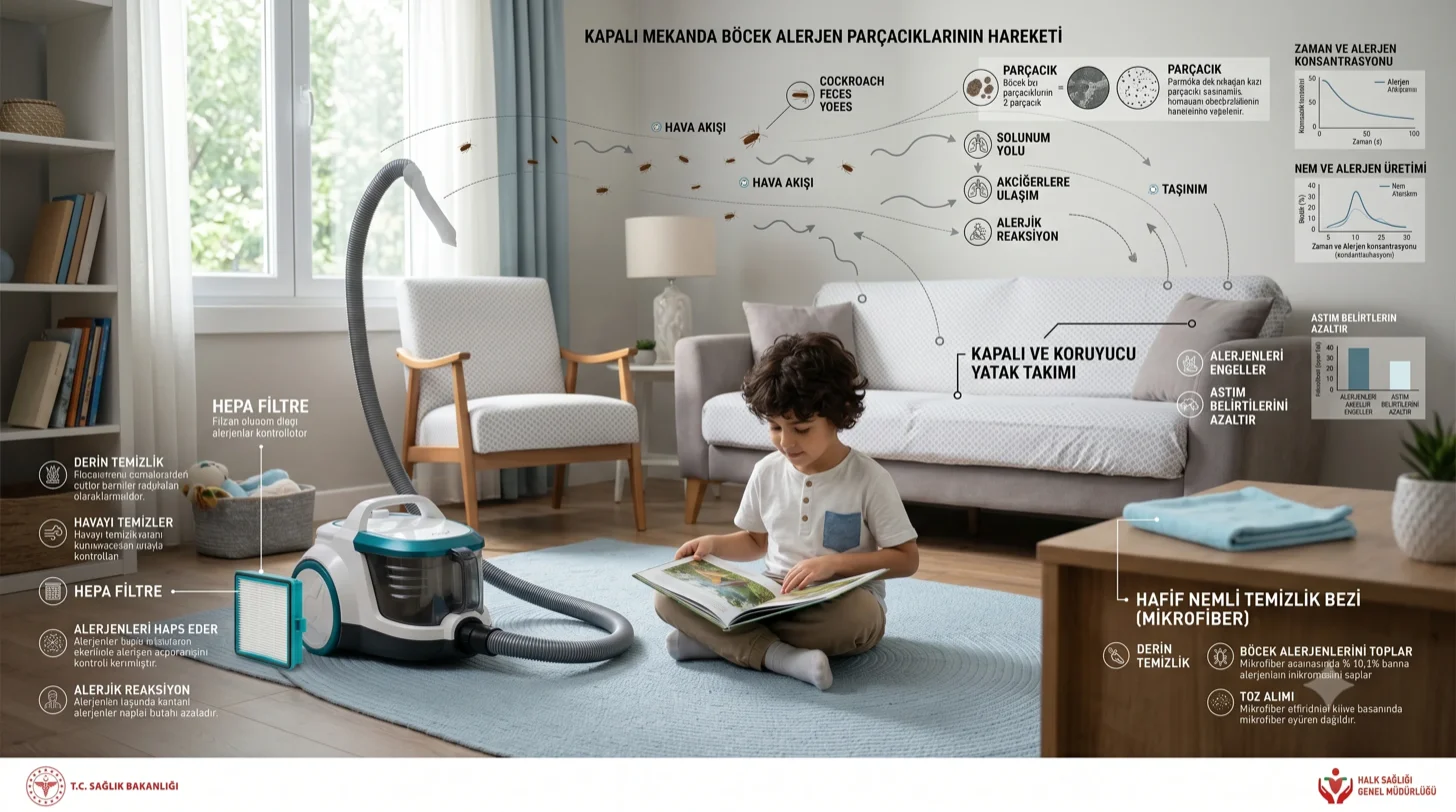
Cockroach allergy in a child is not an ordinary runny nose; the species structure we described in the Cockroach: Species, Biology and Relationship with Humans article combines here with airway sensitivity. The trio of moisture, warmth and food in the Why do cockroaches come indoors? article turns into an allergen load this time. The proteins that remain inside the home make an asthma attack, especially in a child, anything but a minor matter.
Why does cockroach allergy take a severe course?
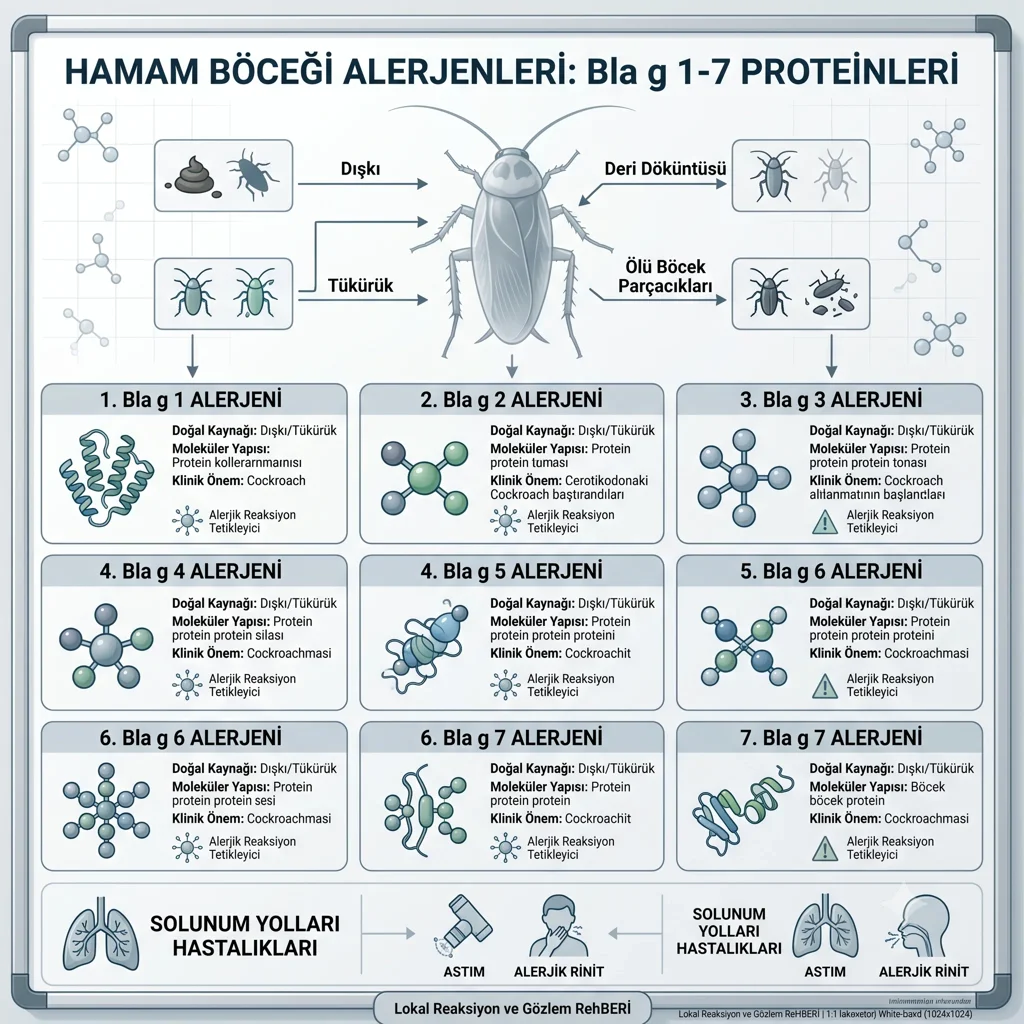
Among cockroach allergens, the group Bla g 1, Bla g 2, Bla g 3, Bla g 4, Bla g 5, Bla g 6 and Bla g 7 stands out. These proteins do not come from a single place; they are found in droppings, saliva, shed skin, secretions and broken-down bodies. That means the problem may not end even if the number of live insects drops. Dead cockroaches, shell remnants and fragments left in dust also get into the air. AAFA’s cockroach allergy page explains this clearly: the fragments become airborne, enter the nose and mouth, go down into the lungs and can trigger both nasal symptoms and an asthma attack. The same page states that in the US sensitization can reach the range of 17-41 percent and that the burden is higher in inner-city groups. That is why the 20-25 percent band mentioned for urban childhood asthma is not an empty number either; it shows the weight of indoor exposure.
Asthma risk in children
A child’s airway is narrower and more sensitive than an adult’s. That is why the same allergen load hits a child harder. Nighttime cough, wheezing, a feeling of tightness in the chest, waking up toward morning and tiring quickly when running are among the first signs. On the nasal side, sneezing, congestion, runny nose and allergic rhinitis can be added to the picture. If the child does not sleep well at night, they also slip at school the next day; attention, energy and appetite are affected. AAFA’s page also stresses that children who are sensitized to cockroaches and exposed to them go to the hospital more often because of asthma. For this reason, the issue is not only the inside of the home; the child’s sleep pattern, school absences and the risk of emergency visits are also part of it.
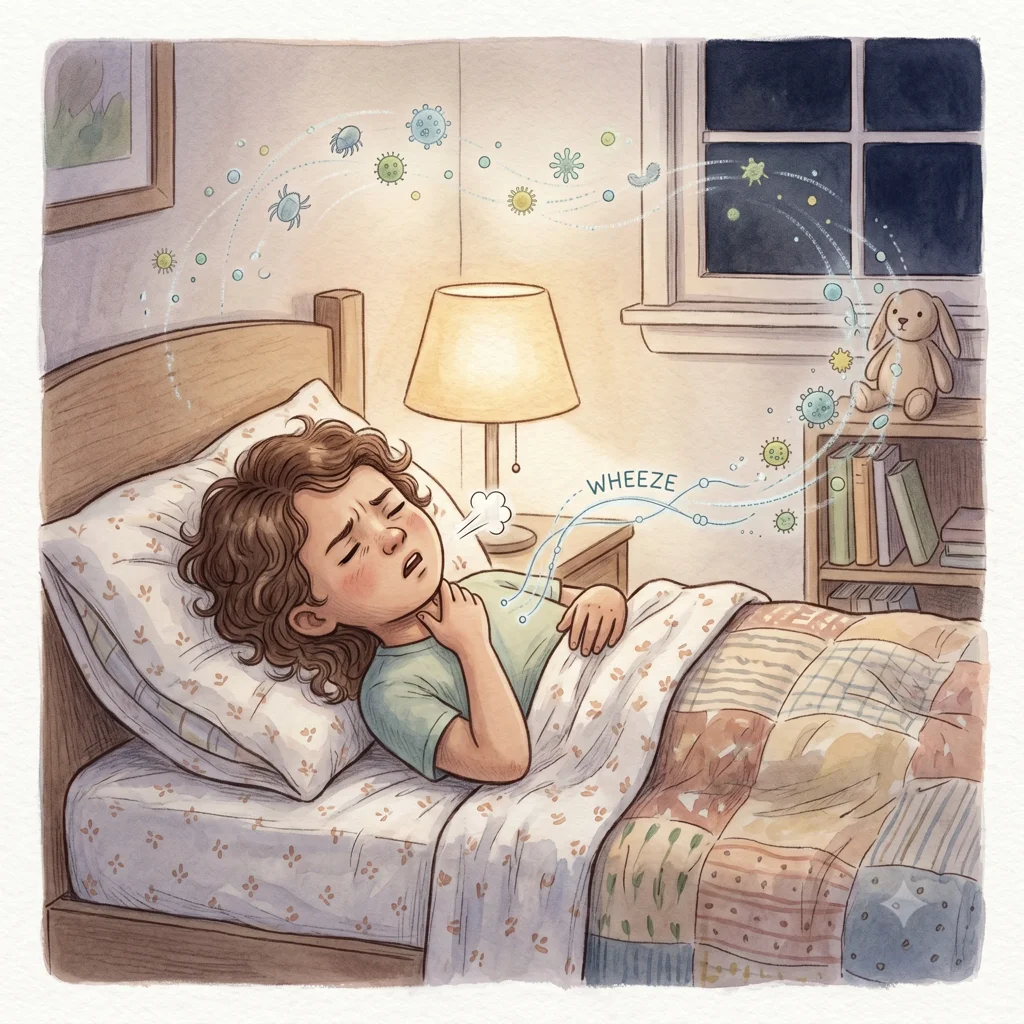
When tracking symptoms, the timeline matters. If complaints increase at night, are concentrated in the bedroom and partly ease after cleaning, an indoor allergen load is considered. In an ordinary upper respiratory tract infection, the picture changes direction within a few days; with allergy, on the other hand, the complaints come back as long as the home environment stays the same. If the child has bluish lips, difficulty speaking, breathlessness when climbing stairs, or no improvement despite the rescue inhaler, this is now beyond home measures and a matter for emergency evaluation. This distinction must be kept clear, because delay can turn a simple trigger into a severe attack.
Allergy in an adult family member
It is not only the child who is affected at home. An adult family member can also experience allergic rhinitis, watery eyes, an itchy throat, sinus pressure and nighttime cough. In some homes, the child has asthma while an adult has constant nasal complaints; the same source shows different faces in different bodies. At this point, brushing it off by saying “I just have a cold” is a mistake. Because the indoor allergen load is shared. If one member of the family shows symptoms, the others are also under exposure in the same environment. Mild symptoms that the adult does not take seriously make a home where the child has an asthma background even riskier.
How do diagnosis and treatment proceed?
The first stop should be the pediatrician, then the allergist. The child’s history, the timing of the symptoms, the nighttime increase and indoor exposure are evaluated together. For diagnosis, a skin prick test or a specific IgE blood test is used. What the test means is this: it shows whether the body is sensitized to cockroach allergen. But the test alone is not enough; an examination and a history of the living environment are essential. In treatment, the physician arranges an inhaler, a nasal spray or other anti-inflammatory medicines if needed. In a suitable patient, immunotherapy can also be an option. AAFA says that immunotherapy is a long-term approach lasting 3-5 years and that it can reduce the allergic response. The decision here lies with the pediatrician and the allergist; no trial and error is done at home.
When the treatment plan is being written, notes taken from home are useful: in which room the cough increased, what happened when the bed was changed, whether there is relief after cleaning, whether the neighboring apartment also has a problem. This small list of observations gives the physician a strong clue. In a child in whom allergy and asthma go hand in hand, environmental control is as important as medication. If one side is left incomplete, the effect of the other side decreases.
Prevention: cut off the source, not the single insect
With cockroach allergen, the real job is not counting live insects but cutting off the source colony. Because allergen is also produced, independently of the live insect, from droppings, shells and dead individuals. That is why squashing one does not count as a solution. First, food is kept covered, no crumbs are left, the trash is taken out at night and water leaks are repaired. AAFA’s recommendations include sealing cracks, regular vacuuming, mopping the floor, not leaving pet food out and using bait traps rather than resorting to sprays. A HEPA filter is important here; both in vacuuming and in air cleaning, it holds allergen dust better. Sheets should be washed once a week, the area around the bed should be kept dry and high humidity should be lowered. Damp wiping collects dry dust without lifting it into the air.
The reality of apartment buildings
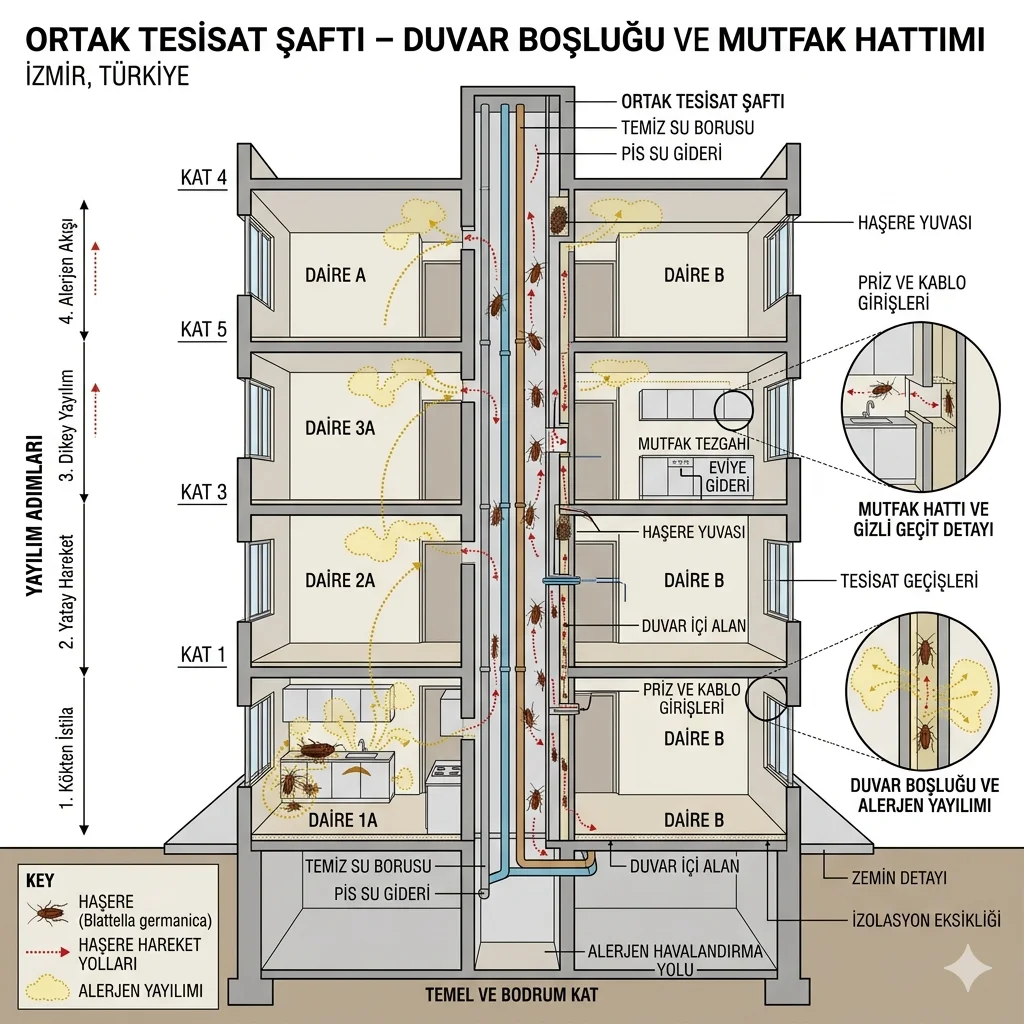
In an apartment building, the job is not done even if a single apartment is clean. Cockroaches use wall voids, cable passages, plumbing shafts and shared kitchen lines. That is why the problem is not fully closed without the building management getting involved. Single-apartment treatment comes back if the colony lives in the neighboring space. Common-area treatment, shaft checks and simultaneous follow-up of neighboring apartments are needed. Sealing one apartment and leaving the other open is like repairing one side of a ship and leaving the other side with a hole in it. If the source is shared, the intervention must be shared too.
Careful work is also needed inside the home. Collecting crumbs with a HEPA-filter vacuum instead of sweeping them, wiping kitchen corners with a damp cloth, not leaving dishes out at night and washing bed sheets once a week lower the allergen load. Soft toys, the bottoms of curtains and the undersides of sofas also hold dust; these need to be included in the plan as well. These measures alone are not colony elimination, but they reduce exposure. The goal is less about seeing the live insect and more about shrinking the invisible allergen trail.
A clear line from a health perspective
If nighttime cough, wheezing, runny nose and allergic rhinitis go together at home, especially in a child, cockroach exposure should be taken seriously. The pediatrician and the allergist set up the diagnosis and the plan together. On the home side, the goal is clear: reduce the allergen source, don’t let it stay in the air, and stop it spreading within the building. This is as much a building management matter as a health one. Once order is established at home, the child sleeps more comfortably, the family goes through fewer crises and the treatment plan becomes more meaningful.
Sources
- AAFA Cockroach Allergy: https://aafa.org/allergies/types-of-allergies/insect-allergy/cockroach-allergy/
- Thermo Fisher i6 Cockroach, German: https://www.thermofisher.com/phadia/us/en/resources/allergen-encyclopedia/i6.html
- Thermo Fisher i206 Cockroach, American: https://www.thermofisher.com/phadia/us/en/resources/allergen-encyclopedia/i206.html
- CDC Controlling Asthma: https://www.cdc.gov/asthma/triggers.html
Related Topics
Read this article together with the main pillar article: Cockroach and Why Do Cockroaches Come Indoors?. The logical next step is the separate spoke article covering the control side.