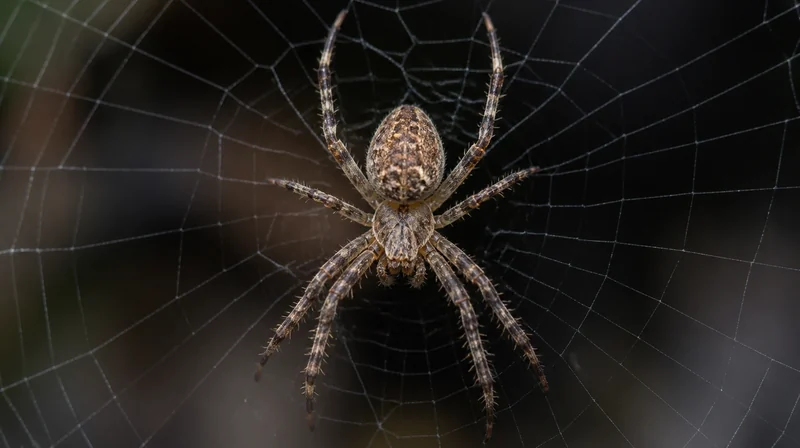
Why spiders spin webs: an eight-legged spider waiting in a web in a corner of the house, Araneae

Why Do Spiders Spin Webs, and How Do They Build Them?

A spider builds a web because silk is a multi-purpose material that serves for catching prey, sheltering and protecting eggs. But not every spider builds a prey web; some chase their prey themselves. The really interesting part is that the spider builds its web not like a single piece of thread but by laying threads with different jobs in sequence. To identify the spider you see at home, you can look at the guide to identifying spiders in the house. ...
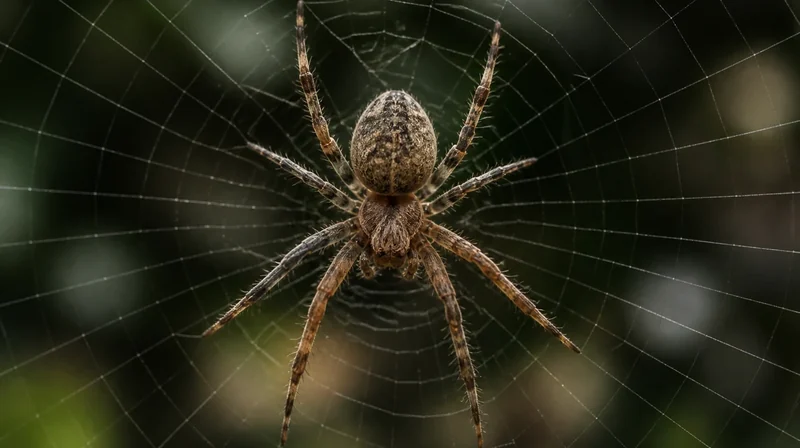
Spider in the house: an eight-legged spider sitting in its web in a wall corner, Araneae

How Many Years Do Spiders Live, and How Many Eggs Do They Lay?

Spiders mostly live from a few months to a few years; a female spider’s egg sac, depending on the species, can contain anything from a few eggs to hundreds, and in some species more. Because “spider” covers thousands of different species, there is no single lifespan or egg count. What is truly surprising is that some females leave the sac in their web while others carry it in their jaws or at the back of their bodies. For basic clues about the species of the spider you see at home, you can look at the guide to identifying spiders in the house. ...
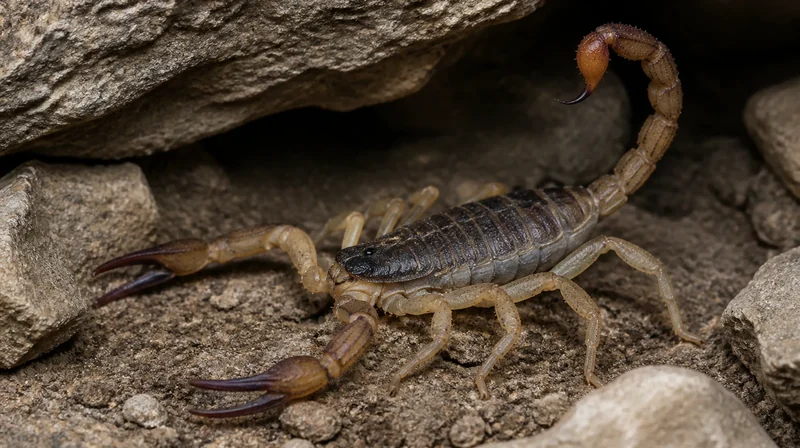
Scorpion (Scorpiones) in its natural habitat, with its eight legs, pincers and segmented tail

How Many Years Does a Scorpion Live, and How Many Young Does It Have?

A scorpion can live a few years depending on its species; in some species lifespan goes well beyond that, and roughly 3–110 young can be seen in one birth. These wide ranges are not fixed values to be applied to a single scorpion. What is really surprising is that the young climb onto their mother’s back as soon as they are born and that some females can produce more than one brood from a single mating. How long does a scorpion live, how many young does it have, and when do the young leave the mother? The answers vary from species to species. You can find a safe approach to a scorpion you come across at home in the scorpions in the house guide. ...

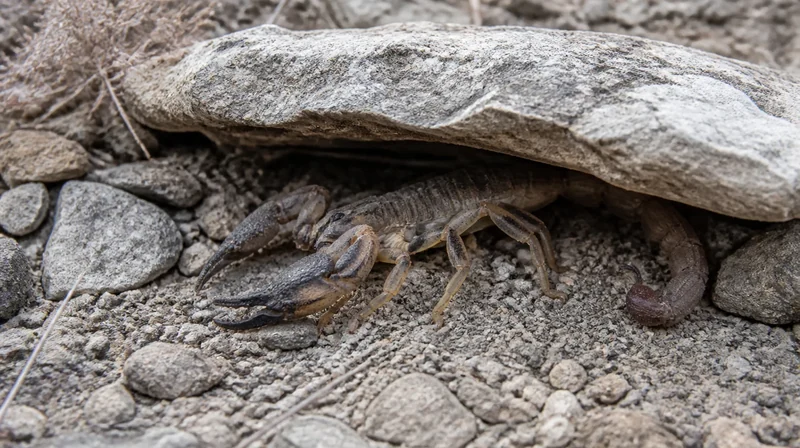
Are there scorpions in winter: a scorpion in a sheltered spot under a stone in the cold season

Are There Scorpions in Winter? How Scorpions Survive the Winter

Yes, there can be scorpions in winter; in cold weather most of them move less, but they don’t disappear for the whole winter. The really important distinction is how a scorpion hides in the cold and why in some homes it can be seen in winter too. The term hibernation doesn’t describe the same thing for every species; the temperature of its location and how sheltered it is are decisive. Scorpions are in the same class, Arachnida, as spiders; they are not insects. The guide to entry points and a safe approach when a scorpion is seen at home also explains the basic protection steps. ...

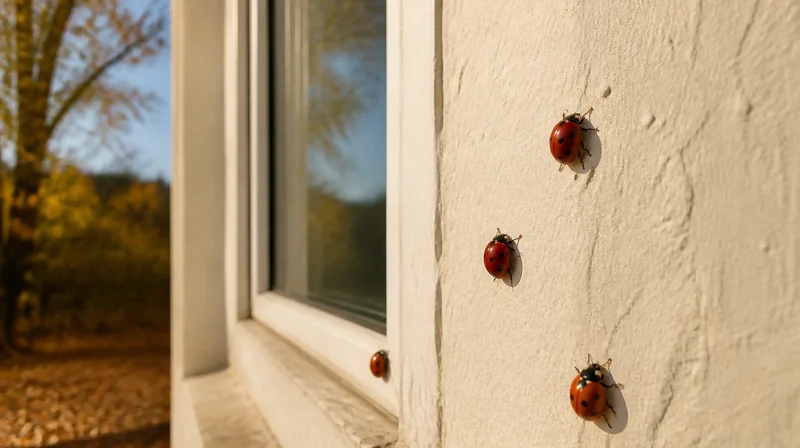
Ladybugs looking for a place to overwinter on a sunlit house wall in autumn

Why Do Ladybugs Come Indoors? Autumn Aggregation

Ladybugs come indoors in autumn mostly because they are looking for a place to shelter from the cold and overwinter. What is really surprising is that the beetle does not mistake the house for food or a nest; most of the time it heads for a warm, bright wall and takes refuge in a gap in the wall. So why do dozens of them appear at once in some houses, do they breed indoors, and how do you get them out without harming them? The main guide on ladybug species and life helps you understand who the individuals you see in your home might be. ...

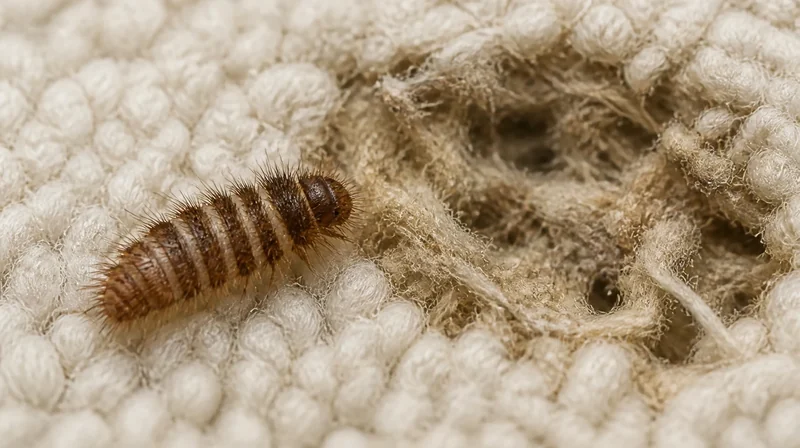
Carpet beetle (Dermestidae) larva and the irregular damage it leaves on woolen fabric

Carpet Beetle Signs and Ways to Control Them

When you suspect carpet beetles, the most meaningful sign is not a single small adult beetle; it is hairy larvae and shed larval skins seen together with recurring damage on items containing wool, fur, feathers or other animal fibers. Carpet beetles are beetles in the family Dermestidae. For the classification and basic body structure of insects, you can look at the general guide to insects. Inspect the damaged area and its surroundings systematically, clean the suitable textiles, and if the signs persist, get professional help to find the source. To avoid confusing them with the silverfish seen in the home, also look at body shape and the type of damage. ...

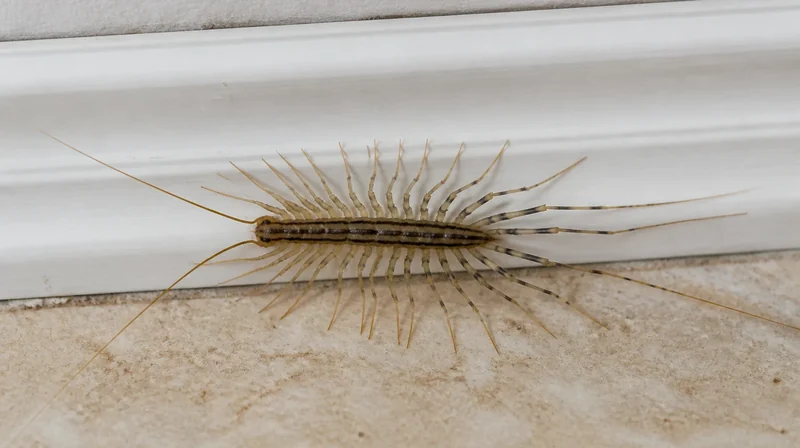
A house centipede (Scutigera coleoptrata) moving along the edge of a wall with its long striped body and very long legs

Centipedes in the House: Why They Appear and How to Prevent Them

If you have seen a centipede in the house, don’t try to catch it with your bare hands first; watch this fast-moving animal from a safe distance. The house centipede encountered in homes is mostly known as Scutigera coleoptrata: it stands out with its long antennae, striped body and very long legs. Seeing a single centipede does not prove that there is a nest inside the house or that the house is dirty. It is more accurate to assess damp areas, small prey animals and possible entry gaps together. To tell other arthropods in the house apart, you can also look at the spider guide, the silverfish guide and the scorpions in the house guide. ...

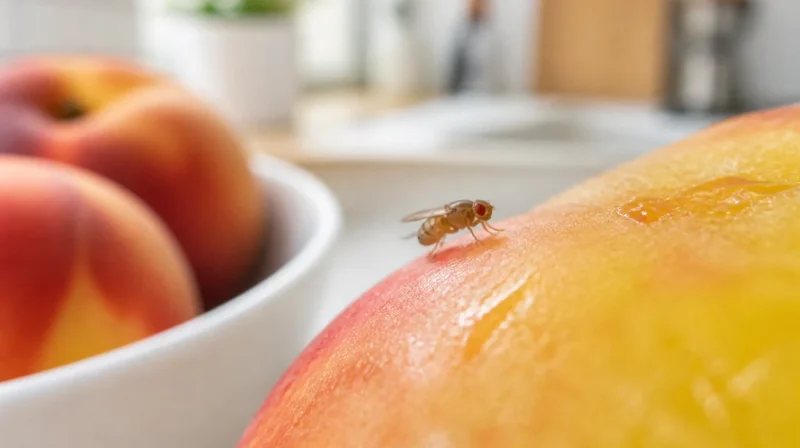
Fruit fly (Drosophila melanogaster) on ripe fruit, with its red eyes and small yellow-brown body

Fruit Fly (Drosophila melanogaster): Identification and Prevention

The small, red-eyed flies wandering around your kitchen may often be fruit flies, that is, Drosophila melanogaster. The adults are a few millimetres long; they are seen around ripe fruit, drops of fruit juice and organic residues that are starting to ferment. If a few flies keep reappearing, you need to find not just the flying adults but also the source that feeds them and lets them multiply. Knowing the difference between the house fly and the fruit fly helps you avoid misclassifying similar small flies. ...

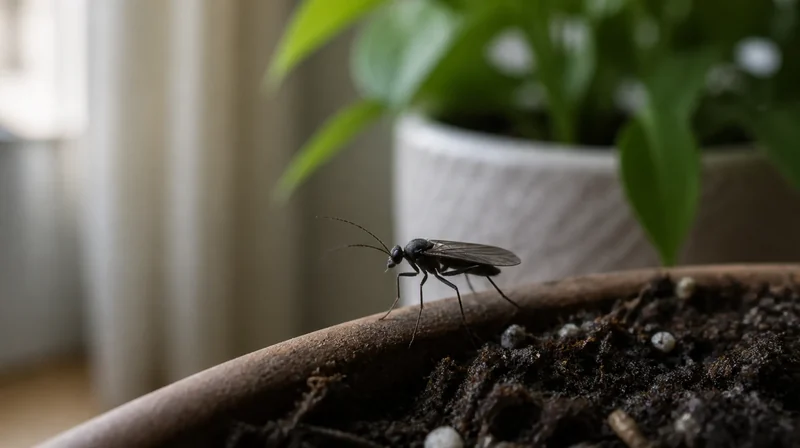
A fungus gnat (Sciaridae) in the house: a small dark-colored fly seen on damp potting soil

Fungus Gnats in the House: The Little Flies in Your Pots

If you are seeing fungus gnats in the house, the first place to look is not the fruit bowl but the potting soil. These small, dark-colored flies mostly hang around damp growing mix. For lasting control, as with an ant problem in the house, catching only the flying adults is not enough; you also need to reduce the breeding conditions. Adjust watering to the plant’s needs, don’t leave water in the pot saucer and watch new plants for a while. ...

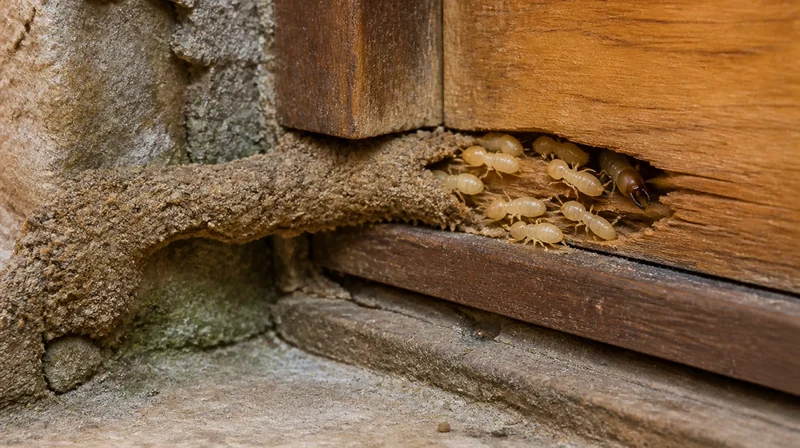
Close-up of door threshold wood and a subterranean termite mud tube at the base of a wall in a suspected termite case at home

Termites in the House: Signs and Safe Control

When you suspect termites in the house, the first job is not to spray the insect you see but to record the traces. If you see a thin tube made of mud at the base of a wall, wood that has been hollowed out, or wings shed along a window sill, the entry point and the damage should be investigated. Not every hole in wood is a termite; termites are easily confused with the ant, especially winged individuals. Fix the source of moisture and ask for an expert inspection without interfering with load-bearing wood. The colony may remain inside the wall or the soil. ...

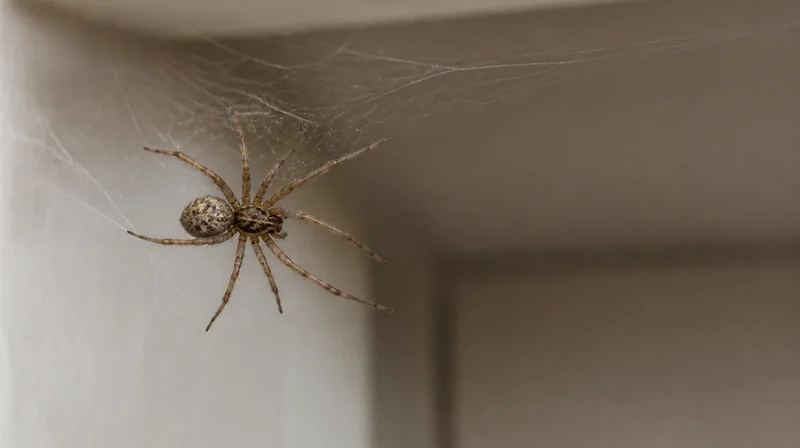
Spider in the house: an eight-legged spider sitting in its web in a wall corner, Araneae

Spiders in the House: Why Are They There, Are They Harmful?

When you see a spider in the house, the first question is usually “Is it harmful?” Most spiders stay away from people and hunt small arthropods in the home; still, it is not right to pin down the species and the health risk just by looking at a photo. Don’t touch the spider with bare hands. If there are a few webs or repeated sightings, first check entry gaps, cluttered hiding places and other small insects in the home. In this article, you will start with the basic ways of identifying insects in the house and find the steps for managing a spider problem calmly and safely. ...

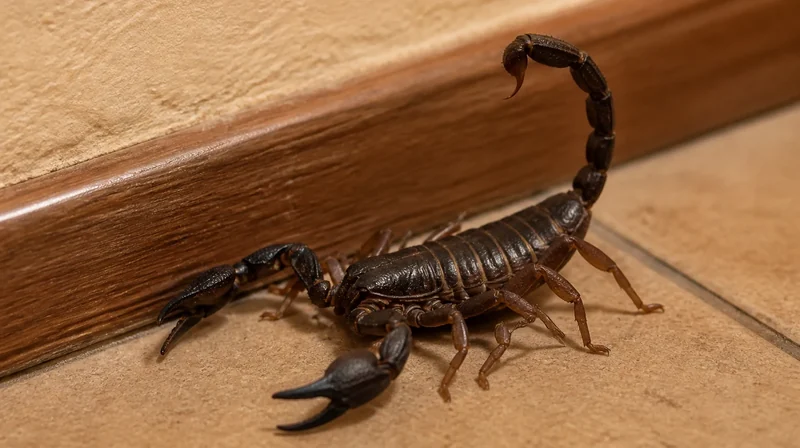
Scorpion in the house: a scorpion seen along a wall, representing the order Scorpiones with its eight legs and curved tail

Scorpions in the House: Why Do They Appear, How to Prevent Them?

If you’ve seen a scorpion in the house, first don’t approach it; don’t try to catch or crush it with your bare hands. Scorpions, like spiders, belong to the class Arachnida and are recognized by their eight walking legs, their pincer-bearing pedipalps and the stinger at the tip of the tail. Seeing a single scorpion does not prove that there is a nest inside the house; but it is a good signal to check under doors, plumbing penetrations and hiding places around the house. In Türkiye, scorpion species and sting risk can vary by region. If you can’t identify the species with confidence, not handling it and preventing risky contact is the best start. To recognize another eight-legged arthropod that is not a scorpion, you can also look at the tick guide. ...