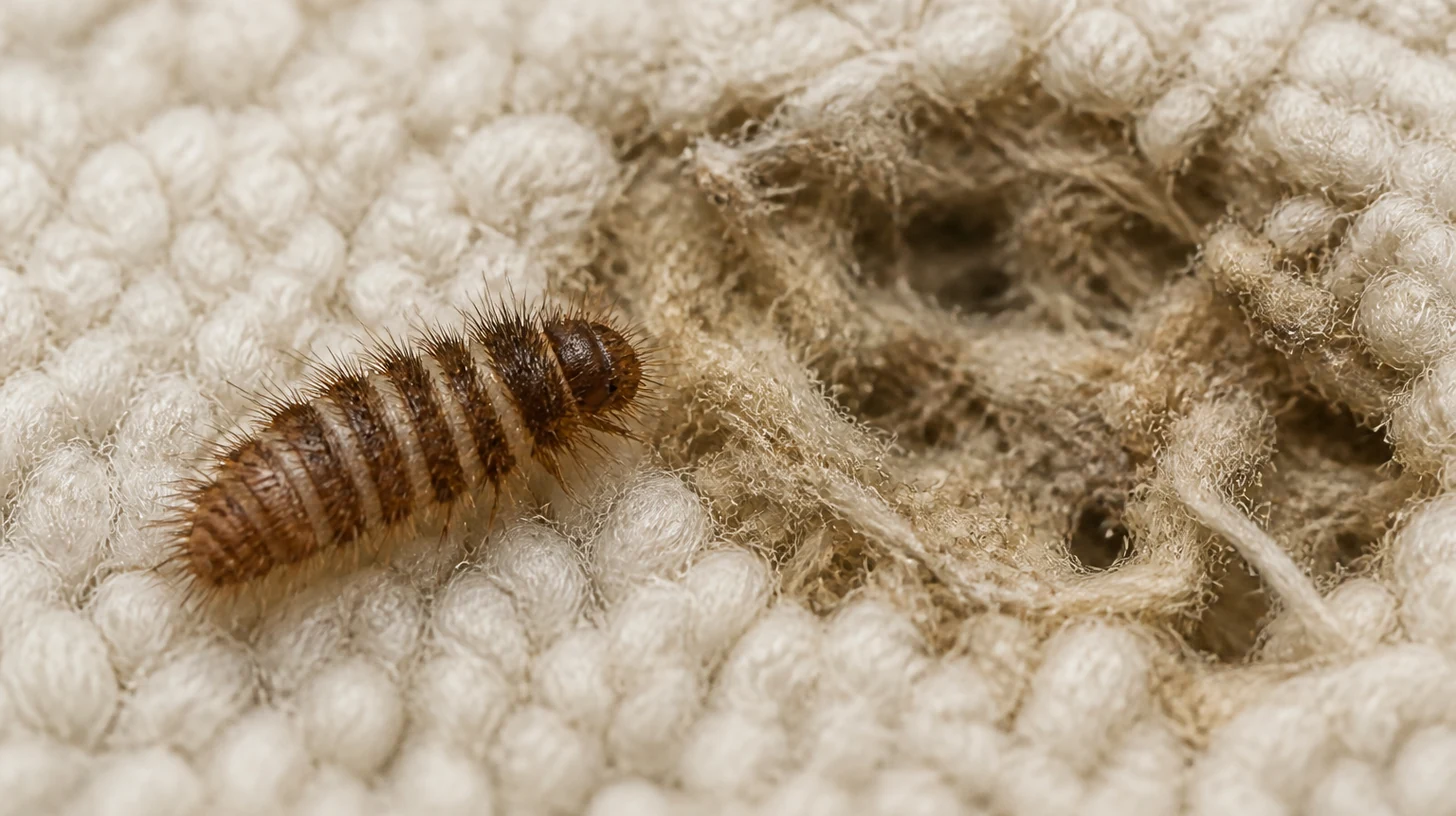
When you suspect carpet beetles, the most meaningful sign is not a single small adult beetle; it is hairy larvae and shed larval skins seen together with recurring damage on items containing wool, fur, feathers or other animal fibers. Carpet beetles are beetles in the family Dermestidae. For the classification and basic body structure of insects, you can look at the general guide to insects. Inspect the damaged area and its surroundings systematically, clean the suitable textiles, and if the signs persist, get professional help to find the source. To avoid confusing them with the silverfish seen in the home, also look at body shape and the type of damage.
What are the signs of carpet beetles?
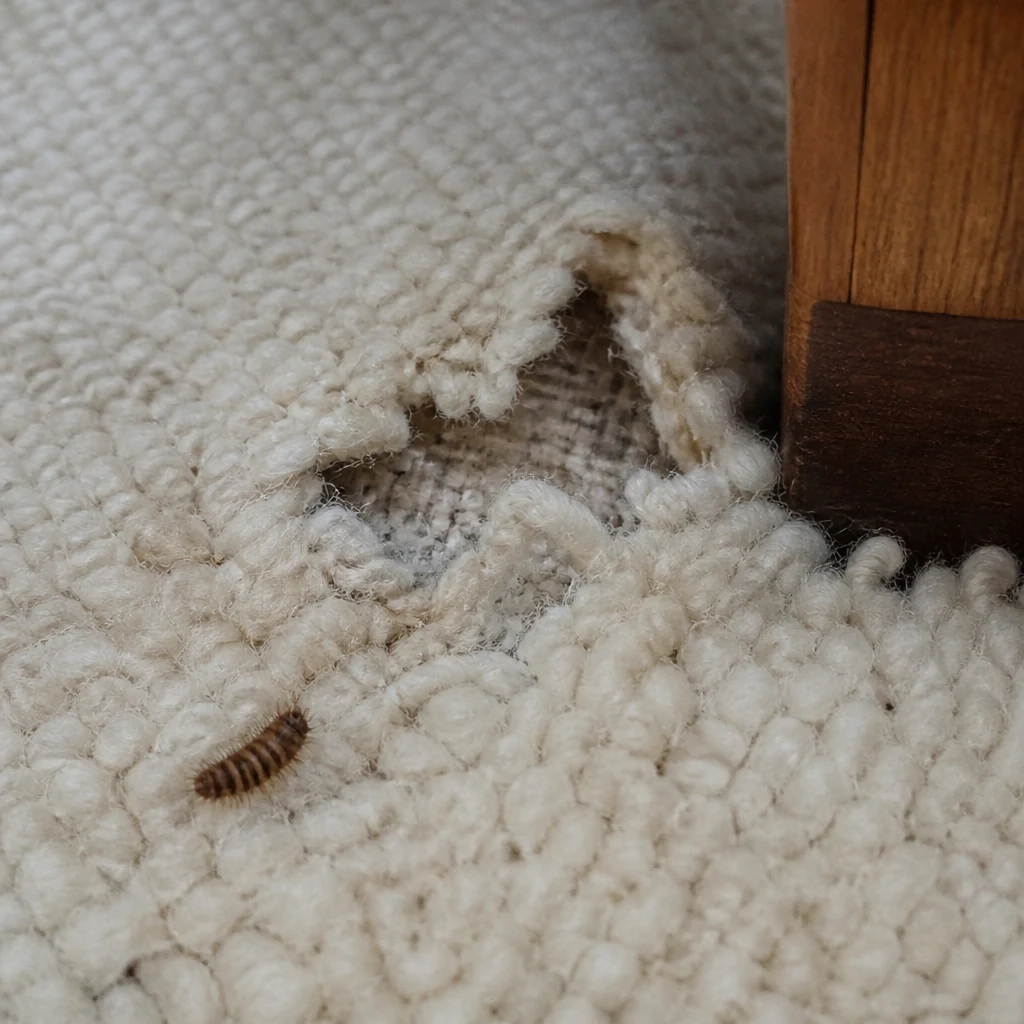
The first sign is most often irregular fiber loss and small openings in a wool rug, clothing, a blanket, upholstery or a stored natural-fiber item. The damage can be concentrated at the edges of the item, along fold lines, under furniture and in parts that go untouched for a long time. Rather than constantly wandering around in places exposed to light, the carpet beetle larva may hide in sheltered gaps near its food source.
The larvae usually look brownish, elongated and hairy; the body segments can be made out. As the larva grows, it can leave behind a thin, empty skin. This skin resembles a small larva but looks hollow and dry. The adults, on the other hand, are small, oval beetles that are patterned or a single color depending on the species. The species in the family do not resemble one another; naming the species just by looking at color or size is not right.
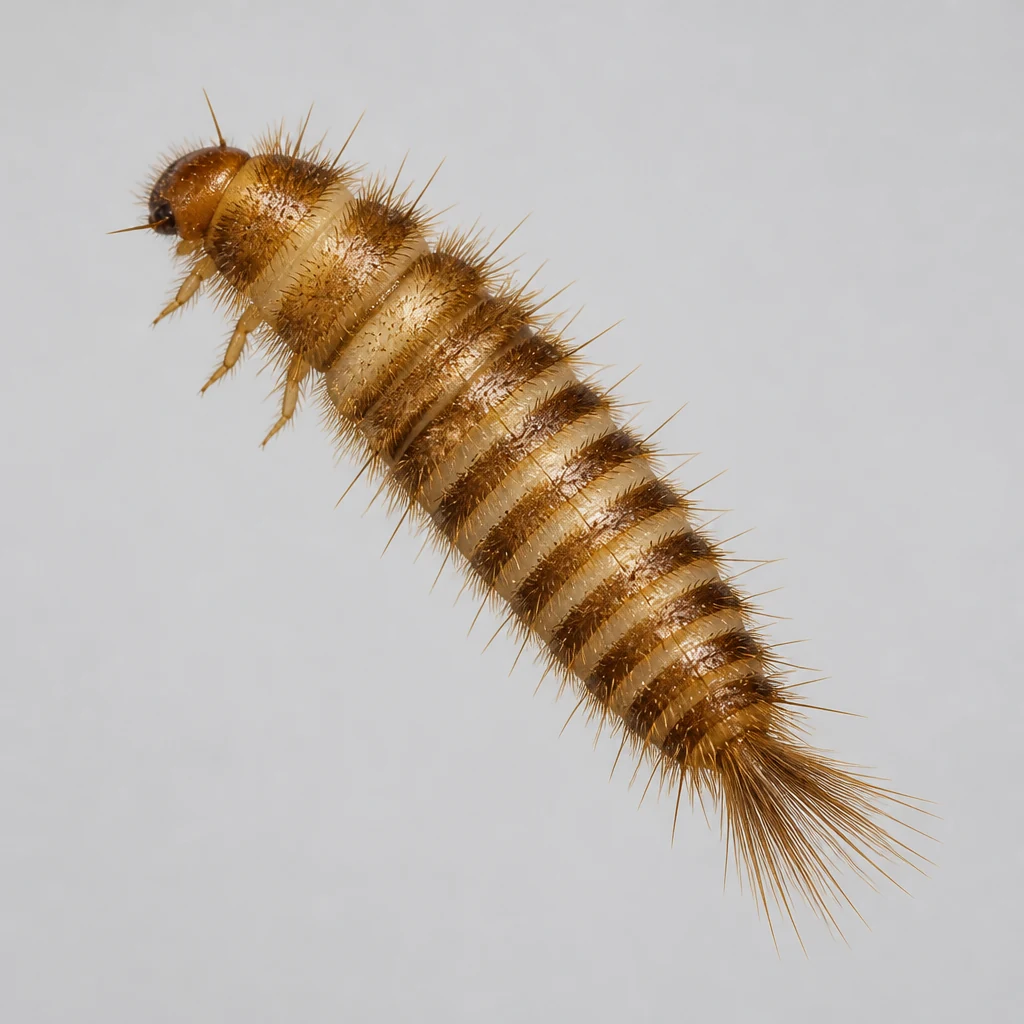
Seeing an adult by a window does not on its own show that they are breeding in the home. Adults can fly in from outside or be drawn toward light. On the other hand, if recurring larvae, shed skins and new textile damage occur together in the same storage area, a nearby food and hiding source needs to be looked for. For rug and textile damage, compare with the signs of clothes moths: the traces left by the two pests can be confused.
Where do the larvae feed, and how do they get into the house?
The family Dermestidae is a large group of beetles; the food preferences of the species encountered in homes are not the same. Many carpet beetle larvae can make use of animal-derived materials such as wool, felt, fur, feathers, leather and silk, as well as dead insects or animal remains. Cotton or synthetic fabric alone may be less attractive; but if there is hair, shed skin, food stains or a mix of animal fibers on it, it is still worth inspecting.
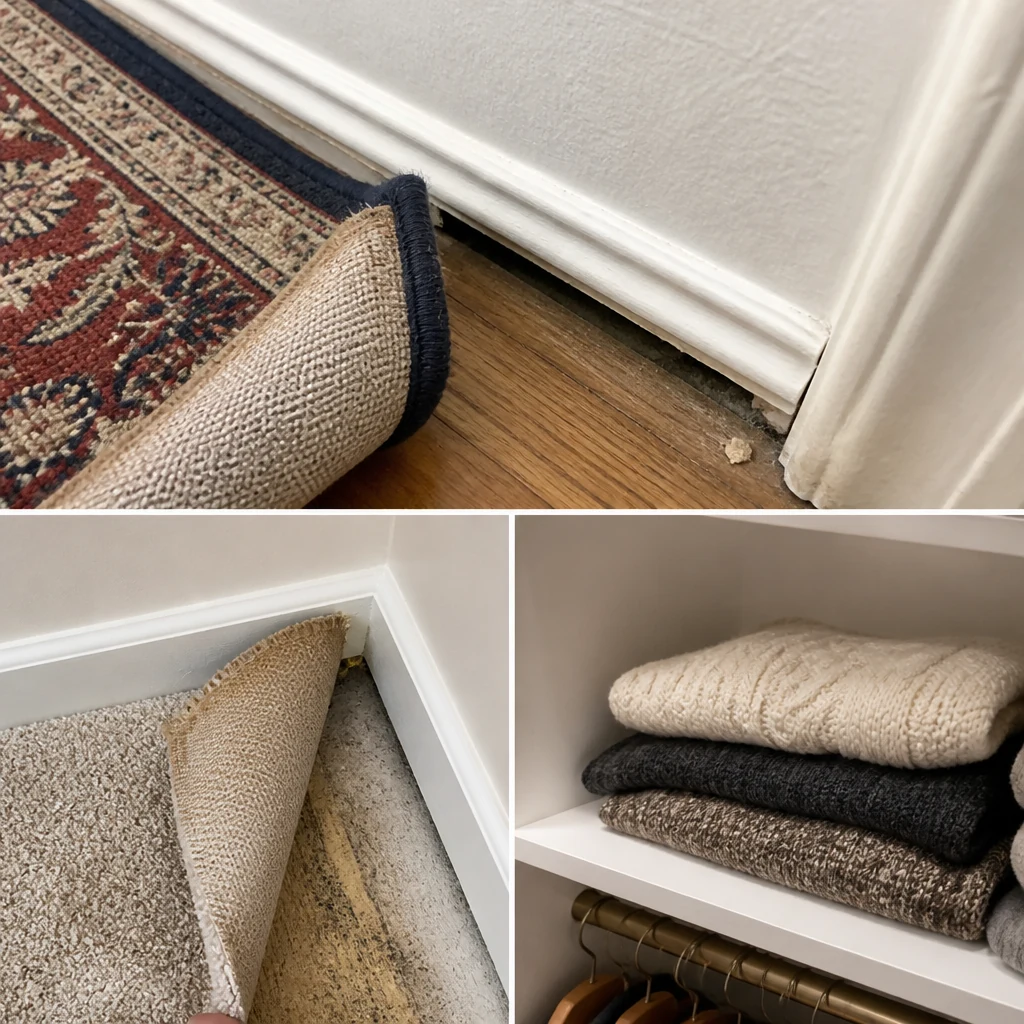
Hiding places can include under and along the edges of rugs, baseboard cracks, wardrobes and chests, under upholstered furniture, around air ducts and unused textiles. The adults of some species feed on pollen in flowers; they can come in through open windows and doors. Sometimes the source is not the item in the home itself but a bird’s nest around the roof or balcony, or inaccessible animal remains. For this reason, killing only the visible beetle does not eliminate the source.
Controlling carpet beetles at home
First identify the item where the damage is and its surroundings. Check rug edges, under furniture, inside wardrobes and stored woolens; photographing any larvae or shed skins you see helps with identification. Don’t shake the item out in another room: this can spread larvae and debris. Wash washable textiles in line with the product label and dry them completely. For delicate or valuable pieces that cannot be washed, get advice on methods from a dry cleaner or a textile conservation expert.
Carefully vacuum rug edges, baseboards, under furniture, wardrobe corners and cracks. After the job, empty the bag or canister in a sealed way; repeat the cleaning regularly in the same areas. Store clean, dry textiles in closed boxes or zippered covers. Reduce the buildup of crumbs, hair, feathers and dead insects; check door and window screens and sources that could come in from outside. These are not a one-time magic solution but basic steps that reduce the larva’s food and hiding places. When working out the source of textile damage, comparing it with the habitat and traces of the clothes moth keeps you from deciding based only on what the holes look like.
Instead of spraying insecticide at random, focus first on cleaning and finding the source. If a pesticide is needed, use only a product whose label permits it for the target pest and the surface to be treated, in the way the label states; don’t apply it indiscriminately to textiles, beds, food or areas of human or animal contact. Follow label precautions such as keeping children and pets away from the application area and the re-entry interval. Fogging or indiscriminate application to a whole room can create exposure without reaching hidden larvae. No prescription for product choice, dose or health assessment is given here; when in doubt, turn to a licensed applicator and the product label.
Health risk and prevention
During the inspection, note your findings with date and location: for example, “two larval skins on the east edge of the living room rug”. Also record the area you cleaned; a few weeks later, compare whether there are new larvae, skins or damage at the same spot. This simple record keeps you from mistaking old damage for new activity and shows where to start in a professional inspection. If the finding is only on a single woolen item kept in storage, focus first on that item and its immediate surroundings rather than applying pesticide to the other rooms.
| Observation | Recurrence / extent | Household or situation at risk | When to call an expert? |
|---|---|---|---|
| A single adult beetle, no accompanying larvae or damage | Not recurring | No particular risk sign | First observe the window surroundings and textiles; if new findings appear, inspect again. |
| Larvae, shed skins and limited textile damage in one area | Findings do not recur after cleaning | If there are valuable/delicate textiles, the wrong treatment can cause damage | If cleaning the item or fabric care is unclear, consult a textile expert. |
| New larvae or damage reappear on a different item | Recurring despite cleaning and storage arrangements | If there are children, pets or household members with irritation complaints, extra care is needed with pesticide application | If the source cannot be found, spread continues or a wall cavity/nest is suspected, call a pest control expert. |
| Damage spread over a large area or the possibility of an inaccessible nest/remains | Several rooms or a common area | Apartment, shared storage room or a sensitive collection | Have the location of the source and the extent determined by a professional inspection; inform neighbors/common area management. |
Frequently asked questions
Do carpet beetles bite people?
No. Carpet beetles do not bite people and do not suck blood. Some larval hairs can cause contact irritation in sensitive people; if you have a skin complaint, consult a health professional.
How do you tell a carpet beetle from a moth?
The carpet beetle larva usually looks hairy and segmented; the clothes moth larva may have a smoother body. The location and shape of the damage are not on their own a definitive identification; a photo of the larva or the debris can help an expert inspection.
I saw an adult beetle; is there an infestation in the home?
A single adult beetle does not count as sufficient evidence. Check whether you see recurring larvae, shed larval skins and textile damage in the same area.
When should I get professional help?
If new findings continue despite the cleaning and textile storage steps, if the damage is spreading to more than one area, or if you think the source could be in an inaccessible cavity, ask for an expert inspection.
Sources
- University of California Statewide Integrated Pest Management Program, Carpet Beetles.
- University of Kentucky, Department of Entomology, Carpet Beetles (ENTFACT-601).
Note
No verified data could be found on prevalence or household occurrence rates specific to Türkiye; statistics belonging to other species were not used.