If we’re going to talk about honey bee stings, first look at the main framework: the Honey Bee article covers the species and the logic of the colony; Honey Bee Dance Language opens up another side of the same cluster. This page is the field side of that cluster: the sting, the stinger, allergy and the emergency threshold. If you want to see the same related line, the Wasp vs Honey Bee Differences article is also useful.
Does a honey bee sting and die?
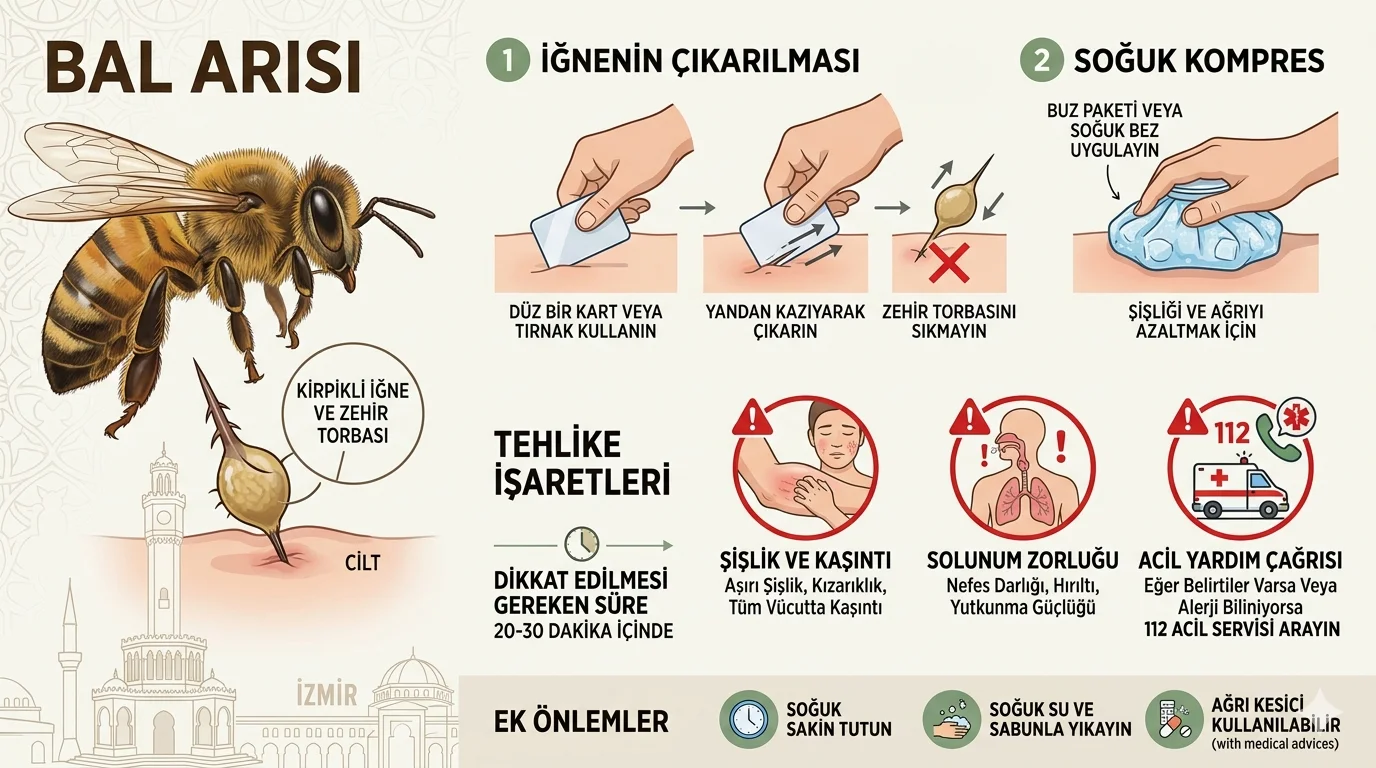
In most cases a honey bee stings and then dies. The reason is mechanical: the stinger is barbed, it catches in the skin, and as the bee pulls away backwards it also pulls out part of its abdomen. In the process, the stinger, the venom sac and the surrounding tissue can come away. So the honey bee and the wasp don’t belong at the same table; one often makes a single-shot defense, the other can pull back and sting again.
In the field this distinction matters. When you see a honey bee sting, don’t say “it’s over”; the stinger may have stayed in place. The bee dying doesn’t mean the person can relax, either. If the venom stays in the skin, the pain, redness and swelling grow. So the first job is to manage the scene; the second job is to watch the anaphylaxis line.
How do you remove the stinger?
The correct method is simple: scrape the stinger out sideways with a card, a fingernail or a similar flat surface. Don’t grip it with tweezers. The squeezing of tweezers can compress the venom sac and release more venom. That’s why the logic of “scraping off”, not “pulling out”, is safer.
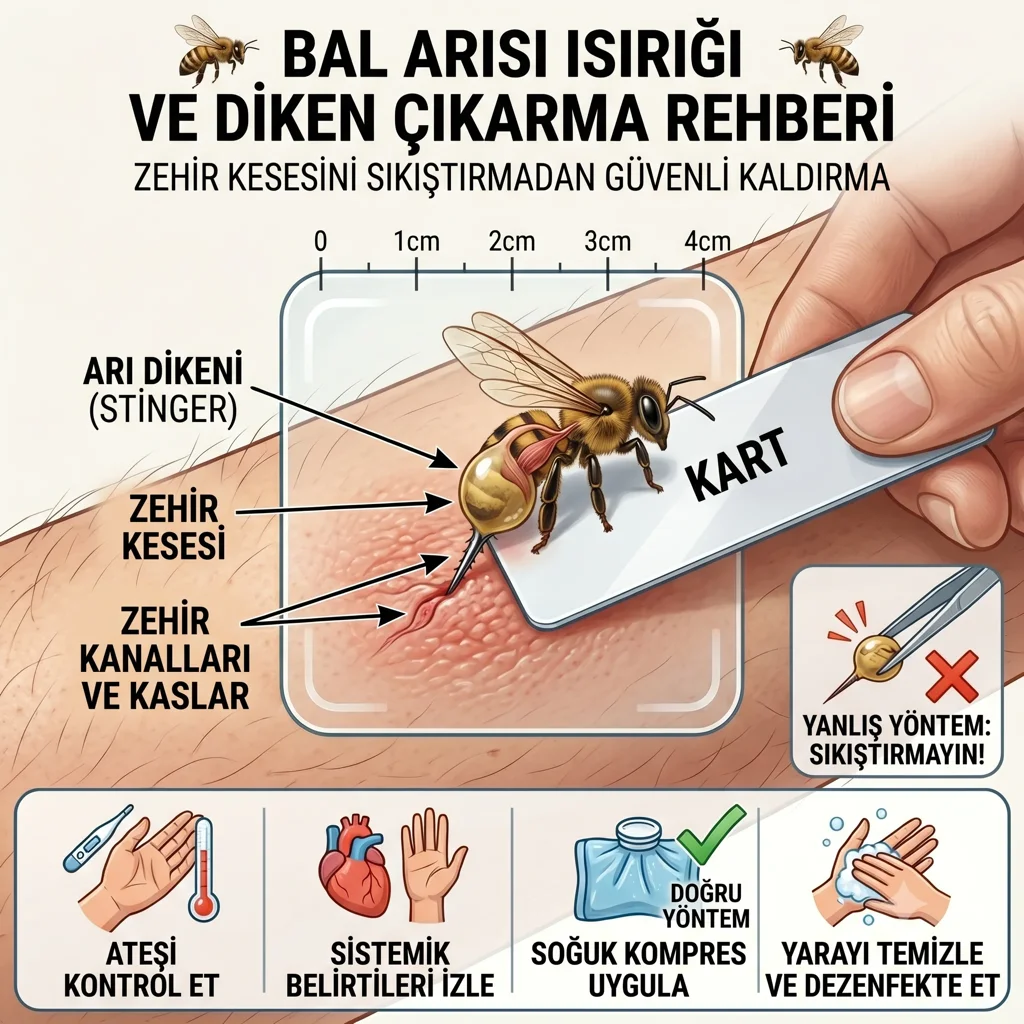
Don’t wait the moment you see the stinger. The longer it stays, the more of its contents spread. But don’t handle it roughly either. Don’t scratch, squeeze or puncture the area, and don’t press on the stinger. Then clean the area with soap and water and apply a cold compress. Cold reduces the pain signal and local edema. Don’t let ice touch the skin directly; apply it over a thin cloth.
The goal of this first aid is small but clear: not to increase the venom load and to keep the local reaction calm.
Which symptoms mean anaphylaxis?
After a honey bee sting, the severe allergic picture appears within the first minutes according to most sources. Within the framework you gave, this window is 5-30 minutes. So don’t be misled if the person looks fine; the picture can turn within a short time. Although an anaphylaxis rate of about 3% in adults and about 1% in children is given, in the field clinical signs matter more than numbers.
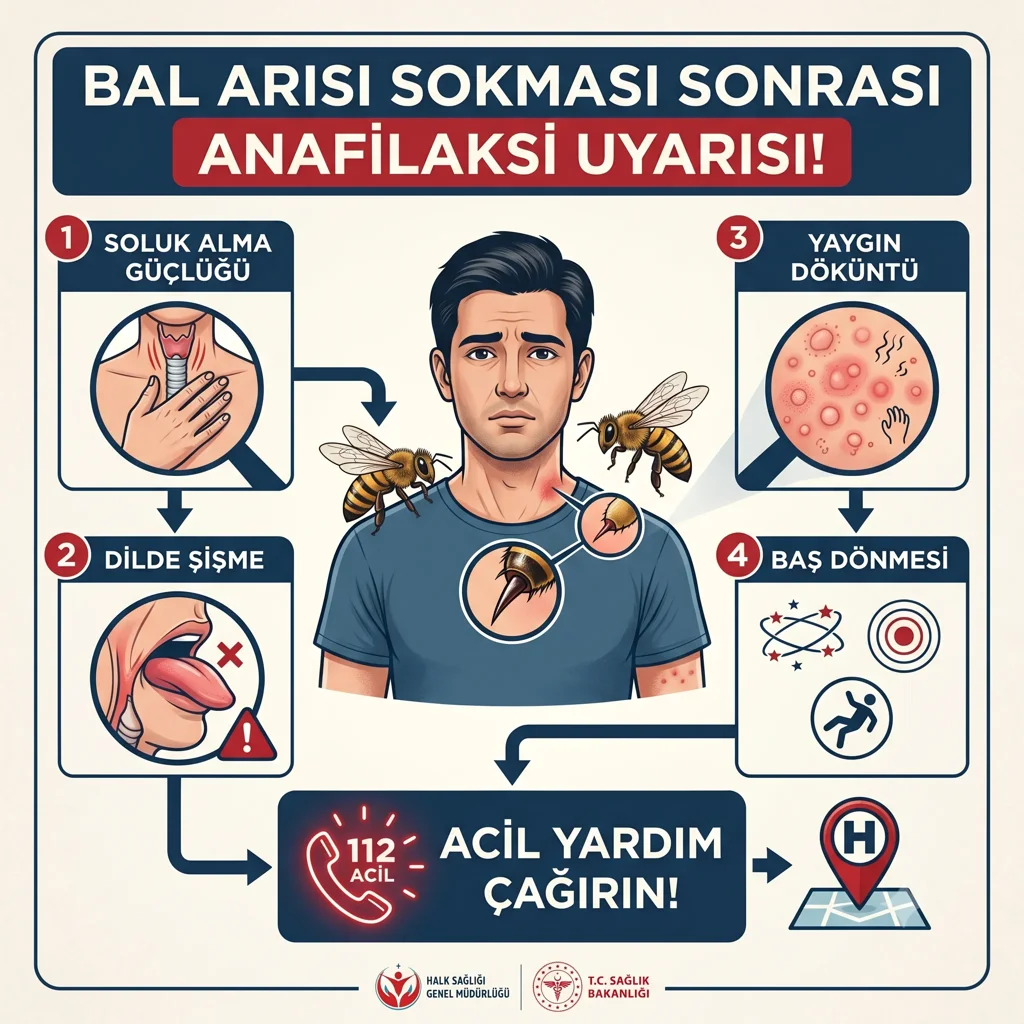
If these symptoms are present, things change: shortness of breath, wheezing, tightness in the throat, swelling of the tongue or lips, widespread hives, dizziness, palpitations, feeling like fainting, clouding of consciousness. If even one of these is present, the call for emergency help is not delayed. AAFA puts deaths from bee stings in the US at roughly 60-90 per year; this shows it is a risk that should not be taken lightly by calling it “rare”.
The critical point here is this: a local reaction is one thing, a systemic reaction is another. Local swelling can go away on its own. But a widespread rash and respiratory signs fall into the emergency category.
How do you use an EpiPen?
If there is an EpiPen and the person is going into anaphylaxis, don’t lose time. The correct place is not the buttock but the outer side of the thigh. The auto-injector can also be used through clothing. Press, hold, don’t let go. Keep to the time in the instructions for use; then keep the line to your country’s emergency number or the emergency health line open.
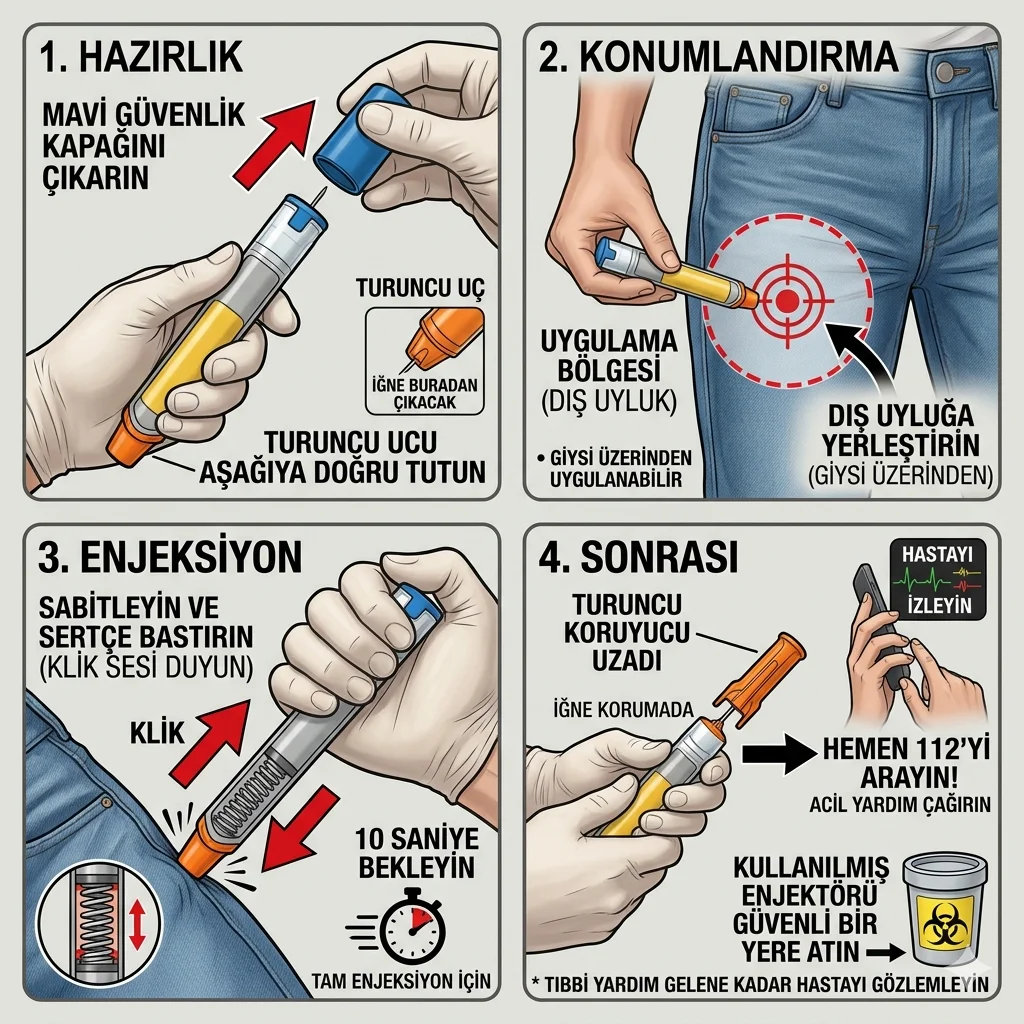
An EpiPen alone is not the end of it. It provides temporary relief. The reaction can come back or a second wave can appear. That’s why the person is laid down if possible; if there is no shortness of breath, the legs can be raised slightly. If there is vomiting, the side position is safer. If consciousness is changing, nothing is given by mouth. The healthcare team decides whether a second dose is needed.
Why does the hospital monitor for 4-6 hours?
Anaphylaxis may not end with the first hit. The second wave, called a delayed or biphasic reaction, appears again after the initial improvement. That’s why 4-6 hours of observation in hospital is not an empty procedure; it is a seat belt set up to catch a delayed return.
Observation becomes even more meaningful especially in people who have had a systemic reaction before, when there was more than one sting, in those with respiratory signs, or if an EpiPen was used. The point here is this: even if the patient looks well, they can get worse within a short time. Keeping them under monitoring is safer than leaving them alone at home.
Who should be more careful?
A honey bee sting doesn’t play out the same way in every body. People who have previously had a systemic reaction to a bee sting, people with asthma, people exposed to multiple stings and people stung in risky areas such as the face, tongue or around the mouth should be more careful. In a child, symptoms are sometimes noticed more quickly, but a delay also does harm more quickly. That’s why the sentence “there’s only local swelling” is reassuring at first, but it doesn’t remove the need for follow-up.
In the field, the right approach is not panic but establishing control. Don’t have the person running around on their feet; if possible, sit them down or lay them down. If there is no shortness of breath, keep them in a calm position and don’t move them too much. While watching the sting area, check the pulse, breathing and quality of speech. If speech is breaking down, the lips are turning blue or the person is dazed, think no longer of a local problem but of a systemic problem.
What not to do
The first prohibition is squeezing the stinger with tweezers. The second prohibition is scratching the sting site. The third prohibition is saying “nothing will happen” and belittling shortness of breath. The fourth prohibition is waiting out swelling inside the mouth or a breakdown in speech and brushing it off.
Folk methods such as alcohol, oil, toothpaste or applying heat don’t fit here. They don’t solve the problem; sometimes they muddle it further. The summary of the job with a honey bee sting is this: first don’t increase the venom load, then watch for a systemic reaction, then don’t miss the emergency line.
A common mistake in the field
The first mistake is fiddling with the area. After seeing the stinger, everyone wants to pull it out right away; but the wrong movement compresses the venom sac. The second mistake is confusing local swelling with allergy and panicking needlessly, or, the other way round, belittling a severe allergy as “itching”. Both extremes lead to bad outcomes.
The cleanest way works like a short algorithm: remove the stinger sideways, clean the area, cool it, watch the symptoms, then decide. This flow is simple, but applied consistently it lowers the margin of error. This is the summary of the job with a honey bee sting: a small intervention makes a big difference. If a family member is nearby, don’t take your eyes off the person in the first five minutes; symptoms sometimes start silently.
Short field summary
If the stinger is visible, scrape it out sideways. Don’t squeeze with tweezers. Apply a cold compress. Within 5-30 minutes, watch breathing, the tongue, rash and dizziness. If there is an EpiPen, use it on the outer side of the thigh. If in doubt, call your country’s emergency number.
Sources
- AAAAI — Stinging Insect Allergy
- NHS — Anaphylaxis: emergency assessment without delay for shortness of breath, widespread rash and change in consciousness after a bee sting.
- Wasp Sting First Aid
- Honey Bee
- Honey Bee Dance Language
FAQ
Why can a honey bee sting be more dangerous?
Because the stinger can stay in the skin and the venom sac can keep emptying its contents for a while longer. In addition, there is a risk of anaphylaxis in sensitive people.
Why don’t I pull the stinger out with tweezers?
Because the squeezing motion can press on the venom sac. Scraping it out sideways with a flat surface is more correct.
Why is a hospital still needed after an EpiPen?
Because the reaction can come back. An EpiPen is not the end of treatment but the beginning.
Which symptoms require calling your country’s emergency number?
Shortness of breath, swelling of the tongue or throat, a widespread rash, a feeling of fainting, a change in consciousness and rapid worsening.
Does everyone stung by a honey bee have anaphylaxis?
No. Most cases stay local. But the risk is not zero; that’s why the symptoms need to be watched.