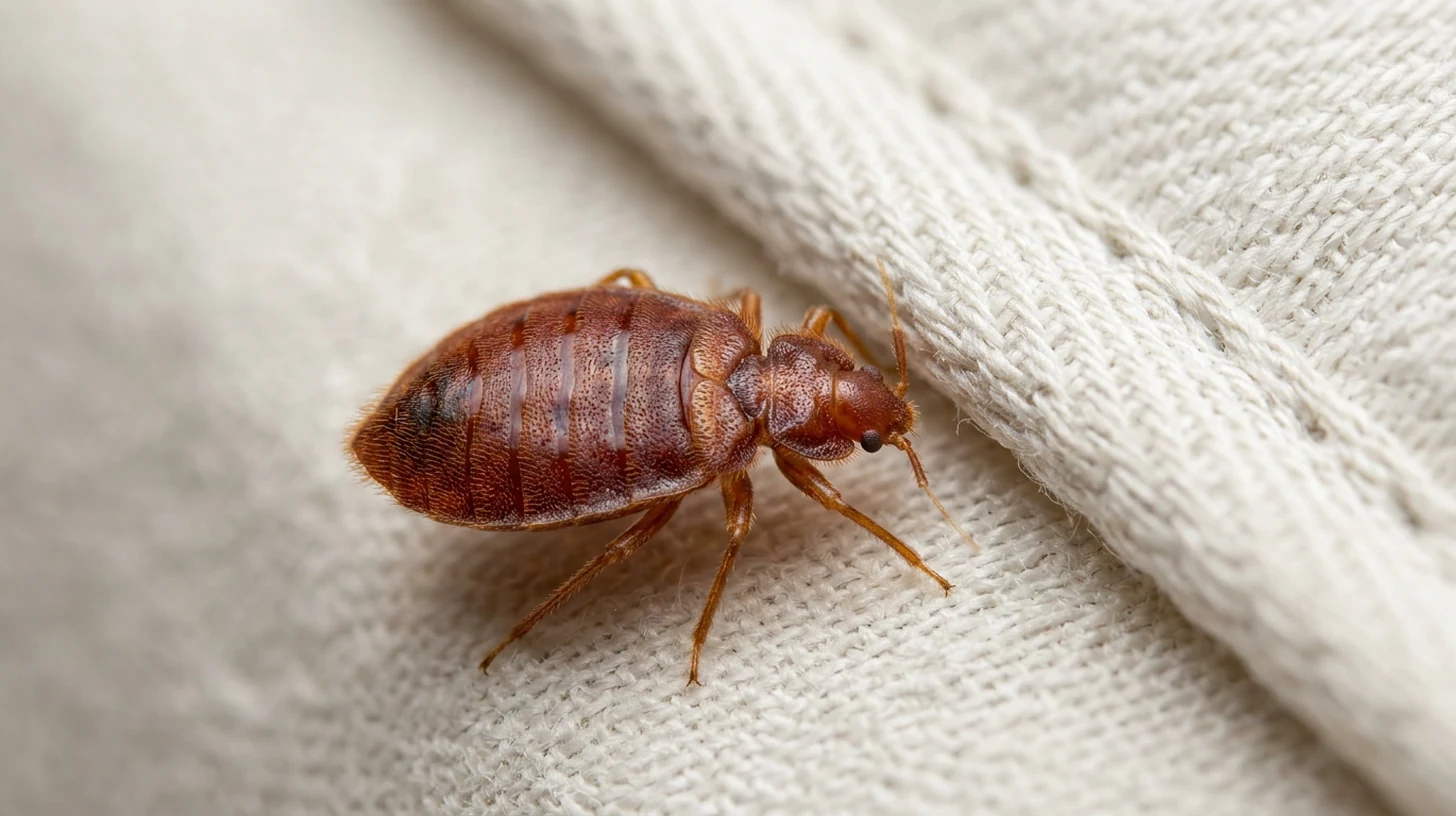
The bed bug is a household insect that feeds on human blood, is active at night and hides during the day in narrow spaces such as the mattress seam, cracks in the bed base and the back of the headboard. The short answer is this: seeing an itchy mark on the bed is not a diagnosis on its own; unlike a pest that wanders out in the open during the day such as the cockroach, the bed bug is usually caught by its traces. To understand the logic of insect control inside the home, the source-cutting approach in the how to get rid of cockroaches guide is useful here too; in addition, the what is an insect article explains the language of classification, and the cockroach allergy in children article explains why the health risk of different household pests needs to be handled species by species. With bed bugs, however, the area around the bed, the transport line and heat treatment come first.
What are bed bugs?
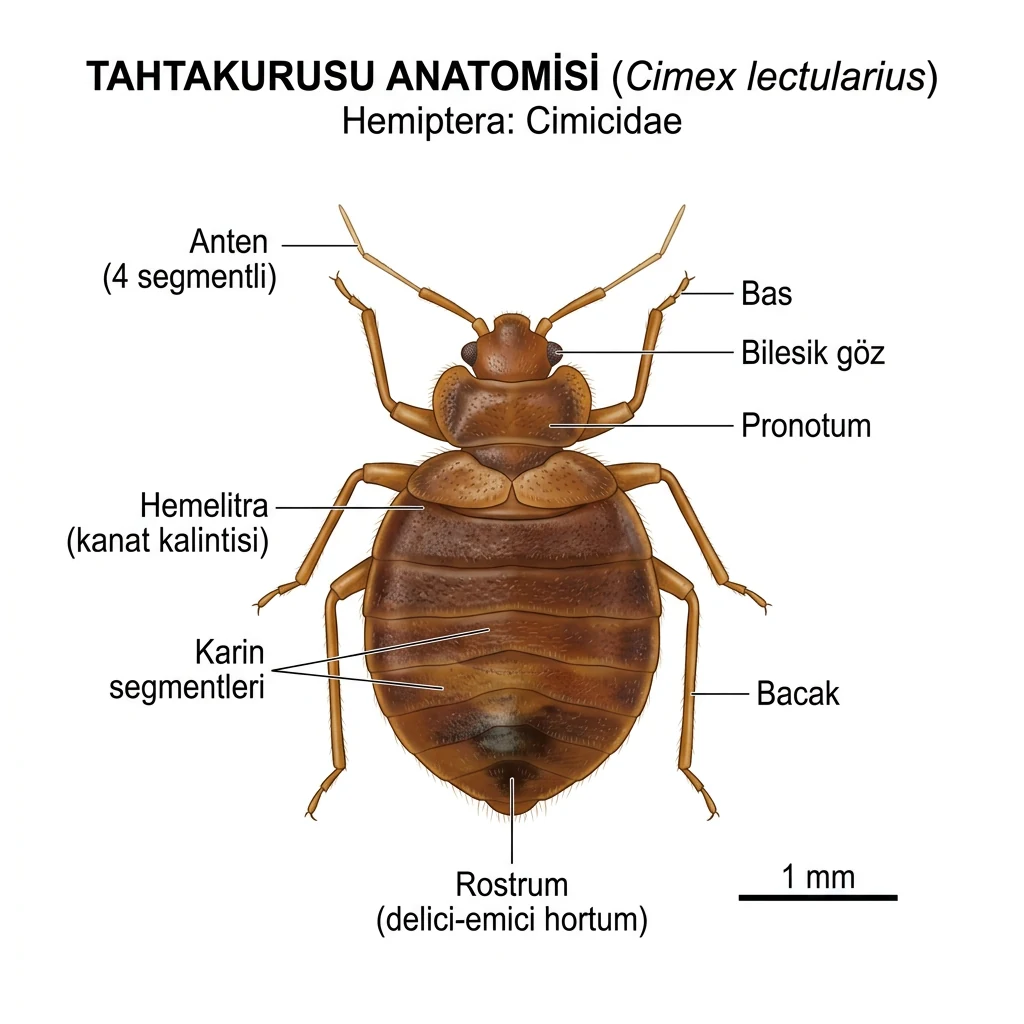
When people talk about bed bugs in everyday language, the species they most often mean is the one with the scientific name Cimex lectularius. It belongs to the order Hemiptera and the family Cimicidae. It is a flat, oval-bodied, brown-reddish insect. The adults are roughly the size of an apple seed, that is, around 5-7 mm. Before feeding on blood it looks flatter and brown; after feeding, its body swells, its color darkens and it becomes more reddish.
This insect does not fly and does not jump like a flea. It walks fast and hides well in narrow gaps. That is why the problem is often not seen from the first day. What the homeowner notices before a live bug is morning itching, small blood stains on the sheet, black dots in the mattress seam or the remains of molting.
How can you tell?
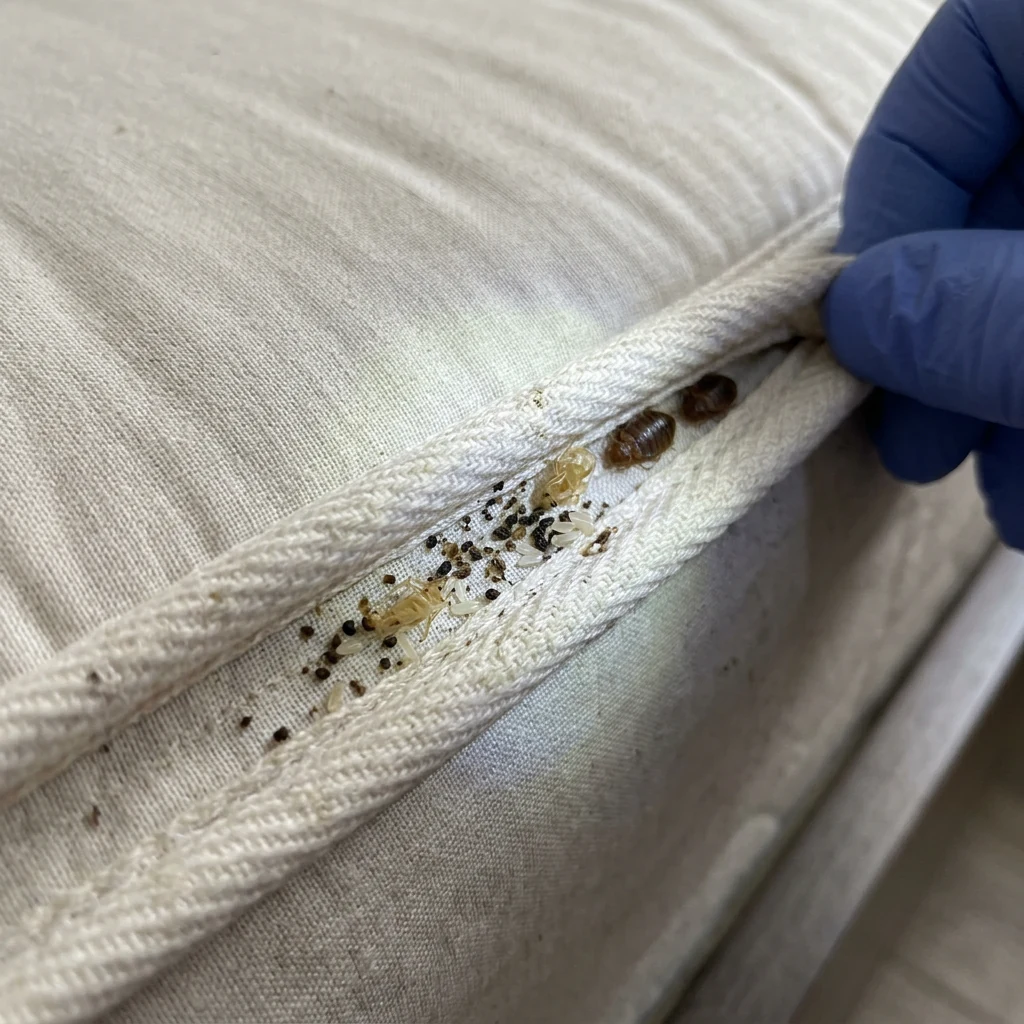
The most reliable way to tell you have bed bugs is not to look at the bite but to read the environmental findings together. Bite marks can be confused with mosquitoes, fleas, allergies or other skin problems. That is why deciding just by looking at the bump on the skin is weak.
The first places to check are the mattress seam, the edge of the bed base, the back of the headboard, the gap by the nightstand, cracks along the baseboards, around electrical outlets, curtain folds and behind items close to the wall. If dark black fecal spots, light-colored eggs, empty shed skins and live individuals are seen in the same area, the likelihood of bed bugs grows stronger.
In practice, the list of signs is as follows:
- Itchy red bumps noticed in the morning.
- Small blood stains on the sheet or pillow.
- Dark fecal marks like ink dots in the mattress seam.
- Whitish eggs or empty shed skins in narrow gaps.
- A small brown bug walking around the bed when you turn on the light at night.
Health perspective
Risk
While feeding on blood, the bed bug approaches the skin with piercing-sucking mouthparts. Most people do not feel the bite right away. In the following hours or days an itchy red bump may form. In some people the symptoms stay mild; in others more marked redness, swelling and disrupted sleep may be seen. In the same home, one person may react strongly while another may see no marks at all.
The important point is this: panicking that the bed bug is a disease carrier is not right. Sources such as NYC Health and Kentucky Extension state that there is no strong evidence that bed bugs spread disease; that the main problem is itching, disrupted sleep and secondary skin infection caused by scratching, that is, the risk of a microbial problem developing in the skin afterwards. Because the available sources do not give a reliable topic-specific prevalence percentage, it is not right to use data from other species here, especially cockroach allergen data.
| Situation | Right line | Reason |
|---|---|---|
| Shortness of breath, swelling of the face or tongue, feeling faint | your country’s emergency number | A possible systemic allergic reaction requires emergency assessment. |
| Rapidly spreading redness, pus, fever, severe pain | Emergency department | An infection or severe reaction is not managed with an insect control article. |
| Persistent itching, widespread bumps, an intense reaction in a child | Physician | Diagnosis and a treatment plan must be tailored to the person. |
| There are marks on the bed but health symptoms are mild | Environmental findings first + follow-up | A bite alone does not allow a diagnosis of bed bugs. |
Prevention and Control
The main way to reduce the health risk is not to interpret bites one by one but to cut off contact. The mattress seam, bed base, back of the headboard and the area around the nightstand are checked on the same day. Suspect textiles are carried in a closed bag and washed or dried on high heat. Not constantly scratching the itchy area reduces the risk of secondary infection; however, decisions about medication, creams or oral treatment are not the subject of this article. If the findings are growing, the emergency-sign logic in the what to do after a tick bite article also guides you here: even though the insect species is different, waiting is not the right line when there are serious health findings.
Life cycle
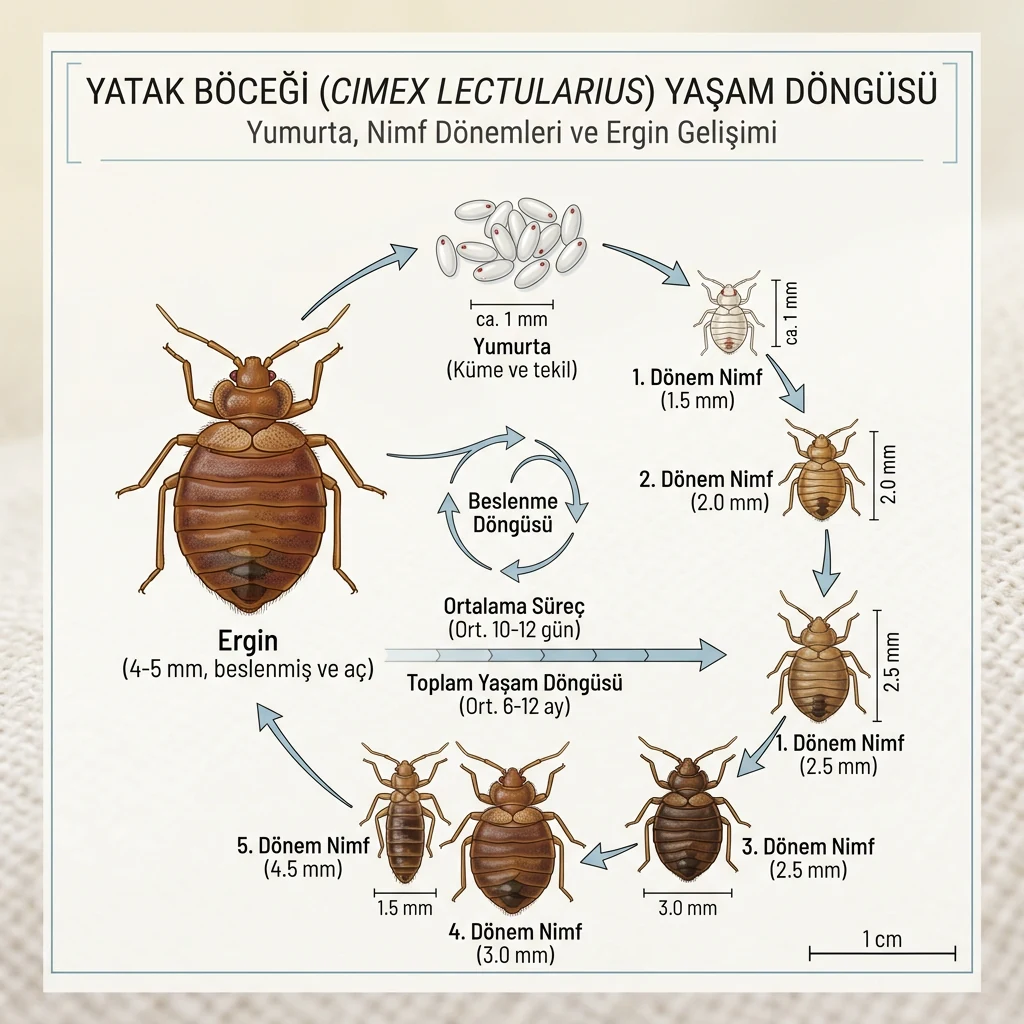
The bed bug goes through egg, nymph and adult stages. According to the EPA’s life cycle summary, the eggs are very small, pearl-white and about the size of a pinhead. An eye spot can be made out in eggs older than five days. The nymphs that hatch from the eggs are lighter in color and small. If they have not fed on blood, they can look almost transparent.
The nymphs molt five times before becoming adults. A blood meal is needed for every developmental stage. That is why small light-colored nymphs, dark adults and empty shed skins can all be seen together around the bed. Kentucky Extension reports that at room temperature the eggs can hatch within about a week and that under suitable conditions females can lay large numbers of eggs in hidden areas.
Where do they come from?
The bed bug is not the insect of a dirty home. It most often arrives by being transported. Hotel rooms, suitcases, second-hand beds, sofas, student dormitories, the movement of items within an apartment building and shared laundry areas create a risk. The bug does not look for food crumbs; it looks for a blood meal. That is why it can be seen in a clean home too.
Even if it looks like a single-apartment problem in an apartment building, a neighboring apartment, a utility void or a shared storage area may be the source. Especially in old buildings, baseboards, pipe passages and wall cracks become movement lines. For this reason, just cleaning the bed is sometimes not enough; the area around the room, the neighboring wall and the traffic of belongings are examined too.
How do you tell them apart from similar insects?
Bed bugs are sometimes confused with fleas, a tick, carpet beetle larvae or small cockroach nymphs; for the practical prevention distinction on the tick side, the tick prevention methods guide can also be read. Fleas jump; bed bugs do not. A tick attaches to the skin and its body is spider-like; the bed bug is a six-legged insect and returns to its hiding area after feeding. The carpet beetle larva has a hairy appearance and does not feed on blood. The cockroach nymph is a household insect with longer antennae, that runs faster and is usually seen along the food-and-moisture line.
This distinction matters in practice. If treatment is aimed at the wrong insect, time is lost and the problem spreads. The most solid way is to photograph a live specimen, a shed skin or the fecal mark in the mattress seam and submit it for expert identification. In shared living spaces such as an apartment building, dormitory or hotel, moving belongings around widely before the identification is clear is not right.
First control steps at home
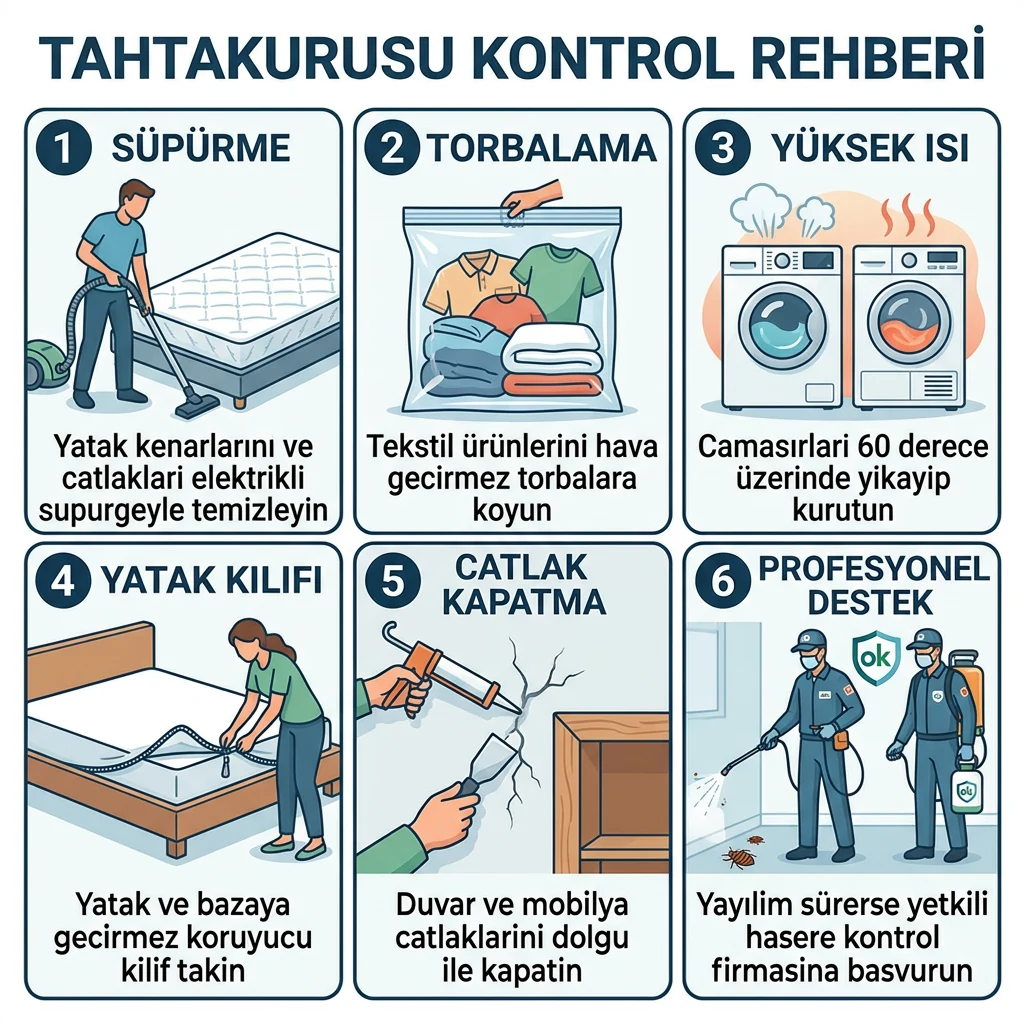
The first step is not panic but narrowing down the area. Moving the bed straight to another room or taking belongings out to the hallway can spread the bugs. First the area around the bed is checked, suspect textiles are put in a closed bag, and laundry is washed or dried on high heat. The EPA states that a high-heat dryer can be useful; but that trying to heat the whole house with the thermostat, a fireplace or a heater does not work and is dangerous.
The practical order is as follows:
- Inspect the area around the bed, bed base, headboard and nightstand with a light.
- Put suspect textiles in a closed bag; avoid carrying them uncovered between rooms.
- If suitable, wash and dry on high heat.
- Use bed-bug-proof encasements for the mattress and bed base.
- If you vacuumed, immediately seal the bag and put it in the outdoor trash.
- Seal baseboards and cracks; reduce clutter.
- If the findings continue, get professional pest control support.
Spray, heat and the professional threshold
In bed bug control, spraying at random is usually a weak move. The wrong product can scatter the population into different cracks. Its effect on the eggs may remain limited. If there are children, pets or asthma sensitivity, the risk increases even more. If a pesticide is to be used, nothing is done without reading the product label, the target pest, the application area and the waiting period.
The bait method is not suitable for bed bugs; because this insect does not feed on crumbs, gel or bait stations, it looks for a blood meal. The bait logic makes sense for species that consume bait, such as cockroaches and ants. For bed bugs the more correct line is: detecting hiding spots, physical cleaning, high heat, mattress encasements, crack management and, when necessary, professional pest control treatment.
| Professional support threshold | Why does it matter? |
|---|---|
| Live bugs, eggs or nymphs were seen | It shows that the population is active. |
| There are signs in different rooms | The problem may have gone beyond the area around a single bed. |
| More than one apartment in the building is complaining | The passage line may originate from the building. |
| The source in second-hand items or travel is unclear | The route of reinfestation may not have been closed. |
| New marks appear during two weeks of follow-up | The current measures have not been sufficient. |
| There is a child, an elderly person, allergy or asthma sensitivity | Pesticide and health risk must be managed more carefully. |
At this point the aim is not to target individual bugs one by one, but to manage hiding spots, eggs and the route of reinfestation in the same plan. Preparation before treatment is also part of control. Bagging belongings haphazardly, taking the bed out to the balcony or leaving the sofa in a common area of the apartment building increases the risk. Suspect textiles are carried in a closed bag. Items to be washed are transferred directly to the machine. Furniture to be thrown away is cut or marked so that no one else can carry it into their home. If a professional team has been called, which room the findings were seen in, the date they were first noticed, and any history of travel or second-hand items are explained clearly. This information makes it easier to find the hiding line.
The situation in Türkiye
The bed bug is a known household pest in Türkiye as well. In big cities, travel, hotels, dormitories, second-hand items and the density of apartment buildings increase the risk. In everyday Turkish, its name is written both as two words and as one word. Scientifically, the subject falls within the family Cimicidae; in household practice, the main species is considered to be Cimex lectularius.
The most critical distinction for readers in Türkiye is this: this problem is not a matter of shame or cleanliness. It is a pest that gets transported. If it is noticed early and contained before it spreads, it is easier to manage. If it is noticed late, it can extend from the bed to the sofa, and from the room to the neighboring line.
Sources
- US EPA — Bed Bugs Appearance and Life Cycle: https://www.epa.gov/bedbugs/bed-bugs-appearance-and-life-cycle
- US EPA — Do-It-Yourself Bed Bug Control: https://www.epa.gov/bedbugs/do-it-yourself-bed-bug-control
- University of Kentucky Entomology — Bed Bugs, ENTFACT-636: https://entomology.ca.uky.edu/ef636
- NYC Health — Bedbugs: https://www.nyc.gov/site/doh/health/health-topics/bedbugs.page
- NHS — Bedbugs: https://www.nhs.uk/conditions/bedbugs/