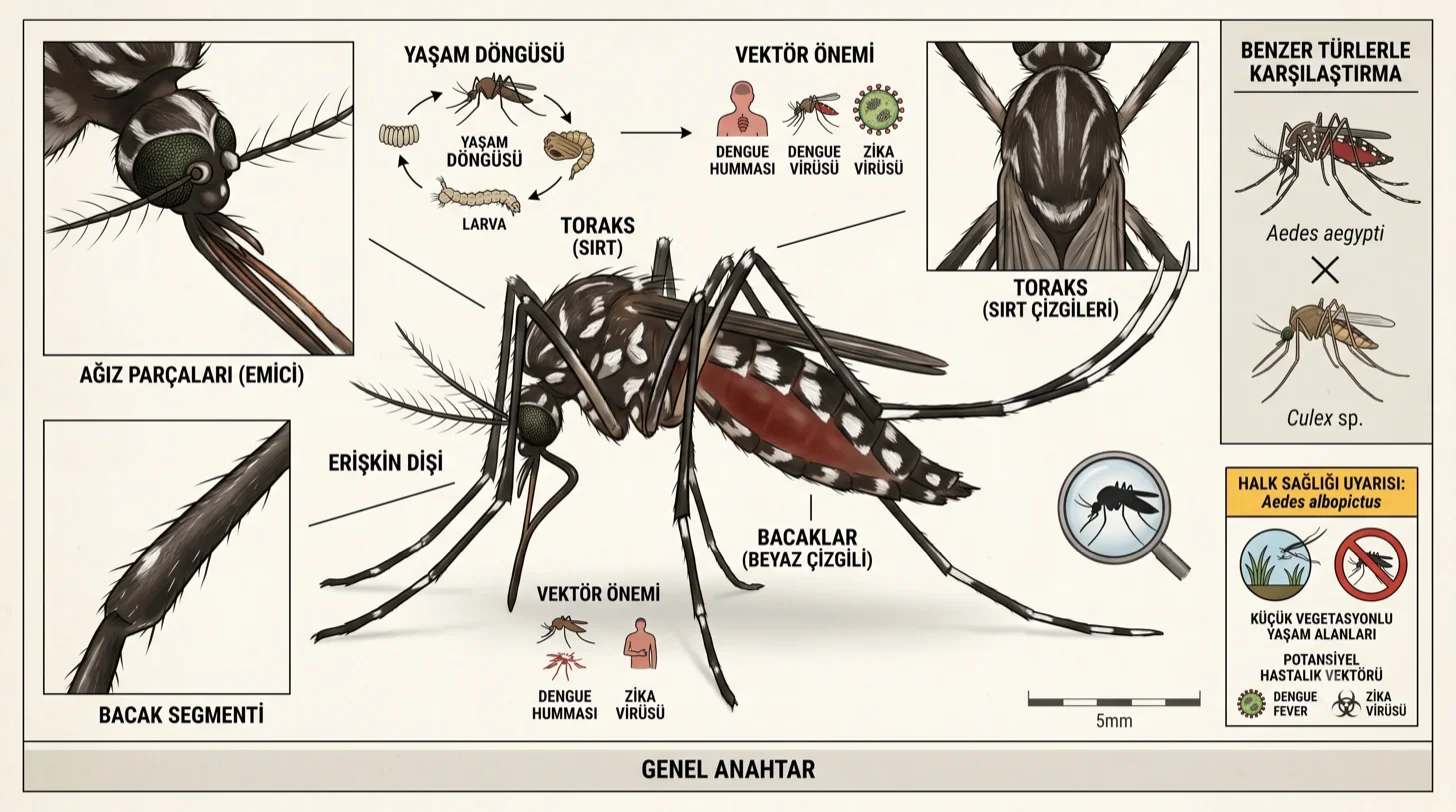
The Asian tiger mosquito is a species that looks small for Türkiye but has to be taken seriously. If you want to read the general framework, first look at the article Mosquito: Biology, Species and Health Information; here we open up the Aedes albopictus side of the matter directly. What makes this species noteworthy is both that it is easy to recognize and that it is monitored separately in terms of health surveillance. Its appearance in Türkiye is not read like that of an ordinary summer mosquito.
Why is Aedes albopictus on the agenda in Türkiye?
Aedes albopictus, that is, the Asian tiger mosquito, is referred to as an invasive species. In Türkiye, records after 2007 stand out; the Trabzon, Istanbul and Izmir line is often mentioned in how this species came onto the agenda. On its own, this information does not mean “there is a widespread outbreak”. But it shows that a species can spread without respecting borders. ECDC and national surveillance records say that in the Mediterranean belt this mosquito is no longer an exception but a monitored reality. That is why the ECDC Aedes albopictus factsheet is one of the core sources.
How is it identified?
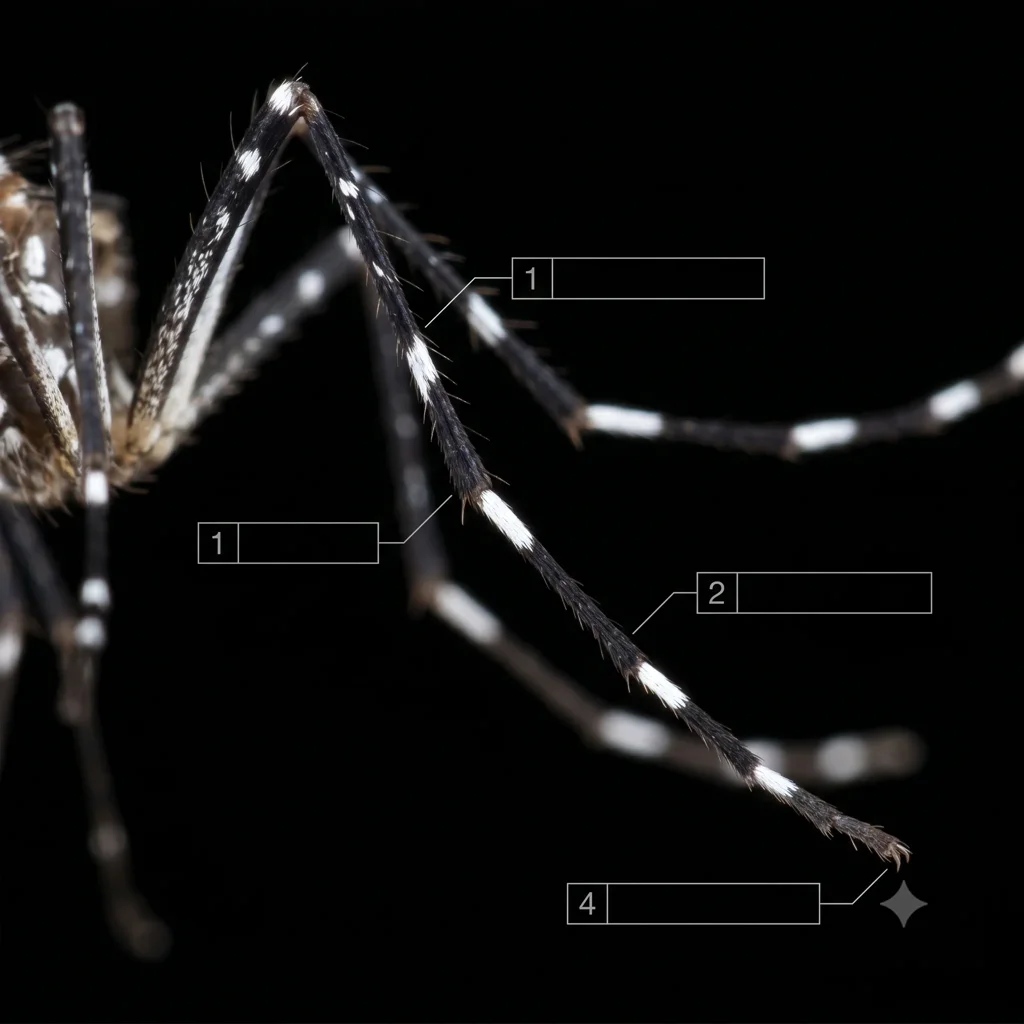
Why does it matter that it is active during the day?
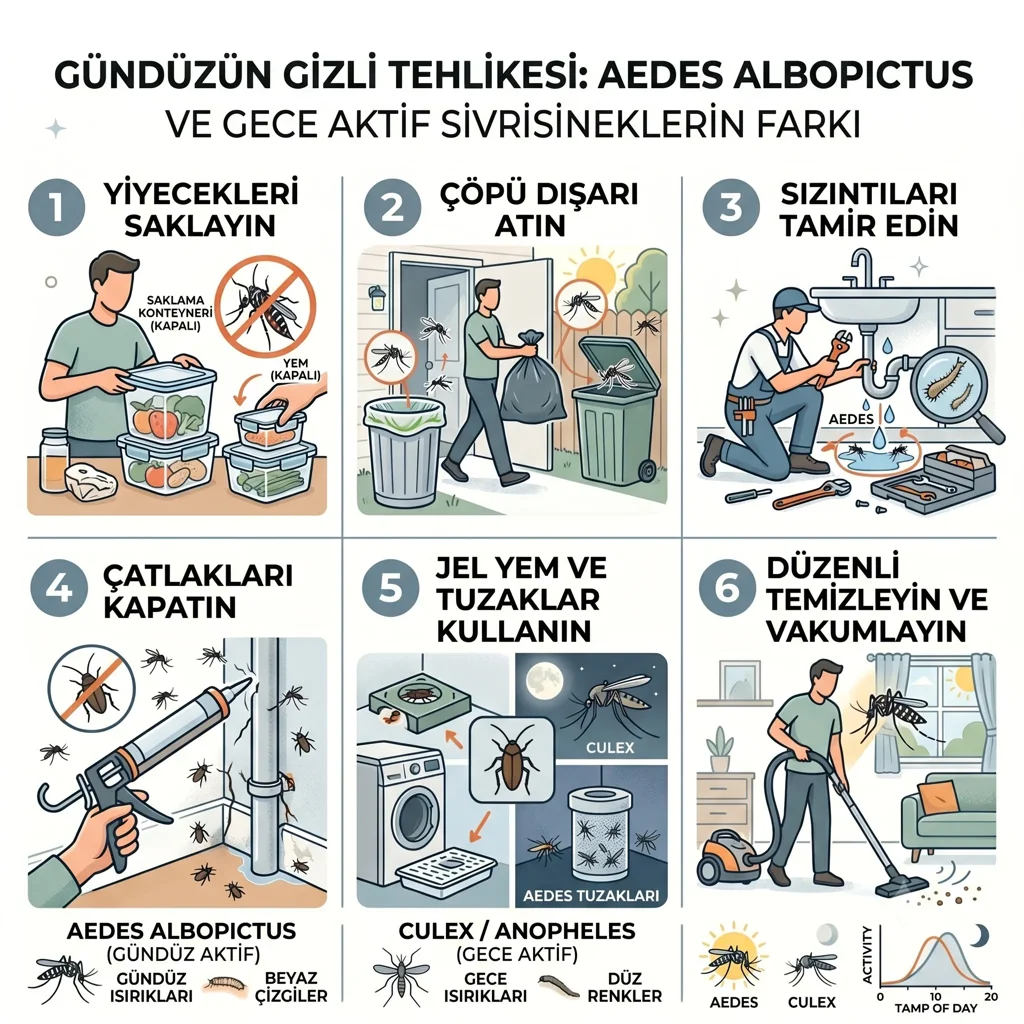
Where does it breed?
Aedes albopictus doesn’t need a large body of water. On the contrary, small and short-lived puddles are enough. Plant saucers, buckets, roof gutters, unused tires, containers with open tank lids and small hollows left after rain become suitable breeding sites for it. Animal water troughs and water containers around the garden are also risky. What the reader needs to pay attention to is that there is a difference between “clean water” and “safe water”. Water that looks clean but stands still can be enough for this species.
After rain, the picture grows. A puddle at first seems almost invisible, then it opens up room for eggs and larvae. That is why checking around the house after rainfall is a cheaper and more effective first move than spraying. Emptying one container of water doesn’t save the whole neighborhood; but it breaks the chain. That is the real job.
Which diseases is it associated with?
Worldwide, Aedes albopictus is associated with several important arboviruses: West Nile, Dengue, Zika and Chikungunya. The line to watch here is clear: vector capacity is one thing, local circulation is another. In other words, the species has the potential to carry disease; this does not mean that the disease is seen at the same level in every region. In Türkiye the right approach is not panic but surveillance. The line of the Ministry of Health of Türkiye, General Directorate of Public Health (in Turkish) also supports this official reading.
Protection: daytime defense
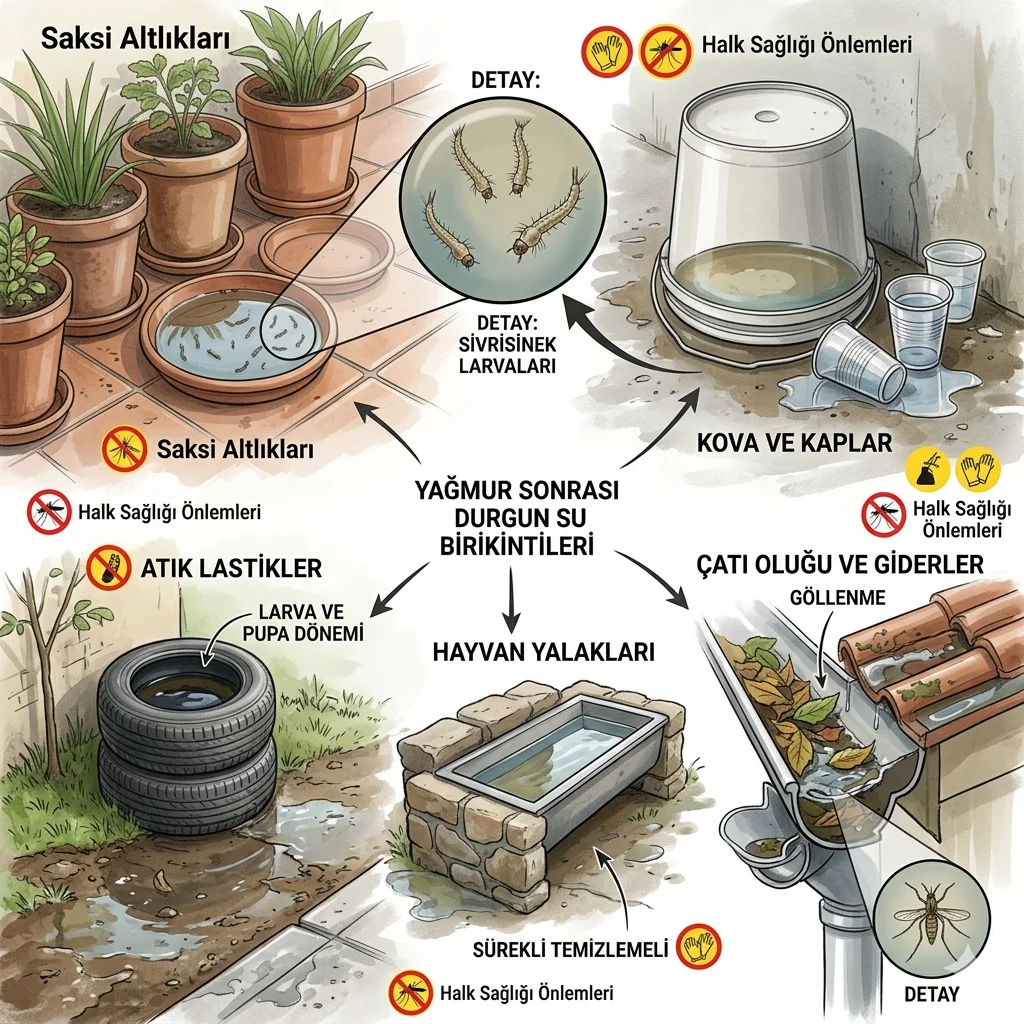
If you want to read the human side of mosquito biting behavior in more depth, the article Why Do Mosquitoes Bite Some People More? The ETM Complex will do the job. Because if one person becomes the target more often in the same setting, odor, heat and breath signals are at work there.
At what point does it differ from Culex?
It is easy to confuse Aedes albopictus with Culex; but in the field the difference matters. Culex mostly leans toward the night, is more visible around indoor spaces and gives a plainer gray-brown line in appearance. Aedes albopictus, on the other hand, goes out into the field during the day, makes brief contact and also turns small water containers into breeding sites. This difference changes the timing of spraying, environmental cleaning and the timing of protective clothing.
If there is an increase in bites during the day in a neighborhood, this is one of the first species to look at. Because it doesn’t behave in a night-focused way like the ordinary house mosquito. Shaded balconies, schoolyards, park edges and the bases of fences can be suitable places for daytime contact. That is why cooperation is needed at the scale of the local administration and the apartment building; a single household’s measures stay limited if the surroundings are neglected.
Which signs matter in the field?
The first thing to look at in the field is not the number but the pattern. Seeing an occasional adult doesn’t always mean a large colony. But if there are repeated sightings in the same area after rain, a water source has been found. The second sign is daytime bite complaints at the same spot. The third sign is the neglect of small containers, plant saucers and open water troughs.
Here there is a simple but clear rule: if there is a puddle, there is risk. Even if this puddle looks clean, it opens up room as long as it stays still. That is why a weekly check around the house and garden is more effective than a one-time harsh intervention.
Medical note
When this species’ name comes up, the subject stops being just a matter of identifying an insect. If there is fever, rash, joint pain, headache and a recent travel history, a physician’s evaluation is needed. Especially if there is the trio of fever + rash + joint pain, don’t wait; pay particular attention at the end of summer. Because in vector-borne diseases, noticing early is more valuable than being late. What is needed is not the language of fear but the language of early warning.
Source line
- ECDC — Aedes albopictus factsheet
- Ministry of Health of Türkiye, HSGM — Zoonotic and vector-borne diseases (in Turkish)
- Main mosquito article
- Article on biting preference
Short conclusion
Aedes albopictus is an invasive mosquito in Türkiye that should not be overlooked. Being active during the day, using small water puddles and its striped appearance put it in a separate class. Correct identification, environmental control and daytime protection work together. One move is not enough; an approach that breaks the chain is needed.